In the world of professional river guiding, the boundary between adventure and technical expertise is bridged by one critical element: safety. In November 2024, instructors from the Whitewater Rescue Institute (WRI)—Ben Schmidt and Sam Johnston—embarked on a high-stakes expedition to Northwestern India. Their mission was twofold: to provide world-class swiftwater rescue certification to the elite guide team at Aquaterra Adventures and to test their own skills against some of the most formidable whitewater on the planet.
This journey, which stretched from the sacred, turquoise waters of the Ganga to the roaring, untamed rapids of the Brahmaputra, served as a masterclass in global collaboration, technical skill-sharing, and the profound cultural connections formed through the medium of the river.
The Foundation: A Partnership in Safety
Aquaterra Adventures has long been recognized as a standard-bearer for outdoor tourism in India. With a legacy of managing complex logistics for everything from single-day splashes to multi-week trekking and river expeditions, they operate at the highest echelon of the industry. The collaboration between WRI and Aquaterra was born from a shared philosophy: that regardless of geography, the principles of river safety, risk management, and rescue logistics must be universal.
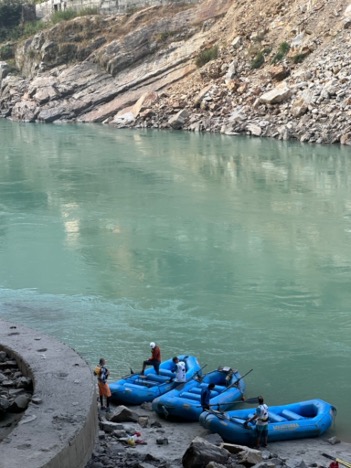
For ten days, Schmidt and Johnston immersed themselves in the daily life of the Aquaterra team at their basecamp in Atali Ganga. Nestled in a valley that feels disconnected from the frenetic pace of modern life, the basecamp offered a front-row seat to the raw beauty of the Himalayas. The objective was not merely to lecture, but to engage in a rigorous exchange of techniques, ensuring that the WRI curriculum was seamlessly integrated into the specific operational needs of Indian river guides.

Chronology of the Expedition
Phase I: The Ganga Workshops
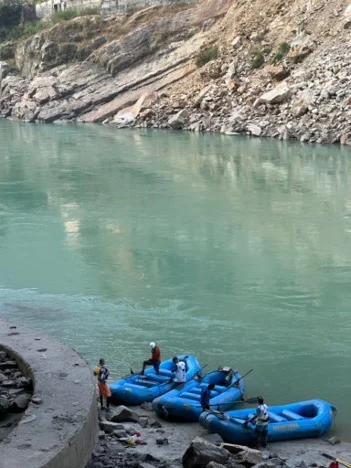
The journey began in the vibrant, sensory-heavy landscape of Dehradun. Navigating the transition from the bustling, honking markets to the serene banks of the Ganga, the WRI instructors settled into a routine of intense professional development.
The training modules focused on standardized rescue protocols, including:

- Universal Risk Management: Establishing upstream and downstream safety protocols and formalizing emergency action plans.
- Technical Rescue Skills: Hands-on training in aggressive and defensive swimming, precise throw-bag deployment, and complex in-flow rescue scenarios.
- Instructor Development: Training senior guides to disseminate these protocols, ensuring the sustainability of safety standards within the Aquaterra organization.
The instructors noted that the guides they worked with were not just students; they were masters of their environment. Many of the Aquaterra team grew up on the tributaries of the Ganga, developing an intuitive, visceral understanding of the river. The collaboration was, in the words of Sam Johnston, "humbling," as the WRI team learned as much about the local nuances of river reading as they taught regarding international rescue standards.
Phase II: The Brahmaputra Expedition
Following the successful completion of the training, the team pivoted to a legendary challenge: the Brahmaputra River. The logistics were orchestrated by Aquaterra owner Vaibhav Kala, whose oversight transformed a potentially chaotic transit across Arunachal Pradesh into a streamlined, high-level expedition.

The Brahmaputra is a titan of the paddling world. With massive water volume, 30-foot wave faces, and lateral currents capable of testing the structural integrity of even the most robust rafts, the river is an endurance test. Guided by Rana G, a veteran with 23 successful Brahmaputra descents to his credit, the WRI team spent their days navigating 20-mph currents and their nights on expansive, isolated sand beaches, fostering a deep sense of camaraderie around driftwood fires.
Supporting Data and Technical Context
The scale of the environment was matched only by the technical demands of the rescue training. Effective swiftwater rescue requires an understanding of fluid dynamics and human physiology. The WRI curriculum, as implemented during the training, relies on:

- Hydraulic Analysis: Training guides to identify and avoid "holes" and recirculation zones that pose high risks to commercial rafters.
- Communication Protocols: In the roar of a river like the Brahmaputra, verbal commands are often ineffective. The training emphasized non-verbal signaling and synchronized movement patterns.
- Equipment Readiness: A rigorous review of gear maintenance, ensuring that throw-bags, PFDs (Personal Flotation Devices), and throw-lines were rated for the high-impact demands of Himalayan whitewater.
The effectiveness of this training was validated during the Brahmaputra run, where the integration of these protocols allowed the team to approach even the most daunting rapids—those with bus-sized laterals and significant drop heights—with a calculated, methodical mindset rather than a purely reactive one.
Official Perspectives: The Value of Global Standards
Reflecting on the partnership, the leadership at both the Whitewater Rescue Institute and Aquaterra Adventures emphasized that this was not a one-way transfer of knowledge.

"We went to India to teach," noted Sam Johnston in his field logs, "but we left having been taught the true meaning of river stewardship." The Aquaterra guides demonstrated that international certification, when paired with local, generational knowledge of specific river systems, creates the safest possible environment for guests.
Vaibhav Kala, owner of Aquaterra, highlighted that bringing in outside expertise like WRI serves to keep his team at the cutting edge of the global industry. "In this business, you cannot afford to be stagnant," Kala remarked. "The standards we have established with Ben and Sam allow us to guarantee our clients that we are operating at the same safety level as a guide service in the Grand Canyon or the Futaleufú."

Implications: The Future of River Stewardship
The implications of this expedition extend far beyond the ten days spent on the water. By elevating the safety standards of one of India’s premier adventure companies, the Whitewater Rescue Institute has effectively raised the bar for the entire regional industry.
Key Implications Include:
- Standardization of Safety: The adoption of WRI protocols provides a scalable framework that can be implemented across other Indian river expeditions, potentially reducing accident rates and increasing professional liability standards.
- Cultural Exchange: The expedition proved that professional collaboration can thrive in remote, rugged environments, fostering a global community of "river professionals" who share a common language of safety.
- The Psychological Element: As Johnston noted, river-running is as much about internal resilience as it is about physical strength. The training underscored that by mastering one’s own fear and reaction to high-stress environments, a guide becomes a more reliable protector of their passengers.
Conclusion: A Legacy of Shared Knowledge
As the trip concluded at the Brahmaputra takeout, the WRI instructors and the Aquaterra team left with more than just a certificate of completion. They carried a renewed commitment to the idea that wild places are not to be "conquered," but understood and respected.

The partnership between the Whitewater Rescue Institute and Aquaterra Adventures stands as a model for future international collaborations. It demonstrates that when technical expertise meets local passion, the result is a safer, more sustainable, and more enriching experience for everyone who dares to challenge the currents. As the world continues to shrink, the shared pursuit of knowledge—and the shared thrill of a perfect line through a massive rapid—will continue to serve as a bridge between the mountains of India and the rivers of the world.