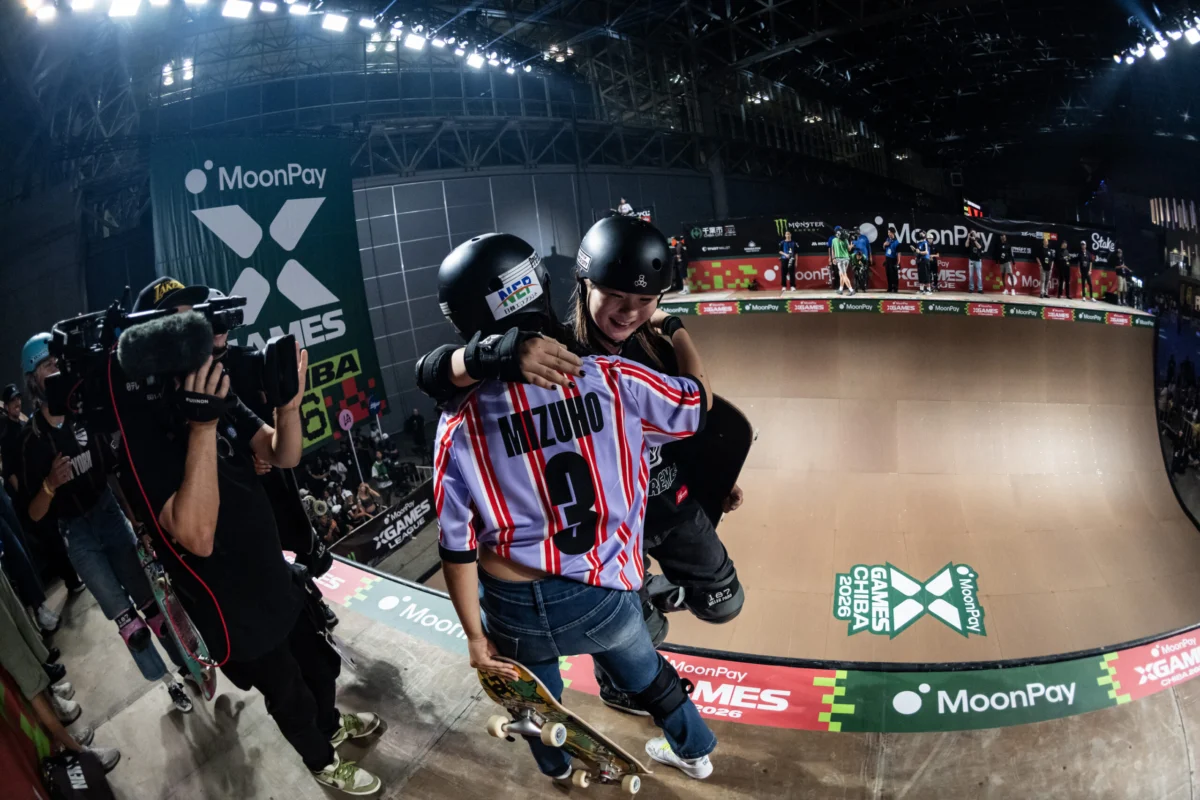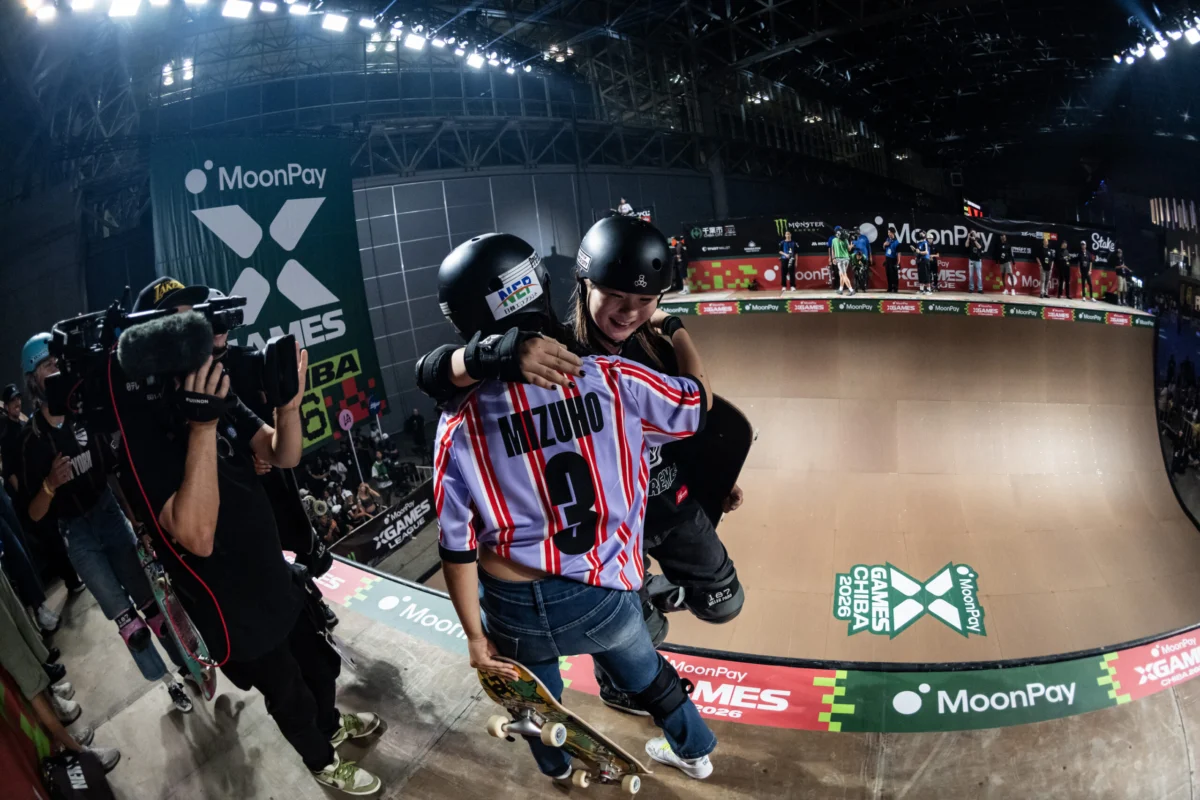
NEW ORLEANS (July 25, 2026) – The inaugural MoonPay X Games New Orleans 2026 Championship has reached a fever pitch. With only one day of competition remaining, the landscape of the MoonPay X Games League (XGL) has been fundamentally altered. In a display of tactical brilliance and individual mastery, XC New York’s top draft pick, Chloe Covell, seized gold in the final event of Saturday’s program, catapulting her club into the driver’s seat of the overall championship standings.
As the sun sets on the Crescent City, the stakes for Sunday’s finale could not be higher. XC New York currently leads the pack with 2,280 points, narrowly edging out XC Tokyo, who sits in second with 2,260. With XC São Paulo (2,120) and XC Los Angeles (2,050) still within striking distance, the quest for the inaugural XGL title remains a wide-open, four-way sprint.
The MVP Race: A High-Stakes Tactical Battle
While the team standings dominate the headlines, the individual MVP race has become a psychological and physical chess match. Mizuho Hasegawa (XC Tokyo) currently holds the lead with 600 points, followed closely by Gui Khury (XC São Paulo) with 550.
The math for Sunday is unforgiving. Should Khury secure gold in the Men’s Skateboard Vert, he will finish with a maximum of 650 points, placing the burden of proof squarely on Hasegawa. To claim the MVP honors, Hasegawa must secure at least a bronze medal in the Women’s Skateboard Park. If Khury falters and claims only silver, the threshold for Hasegawa drops significantly; she would then only need a fourth-place finish or better to secure the league’s most prestigious individual award.
Chronology of an Electric Saturday
Saturday’s itinerary was a grueling gauntlet, featuring eight high-intensity events spanning Skateboarding, BMX, and Moto X. The day served as a showcase for both the established icons of action sports and the rising generation of phenoms who are redefining the limits of physics.
Morning Session: Rising Stars and Technical Feats
The day opened with the MoonPay Women’s Skateboard Vert Best Trick, a competition characterized by its youth. With an average age of just 16, the field was a testament to the sport’s rapid evolution. Eleven-year-old Mia Kretzer (XC Los Angeles) emerged as the star of the morning. Already the most decorated tween in X Games history, Kretzer added to her legacy with a never-before-seen fakie body varial 720. This victory marked her fourth X Games gold and cemented her status as the "steal" of the 2026 draft, as she currently accounts for 26% of XC Los Angeles’ total points.
Following the youth-led morning, the Stake Dave Mirra BMX Park Best Trick saw the legendary Ryan Williams (XC São Paulo) secure his 14th X Games gold. In a poignant tribute to his late friend Oliver Tree, Williams executed "The Oliver Twist"—an alley-oop frontflip 540 flair. Williams’ ability to maintain his composure under the pressure of the MVP race demonstrates the unique maturity required in the XGL team-based format.
Afternoon Dominance: Khury and Onodera Assert Authority
The afternoon session turned the focus to vertical and street dominance. Gui Khury continued his unparalleled streak in the MoonPay Men’s Skateboard Vert Best Trick, securing his eighth consecutive gold medal in the event. His mastery of the kickflip body varial 900 remains the benchmark for the discipline. With 13 career golds, Khury is now on the precipice of history, needing only one more consecutive win to match the all-time records held by legends Jamie Bestwick and Tucker Hibbert.
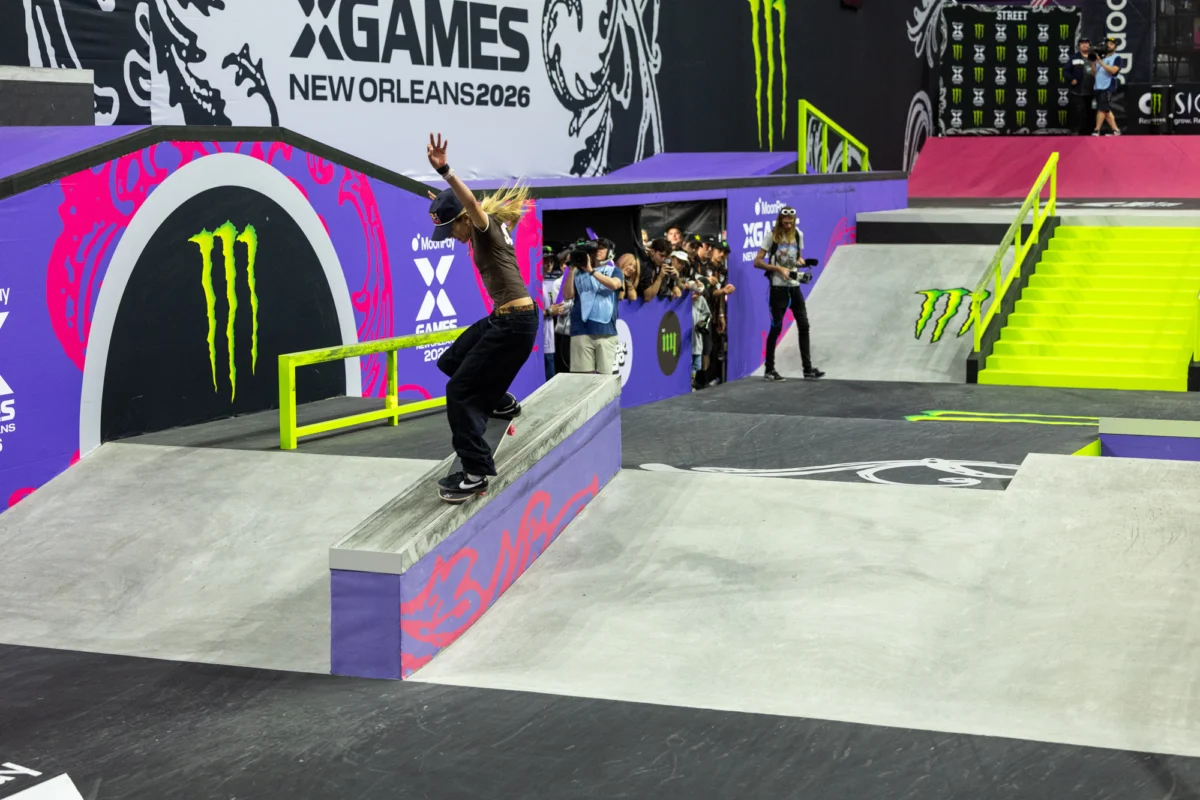
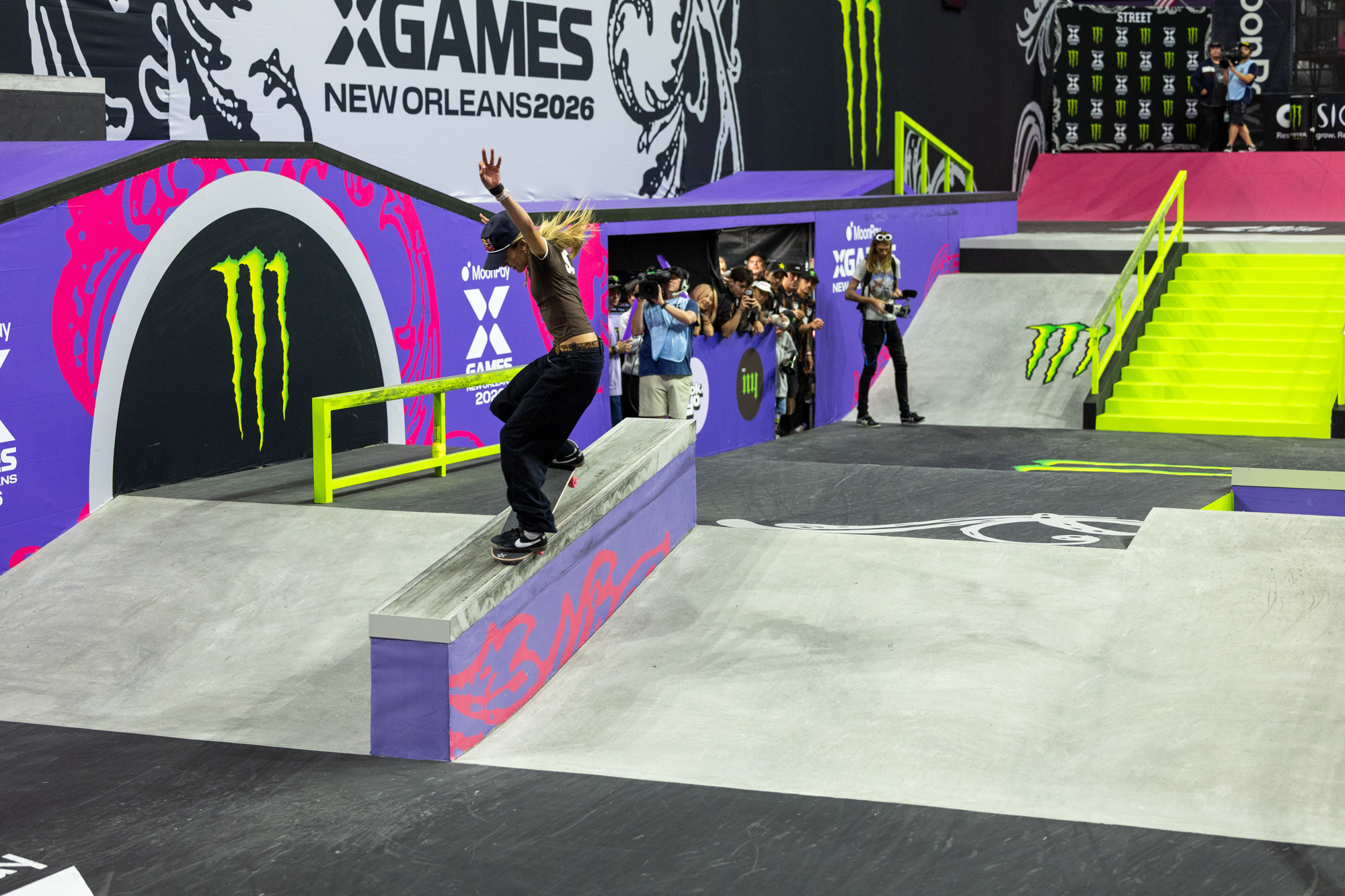
In the Monster Energy Men’s Skateboard Street, 16-year-old Ginwoo Onodera (XC New York) completed a historic hat trick, securing his third consecutive gold in the discipline. Onodera’s performance was not merely for individual glory; his contribution was vital to XC New York’s climb to the top of the standings. His closing trick—a kickflip front blunt fakie down a non-round rail—was the definitive moment of the afternoon, showcasing a technical difficulty that left his peers in awe.
Supporting Data: The Statistical Weight of Success
The XGL’s inaugural season has introduced a level of data-driven competition previously unseen in action sports. The standings are not merely a reflection of medals, but a complex point-aggregation system that rewards consistency across multiple disciplines.
- XC New York: 2,280 Points
- XC Tokyo: 2,260 Points
- XC São Paulo: 2,120 Points
- XC Los Angeles: 2,050 Points
The gap of just 20 points between New York and Tokyo highlights how every podium placement, and even every fourth-place finish, is critical. The integration of "Free Agents" into the scoring ecosystem adds another layer of complexity, as seen in the success of riders like Justin Dowell and Egoitz Bijueska, whose individual performances directly impact the momentum of the sponsored clubs.
Official Responses and Athlete Insights
The atmosphere in the Superdome was one of shared intensity and mutual respect. Following her gold-medal win, Chloe Covell was quick to credit the team-first culture of the XGL. "It’s so crazy I don’t even think about individual records like tying Leticia Bufoni," Covell said. "I’m just happy to do it for my team. We were so close to that number one spot, and Momiji [Nishiya] and I pushed each other. It’s a big team effort."
Gui Khury, ever the pragmatist, acknowledged the pressure of the MVP race while expressing gratitude for the New Orleans crowd. "The crowd here is the best," Khury remarked. "They are the nicest people, and I have to thank them from the bottom of my heart. But the job isn’t done yet—I’m looking ahead to the final two comps."
For Brady Baker, who became the first four-time gold medalist in Men’s BMX Dirt, the motivation is increasingly personal. "I have a baby girl on the way," Baker noted. "If I’m going to keep doing this, I want to do it at the highest level. That’s my motivation now."
Implications for the Future of Action Sports
The success of the MoonPay X Games League in New Orleans signals a fundamental shift in the action sports industry. By moving away from the traditional, isolated competition model toward a year-round, team-based structure, the XGL has effectively increased the stakes for both athletes and fans.
1. Increased Professionalism and Compensation
The league model provides a framework for career longevity. Athletes are no longer dependent solely on prize purses; they are part of a broader ecosystem that offers stability and team-based benefits. This professionalization is attracting higher levels of corporate sponsorship and media engagement.
2. Global Fan Engagement
The team-based structure allows fans to identify with a "club" rather than just an individual. This creates local and regional loyalties that mimic the traditional sports fan experience, potentially expanding the X Games demographic far beyond the niche action sports enthusiast.
3. The "Team" Dynamic
As seen in the post-event interviews, the team dynamic has added a layer of collaborative strategy. Coaches and General Managers—like Steve Rodriguez of XC New York—are now integral to the competition, managing athlete rotations and morale in real-time. This adds a "managerial" element to the sport that was previously non-existent.
Looking Toward the Finale
As the MoonPay X Games New Orleans 2026 Championship enters its final day, the pressure is palpable. The narrative of the inaugural season is nearing its climax, with the crowning of the first-ever XGL champion set to take place tomorrow. Whether XC New York can hold off the surging Tokyo squad or if an individual heroics from Gui Khury can spark a São Paulo comeback remains to be seen.
One thing is certain: the world of action sports has been permanently transformed. The combination of historic performances, record-breaking tricks, and the high-stakes drama of team competition has elevated the New Orleans event to a landmark moment in the history of the X Games. The final day of competition will not just determine a champion; it will establish the standard for the future of the league and the trajectory of the sport for years to come.