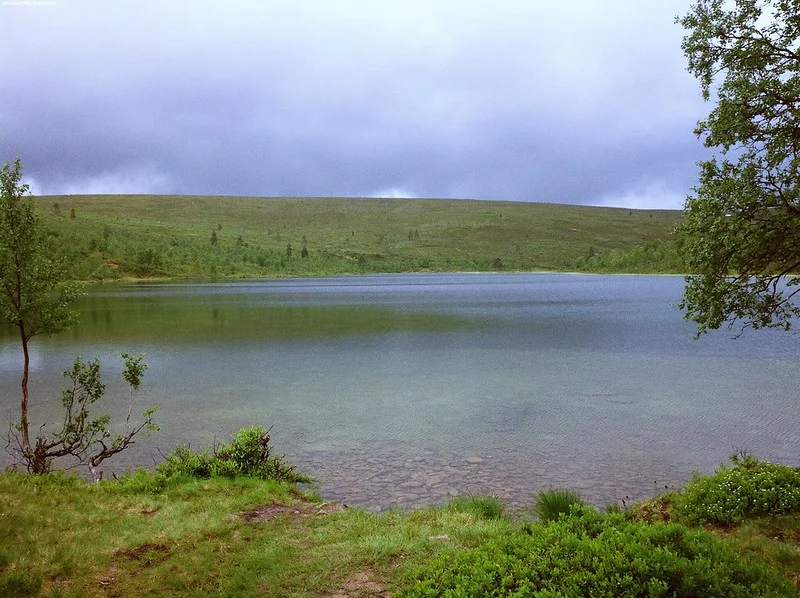
While the rugged forests and peatlands of Kainuu, Finland, offer a home to modest, enigmatic orchids like the lesser twayblade (Neottia cordata) and the creeping lady’s-tresses (Goodyera repens), they are far from being a global hotspot for the Orchidaceae family. For the true enthusiast, the journey must turn southward, toward the sun-drenched, limestone-rich islands of the Baltic Sea. In regions like Sweden’s Öland and Gotland, or Estonia’s Saaremaa and Vormsi, the landscape transforms into a botanical theater where rare, exotic-looking orchids flourish in unique, nutrient-poor conditions.
The Geological Foundation of Orchid Diversity
The secret to the spectacular orchid flora of the Baltic islands lies beneath the surface: limestone. Many of the most sought-after species thrive on alvar—a rare, drought-prone biotope characterized by thin, nutrient-poor soil overlying a solid limestone bedrock. This landscape, which appears desolate at first glance, provides the precise alkaline chemistry that many rare orchids require to establish their complex symbiotic relationships with mycorrhizal fungi.
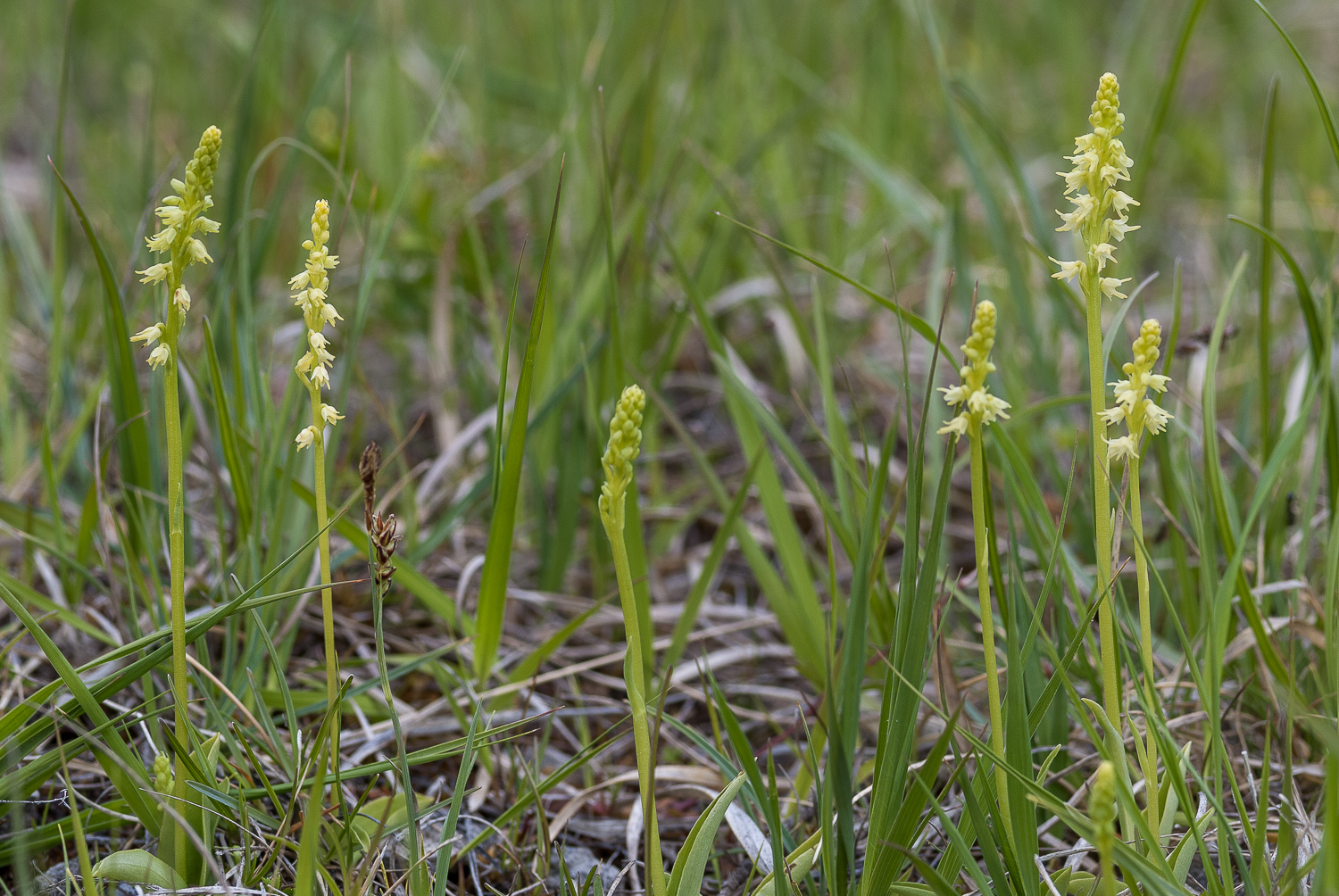
During a decade-long residency on the Estonian island of Vormsi, the authors of this study were able to document species that are either exceedingly rare in Finland or entirely absent from the northern interior. This period of observation revealed that while orchid seeds are prolific, their survival is a game of extreme chance, dependent on wind, luck, and the presence of specific fungal partners in the soil.
Chronology of Species Observations: A Personal Field Account
The Enigmatic Red Helleborine (Cephalanthera rubra)
Perhaps the most striking resident of the Vormsi forests was the red helleborine. Often cited by botanical authorities like LuontoPortti as one of the most elusive and capricious orchids, the species is notorious for its irregular flowering cycles. In Finland, it has been recorded in only about twenty locations, most notably near Lake Lohjanjärvi.
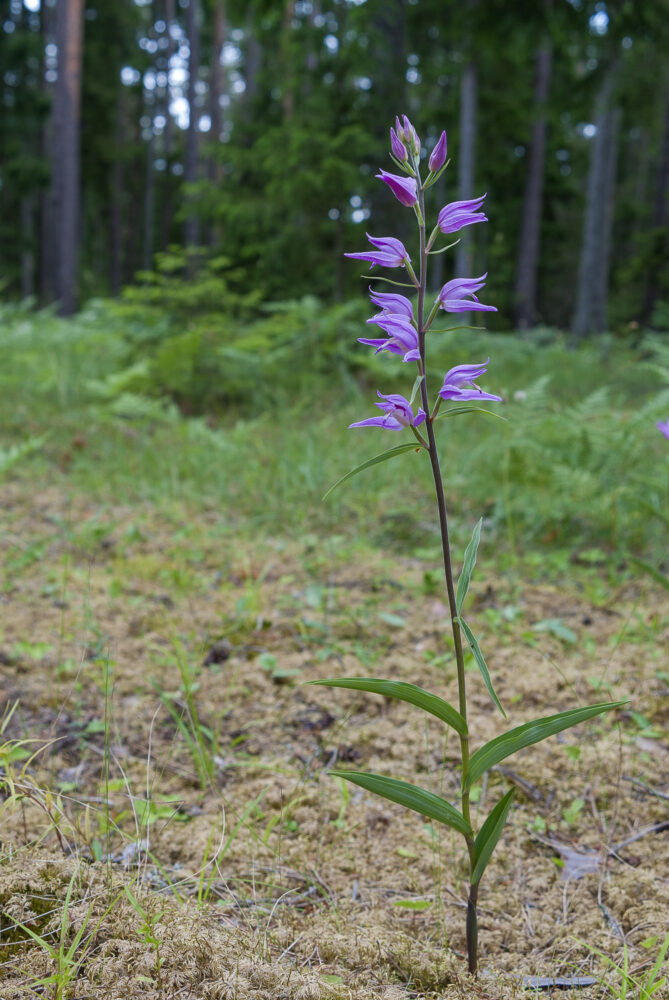
The red helleborine operates on a "now you see me, now you don’t" schedule. A single specimen may bloom once in a decade, only to retreat into the underground root system for years. On Vormsi, however, they were found with surprising frequency along old, mossy forest trails where the canopy allowed for filtered sunlight. Interestingly, the plant eschews the traditional rewards of the floral world: it produces no nectar, no scent, and no easily accessible pollen. It relies entirely on its vivid, violet-red beauty to entice pollinators, proving that in the plant kingdom, visual deception is a powerful evolutionary tool.
The Sword-Leaved Helleborine (Cephalanthera longifolia)
While the red helleborine proved relatively common on Vormsi, the sword-leaved helleborine was a rare gem. During our residence, we identified only a single specimen in a grassy patch of forest. In Finland, this species is restricted to the Åland Islands, where it faces a precarious future. Its decline is attributed to forest management practices and, ironically, its own beauty; collectors frequently attempt to transplant these delicate flowers into private gardens, where they almost invariably die.
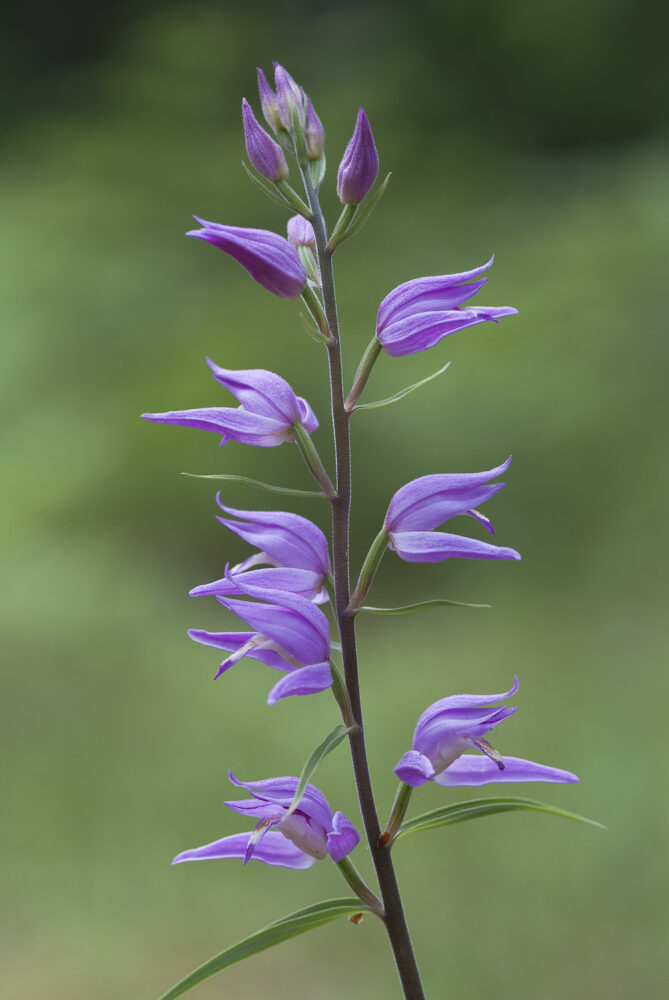
Beyond human interference, a more natural threat has emerged in the form of the roe deer. As noted by expert Hannu Kämäräinen, whose work Pohjolan kasvien pauloissa remains a cornerstone for Nordic botany, the surging roe deer population in the Baltic region has a taste for the tender tips of helleborines, effectively "harvesting" the flowers before they can reproduce.
The Dark Red Helleborine (Epipactis atrorubens)
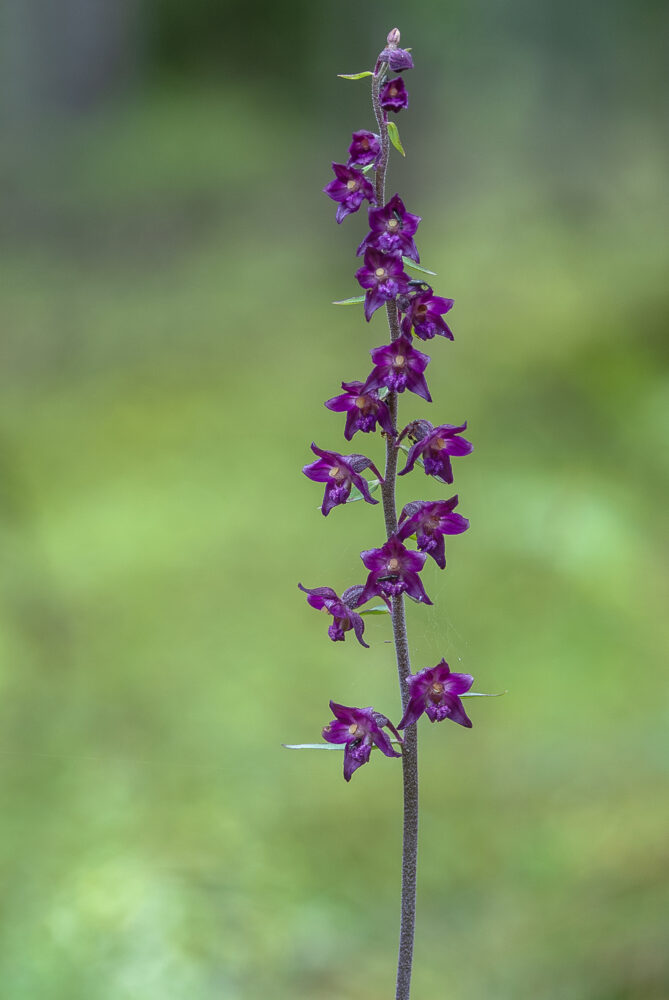
The dark red helleborine prefers the edges of sandy paths, often thriving in seemingly inhospitable, bare gravel. Unlike the deceptive red helleborine, this species offers both scent and nectar. We frequently observed the stalks of these plants bitten clean off—clear evidence that roe deer find the nectar-rich stems as appealing as the pollinators do. In Finland, this species is a rarity of the northeast and the Savo region, usually found in proximity to natural limestone deposits or, in some cases, the dust and runoff from industrial lime processing sites.
The Queen of the North: The Lady’s Slipper (Cypripedium calceorum)
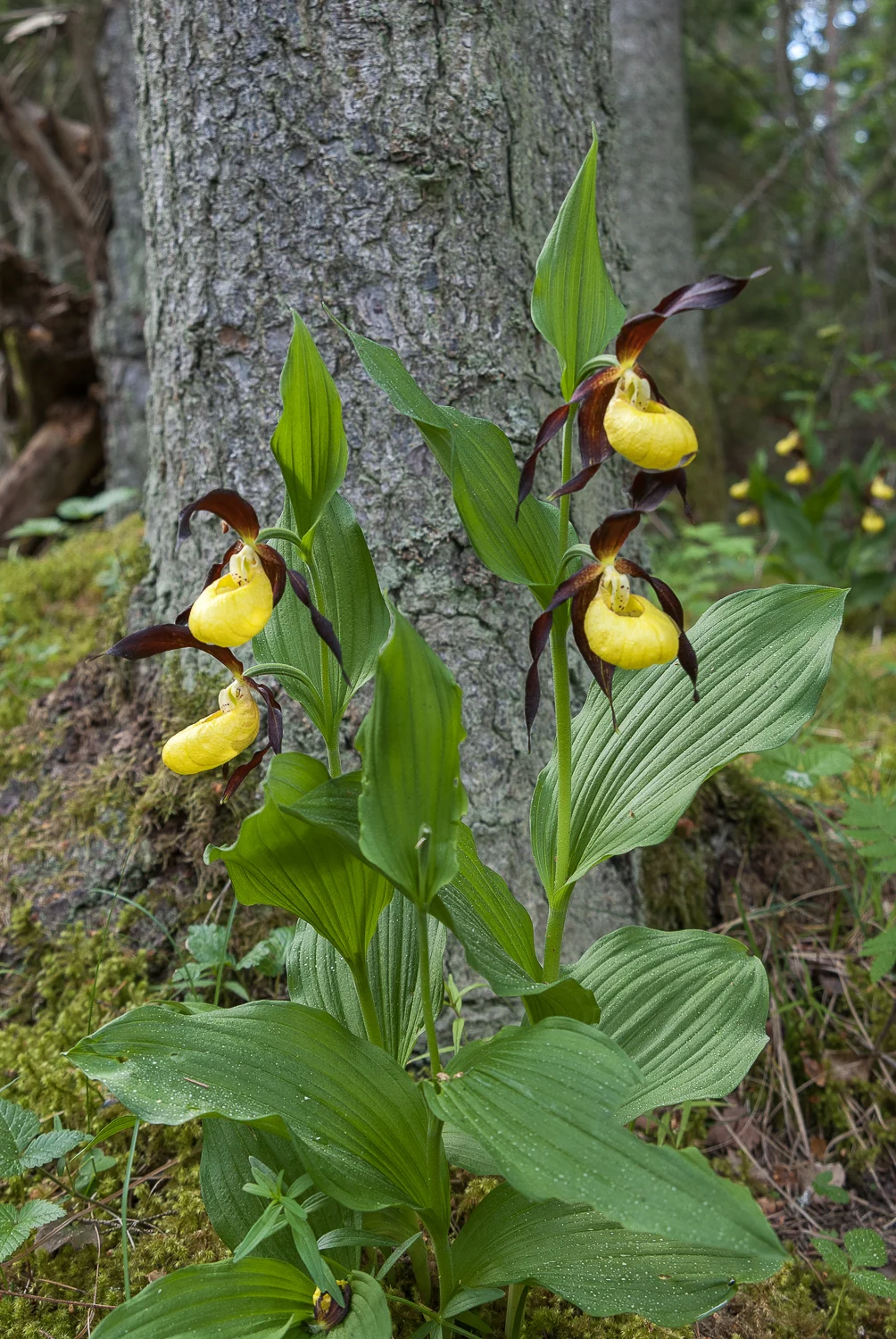
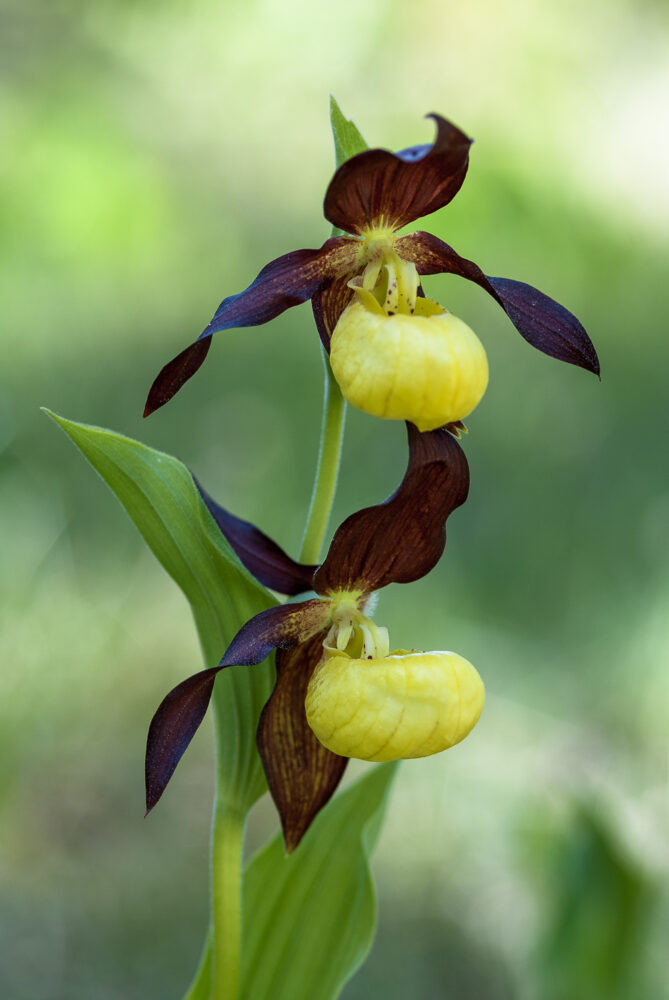
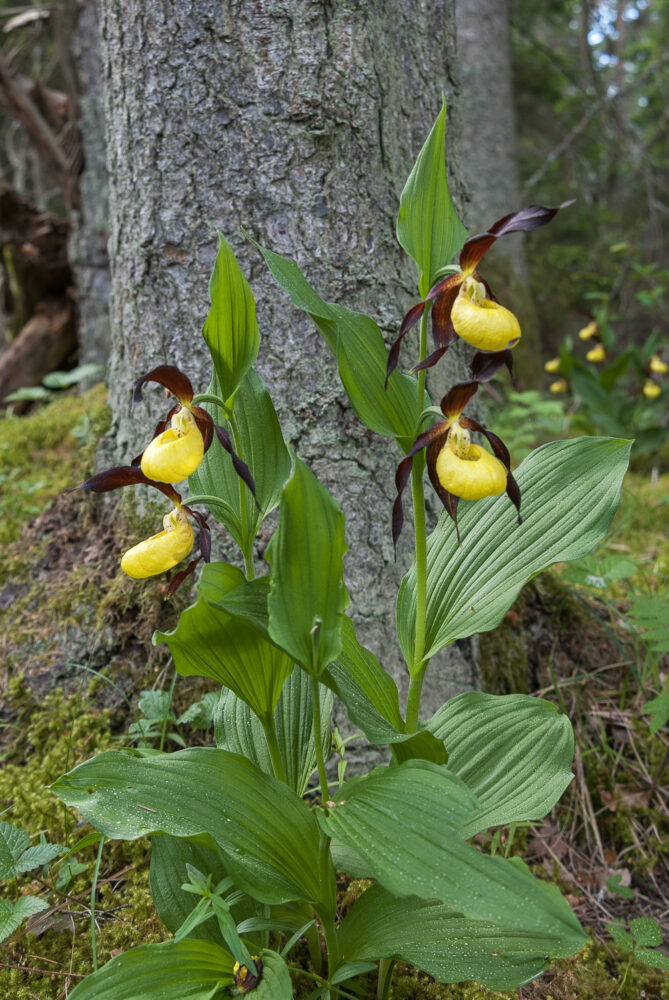
The lady’s slipper, or kaunis kuldking in Estonian, is arguably the most magnificent orchid of the northern latitudes. Its golden, slipper-shaped labellum is an architectural masterpiece designed to trap insects.
The mechanism is ingenious: small insects, lured by the scent, crawl into the pouch, only to find the walls too slippery to climb back out. The only exit is a narrow passage that forces the insect to brush against the pollen sacs. While larger insects like bumblebees might escape, smaller insects are often temporarily imprisoned, ensuring they perform the necessary pollination duties. Research suggests the scent of the lady’s slipper mimics the pheromones of specific mining bees, turning the flower into a potent biological trap.
Supporting Data: The Dynamics of Orchid Colonization
The distribution of these species is governed by the "wind-borne lottery." Orchids produce millions of microscopic seeds that can travel vast distances on air currents. However, these seeds lack endosperm (nutritional reserves), meaning they cannot germinate without the help of specific soil fungi.
This requirement for a "fungal handshake" explains why even when a seed lands in a seemingly perfect location, it may fail to germinate. For species like the broad-leaved helleborine (Epipactis helleborine) and the rare ghost orchid, the environmental threshold for success is razor-thin.
The Case of the Narrow-Leaved Helleborine (Cephalanthera longifolia) and the Meadow Orchid (Orchis morio)
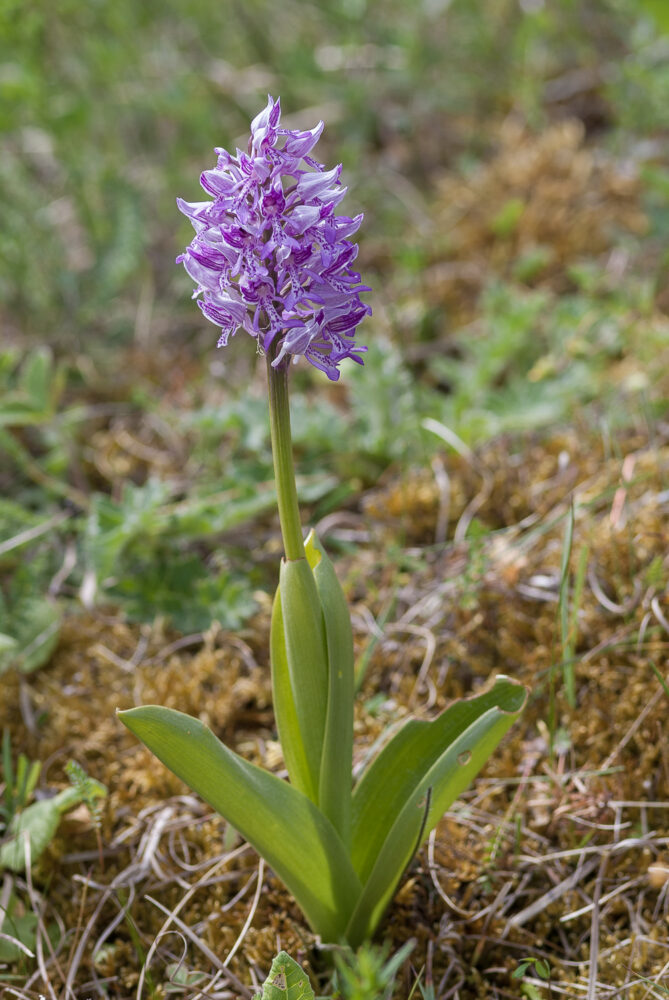
The meadow orchid, which we encountered on the alvars of Vormsi, serves as a poignant example of habitat loss. Once found in Finland in the Tuulos region of Hämeenlinna, it vanished in the 1930s due to the conversion of meadows into arable farmland. While it clung on in the Åland Islands for decades, the gradual abandonment of traditional grazing practices led to the overgrowth of these open meadows. When the last known site was destroyed by a road-widening project in 1975, the species was effectively wiped from the Finnish map.
Implications for Conservation
The survival of these species is intrinsically linked to traditional land management. The "alvar" biotopes of the Baltic are not purely natural; they are the result of centuries of light grazing and human land use. When grazing ceases, the meadows become choked with scrub and high-growing grasses, shading out the sun-loving orchids.
Conservationists argue that protecting these species requires more than just "hands-off" nature reserves. It necessitates the active restoration of traditional landscapes. The disappearance of these plants from Finnish soil is not merely a botanical tragedy; it is a signal of the fragmentation of the ecological corridors that once connected the Baltic islands to the mainland.
Summary of Findings
The study of orchids on islands like Vormsi provides a sobering lesson in ecological fragility. We see a clear pattern:
- Habitat Specialization: Most rare orchids are "calcareous specialists," tethered to limestone substrates.
- Pollinator Dependency: The loss of specific insect populations directly impacts the reproductive success of orchids like the lady’s slipper.
- Land Use Pressure: Both intensive agriculture and the abandonment of traditional grazing threaten these species.
- Genetic Resilience: While orchids possess a unique method of long-distance dispersal via wind, the probability of a seed finding both the right soil conditions and the right fungal partner remains statistically minuscule.
As we look toward the future, the conservation of these "small and fascinating" residents of the forest floor requires a landscape-level approach. We must recognize that these orchids are not just individual plants, but markers of healthy, functioning ecosystems that balance geological history with human tradition. Whether it is the red helleborine emerging from the shadows of an old trail or the lady’s slipper luring a bee into its golden trap, these plants remind us that biodiversity is a fragile, complex, and deeply interconnected web—one that demands our continued vigilance and protection.