By Samuli Haapasalo | Vuosi luonnossa | September 29, 2026
Main Facts: A Seasonal Encounter in the Sipoo Wilds
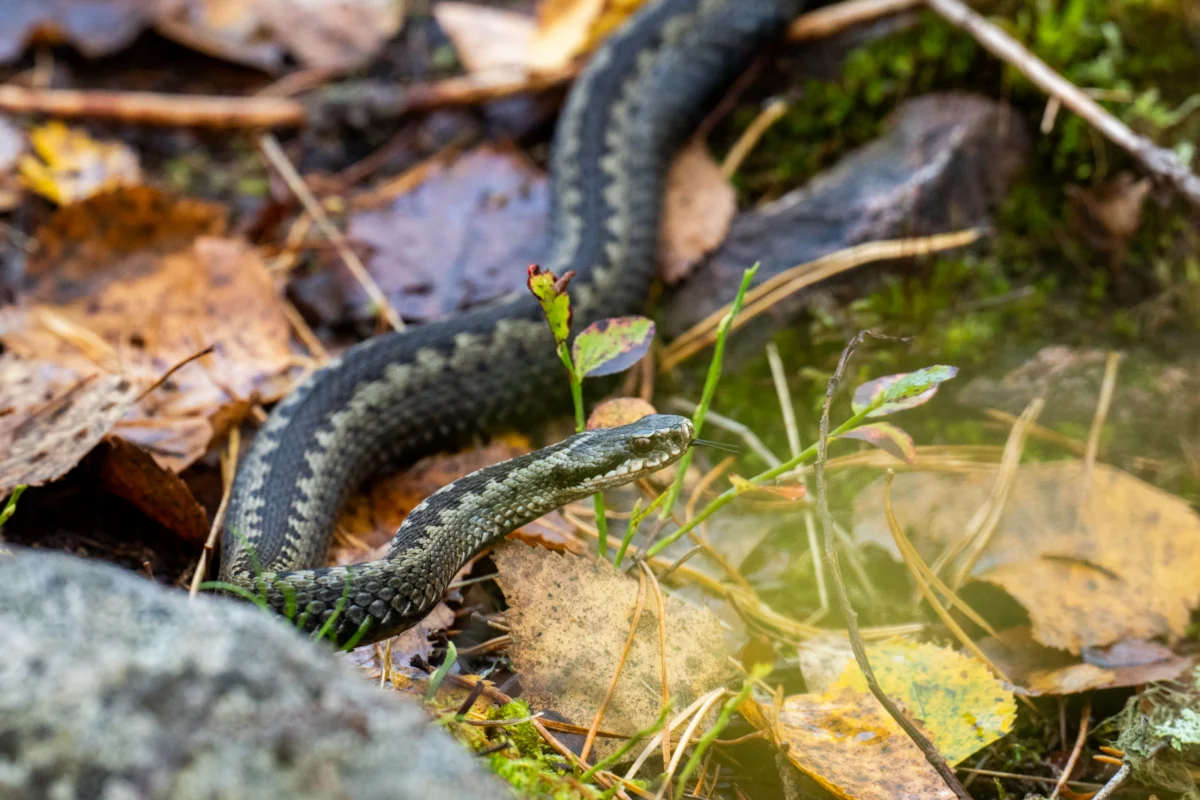
On September 22, 2026—the eve of the autumn equinox—a routine hike along a forest trail in Sipoo, Finland, turned into an intimate encounter with one of the region’s most misunderstood inhabitants: the European adder (Vipera berus). The sighting serves as a poignant reminder of the cyclical nature of the Nordic wilderness. As temperatures begin to dip and the daylight hours wane, Finland’s only venomous snake is entering a critical phase of its biological cycle: the preparation for winter hibernation.
The adder encountered was a robust, well-fed male, exhibiting the characteristic caution of a cold-blooded creature preparing for a months-long period of metabolic stasis. This encounter, occurring just days before the official start of the autumn, highlights the precarious timing that defines survival in the Finnish climate.
Chronology of the Encounter
The observation took place in the early afternoon, under the filtered light of a classic September day. As I navigated a narrow forest path, the snake was positioned prominently, resting against a stone—a behavior typical of an animal attempting to maximize its final solar energy intake before the prolonged darkness of the Finnish winter.
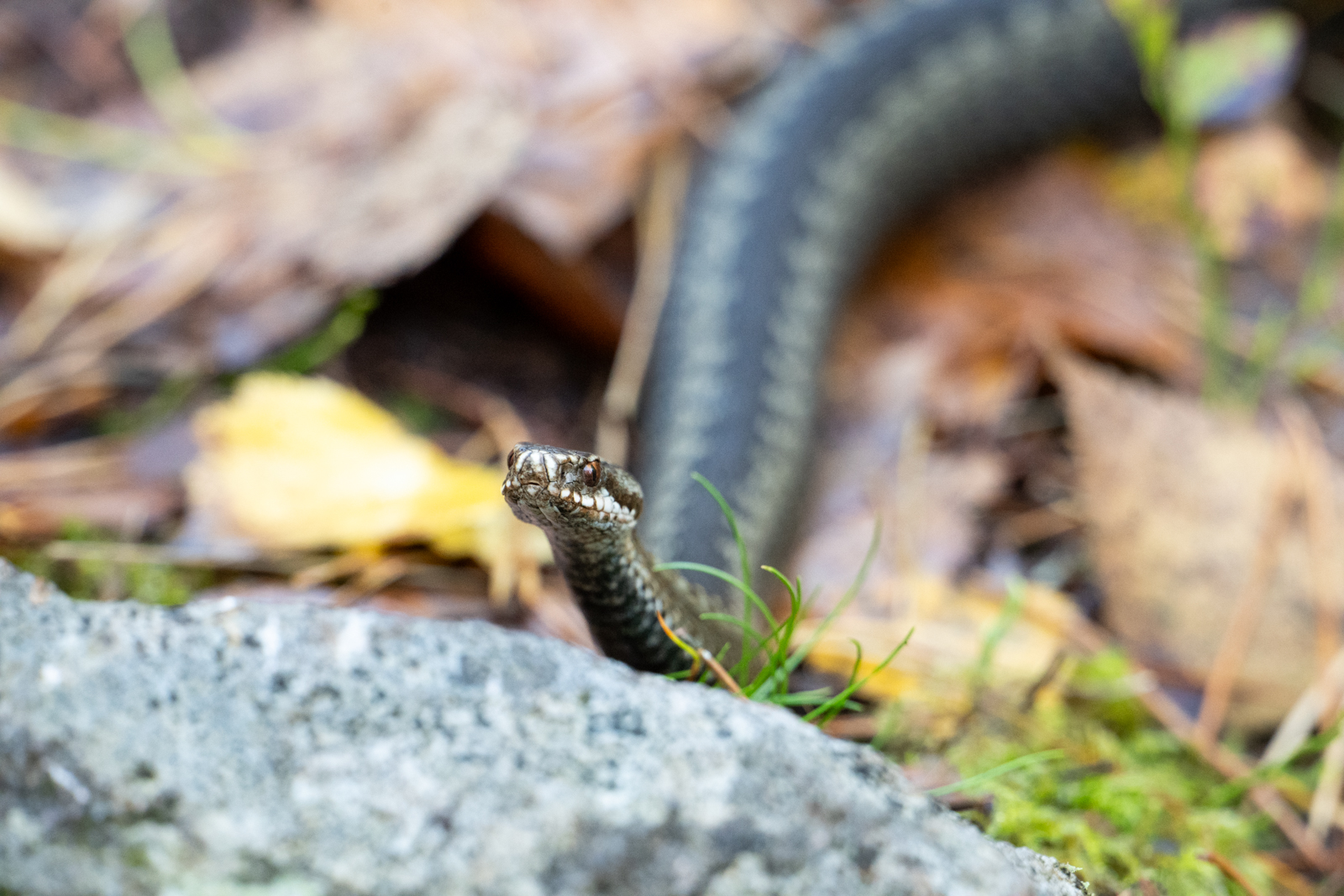
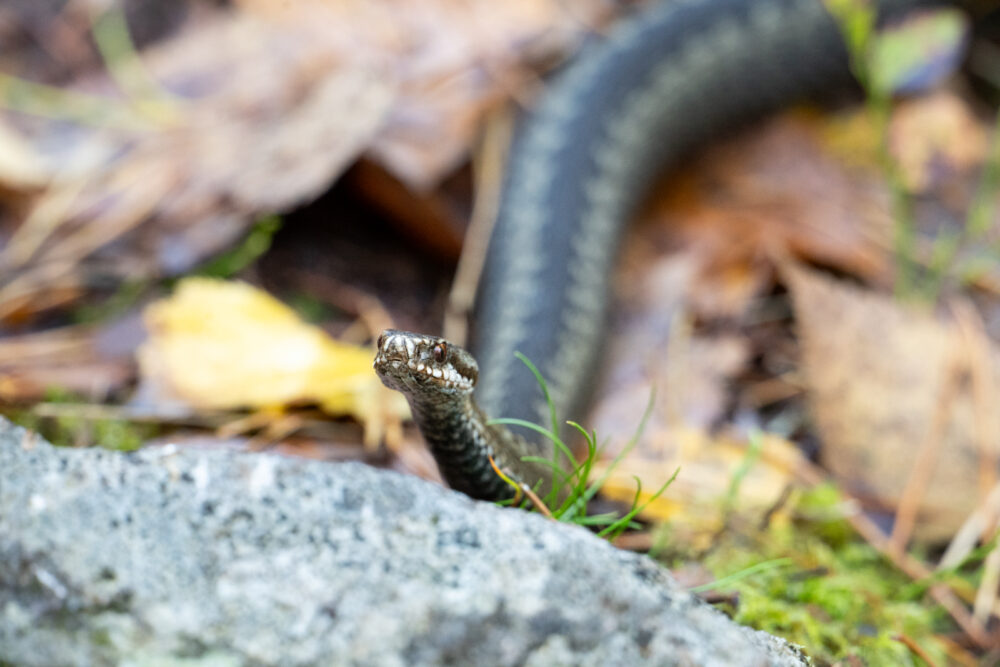
- The Initial Sighting: Upon noticing the intruder, the viper did not retreat immediately. Instead, it displayed an impressive level of situational awareness, raising its head to assess the surroundings.
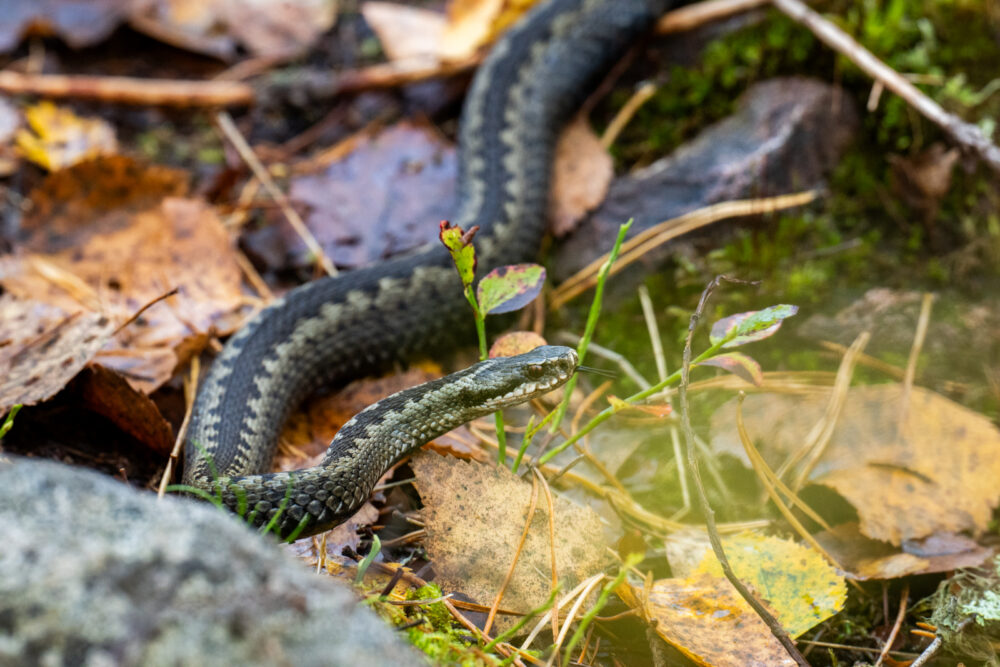
- Sensory Investigation: For several moments, the snake flicked its bifurcated tongue, sampling the air to gauge my presence and intent. The interaction was one of mutual respect; I retreated several paces to bring the animal into the focal range of my long-lens camera, allowing for documentation without causing undue stress to the reptile.
- The Slow Withdrawal: Once the adder determined that it had sufficiently assessed the threat, it moved toward the dense undergrowth. Its movements were distinctively sluggish—a hallmark of a ectothermic creature whose body temperature is dictated by the cooling environment. It appeared to be transitioning from a sun-drenched rock slope toward a more permanent, sheltered location.
Supporting Data: The Science of Hibernation
The timing of this encounter prompted a deeper investigation into the biology of Finnish reptiles and amphibians. To understand the transition, one must look to the long-standing research curated by experts Niina and Joonas Gustafsson. Their project, Sammakkolampi.fi, has served as a cornerstone for Finnish herpetological education since 1999.
Understanding the Viper’s Winter Strategy
In Southern Finland, the window for activity is closing rapidly. By the end of September, most Vipera berus populations are actively seeking out "hibernacula"—winter dens that provide protection against freezing.
- Thermal Regulation: The primary challenge for an adder is not merely the cold, but the threat of freezing. Because they are ectothermic, they cannot generate their own body heat. They must find locations that stay below the frost line.
- The Anatomy of a Den: Favorite hibernation sites include deep rock crevices, abandoned mammal burrows, or the spaces between large, rounded stones found in ancient moraine formations. These spots can sometimes extend several meters deep into the earth, providing a stable, insulated environment.
- Communal Hibernation: These dens are often communal. It is not uncommon for a single, ideal location to host dozens—or even hundreds—of individuals. In these "snake pits," adders may share space with other species, such as the grass snake (Natrix natrix), creating a micro-ecosystem of dormant reptiles waiting for the return of the spring sun.
Official Perspectives and Biodiversity Implications
While the general public often views the adder with trepidation, environmental experts emphasize that the presence of these snakes is a primary indicator of a healthy, diverse ecosystem.
The Role of Reptiles in the Finnish Food Web
According to biodiversity studies, the adder plays a crucial role in controlling rodent populations, which in turn protects forest health and agricultural interests. Their presence is a sign that the habitat in places like Sipoo remains intact and capable of supporting complex predator-prey relationships.
The decline of suitable habitats—specifically, the loss of undisturbed, rocky slopes and diverse forest undergrowth—poses a silent threat to these populations. Conservationists argue that protecting the "mundane" parts of the forest, such as rocky outcrops and natural debris, is just as important as protecting expansive old-growth timber.
Resources for Continued Learning
For those interested in the broader scope of Finnish herpetology, the work of the Gustafssons remains the gold standard. Their platform covers the full spectrum of the nation’s cold-blooded residents, including:
- Amphibians: From the common frog to the elusive toads that also seek refuge in the coming weeks.
- Reptiles: Including the common lizard (Zootoca vivipara) and the slow-worm (Anguis fragilis).
- Salamanders: The unique, aquatic-reliant species that form the base of many forest ponds.
Understanding these species is not just an academic exercise; it is an act of ecological stewardship. By recognizing when and where these animals hibernate, we can avoid disturbing critical sites that are essential for their survival.
Implications: A Long, Challenging Winter
As I watched the adder disappear into the varvikko (lingonberry/heather shrubbery), I was struck by the severity of the challenge the creature faces. It must endure more than six months of near-total inactivity. During this time, every calorie burned is a liability. If the snake emerges too early in the spring, it risks death by frost; if it stays hidden too long, it risks missing the critical mating season.
The "well-fed" appearance of the male I encountered offers a glimmer of optimism. It suggests that the past summer was productive, allowing the snake to build the fat reserves necessary to survive the metabolic "slow-motion" state of winter.
Conclusion: Lessons from the Trail
The encounter in Sipoo serves as a reminder that the natural world is constantly in flux. We are merely visitors in the habitats of creatures that have navigated the harsh Nordic climate for millennia. As the temperature drops and the frost begins to claim the morning meadows, the adders of Finland are already beneath our feet, tucked into the ancient granite of the earth.
They do not view the winter as a tragedy, but as a biological necessity. As we move into the darker months, perhaps we, too, can learn from their patience—a quiet, deliberate retreat, ensuring we have the vitality to emerge when the light inevitably returns.
For more information on the species discussed in this article, or to support ongoing research into Finland’s biodiversity, visit the Sammakkolampi project. To stay updated with the latest in nature conservation and environmental journalism, consider subscribing to Suomen Luonto, where we continue to document the hidden lives of our wild neighbors.