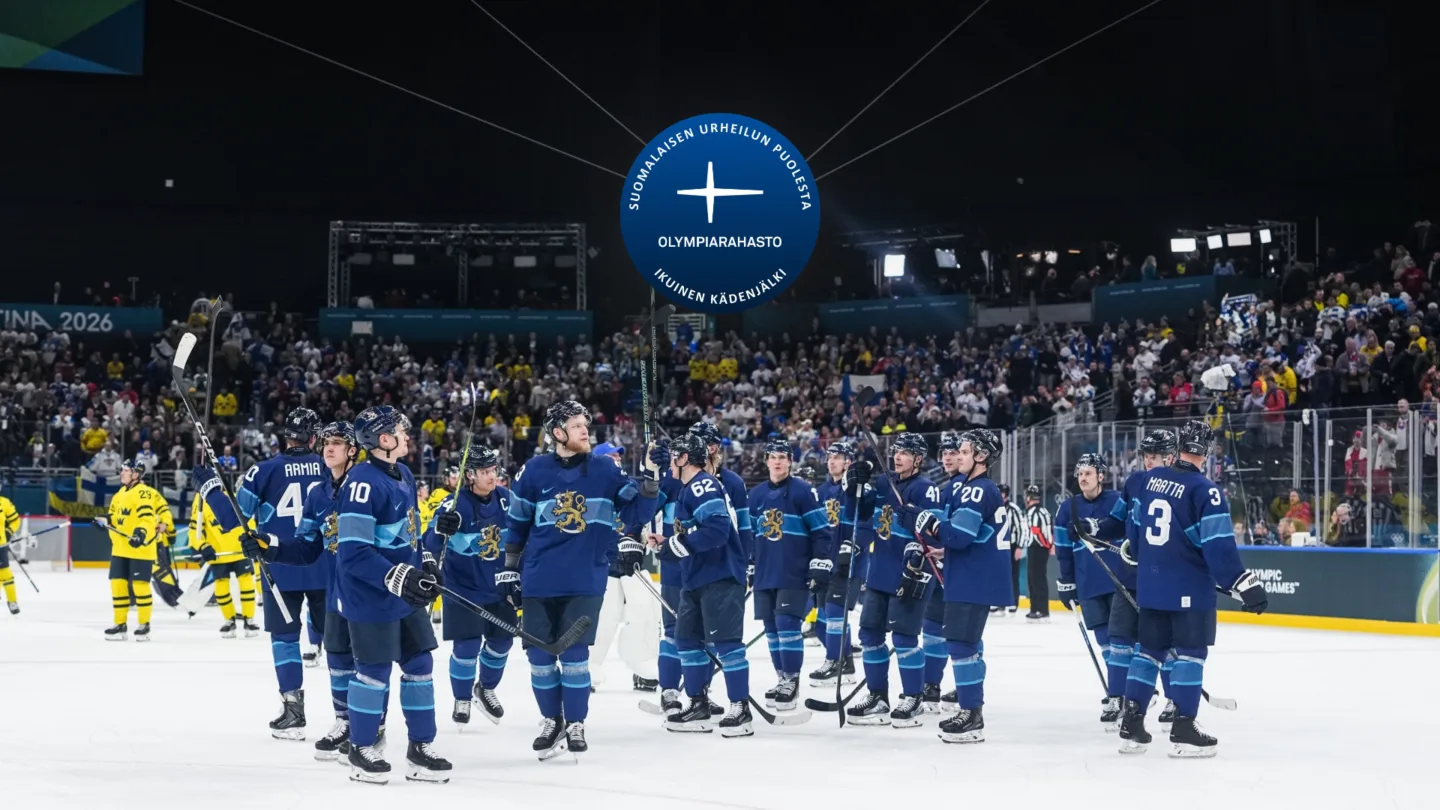
In a significant display of commitment to the future of Finnish athletics, a group of elite professional ice hockey players has collectively donated €121,000 to the Olympiarahasto (Olympic Fund). This substantial contribution is not merely a one-time gift; it represents a strategic investment in the long-term sustainability of Finnish sports. The funds, provided by members of the Milano-Cortina Olympic team alongside star players Aleksander Barkov, Mikael Granlund, and Olli Määttä, are specifically earmarked to foster the development of the next generation of ice hockey talent.
By funneling these resources into the Olympiarahasto, these athletes are participating in a unique financial model designed to move beyond traditional, ephemeral funding methods. Instead, this capital will remain in the fund’s permanent endowment, with only the annual investment returns utilized to provide ongoing support for aspiring young hockey players as they navigate their paths toward national and international excellence.
The Core Facts: A Strategic Financial Injection
The donation of €121,000 serves as a cornerstone for future athletic development. To understand the significance of this contribution, one must look at the structural mechanics of the Olympiarahasto. Unlike typical grant programs that deplete their capital to meet immediate needs, the Olympiarahasto operates as an endowment fund managed by the Finnish Sports Support Foundation (Suomen Urheilun tukisäätiö).
The principal sum donated by Barkov, Granlund, Määttä, and their teammates remains untouched. The financial yield generated from this capital is then disbursed to support developmental programs. By targeting this specific donation toward ice hockey, the contributors have ensured that their professional legacy will continue to bear fruit for decades to come, creating a self-sustaining cycle of support for the next generation of skaters, coaches, and support staff.
Chronology: From the Ice to the Endowment
The journey toward this announcement began with the shared recognition among elite Finnish players that the support structures they once relied upon require modernization and long-term financial stability.
- Foundation Phase: The Olympiarahasto was established to create a buffer against the volatility of annual budget cycles. Its mission is to build a foundation that is insulated from economic downturns.
- The Milano-Cortina Campaign: Following the 2026 Milano-Cortina Olympic Games, discussions among the national team members intensified regarding how to give back to the sport that defined their professional lives.
- Engagement of Key Figures: Aleksander Barkov, a stalwart of the NHL and a key figure in Finland’s international successes, joined forces with Mikael Granlund and Olli Määttä to formalize the donation.
- Official Announcement (October 2026): The collaborative effort was finalized and publicly declared, marking one of the most significant athlete-led contributions to the foundation to date.
- Future Milestones: The donation is set to be complemented by state matching funds in 2027, effectively doubling the impact of the initial €121,000 contribution.
Supporting Data: Building a Sustainable Ecosystem
The financial health of the Olympiarahasto is a testament to the growing trend of private-public partnerships in Nordic sports. Currently, the fund has reached a valuation of approximately €5 million. While this is a respectable figure, the long-term goal is to grow the endowment to a level where it can act as a permanent, independent source of income for the Finnish Olympic Committee’s development programs.
Impact of State Matching
One of the most critical aspects of this donation is its timing. The Finnish government has committed to a matching program where private donations made during 2026 are eligible for state-provided matching funds in 2027. This effectively means that the €121,000 contribution acts as a catalyst for a much larger injection of capital, maximizing the efficiency of the players’ generosity.
The Power of Perpetual Funding
The beauty of the endowment model lies in the mathematics of compound interest. By preserving the principal, the fund ensures that the €121,000 donation—amplified by the state match—will continue to provide scholarships, training resources, and equipment to young athletes long after the original donors have retired from professional play. It shifts the paradigm from "funding a project" to "funding a future."
Official Responses: A Unified Vision
The decision by these athletes to invest in the system has been met with widespread praise from stakeholders across the Finnish sports landscape.
The Perspective of the Donors
Aleksander Barkov, captain of the world championship-winning team, spoke with profound gratitude about his roots. "Ice hockey has given me an immense amount," Barkov stated. "Nobody is born a top-tier athlete. The journey to the world stage is long and requires not just years of hard work, but significant support and opportunities. Now, I have the chance to help young people on their own journey. It feels deeply meaningful."
Mikael Granlund and Olli Määttä echoed this sentiment, emphasizing the need for innovation in how sports are funded. "Finnish sports need a new way of thinking," they noted in a joint statement. "The Olympiarahasto’s innovation regarding permanent capital is a unique opportunity to build a funding instrument that crosses generations. This is how we, as athletes who have already succeeded in our careers, can help the next generation."
Institutional Support
Lauri Inna, Chairman of the Finnish Sports Support Foundation, expressed his hope that this move will create a domino effect. "There is something truly valuable for Finnish sports here. Successful athletes are not thinking only about their own careers; they want to use their success for the benefit of the next generations. I hope this sets an example that encourages other athletes and friends of Finnish sports to join in donating to the Olympic Fund."
Implications: The Broader Impact on Finnish Sports
The implications of this donation reach far beyond the rink. It signals a maturation of the relationship between professional athletes and their home federations.
1. Changing the Narrative of Athlete Responsibility
Traditionally, the role of an athlete was seen as purely competitive. However, this move by Barkov and his peers redefines the "professional athlete" as a stakeholder in the entire ecosystem. By taking an active role in financing, they are assuming a role as stewards of the sport, which is likely to inspire younger players to consider the long-term health of their discipline.
2. Economic Resilience
Finland, like many nations, faces challenges in maintaining high-performance sports programs amidst fluctuating economic conditions and competing national priorities. An endowment-based fund provides a "rainy day" safety net. It allows the Olympic Committee to plan programs with a multi-year horizon, knowing that the basic funding is secured, rather than having to restart funding negotiations annually.
3. A Blueprint for Other Disciplines
While ice hockey currently leads the way in this specific initiative, the success of the Olympiarahasto serves as a pilot program for other sports. If this model proves effective in sustaining talent pipelines in hockey, it could be replicated across athletics, swimming, skiing, and other disciplines that rely on consistent, long-term development.
4. Psychological Impact on Youth
For a young athlete in a Finnish junior hockey club, knowing that their progress is supported by the very icons they emulate provides a psychological boost. It reinforces the idea that the community cares about their growth. It fosters a sense of continuity and tradition—a "passing of the torch" that is essential for maintaining the competitive spirit of a nation.
Conclusion: Investing in Possibility
The Olympiarahasto does not promise medals. It does not guarantee that every young player will reach the NHL or the Olympic podium. What it does offer is something arguably more important: opportunity.
By removing financial barriers to training, coaching, and international competition, the fund ensures that talent is not sidelined by economic circumstance. The €121,000 donated by the hockey stars is more than a line item in a ledger; it is a vote of confidence in the future of Finnish sports. As the fund continues to grow through interest, further private donations, and state support, it stands as a monument to the idea that success is a collective endeavor—a journey that requires the support of those who have already reached the summit to pull up those who are still climbing.
In an era of instant gratification, the commitment of these athletes to a long-term endowment is a refreshing and vital reminder that the greatest legacies are built not on the goals scored today, but on the structures that will allow the next generation to score theirs tomorrow.