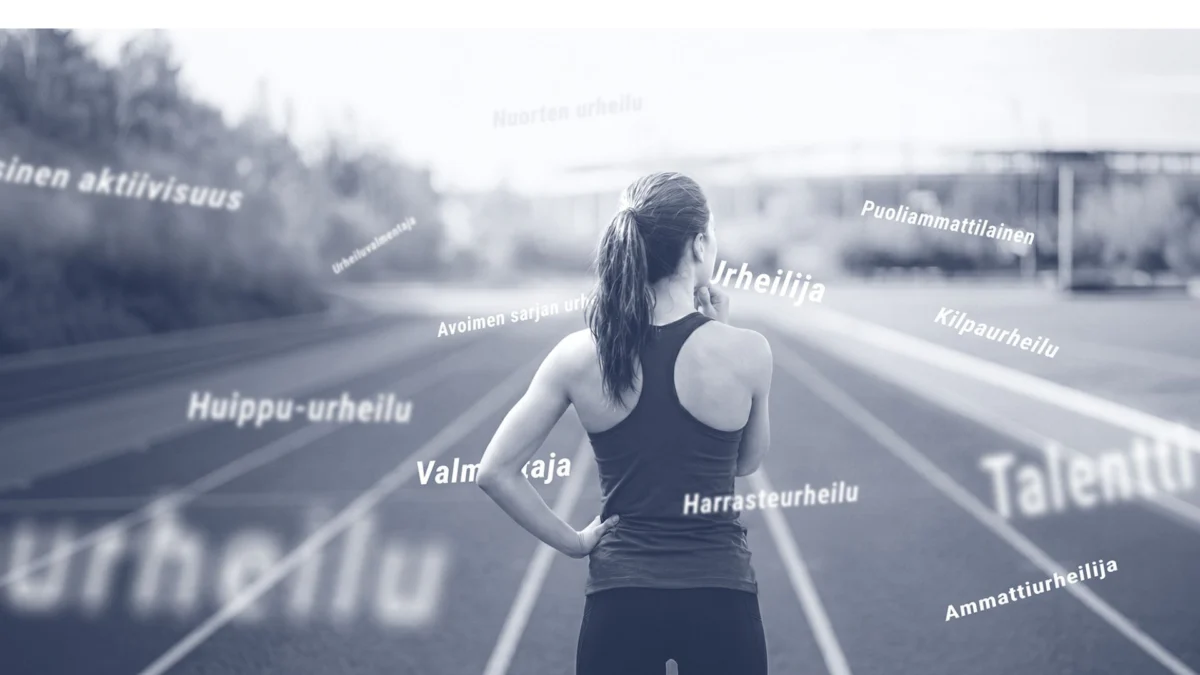
The landscape of competitive and elite sports in Finland has undergone a significant transformation, not just on the field of play, but in the very language used to define it. The Research Institute for Olympic Sports (KIHU), in collaboration with the Finnish Terminology Centre (Sanastokeskus), has officially released the Vocabulary of Competitive and Elite Sports—a comprehensive guide designed to unify the linguistic framework governing one of the nation’s most scrutinized sectors.
This publication marks a milestone in sports administration, offering standardized Finnish terminology alongside Swedish and English equivalents for 23 core concepts. By bridging the gap between colloquial sports parlance and professional administrative language, the project aims to foster a shared understanding among athletes, coaches, policymakers, and media professionals.
Main Facts: Defining the Core of Athletic Performance
The Vocabulary of Competitive and Elite Sports is not an exhaustive encyclopedia of every sport; rather, it is a strategic tool designed to define the structural and human elements that constitute the "elite" tier of athletic endeavor.
The 23 defined concepts fall into two primary categories:
- Activity-based concepts: Terms such as "competitive sports" (kilpaurheilu) and "coaching" (valmentautuminen).
- Personnel-based concepts: Definitions for roles such as "professional athlete" (ammattiurheilija) and "sports coach" (urheiluvalmentaja).
The vocabulary is structured as a series of term records supplemented by concept system diagrams. These diagrams are critical, as they visually map the relationships between complex terms, moving beyond simple dictionary definitions to illustrate how these concepts interact within the broader ecosystem of high-performance sports.
Chronology: From Concept to Publication
The journey toward this standardized lexicon began in August 2025 as part of the "Knowledge Work for Reforming Elite Sports" project, an initiative funded by the Finnish Ministry of Education and Culture. The timeline of this endeavor reflects the complexity of the task:
- August 2025: Formal launch of the project. A multi-disciplinary working group was assembled, led by a professional terminologist from the Finnish Terminology Centre to ensure linguistic rigor.
- Late 2025 – Early 2026: The working group engaged in extensive deliberation, navigating the blurred lines of modern sports terminology. The process involved rigorous debate, identifying where existing terms were ambiguous or insufficient for modern usage.
- March 2026: The draft vocabulary was released for a public consultation period. This phase was vital, allowing practitioners from across the sports community to weigh in on whether the definitions matched the reality of their daily operations.
- May 2026: Following the incorporation of feedback and final refinements, the document was published as part of the KIHU publication series (No. 93).
Supporting Data: Why Definitions Matter
Why invest time in defining words that everyone already "knows"? The impetus for this project stems from the realization that in the high-stakes world of elite sports, ambiguity can lead to significant management and cultural failures.
The Challenge of "Sports"
One of the most heavily debated terms was "sport" itself. As a social, cultural, and economic phenomenon with a deep history, the term is notoriously difficult to pin down. The working group opted for a minimalist, functional definition: Sport must include, at some level, a physical performance and a competitive element. While this may seem simple, it provides a crucial boundary for stakeholders who must decide where funding and administrative support should be directed.
The "Talent" Conundrum
The definition of "talent" proved to be a lightning rod for the working group. Despite its foreign origin, the term was retained because no established Finnish equivalent captured the specific nuances required in a high-performance context.
Crucially, the new definition strips away the romantic notion of "innate genius." In the context of the vocabulary, a "talent" is defined as an individual currently engaged in competitive sports who possesses specific attributes that suggest a high probability of development into an elite athlete. This shift in definition moves the focus from "potential" as a mystical trait to "potential" as a measurable set of indicators.
Official Responses: The Voice of the Project
The project’s lead coordinator, Sanna Pusa, an expert at KIHU, reflects on the grueling but rewarding nature of the project. According to Pusa, the experience highlighted a critical need for further standardization across the sector.
"The conversations we had within the working group, along with the feedback from the wider sports community, showed just how demanding—and yet infinitely interesting—this project was," Pusa stated. "We realized that certain areas of sports, such as coaching, are so vast that they could justify an entire vocabulary project of their own."
Pusa also noted that this document is a "living" resource. "Some concepts will inevitably require updates as the world changes and sports evolve with it. Our goal was to build a foundation, not a static monument."
The project also drew on existing expertise, notably the Vocabulary of Adapted Physical Activity and Para Sports, ensuring that the new terminology is inclusive and compatible with the broader Finnish sports nomenclature.
Implications: The Future of Elite Sports Management
The release of this vocabulary has profound implications for the future of Finnish sports, particularly regarding transparency and organizational efficiency.
1. Standardizing Performance Indicators
When organizations, researchers, and government bodies use different definitions for terms like "professional athlete" or "elite athlete," data collection becomes fragmented. By providing a unified language, KIHU has laid the groundwork for better cross-organizational data sharing and more accurate longitudinal studies on athlete development.
2. Policy and Funding Clarity
Government funding for sports is increasingly tied to specific metrics. By clarifying what constitutes "competitive" versus "elite" sports, this vocabulary provides a linguistic framework that can help policymakers allocate resources with greater precision, reducing friction between administrative goals and grassroots realities.
3. A Foundation for Future Specialization
The working group explicitly identified that this document is the beginning, not the end. The success of this project serves as a "proof of concept" for future terminology work. Fields like sports psychology, anti-doping, and sports medicine are expected to be the next frontiers for similar standardization efforts.
4. Cultural Cohesion
Finally, the vocabulary acts as a cultural bridge. By standardizing the language used to discuss sports, the sector can better communicate its value to the public. When the media, the government, and the sports organizations speak the same language, the public discourse becomes more sophisticated and better informed.
Conclusion: A Tool for Evolution
The Vocabulary of Competitive and Elite Sports is more than just a reference book; it is a strategic asset for a nation that takes its athletic prowess seriously. By formalizing the definitions of the terms that drive the industry, KIHU and the Sanastokeskus have provided a common language that will allow the Finnish sports community to navigate the complexities of the 21st century with greater clarity and precision.
As the industry continues to evolve, this document will serve as a lighthouse, ensuring that when we talk about the "elite," we know exactly what we mean—and more importantly, we know exactly what it takes to get there.
Quick Reference Information
- Kilpa- ja huippu-urheilun sanasto (Vocabulary of Competitive and Elite Sports)
- Publisher: Huippu-urheilun instituutti (KIHU)
- Publication Series: KIHUn julkaisusarja, no. 93
- ISBN: 978-952-7290-38-5
- ISSN: 2489-8317
For further inquiries:
- Sanna Pusa (KIHU): [email protected] | +358 400 815 943
- Jari Lämsä (KIHU): [email protected] | +358 500 245 493
- Liisa Ahlqvist-Lehkosuo (Finnish Olympic Committee): [email protected] | +358 40 592 5109