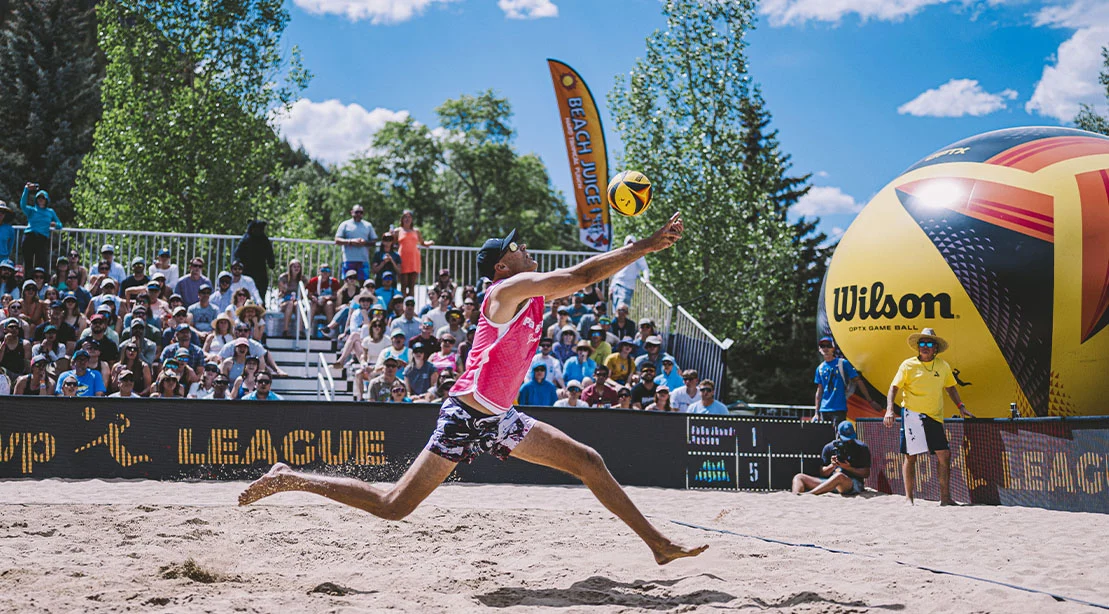
After nearly a quarter-century of dominating the world’s sand courts, Olympic gold medalist Phil Dalhausser has arrived at a conclusion that defies the conventional wisdom of modern sports science: true longevity is not found in doing more, but in the radical courage to do less.
At 6’9”, the towering beach volleyball icon stands as one of the sport’s most enduring anomalies. While generations of athletic phenoms have burned bright and faded away, the victim of overtraining or physical breakdown, Dalhausser continues to compete at the absolute apex of the sport well into his 40s. His career is a masterclass in the shift from raw, unbridled intensity to the strategic preservation of performance.
The Paradigm Shift: Quality Over Quantity
In an era where "hustle culture" dominates the gym, with younger athletes packing their schedules with high-volume conditioning, aggressive lifting, and endless, repetitive drills, Dalhausser has taken a path of deliberate subtraction. His formula for staying competitive is a radical departure from the norm.
"I’m definitely training way differently than everyone else," Dalhausser explains. "I’ve put in the time and the reps. I stay in shape in the gym and practice maybe once a week or so."
This isn’t a sign of a fading athlete; it is the calculated output of two decades of trial and error. For the veteran, training is no longer about building a larger engine; it is about keeping the existing one finely tuned. He has moved away from the punishing, exhaustive workouts that defined his twenties, choosing instead to focus on the specific physical qualities that allow a beach volleyball player to excel: explosive verticality, rapid-fire reactions, and the ability to generate power without compounding systemic fatigue.
A Chronology of Excellence
Dalhausser’s career has been marked by a constant, iterative refinement of his craft. His journey from a promising collegiate player to an international legend is characterized by several distinct phases:
- The Formative Years: Early in his career, Dalhausser operated with the standard "more is better" mentality, absorbing heavy loads and testing his body’s limits to gain a competitive edge.
- The Peak Performance Era: During his Olympic gold medal run, his focus shifted toward technical mastery and the integration of professional-grade physical preparation.
- The Era of Calibration: Now in his 40s, the focus has shifted to "maintenance of explosiveness." He employs Olympic-style lifts—specifically clean pulls—to sustain the fast-twitch muscle fibers required for blocking and attacking, while strictly avoiding the "junk volume" that leads to overtraining.
- The Coaching Transition: Having established himself as a perennial winner, Dalhausser has recently pivoted toward legacy building, operating a junior volleyball club in Orlando to cultivate the next generation of talent.
The Science of the "Garage Gym"
Dalhausser’s training environment offers a window into his no-frills philosophy. Eschewing the climate-controlled, tech-heavy facilities favored by many of his peers, he trains in a simple garage gym at his home in Orlando.
During the peak of the Florida summer, the heat is stifling, but Dalhausser views the environment as an asset rather than a hindrance. "It’s two million degrees in there," he jokes, noting that the heat accelerates his warm-up process and conditions him for the brutal, sun-drenched environments he faces on the professional tour.
Tactical Exercise Selection
His training program is filtered through a singular, ruthless question: Will this help me perform on the weekend? If an exercise does not provide direct, measurable value to his performance on the court, or if it introduces unnecessary recovery debt, it is eliminated. He prioritizes "intent" over load, moving weights with explosive speed to preserve the power required for high-level competition, rather than chasing personal records that serve no functional purpose in a match.
Recovery and the Tech Skepticism
Perhaps the most striking aspect of Dalhausser’s late-career evolution is his rejection of the modern "recovery obsession." While his contemporaries are glued to wearable devices, tracking sleep scores and HRV (Heart Rate Variability) metrics, Dalhausser remains distinctly analog.
He expresses a healthy skepticism toward the psychology of wearable technology. He argues that if a device tells an athlete they slept poorly, the athlete will inherently feel tired, creating a self-fulfilling prophecy of fatigue.
"I don’t need some device to tell me if I slept well," he says. "I know when I wake up if I’m tired or not."
The Vinyasa Advantage
Instead of expensive tech, he turns to yoga. After every tournament, he performs a 45-minute vinyasa flow. This practice, he claims, addresses both the physical stiffness of high-impact sand play and the mental exhaustion of competition. It is a holistic, low-cost intervention that has kept him mobile long after his peers have been forced into retirement by chronic injury.
Psychological Resilience: The "Suffering Bar"
If training is the foundation, psychology is the ceiling. Dalhausser credits his longevity to a dedicated meditation practice, which he began a decade ago. He views the mind as the ultimate variable in sports performance.
To manage the brutal conditions of professional beach volleyball, he employs a cognitive technique he calls setting the "suffering bar." Before stepping onto the sand in high-heat environments like Las Vegas, he mentally prepares for an experience of intense discomfort. By setting the expectation that he will suffer, the reality of the match often feels like a relief.
This mental discipline also applies to the inevitable mistakes of the game. When altitude or poor play threatens to derail his performance, he no longer fights the frustration. Instead, he treats every error as a data point, an opportunity to "recalibrate." He has learned that the frustration of an error is often more damaging than the error itself.
Implications for Future Athletes
What does Dalhausser’s career teach the next generation? His story suggests that the lifespan of an athlete is significantly longer than currently accepted, provided they can transition from a "builder" mindset to an "optimizer" mindset.
- Understand Your Biology: Injuries are not just setbacks; they are teachers. By identifying the root cause of an injury—such as a flaw in serving mechanics—an athlete can adjust their technique rather than just treating the symptom.
- Reject the Noise: Success does not require the latest recovery gadget. It requires the consistency of whole-food nutrition, adequate rest, and the confidence to trust one’s own internal cues over external data.
- Growth as a Constant: The most successful athletes are those who treat their sport as a lifelong study. Whether through coaching youth players or analyzing his own shifting mechanics, Dalhausser remains a student of the game.
Conclusion: The Ride is the Goal
Phil Dalhausser’s legacy is already cemented with gold medals and world titles, but his true contribution to the sport may be the blueprint he has provided for the "pro-longevity" athlete. He has demonstrated that while the body will inevitably change, the ability to adapt, learn, and simplify is the most powerful tool in an athlete’s arsenal.
For the young athlete just beginning their journey, his advice is profound in its simplicity: stop trying to force the outcome and start being present for the process. Every mistake is a necessary step, and every tournament is a chance to refine the system. After 24 years, Dalhausser isn’t just surviving; he is thriving—proving that when you strip away the unnecessary, what remains is the pure, enduring power of a focused mind and a well-cared-for body.