Published: June 15, 2026 | Source: Backpacking Light Podcast Episode 148
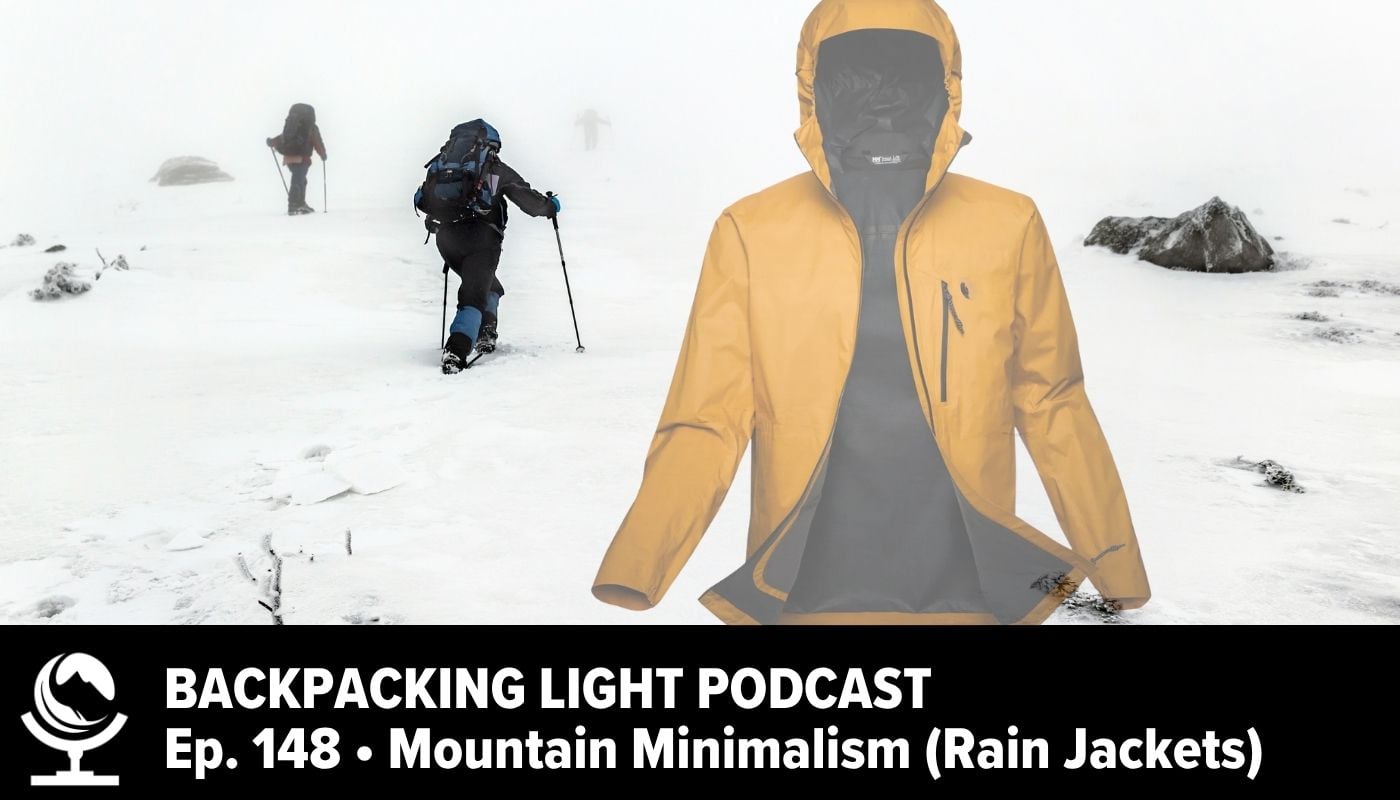
In the evolving landscape of backcountry travel, the philosophy of "mountain minimalism" has become a guiding principle for many, promising lighter packs and increased agility. However, as gear technology advances, the boundary between "ultralight" and "inadequate" becomes increasingly blurred. In Episode 148 of the Backpacking Light podcast, the editorial team tackles a critical debate: when does a lightweight rain shell stop being an asset and start becoming a liability in high-consequence alpine environments?
The Core Conflict: Weight vs. Survival
For years, the ultralight movement has championed the reduction of pack weight as the primary metric of efficiency. While this approach is highly effective for mild trail conditions and well-maintained forest paths, it often fails when applied to the unpredictable, high-exposure zones of the alpine.
The fundamental tension lies in the design intent of the modern rain jacket. Minimalist shells are engineered for breathability and low mass, often sacrificing the robust weatherproofing, abrasion resistance, and thermal insulation required for survival during an unexpected storm above the treeline. The episode serves as a reality check for gear enthusiasts, urging a shift from "weight-obsessed" decision-making to "context-dependent" risk assessment.
A Decision Framework for Alpine Exposure
To help hikers and climbers make safer choices, the podcast outlines a comprehensive six-point framework for evaluating whether a rain shell is appropriate for a specific objective.
- Exposure Duration: How long will you be truly exposed to the elements? A shell that performs for a two-hour rain shower in the valley may fail after twelve hours of sustained horizontal sleet on a high-altitude ridge.
- Retreat Options: How quickly can you reach shelter? In a remote wilderness area with no bail-out points, your clothing system must be capable of acting as a temporary survival shelter.
- Terrain Complexity: Does the route involve off-trail scrambling, thick brush, or sharp rock? Minimalist fabrics are notoriously fragile; a jacket that shreds at the first encounter with granite is a safety risk.
- Abrasion Potential: Closely linked to terrain, this factor asks whether the jacket can withstand the repeated friction of a heavy pack frame or climbing harness over the course of a multi-day trek.
- Wind Velocity: Wind is the primary driver of convective heat loss. A jacket that is "waterproof" but lacks wind-blocking integrity will allow the mountain air to strip away your body heat at an alarming rate.
- Thermal Margin: What is your buffer for error? If your rain shell is your only outer layer, it must be robust enough to prevent hypothermia when the ambient temperature drops alongside a precipitation event.
Featured Gear: Balancing Weight and Performance
The podcast highlights three specific models that represent the current state of the art in "mountain minimalist" design. Each represents a different approach to balancing the trade-offs between weight and environmental protection.
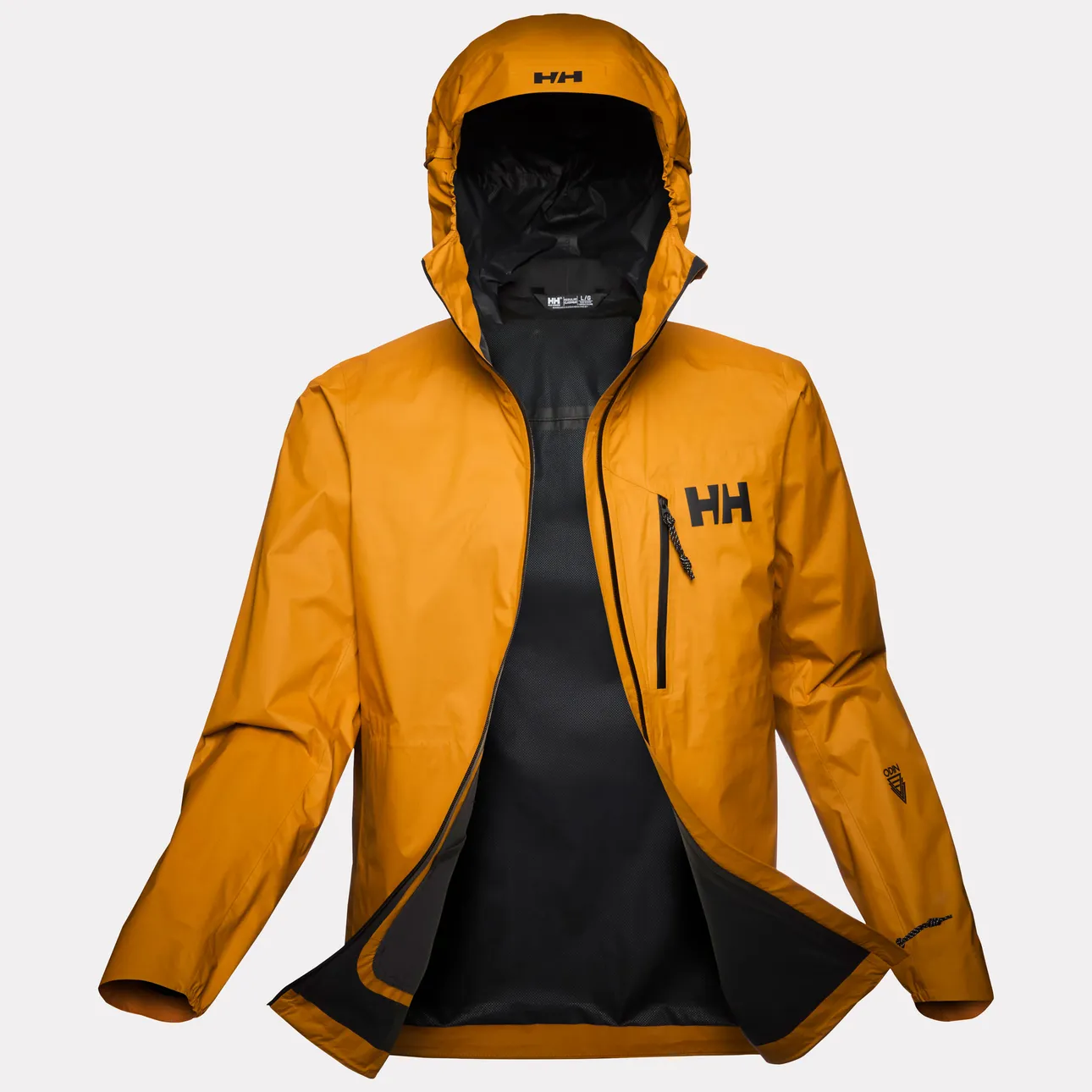
Helly Hansen Odin Infinity Minimalist Jacket
At 250 grams, the Odin Infinity is a masterclass in weight management. Utilizing 3.5-layer HELLY TECH PROFESSIONAL construction and LIFA INFINITY technology, it offers a sophisticated balance of waterproofing and breathability. Its design includes a helmet-compatible hood and a RECCO reflector, signaling its intent for serious alpine use. The use of 2-way stretch fabric provides the mobility necessary for technical maneuvers, while the packable design ensures it doesn’t become dead weight in your kit.
Arc’teryx Alpha SL Jacket
The Alpha SL (232 grams) stands out for its uncompromising focus on alpine durability. By integrating GORE-TEX PRO ePE and 20D Hadron face fabric, Arc’teryx has created a shell that offers high-end protection without the traditional bulk. The PFAS-free membrane is a significant nod toward sustainability, while the StormHood provides the critical coverage needed when visibility drops during a storm. This is a garment designed for the minimalist who refuses to sacrifice technical utility for weight savings.
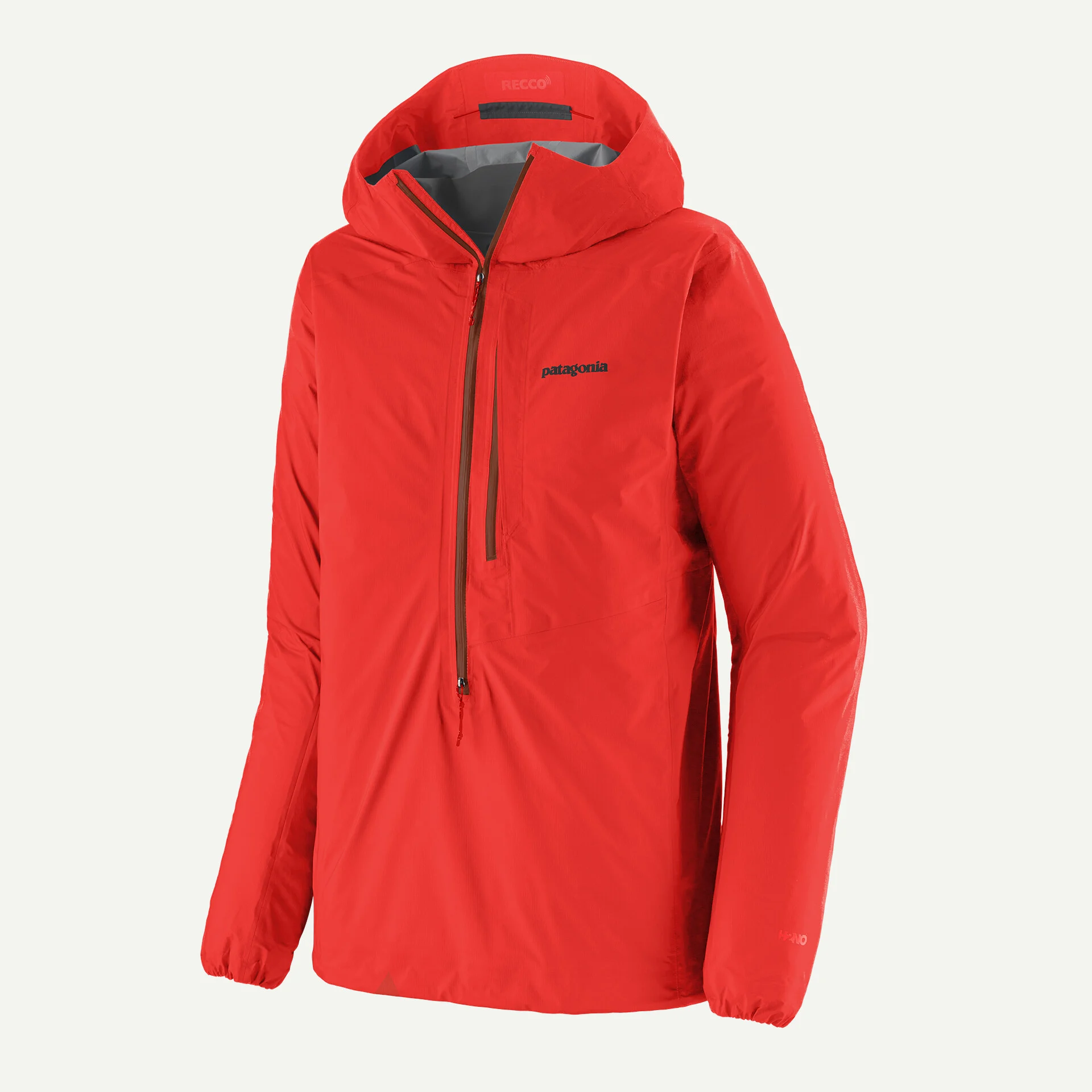
Patagonia M10 Anorak
The Patagonia M10 Anorak (300 grams) takes a slightly different approach. Using an Xpore nanoporous membrane and a 20-denier recycled nylon ripstop face, it emphasizes a slim-fit, 3-layer construction. The inclusion of a jersey backer improves comfort against the skin during high-output activity. Its design as an anorak—with a long, waterproof two-way front zipper—is a specific choice for those who value venting and ease of use while wearing a climbing harness.
The Evolution of Materials and Implications
The transition toward PFAS-free membranes and advanced ePE (expanded polyethylene) structures represents the most significant shift in the outdoor industry this decade. These materials offer higher performance-to-weight ratios than the traditional heavy-duty hardshells of the early 2000s.
However, the implications for the end-user are clear: The gear is becoming more capable, but the user must become more knowledgeable. As materials become thinner and lighter, the "margin for error" in the field actually decreases if the user assumes that "waterproof" always means "invincible."
Professional Journalistic Assessment: The Safety Gap
The debate presented in this podcast reflects a broader trend in outdoor journalism. As brands compete to shave grams off their flagship products, the burden of safety education shifts to the consumer. The "Mountain Minimalist" is no longer just a style—it is a discipline that requires understanding the limitations of the fabric, the chemistry of the membrane, and the reality of the climate.

For the average weekend warrior, the takeaway is simple: Do not mistake a "minimalist" label for an invitation to ignore mountain safety protocols. These jackets are precision tools designed for specific environments. When used within their intended design parameters, they are transformative; when used outside of them, they can lead to dangerous outcomes.
Conclusion: Preparing for the Unknown
As we look toward the remainder of the 2026 season, the Backpacking Light team emphasizes that the best piece of gear is the one that stays in your pack until you need it, and performs perfectly when you do. Whether you are scaling an alpine peak or navigating a remote forest, the framework provided in this episode offers a roadmap for moving beyond the marketing hype of "ultralight" and into the realm of informed, expert-level wilderness travel.
For those looking to deepen their understanding, the full episode includes extended discussions on layering strategies, the science of moisture vapor transmission, and field-tested advice from experienced mountain guides.
To gain full access to the Backpacking Light community, including in-depth gear reviews, expert-led forums, and extensive online educational resources, consider becoming a member. Pack less, know more, and venture further with confidence.