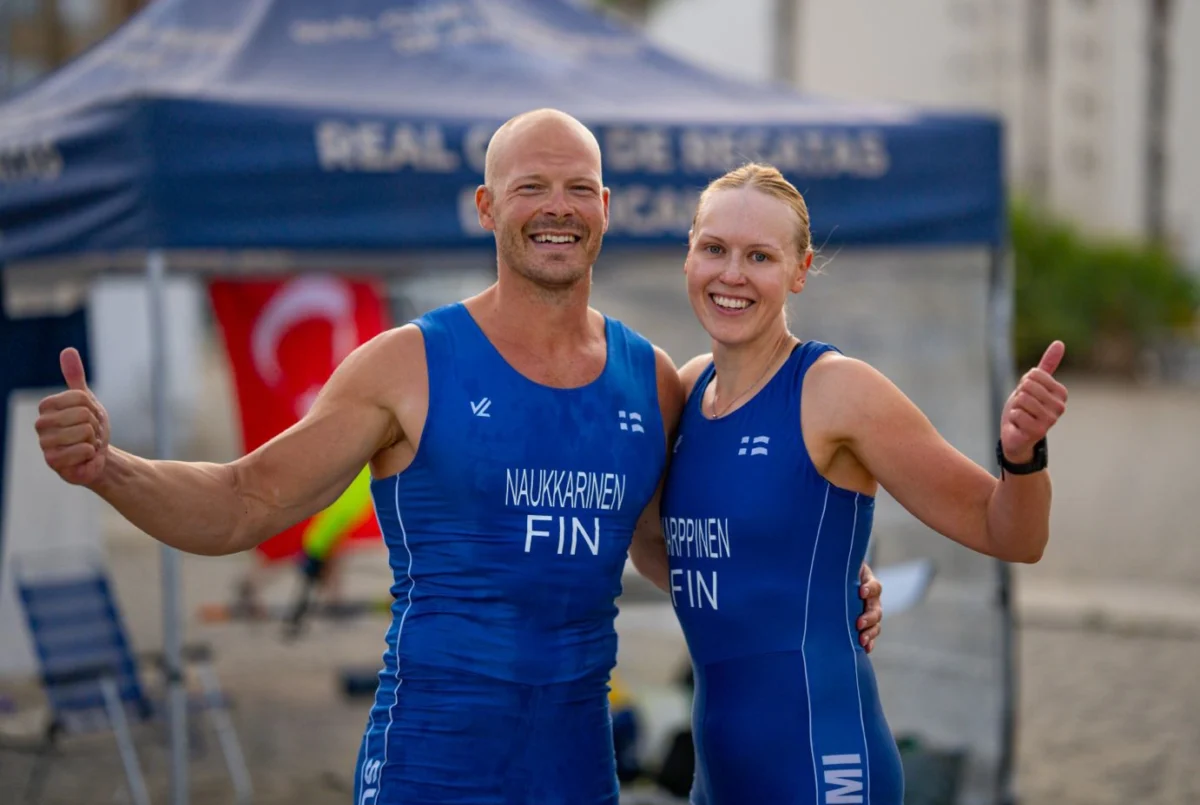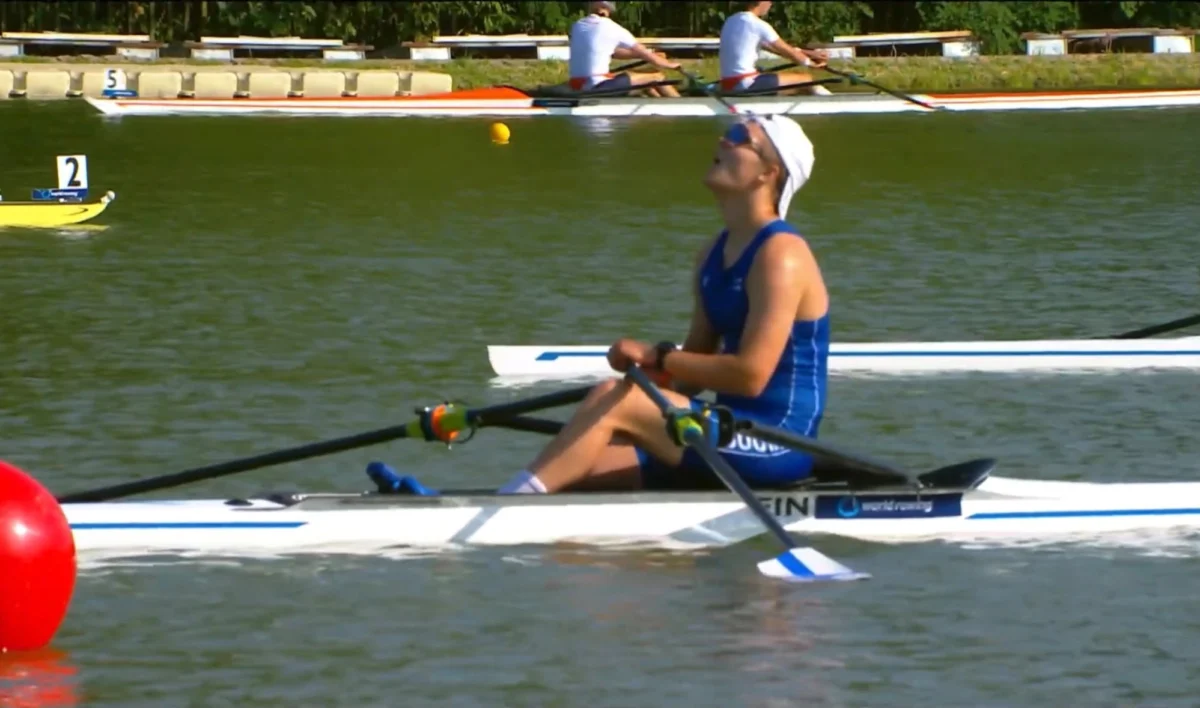
La Línea, Spain – September 17, 2026 – Finnish coastal rowing achieved a remarkable milestone on Friday, securing two prestigious medals at the European Coastal Rowing Endurance Championships held amidst the challenging waters of La Línea, Spain. Joel Naukkarinen solidified his dominance in the sport by clinching the European Championship gold in the men’s solo (CM1x) event, successfully defending his title from the previous year. Adding to Finland’s triumph, Eeva Karppinen delivered an outstanding performance to earn a bronze medal in the women’s solo (CW1x) category, marking a significant achievement in her career.
The double medal victory underscores Finland’s growing prowess in the dynamic and physically demanding discipline of coastal rowing, particularly as the sport gains global recognition and prepares for its Olympic debut in a related format.
Main Facts: Finnish Rowers Dominate European Coastal Rowing Championships with Double Medal Haul
Golden Glory for Naukkarinen, Bronze for Karppinen
Joel Naukkarinen, a name synonymous with Finnish rowing excellence, once again proved his mettle in the men’s solo six-kilometer endurance race. Navigating the unpredictable currents and waves off the Spanish coast, Naukkarinen crossed the finish line with an impressive time of 26 minutes, 27.29 seconds. His formidable performance left his closest competitor, Amos Keijser of the Netherlands, trailing by a decisive margin of 7.14 seconds, with Keijser recording a time of 26:34.43 to claim silver. Spain’s Salvador Diaz Moreno secured the bronze medal with a time of 27:03.18, completing the podium. This victory not only reaffirms Naukkarinen’s status as a reigning European champion but also highlights his consistent ability to perform under pressure on the international stage.
In the women’s solo endurance event, Eeva Karppinen showcased remarkable resilience and skill to secure a hard-fought bronze medal. Her time of 29 minutes, 54.94 seconds positioned her firmly among Europe’s elite. The gold medal in this fiercely contested category went to Austria’s Magdalena Lobnig, who powered through the course in 29:29.33, followed by Ukraine’s Kateryna Dudchenko, who earned silver with a time of 29:44.21. Karppinen’s bronze is a testament to her dedication and strategic rowing, further elevating Finland’s presence in the competitive landscape of women’s coastal rowing.
These two medals represent a monumental day for Finnish sports, signaling a significant moment for the country’s rowing federation and its athletes on the path to greater international acclaim. The triumphs in La Línea are not merely individual achievements but collective indicators of a burgeoning national program in a rapidly evolving sport.
A Chronology of Triumph: Naukkarinen’s Meteoric Rise Across Disciplines
The European Coastal Rowing Championships in La Línea have been a stage for Joel Naukkarinen’s exceptional versatility and enduring form. His gold medal in the endurance race on Friday was not an isolated triumph but the culmination of a stellar performance throughout the competition, marking his second medal within a mere two days.
From Beach Sprint Silver to Endurance Gold in Two Days
Just twenty-four hours prior to his gold medal performance, Naukkarinen had already made history for Finland by securing a silver medal in the beach sprint discipline. This achievement was particularly significant as it marked Finland’s first-ever European Championship medal in the beach sprint, a format distinct from endurance rowing and one that has recently garnered Olympic status. His journey in beach sprint has been one of remarkable ascent; in the 2025 European Championships, Naukkarinen placed 12th. His dramatic improvement to a silver medal position in 2026 demonstrates not only his rapid development but also his acute adaptability to the varied demands of coastal rowing’s different formats.
The beach sprint is a high-octane, dynamic race that combines a short sprint on the beach with a rapid launch into the water, a slalom course around buoys, and a final dash back to the finish line on shore. It requires an explosive blend of speed, agility, and technical precision, alongside the raw power of rowing. Naukkarinen’s ability to transition from this intense, short-burst discipline to the sustained effort of the six-kilometer endurance race within such a short timeframe underscores his exceptional physical conditioning and mental fortitude.
This dual-discipline success is a clear indicator of his comprehensive skill set, positioning him as one of the most versatile coastal rowers in Europe. It also carries significant implications for his Olympic aspirations, given that beach sprint is set to debut at the Los Angeles 2028 Games.
The Antalya Precedent: A Look Back at 2025 Success
Naukkarinen’s gold medal in the endurance event was not just a victory but a successful defense of his European Championship title from 2025. In the previous year’s championships held in Antalya, Turkey, he had similarly clinched gold in the men’s solo endurance race, establishing himself as a formidable force in the long-distance coastal rowing format. His ability to maintain this top-tier performance year after year speaks volumes about his consistent training regimen, strategic race planning, and an unwavering commitment to excellence.
Furthermore, the 2025 championships in Antalya were also memorable for Naukkarinen and Eeva Karppinen for another reason: they jointly secured a European Championship gold medal in the mixed doubles endurance event. This shared victory highlighted their potent partnership and mutual understanding on the water, demonstrating their combined strength and synchronized technique. This historical context of success, particularly in mixed doubles, adds an extra layer of anticipation for their upcoming performance in the same event at the current championships, where they are once again the reigning champions. The pattern of consistent medal-winning performances over multiple years firmly establishes both Naukkarinen and Karppinen as key figures in the international coastal rowing scene.
Supporting Data: Dissecting the Performances and the Demands of Coastal Rowing
The European Coastal Rowing Championships are renowned for testing athletes against both their competitors and the elements. The six-kilometer endurance course in La Línea, a challenging stretch of open water punctuated by strategic buoys, provided a true test of skill, stamina, and tactical prowess.
The Grueling Six-Kilometer Endurance Test
Joel Naukkarinen’s victory in the men’s solo endurance race was a masterclass in strategic execution and sustained power. The 6km course, typically featuring multiple turns around buoys, demands not only brute strength but also acute awareness of currents, wave patterns, and the positions of rival boats. In coastal rowing, unlike flat-water rowing, the dynamic nature of the ocean means conditions can change rapidly, forcing athletes to constantly adapt their stroke rate, steering, and power output. Naukkarinen’s winning time of 26:27.29, with a clear 7.14-second lead over the silver medalist, suggests a dominant race from start to finish. He likely established an early lead or made a decisive move midway through the race, then skillfully managed his pace and navigated the course to hold off any challenges. His experience from previous victories undoubtedly played a crucial role in his ability to maintain composure and execute his race plan flawlessly under pressure.
Eeva Karppinen’s bronze medal performance in the women’s solo event similarly showcased a deep understanding of the course and a strong competitive spirit. Her time of 29:54.94 placed her firmly behind the gold and silver medalists, Magdalena Lobnig and Kateryna Dudchenko, respectively. In a field where margins can be incredibly tight, securing a podium finish requires a combination of raw speed, efficient turning around buoys, and intelligent energy management over the entire distance. Coastal rowing, with its inherent unpredictability, often rewards those who can adapt quickest to shifting conditions, making Karppinen’s bronze a testament to her tactical acumen and physical endurance. The competitive landscape of women’s coastal rowing is rapidly evolving, with increasing depth of talent, making every medal earned a hard-fought achievement.
The Duality of Coastal Rowing: Sprint vs. Endurance
Coastal rowing is unique in its offering of two distinct competitive formats: beach sprint and endurance racing. While both fall under the umbrella of coastal rowing, they demand vastly different skill sets and strategic approaches, making Naukkarinen’s success in both even more remarkable.
Beach Sprint (CM1x / CW1x): This format is a high-octane, spectator-friendly event designed for explosive action. It typically involves:
- A beach start: Athletes sprint from a designated line on the sand to their boats, which are positioned at the water’s edge.
- A rapid launch: Quick and efficient boat entry and launching into the waves.
- A slalom course: A short, intense row (e.g., 250-500 meters) around buoys, often requiring sharp turns.
- A beach finish: Athletes exit their boats, sprint back up the beach, and cross a finish line on land.
This discipline prioritizes explosive power, agility, quick decision-making, and exceptional boat handling skills in dynamic wave conditions. Its fast pace and dramatic transitions from land to water make it particularly appealing for television and live audiences, which contributed to its inclusion in the Olympic program for Los Angeles 2028.
Endurance Racing (CM1x / CW1x): In contrast, endurance races are longer, typically covering distances of 4 to 8 kilometers for adults, though some events can be even longer. The La Línea adult final distance was six kilometers. Key characteristics include:
- Open water conditions: Races take place entirely on the open sea, navigating around a series of buoys.
- Strategic navigation: Athletes must contend with currents, tides, wind, and waves over an extended period. Route choice, buoy turns, and maintaining a consistent rhythm are crucial.
- Stamina and pacing: The focus shifts from explosive bursts to sustained power and efficient energy management.
- Equipment differences: While boats are generally similar (self-bailing, more robust than flat-water shells), the setup and athlete’s approach differ.
Naukkarinen’s ability to excel in both formats highlights his exceptional athletic range. His beach sprint silver demonstrates his explosive power and agility, while his endurance gold showcases his immense stamina, strategic mind, and mastery of sustained effort in challenging marine environments. The fact that beach sprint is an Olympic discipline and endurance is not adds a layer of strategic importance to his beach sprint success, potentially shaping his future training and competitive focus.
Official Responses and Athlete Insights
The achievements in La Línea have resonated deeply within the Finnish sporting community, prompting reflection on the dedication and unique perspectives of its top athletes.
Naukkarinen’s Unique Perspective: Science Meets Sport
Joel Naukkarinen is not just an elite athlete; he is also a scholar, currently engaged in doctoral research on the very topics that underpin his success: fatigue and endurance. This academic pursuit provides him with a unique, scientifically informed approach to his training and competition. His quote following the endurance victory encapsulates this synergy: "The good form continues. I have also researched fatigue and endurance from a researcher’s perspective in my dissertation, and in such a race series, recovery has a really big significance."
This statement offers a fascinating glimpse into the mind of a champion. Naukkarinen isn’t merely training hard; he’s applying theoretical knowledge to optimize his physical and mental recovery, a critical factor in multi-day, multi-event competitions like the European Championships. His dissertation likely delves into physiological markers of fatigue, optimal recovery protocols, and the psychological aspects of sustained performance. By integrating his academic insights into his athletic practice, he gains a competitive edge, understanding precisely how to manage his body and mind to peak repeatedly. This interdisciplinary approach not only contributes to his personal success but also potentially offers valuable insights for the broader sports science community and other athletes. His self-awareness and systematic approach to recovery are undoubtedly key components of his consistent high-level performance and ability to defend titles.
A National Federation’s Pride and Future Vision
While the original article did not include a direct quote from the Finnish Rowing Federation, the impact of these medals on the national body would be profound. It’s plausible that an official statement would reflect immense pride and optimism for the future of Finnish rowing.
"This is an incredibly proud moment for Finnish rowing," a spokesperson for the Finnish Rowing Federation might state. "Joel’s gold, defending his title, and Eeva’s bronze in the solo events are testaments to their immense talent, hard work, and unwavering commitment. Joel’s earlier silver in the beach sprint, our first in that discipline, is particularly exciting given its Olympic inclusion. These results are not just individual triumphs; they signal a significant step forward for Finland on the international coastal rowing stage. We are seeing the fruits of dedicated athlete development programs and a growing passion for this dynamic sport across the country. We believe these successes will inspire a new generation of rowers and further solidify Finland’s reputation as a strong contender in international rowing competitions."
Such a statement would underscore the strategic importance of these medals, particularly in an Olympic discipline, and highlight the federation’s role in nurturing talent and promoting the sport. It would also acknowledge the hard work of coaches, support staff, and the broader rowing community in Finland.
Implications: Paving the Way for Future Success and Olympic Dreams
The double medal haul in La Línea carries significant implications, not only for the careers of Joel Naukkarinen and Eeva Karppinen but also for the trajectory of Finnish rowing and the sport of coastal rowing itself.
Los Angeles 2028: The Beach Sprint Horizon
Joel Naukkarinen’s silver medal in the beach sprint, preceding his endurance gold, is particularly noteworthy given the discipline’s inclusion in the Los Angeles 2028 Olympic Games. This marks the first time coastal rowing will feature on the Olympic program, and the beach sprint format has been selected for its dynamic, spectator-friendly nature. Naukkarinen’s leap from 12th place in 2025 to a silver medal in 2026 demonstrates a rapid adaptation and mastery of the specific skills required for this Olympic discipline.
This success positions him as a strong contender and a frontrunner in the nascent Olympic journey of beach sprint. His performance will undoubtedly serve as a crucial benchmark for his training and strategic planning over the next two years. The experience gained in La Línea, particularly in navigating the unique challenges of beach sprint—the rapid transition from land to water, precise buoy turns, and the final sprint on the sand—will be invaluable. For Naukkarinen, the path to Los Angeles 2028 has become clearer, with this silver medal serving as a powerful declaration of his Olympic intentions and capabilities. His ability to excel in both sprint and endurance formats suggests a remarkable athletic versatility that could be honed to perfection for the specific demands of the Olympic beach sprint.
Finland’s Rising Tide in International Rowing
The achievements of Naukkarinen and Karppinen signify a "rising tide" for Finnish rowing on the international stage. Historically, Finland has had strong traditions in various sports, but coastal rowing is a relatively newer domain for significant international success. These medals, particularly a European Championship gold, elevate Finland’s profile and demonstrate that Finnish athletes can compete and win at the highest level in this globally growing sport.
This success can have several cascading effects:
- Inspiration for New Talent: High-profile victories often inspire younger athletes to take up the sport, increasing participation rates at the grassroots level.
- Increased Funding and Support: International success can attract greater investment from national sports bodies, sponsors, and government agencies, leading to improved training facilities, coaching programs, and athlete support systems.
- National Team Development: The consistent performance of athletes like Naukkarinen and Karppinen can foster a stronger national team culture, encouraging collaboration and raising the overall standard of competition within Finland.
- Global Recognition: Finland’s flag on the podium in a sport gaining Olympic traction enhances its reputation in the broader international sporting community.
These medals are not just about individual glory; they are a powerful statement about the potential and future direction of Finnish rowing.
The Anticipation of the Mixed Doubles Final
Adding another layer of excitement to the championships, Joel Naukkarinen and Eeva Karppinen were slated to compete later on Friday in the mixed doubles endurance final. They entered this race as the reigning European Champions from 2025, a title they successfully secured in Antalya. This event demands exceptional teamwork, synchronized power, and a deep understanding between the two rowers to navigate the course effectively.
Their individual successes in the solo events undoubtedly built momentum and confidence going into the mixed doubles. The prospect of defending their title together would have added a significant psychological element to their performance. The synergy between Naukkarinen’s strategic mind and power, and Karppinen’s skill and endurance, makes them a formidable duo. Their previous gold in this event underscores their compatibility and shared competitive drive. The mixed doubles event, while not Olympic, is a highly regarded and fiercely competitive discipline within coastal rowing, and their pursuit of another gold would have been a captivating conclusion to their individual successes, potentially capping off an extraordinary championship for Finland.
The European Coastal Rowing Championships in La Línea will be remembered as a landmark event for Finnish rowing, showcasing extraordinary athletic prowess and setting a new benchmark for national achievement in this exhilarating sport. The performances of Joel Naukkarinen and Eeva Karppinen have not only brought home prestigious medals but have also illuminated a bright future for Finland on the international rowing stage, with an eye firmly fixed on the Olympic horizon.