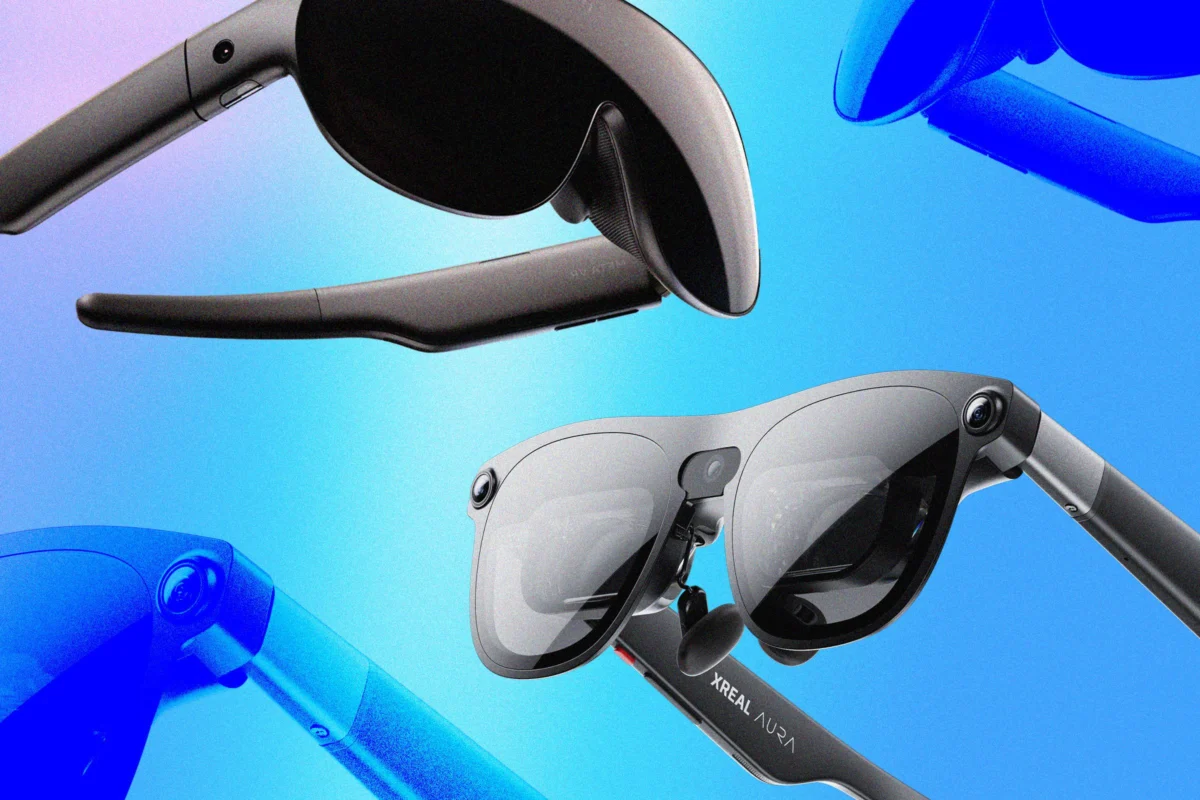
The era of the "face computer" has officially arrived, transitioning from the clunky, isolated VR headsets of the last decade to a new, more refined category of mixed-reality (MR) glasses. As the technology matures, two major players—Meta and Xreal—have emerged as the primary combatants in this high-stakes race to redefine personal computing. With price tags hovering around $1,300 and ambitious promises of seamless digital integration, these devices represent the most significant shift in wearable technology since the smartphone.
The Main Event: A New Era of Wearables
For years, "smart glasses" existed in a state of compromise. Consumers were forced to choose between simplistic, camera-equipped frames like the Ray-Ban Meta—which prioritize social interaction and AI assistance—or heavy, isolated VR headsets that act as face-mounted televisions.
The new generation of mixed-reality glasses attempts to bridge this divide. By combining high-resolution visual overlays with lightweight, ergonomic designs, these devices promise a "third way" of computing. At the forefront is the Meta VR Glasses project, a $1,299 device that has impressed critics with its sophisticated micro-OLED displays and refined optics. Simultaneously, Xreal, a veteran of virtual-display hardware, has entered the fray with the Xreal Aura. Partnering with Google to utilize the Android XR platform, the Aura is positioned as a direct, slightly more affordable, and more immediate competitor to Meta’s offering.
Chronology: How We Got Here
The roadmap to the current state of mixed reality has been paved with both innovation and controversy:
- 2010s–Early 2020s: The dominance of "heavy iron." VR headsets like the Meta Quest and Valve Index offered immersive experiences but effectively isolated users from their physical environment, limiting their utility to gaming and niche professional simulations.
- 2023: Meta releases the Ray-Ban Meta smart glasses. While a commercial success, they sparked intense public debate regarding privacy, "Meta-creep," and the social implications of being recorded by a stranger’s eyewear.
- September 2024: Meta officially debuts its upcoming high-end VR glasses at the Meta Connect event. The industry takes notice of the device’s slim profile and surprisingly high visual fidelity.
- Late 2024: Xreal announces the Xreal Aura, building on the Google Android XR ecosystem. The company reveals a retail price of $1,279, intentionally undercutting Meta by $20 and committing to a shipping date within the calendar year.
- The Future (2025 and beyond): Meta’s glasses are slated for a general release in early 2025, while Xreal continues its phased rollout, expanding from North America and East Asia to broader global markets by 2027.
Supporting Data: Comparing the Contenders
When evaluating these two devices, the differences lie in their fundamental approach to "mixed reality."

Meta VR Glasses
- Price: $1,299
- Display: 5K micro-OLED
- Strengths: Exceptional hand tracking, highly polished OS, and deep integration with existing Quest app ecosystems.
- Weaknesses: Relies on video passthrough, which can introduce blurriness or latency when interacting with the real world.
- Privacy Context: The device features downward-facing cameras for hand tracking, a design choice that requires significant trust from the user regarding data handling.
Xreal Aura
- Price: $1,279
- Operating System: Android XR (Google)
- Strengths: Superior real-world visibility through optical passthrough lenses; more natural integration with the Android mobile ecosystem.
- Weaknesses: Currently less "polished" in terms of software-to-hardware synergy; occasional app syncing issues due to the vast, fragmented nature of the Android app library.
Both devices require a tethered "compute puck"—a small, pocketable unit that houses the processor and battery. While this design is a compromise compared to fully standalone glasses, it is the necessary trade-off to achieve a form factor that doesn’t feel like a heavy weight on the user’s nose.
The Competitive Landscape
The market is rapidly crowding. Beyond Meta and Xreal, Snap Inc. has introduced its own high-end AR Spectacles, priced at a premium $2,195, targeting a different segment of the market. Furthermore, giants like Samsung and Google are rumored to be finalizing their own entries into the Android XR space, suggesting that the $1,200–$2,500 price point will be the primary battlefield for early adopters over the next 24 months.
The choice for the consumer currently boils down to the "use case." If the goal is a stationary, high-fidelity experience—such as writing, watching cinema-quality video, or running complex simulations—Meta’s ecosystem currently holds the edge in software fluidity. If the goal is mobility—moving through a room, interacting with the environment, and utilizing a familiar Android-based interface—the Xreal Aura’s optical passthrough offers a more grounded, less dizzying experience.
Official Responses and Industry Sentiment
Meta’s strategy has been one of gradual iteration. By acknowledging the privacy concerns that dogged their earlier glasses, the company has attempted to pivot toward "responsible AI" and transparent user controls. However, the discomfort surrounding "face computers" remains a significant hurdle.
Xreal, conversely, has leaned into the open-platform narrative. By partnering with Google, they are betting that the familiarity of Android will win over users who are wary of being locked into a proprietary "walled garden" like Meta’s. In official statements, Xreal executives have emphasized that the Aura is designed to be an "extension of your phone," rather than a complete replacement for your digital life.

Implications: The Privacy and Social Dilemma
The rise of these devices carries profound implications for society. As we move toward a future where computing is literally worn on the face, the "privacy tax" continues to climb.
- The Surveillance Question: As seen with the public backlash against Meta’s previous smart glasses, the general public is increasingly sensitive to the presence of cameras on wearables. Both Meta and Xreal must navigate a landscape where "recording" is no longer an occasional action, but a persistent state of the device.
- The Social Red Flag: There is a growing cultural stigma associated with wearing tech-heavy eyewear in social settings. Whether these devices will ever shed their "tech-bro" reputation depends on whether they can eventually shrink to the size of standard prescription frames—a goal that remains years, if not a decade, away.
- Workplace Transformation: The promise of a "multi-monitor workplace" is perhaps the most compelling value proposition for these companies. If a $1,300 device can effectively replace a $3,000 desk setup with a private, infinite digital canvas, the corporate adoption of MR glasses may outpace consumer adoption.
Conclusion: The Verdict Awaits
We are currently in the "Model T" phase of mixed-reality glasses. Both the Meta and Xreal devices are remarkable feats of engineering, yet both suffer from the limitations of the current era: bulky compute units, expensive price points, and a lack of clear social etiquette.
As Meta prepares for its full launch in early 2025 and Xreal begins delivering the first wave of Aura units to pre-order customers, the industry is watching closely. The success of these devices will not be measured solely by their screen resolution or processor speeds, but by their ability to integrate into the daily rhythm of human life without feeling like a burden—or a violation of the privacy of those around us. For now, the race is tied, and the true winner will be the one that can make the face computer feel as essential, and as invisible, as the smartphone in our pockets.