For many pool owners, the dream of automated maintenance has long been hindered by the most tedious part of the process: the manual cleanup. While robotic pool cleaners have revolutionized how we handle floor and wall debris, the post-cleaning ritual—hauling a dripping, debris-heavy robot out of the water, prying open its filter, and rinsing out the grime—remains a chore. Enter the Beatbot AquaSense X, paired with its innovative AstroRinse cleaning station. This new ecosystem promises to automate not just the scrubbing of your pool, but the maintenance of the cleaner itself.
Main Facts: Redefining Autonomous Pool Care
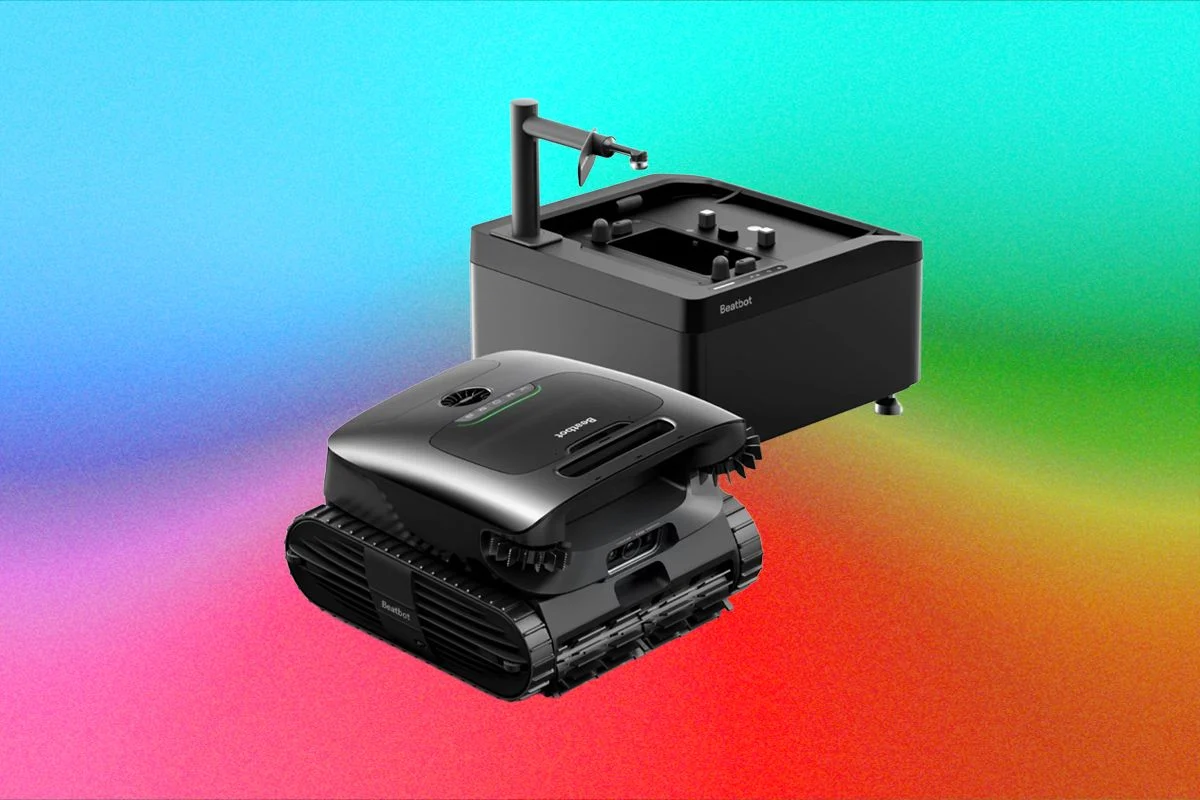
The Beatbot AquaSense X represents an iterative evolution in the company’s high-end robotic lineup. Visually and mechanically similar to the acclaimed AquaSense 2 Ultra, the "X" model focuses its engineering prowess on the integration with the AstroRinse station.
At its core, the AquaSense X is a heavy-duty, battery-powered submersible unit. It relies on a 13,400 mAh battery capable of delivering up to four-and-a-half hours of continuous operation. The system utilizes advanced sensor arrays and AI-driven navigation to map pool geometry, effectively cleaning floors, walls, and, in theory, the water surface.
However, the "killer feature" is the AstroRinse. This external base station serves as the robot’s home, charging port, and, most importantly, its automated maintenance hub. By utilizing a high-pressure water jet arm that interfaces directly with the robot’s internal filter basket, the system removes the need for the user to manually rinse the device after every cycle.
Chronology: From Setup to Submersion
The journey to an automated pool experience begins with a complex installation process. Unlike traditional plug-and-play cleaners, the AstroRinse requires a precise environment. Users must identify a location that satisfies three distinct infrastructure requirements: a steady water supply via a hose spigot, a reliable electrical outlet for power, and adequate drainage to handle the expelled debris.

Initial Configuration
The setup of the robot itself is straightforward. Users attach two side brushes—dedicated specifically to the skimmer function—before performing a wireless handshake between the robot and the AstroRinse station. This pairing is essential for the system to synchronize its cleaning cycles. Once the hardware is physically aligned, the final step involves the Beatbot mobile app.
The Digital Hurdle
Configuration requires both Bluetooth and a stable 2.4 GHz or 5 GHz Wi-Fi connection. In testing, the process proved reliable, though not entirely without friction. A common "hiccup" involves the inevitable firmware update. After the initial connection, both the robot and the station automatically initiate firmware downloads. These updates often reset the internal pairing status, requiring the user to repeat the sync process. While a minor inconvenience, it is a necessary step to ensure the onboard AI remains current.
Deployment and Performance
Once configured, the robot is ready for the water. The performance metrics are largely consistent with the AquaSense 2 Ultra. In rigorous testing involving both organic matter (leaves, twigs) and synthetic debris, the AquaSense X achieved a 97% collection rate on pool floors and steps. The robot excels at navigating complex transitions, such as stairs and curved corners, where many competing models struggle with suction loss.
Supporting Data: The Efficiency Paradox
To understand the value of the AquaSense X, one must weigh its strengths against its limitations.
Floor vs. Surface Cleaning
The data reveals a stark performance gap between submerged cleaning and surface skimming. On the pool floor, the device is an industry leader. Its intelligent navigation ensures high coverage, and the 13,400 mAh battery provides ample runtime for even the largest residential pools.

Conversely, the surface skimming feature remains a "predictably middling" endeavor. Despite the inclusion of spinning side brushes designed to funnel floating debris toward the intake, the robot’s movement speed is too slow to effectively capture material before it becomes waterlogged and sinks. While the AI Quick Mode—which uses the onboard camera to proactively hunt for floating debris—is a welcome improvement over random-pattern cleaners, it is not a complete replacement for a manual net during heavy leaf-shedding seasons.
The AstroRinse Mechanics
The efficacy of the cleaning station is the system’s primary selling point. Once the robot docks, the AstroRinse takes over. A high-pressure mechanical arm swings into position, sealing against the robot’s intake. It then blasts water directly into the filter basket for three minutes. This is sufficient to dislodge the majority of trapped debris, which is then captured in a secondary, net-lined basket at the base of the station. Any excess water is channeled through a mesh drainage screen, ensuring the system stays clean and odor-free.
Official Perspectives and User Experience
While Beatbot has not released official technical white papers regarding the internal hydraulic pressure of the AstroRinse, the real-world performance speaks for itself. The loud, pressurized burst of water is clearly engineered to dislodge stubborn, wet debris that would otherwise require a garden hose and manual scrubbing.
However, the "human factor" cannot be ignored. The requirement for a specific, leveled placement of the AstroRinse station—facilitated by adjustable feet and a built-in spirit level—implies that this is a semi-permanent installation. If the station is placed too far from the pool, the weight of the 29-pound robot becomes a significant logistical hurdle. For users with large pool decks, careful planning regarding the proximity of water, power, and drainage is the difference between a seamless experience and a frustrating manual haul.
Implications: The Future of Residential Pool Automation
The Beatbot AquaSense X and its AstroRinse station represent a pivotal shift in the smart-home sector. For years, "smart" pool cleaners were limited to remote control and scheduling. By automating the cleaning of the cleaner, Beatbot is addressing the "last mile" of pool maintenance.

The Value Proposition
Is the system worth the investment? For the affluent pool owner who values time above all else, the answer is a resounding yes. The ability to finish a swim and know that the robot will not only clean the floor but also self-clean its own filters is a significant quality-of-life upgrade. It effectively turns a weekly maintenance task into a "check the net every few days" endeavor.
Limitations and Future Trajectory
The current iteration of the system is not without its flaws. The reliance on precise leveling and the specific need for three utility hookups (water, power, drainage) limits its versatility for smaller yards or older pool configurations. Furthermore, the underperformance in surface skimming suggests that we are still a few years away from a truly "perfect" all-in-one robotic solution.
However, the path forward is clear. We are entering an era where robotic maintenance systems will prioritize ecosystem integration. Future iterations will likely focus on:
- Enhanced Surface Speed: Improving the motor output or buoyancy control to allow for faster surface navigation.
- Simplified Infrastructure: Reducing the reliance on external water hookups, perhaps through internal recirculating filtration systems that require less frequent draining.
- AI Integration: More robust use of the onboard camera for debris identification and long-term pool health monitoring.
Conclusion
The Beatbot AquaSense X, while tethered to the complexities of its AstroRinse station, remains a formidable entry in the robotic cleaning market. It is not merely a tool for cleaning water; it is a sophisticated appliance designed to eliminate the most tedious aspects of ownership. While it may struggle with the physics of surface cleaning and demand a specific setup environment, its floor-cleaning capabilities and automated maintenance cycle set a high bar for competitors. As the technology matures, we can expect these systems to become smaller, more efficient, and perhaps even more autonomous, bringing us closer to the goal of a truly "set it and forget it" pool experience.