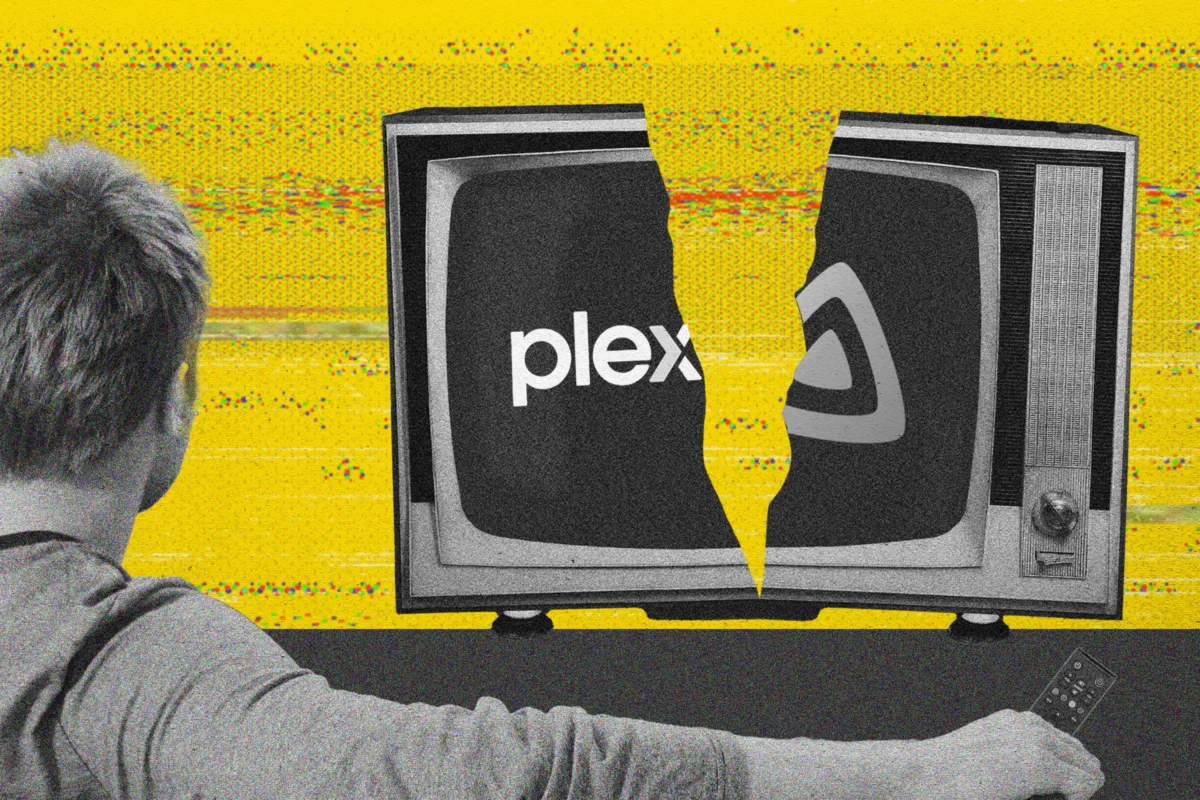
For years, Plex has been the gold standard for home media enthusiasts. By transforming a collection of disparate digital files—stored on hard drives and NAS devices—into a sleek, Netflix-like experience, it became the cornerstone of the modern "cord-cutter" lifestyle. However, a growing sense of disillusionment is permeating the community. As the platform pivots toward ad-supported streaming and social features, many long-time power users are asking the same question: Is the convenience of Plex still worth the trade-off, or is it time to embrace the open-source alternative, Jellyfin?
The Shift in Plex’s Corporate Strategy
The frustration surrounding Plex stems from a fundamental misalignment between the company’s business model and its user base. Originally a tool for organizing local media, Plex has increasingly prioritized growth through monetization. Recent updates have introduced features like social integration, user reviews, and a heavy push toward free, ad-supported streaming (FAST) services.
For many, these additions represent "feature bloat." Enthusiasts who rely on the service to catalog their own high-quality rips and personal archives are finding their interface increasingly cluttered with content they have no intention of watching. When a user logs in to access their own home-recorded content, they are often met with prompts for third-party movies or social feeds, creating a jarring experience that deviates from the service’s original purpose.
This frustration was exacerbated by a significant pricing shift. With the lifetime Plex Pass jumping from $250 to $750, the financial barrier to entry has tripled. For a service that relies on the user’s own hardware and content, such a steep increase feels to many like a "loyalty tax," prompting a search for more sustainable, user-centric alternatives.
Enter Jellyfin: The Open-Source Challenger
Jellyfin, a fork of the original Emby project, has emerged as the premier open-source alternative. Developed entirely by the community, it offers a clean, ad-free experience that prioritizes the user’s ownership of their media.
Core Functionality and Local Performance
At its most basic level, Jellyfin is remarkably capable. For the user who wants to stream locally within their home network, the setup is nearly instantaneous. By pointing the server to a directory of media, Jellyfin scans and populates a library with metadata that rivals Plex in quality.
The software supports almost every major client—from smart TVs and mobile devices to desktop browsers. For those whose primary use case is "watch what I have, where I have it," Jellyfin is a plug-and-play success story. If your library is well-organized, the transition is frictionless, proving that the open-source community can match, and in some cases exceed, the performance of proprietary software.
The Friction of Remote Access and Networking
Where the divide between Plex and Jellyfin becomes a chasm is in remote access. Plex’s "secret sauce" has always been its proprietary relay infrastructure. Because Plex maintains servers that facilitate the handshake between your home device and your phone while you are on the road, users rarely have to worry about network topology.
Jellyfin, by contrast, operates on a "do-it-yourself" model. It does not provide the centralized infrastructure required to traverse home routers. For a user to watch their library from a hotel or a friend’s house, they must navigate the complexities of:
- Port Forwarding: Manually configuring router settings to expose the server.
- VPN Deployment: Setting up a WireGuard or OpenVPN instance to create a secure tunnel.
- Domain Management: Configuring a reverse proxy and SSL certificates for secure access.
While these tasks are standard fare for a system administrator or a dedicated home-lab hobbyist, they represent a significant barrier for the average consumer. Furthermore, the lack of a centralized login system means that if you are sharing your library with family, you cannot simply send an invite link. Each client must be configured to point to the server, adding a layer of logistical friction that can prove daunting for non-technical users.
The Live TV and DVR Conundrum
Perhaps the most contentious area for power users is the handling of Live TV and DVR functionality. For those who utilize hardware tuner cards and OTA (Over-the-Air) antennas, the difference between the two platforms is stark.
Plex provides an integrated experience that abstracts away the technical difficulty. It manages the EPG (Electronic Program Guide) data, handles the commercial skipping algorithms, and ensures that recorded content is seamlessly integrated into the library.
Jellyfin’s approach is far more granular and often requires "chaining" services together. For instance, many tuner cards supported natively by Plex are not directly compatible with Jellyfin. Users are often forced to use middleware like NextPVR to bridge the gap. This introduces a cascade of potential failure points:
- Dependency Issues: If the middleware updates or breaks, your recording schedule goes down.
- Metadata Costs: Accessing high-quality guide data often requires a subscription to services like Schedules Direct. Because of integration bugs, some users have reported issues with account stability when linking these services to Jellyfin, creating a "house of cards" configuration.
- Complexity: Commercial removal and advanced scheduling, which are one-click features in Plex, often require manual script maintenance in the Jellyfin ecosystem.
Community Culture and the Philosophy of Ownership
The choice between Plex and Jellyfin is ultimately a philosophical one. Plex is a product; it is designed to be sold, monetized, and maintained by a corporation with shareholders. When the company makes a design choice—like prioritizing its own ad-supported catalog—it is doing so to maximize revenue, regardless of how it affects the "power user."
Jellyfin is a project. Its development is driven by a community that values transparency, privacy, and control. This manifests in the form of extensive customization. Plugins in the Jellyfin ecosystem allow for deep personalization, such as themed interfaces, custom CSS, and automated newsletters for new media.
As free software advocate Gardiner Bryant has noted, while Jellyfin has its fair share of bugs and lacks the "polish" of a billion-dollar company, its trajectory is defined by the needs of its users. If a feature is missing, the community can—and often does—build it.
The Verdict: Who is the Switch For?
If you are a user who values "it just works," the transition to Jellyfin may feel like a step backward. The loss of seamless remote access and the potential for a broken DVR setup are non-trivial inconveniences. For the average household, Plex remains the superior "set it and forget it" solution.
However, if you are a user who feels the "itch" of corporate overreach—if you are tired of paying for a subscription only to be treated like an ad-delivery target—Jellyfin offers a path to digital sovereignty. It is a tool for those who view their media collection not just as a library, but as a hobby.
As of today, the ecosystem remains divided. Plex is currently the dominant force, but the sheer velocity of development within the open-source community suggests that the gap is narrowing. For now, most power users are likely to maintain a "hybrid" approach: keeping the Plex subscription for the convenience of family members and daily reliability, while slowly building out a Jellyfin instance to test the waters of a truly private, user-controlled future. The migration has begun, but for many, the destination is still being built.