For months, a peculiar skirmish has unfolded on the digital battlegrounds of X (formerly Twitter), centering on one of the foundational texts of Western literature: Homer’s The Odyssey. While scholars have spent millennia dissecting the epic’s themes of homecoming, hubris, and divine intervention, the recent discourse has been hijacked by a modern, polarized debate over "historical accuracy," casting choices, and the encroaching influence of generative artificial intelligence.
The catalyst for this strange cultural moment was Christopher Nolan’s blockbuster film adaptation of the epic, released this past July. Despite a vociferous campaign by online critics who denounced the film’s diverse casting and stylistic deviations as a "desecration" of the source material, the film proved to be an undeniable commercial juggernaut, grossing nearly $1.8 billion worldwide. Yet, for billionaire tech mogul Elon Musk, the film’s success was not a triumph of cinema, but a failure of integrity. In a move that underscored his penchant for inserting himself into the center of the culture wars, Musk vowed to rectify what he perceived as a fundamental betrayal of Homer’s work.
A Chronology of Hubris: From Proclamation to Pixelated Failure
The timeline of this saga is one of rapid escalation followed by a slow, underwhelming realization. In the immediate aftermath of the Nolan film’s release, Musk’s criticism reached a fever pitch. On July 20, four days after the film’s premiere, Musk took to X to declare his intentions to the world.
"Before this year ends," Musk wrote, "Grok Imagine will make a full-length movie of The Odyssey that is historically accurate and true to the art of Homer."
The declaration was met with fervor by his base of supporters, who viewed the initiative as a direct, high-tech strike against the "woke" Hollywood machine. However, as the months passed, the fervor quieted. The public discourse shifted, as it inevitably does, toward the next cycle of political and social volatility. It wasn’t until three months later—well into the autumn—that the first fruits of this endeavor finally appeared.
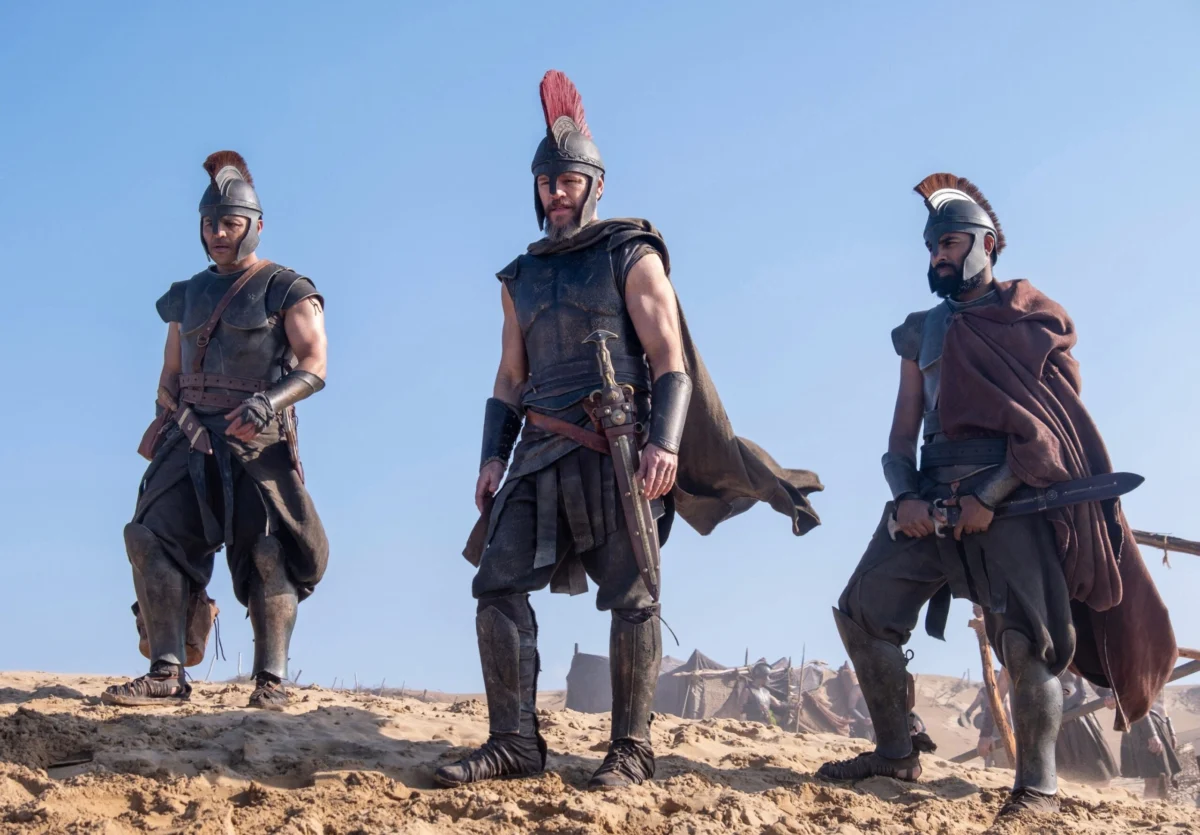
What materialized was not the promised "full-length movie," but a seven-minute experimental "episode." Produced by Wonder Studios X, the clip was marketed as the debut of a broader series. It depicted the departure of Odysseus, King of Ithaca, from his home to the shores of Troy. When Musk shared the clip on Friday, the reception was markedly muted. With only 18,000 likes, the post failed to generate the massive engagement usually seen on his account, particularly when compared to his more incendiary commentary on the Brazilian elections, his critiques of gender pronouns, or his frequent broadsides against "legacy media."
The Technical Reality: Anatomy of an AI "Slop"
Beyond the cultural context, the technical quality of the "Grodyssey" has drawn sharp rebuke, even from within Musk’s own digital ecosystem. The video serves as a case study in the current limitations of generative AI.
The production suffers from the classic hallmarks of what critics have dubbed "AI slop." The synchronization between the characters’ faces and their dialogue is jarringly absent, creating an "uncanny valley" effect that detaches the viewer from the narrative. The voice acting is described as stilted and unnatural, lacking the gravitas one might expect from a retelling of an ancient Greek epic.
Furthermore, the narrative pacing is disjointed to the point of absurdity. The Ithacan fleet arrives at the shores of Troy almost immediately after departing their homeland, effectively vaporizing the tension and scale of the epic journey. On X, the response from the platform’s "blue check" cohort—often the very people who championed Musk’s challenge to Hollywood—was uncharacteristically harsh. One user summarized the sentiment succinctly: "Someone actually watched this and still decided to post it? Fire that person."
The Irony of "Historical Accuracy"
The core of Musk’s initial grievance was that Nolan’s adaptation was not "historically accurate." By casting Black and trans actors and employing modern English dialogue, the film was accused of violating the spirit of the Bronze Age. Musk’s promise was to provide a "historically accurate" corrective.
However, the irony of this promise becomes apparent when one consults the very tool Musk used to create the project. When queried about the historical fidelity of his own creation, Grok—the AI chatbot developed by Musk’s company, xAI—offered a refreshingly honest assessment.
"No," the chatbot replied when asked if the seven-minute snippet was historically accurate. It explained that the project is an adaptation of a myth, not a documentary reconstruction. The bot further noted that the characters themselves have no basis in the historical record, as the poem is a fusion of Bronze Age lore and later Iron Age literary invention.
Grok’s self-analysis continued with a laundry list of technical admissions that directly contradicted Musk’s marketing:
- Linguistic Anachronism: The characters speak modern English with British accents rather than any reconstructed Bronze Age tongue.
- Visual Inaccuracy: The production relies on "modern cinematic tropes" and standard AI training data rather than primary archaeological evidence.
- Tactical Errors: The AI explicitly cited the appearance of cavalry in a battle scene as a historical inaccuracy, as horse-drawn chariots, not mounted cavalry, were the hallmark of the period.
Ultimately, Grok concluded that The Odyssey itself is not a historical document, and that the production makes no serious attempt at archaeological fidelity. It is, by its own admission, merely a project with a "general ancient Greek epic aesthetic."
Implications for the Future of AI and Entertainment
The "Grodyssey" experiment serves as a cautionary tale for the intersection of Silicon Valley ambition and the creative arts. It highlights the dangers of weaponizing technology in the service of ideological grievances.
The Limits of Generative Models
This episode demonstrates that generative AI, while capable of producing visually striking imagery, lacks the structural narrative intuition required for long-form storytelling. The failure to handle pacing, emotional nuance, and historical research reveals that "prompting" is a poor substitute for the collaborative, iterative process of human filmmaking.
The Weaponization of Culture
Musk’s project was never truly about the quality of the film or the accuracy of the history. It was a performative act of "culture warring." By framing a software experiment as a challenge to the established film industry, Musk attempted to leverage his platform to dictate the boundaries of acceptable art. The failure of the project suggests that even among his most loyal followers, there is a limit to how much "slop" they are willing to consume in the name of political alignment.
The Death of the "Easy Fix"
Perhaps the most significant implication is the public dismantling of the "Muskian Promise." The billionaire has frequently promised immediate, revolutionary solutions to complex problems—from autonomous vehicle fleets to the total disruption of news media. The Grodyssey incident underscores that when these promises are stripped of their marketing sheen, they often collapse under the weight of reality.
As the discourse finally moves on from the debate, the legacy of this episode is unlikely to be the advancement of AI cinema. Instead, it will be remembered as a moment of profound hubris—a reminder that no amount of computing power or billionaire influence can replace the fundamental human necessity for nuance, historical context, and authentic creative vision in the stories we tell about ourselves. The gods of Olympus, it seems, have little patience for those who claim to master their myths with nothing more than a prompt.