By Samuli Haapasalo
On September 22, 2026, on the eve of the autumnal equinox, a routine hike along a forest path in Sipoo, Finland, turned into a moment of biological reflection. Amidst the cooling air and the fading greenery of the Finnish forest, I crossed paths with one of the most misunderstood and ecologically vital inhabitants of our wilderness: the common European adder (Vipera berus).
This encounter, occurring as the northern landscape prepares for its long, dormant cycle, serves as a poignant reminder of the intricate biological clock that governs our reptilian neighbors. As temperatures drop and the metabolic demands of cold-blooded creatures reach a critical juncture, the adder serves as a sentinel of the season—a living bridge between the active summer and the silent winter.
The Autumnal Transition: A Race Against the Frost
The timing of this sighting was notable. While spring sightings of adders—often occurring as they emerge from their winter dens to bask in the first warming rays of April—are widely reported and celebrated by nature enthusiasts, the autumn retreat is a far more clandestine affair. By late September, the biological imperative for the adder shifts from foraging and reproduction to the urgent necessity of survival.
For an ectothermic animal, the change in season is a matter of life and death. The adder does not have the luxury of generating its own body heat; its physiological state is dictated by the ambient temperature. As the nights grow longer and the sun’s angle diminishes, the snake must locate a secure hibernaculum—a subterranean refuge where it can remain below the frost line throughout the harsh Finnish winter.
The Mechanics of Hibernation
The physiological requirements for a successful winter are stringent. The snake must not freeze, yet it must also conserve its precious energy reserves, accumulated through a summer of hunting small mammals, amphibians, and nestlings. If the snake emerges too early or fails to reach a sufficiently deep location, it risks death. Consequently, the last weeks of September are characterized by a gradual, deliberate movement toward these communal wintering sites.
These sites are often geological marvels—ancient shorelines filled with rounded stones that allow for deep, insulated crevices, or deep fractures within solid bedrock. In the most ideal locations, hundreds of adders, sometimes sharing their quarters with grass snakes (Natrix natrix) and other reptiles, will cluster together to survive the winter. This communal behavior is not social in the human sense, but rather a survival strategy that optimizes the use of protected, stable microclimates.
A Close Encounter: The Anatomy of a Meeting
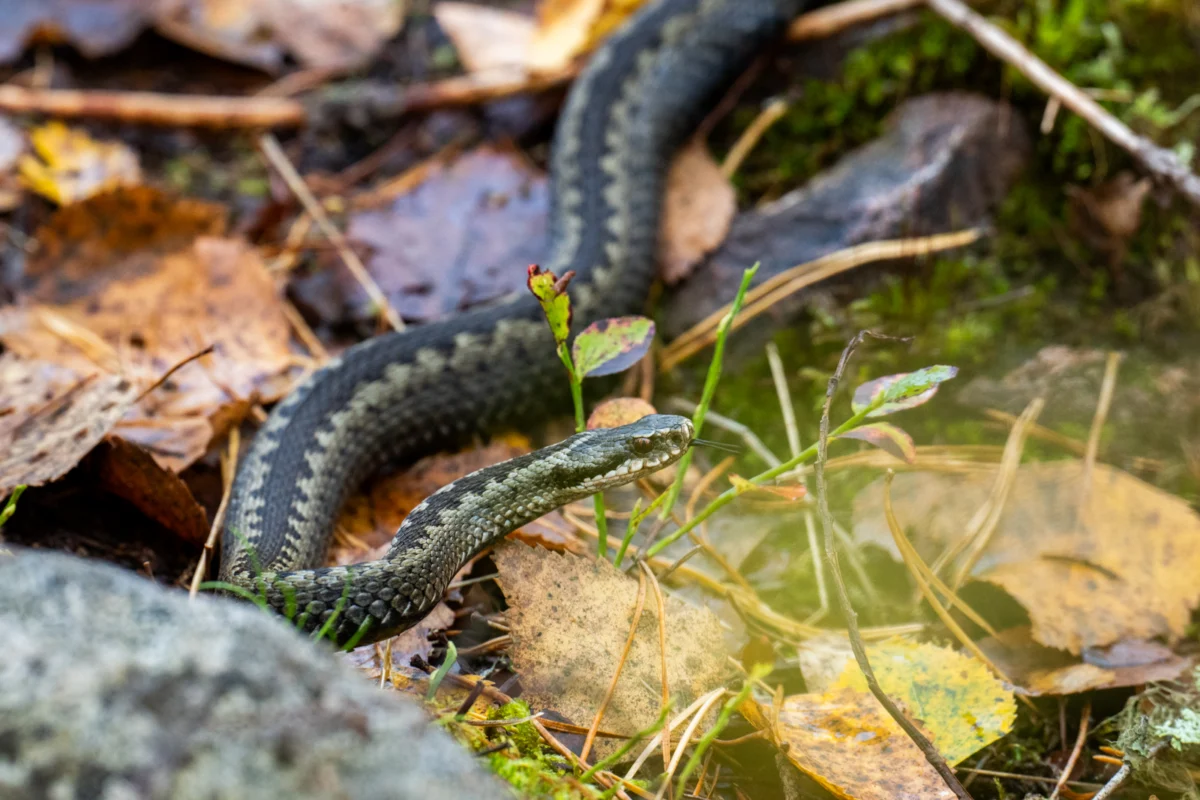
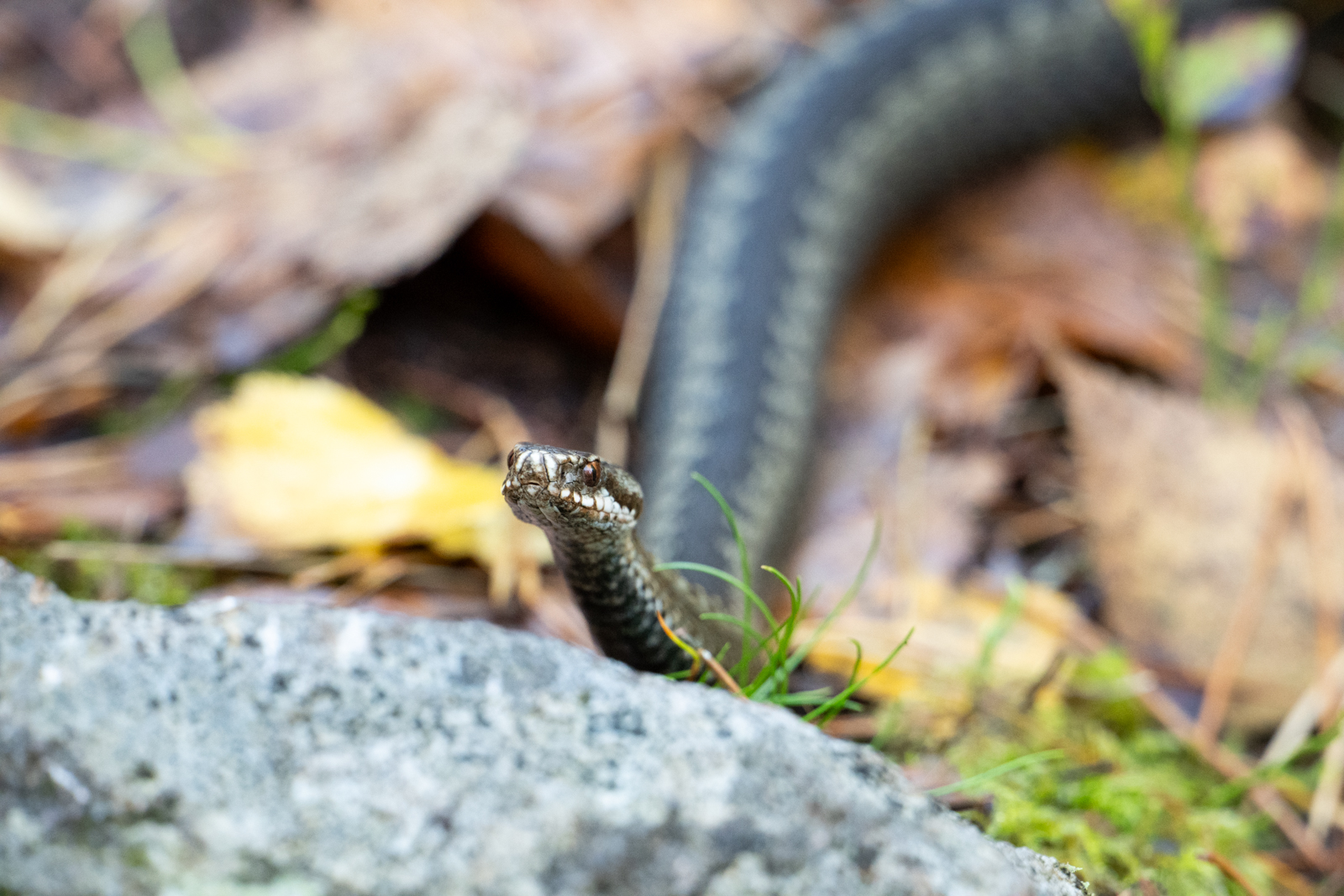
My encounter with the specimen in Sipoo was one of mutual assessment. The snake was positioned on the path, likely having spent its final hours of warmth absorbing the sun’s energy from a nearby rocky slope. As we met, the adder demonstrated the characteristic behavior of its species: caution, followed by deliberate, calculated movement.
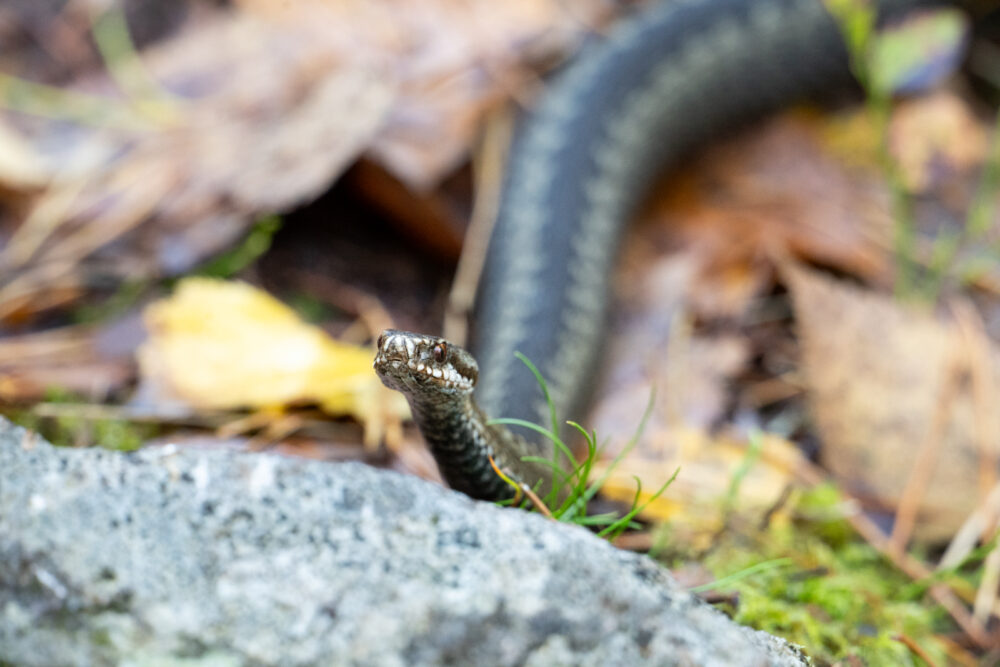
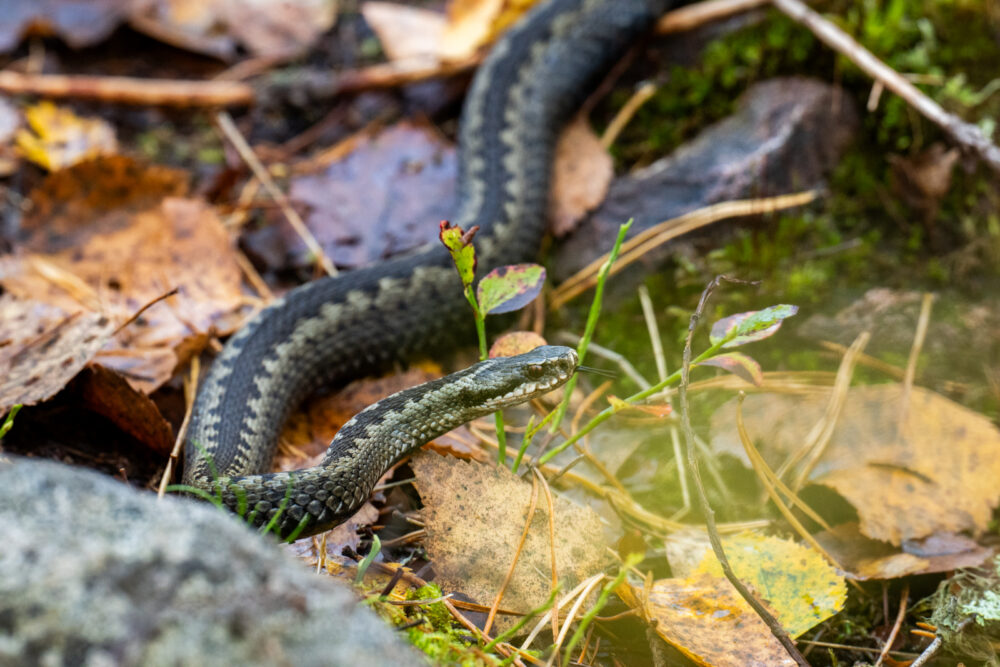
It did not strike; instead, it raised its head, leaning against a stone, and flicked its forked tongue into the air. This behavior is not a threat, but an attempt to "taste" the environment—collecting chemical cues to determine whether I represented a predator or a harmless bystander. I took a few steps back, adjusting my lens to capture the moment without causing undue stress to the animal.
The adder was a mature male, robust and well-fed, suggesting a successful hunting season. Its movements were slow, reflecting the drop in temperature. Even the transition from the path into the dense undergrowth was methodical. It was clearly a creature in transition, moving with the heavy, measured pace of a reptile that knows its window of activity is closing.
Supporting Data: Understanding Finnish Reptiles
To better understand these encounters, I turned to the extensive research provided by Niina and Joonas Gustafsson. Since 1999, their platform, Sammakkolampi.fi, has served as a primary repository for information regarding Finland’s herpetofauna. Their work provides an essential service in demystifying the life cycles of our native amphibians and reptiles, including salamanders, frogs, toads, lizards, and snakes.
The Diversity of Finnish Herpetofauna
The Gustafssons’ research emphasizes that the adder is not merely a creature of myth or fear, but a key component of the Finnish ecosystem. Their documentation covers the full spectrum of local biodiversity:
- The Common Adder (Vipera berus): The only venomous snake in Finland, yet notably shy and non-aggressive unless provoked.
- The Grass Snake (Natrix natrix): Often confused with the adder, this non-venomous, water-loving species is also preparing for winter.
- The Slow Worm (Anguis fragilis): A legless lizard that is frequently mistaken for a snake, highlighting the importance of public education in identifying our neighbors.
The ecological role of these animals is profound. As predators, they control populations of rodents that might otherwise cause agricultural damage or spread disease. As prey, they provide sustenance for birds of prey and mammals. The loss of a single hibernaculum can have cascading effects on local populations, which is why protecting these sites is a pillar of conservation.
Official Perspectives and Ecological Implications
Conservationists and ecologists in Finland have noted that as climate patterns shift, the timing of hibernation and emergence may also change. Warmer autumns might keep snakes active longer, while unstable winters with minimal snow cover—which acts as an insulator for the ground—could threaten the survival of those in shallow hibernacula.
The Finnish Nature Association (Suomen Luonto) has long advocated for the protection of habitats that support these species. The "Year in Nature" project underscores the importance of documenting these sightings. By reporting observations, citizens contribute to a broader understanding of how climate change and human land use impact the distribution of sensitive species.
The Human-Reptile Interface
Public perception of the adder remains a challenge. Despite being a protected species, adders are frequently killed out of fear. The irony is that the adder is one of the most sedentary and defensive animals in the forest; it would almost always prefer to flee than to confront a human.
Education initiatives, such as those promoted by the Gustafssons, encourage a "live and let live" philosophy. By understanding that a snake on a path is simply an animal trying to reach its winter home, the public can transition from fear to appreciation. This shift in perspective is essential for the preservation of biodiversity.
Conclusion: The Quiet Winter Ahead
As the adder I encountered disappears into the leaf litter and the cracks of the earth, it leaves behind a forest that is preparing for its own long sleep. The encounter was a reminder that we share this land with creatures whose lives are governed by ancient, rhythmic cycles of heat and cold, movement and stillness.
The adder will now spend the next six months in a state of suspended animation, its heart rate and metabolism slowed to a fraction of their summer capacity. It will wait out the frost, the darkness, and the wind, shielded by the earth itself. And come April, when the first warmth of spring touches the forest floor, it will emerge once more—a survivor of the Finnish winter, and a testament to the resilience of our natural world.
For those interested in learning more about these fascinating creatures, visiting resources like Sammakkolampi.fi is highly recommended. By familiarizing ourselves with the biology and behavior of our native reptiles, we do not just protect them; we enrich our own connection to the wild places that remain in our midst.
As we look toward the winter months, let us carry the image of the adder—not as a symbol of danger, but as a symbol of the endurance required to survive in the North. It is a quiet, hidden life, yet it is one that is vital to the health and complexity of our forests.