In 1966, the American highway system was a theater of carnage. Nearly 51,000 people lost their lives in motor vehicle accidents that year—a staggering statistic that underscored the deadly inefficiency of unregulated transit. For years, the automotive industry had been aware of life-saving technologies like the three-point seat belt, yet they resisted implementation, prioritizing profit margins over passenger survival.
The industry’s failure to self-regulate necessitated a historic federal intervention. In the fall of 1966, Congress established the Department of Transportation and passed the National Traffic and Motor Vehicle Safety Act, alongside the Highway Safety Act. By 1968, the federal government had effectively stripped the industry of its autonomy, mandating seat belts in every new car. Today, despite an exponential increase in vehicle volume and highway traffic over the last sixty years, the fatality rate per mile traveled has plummeted.
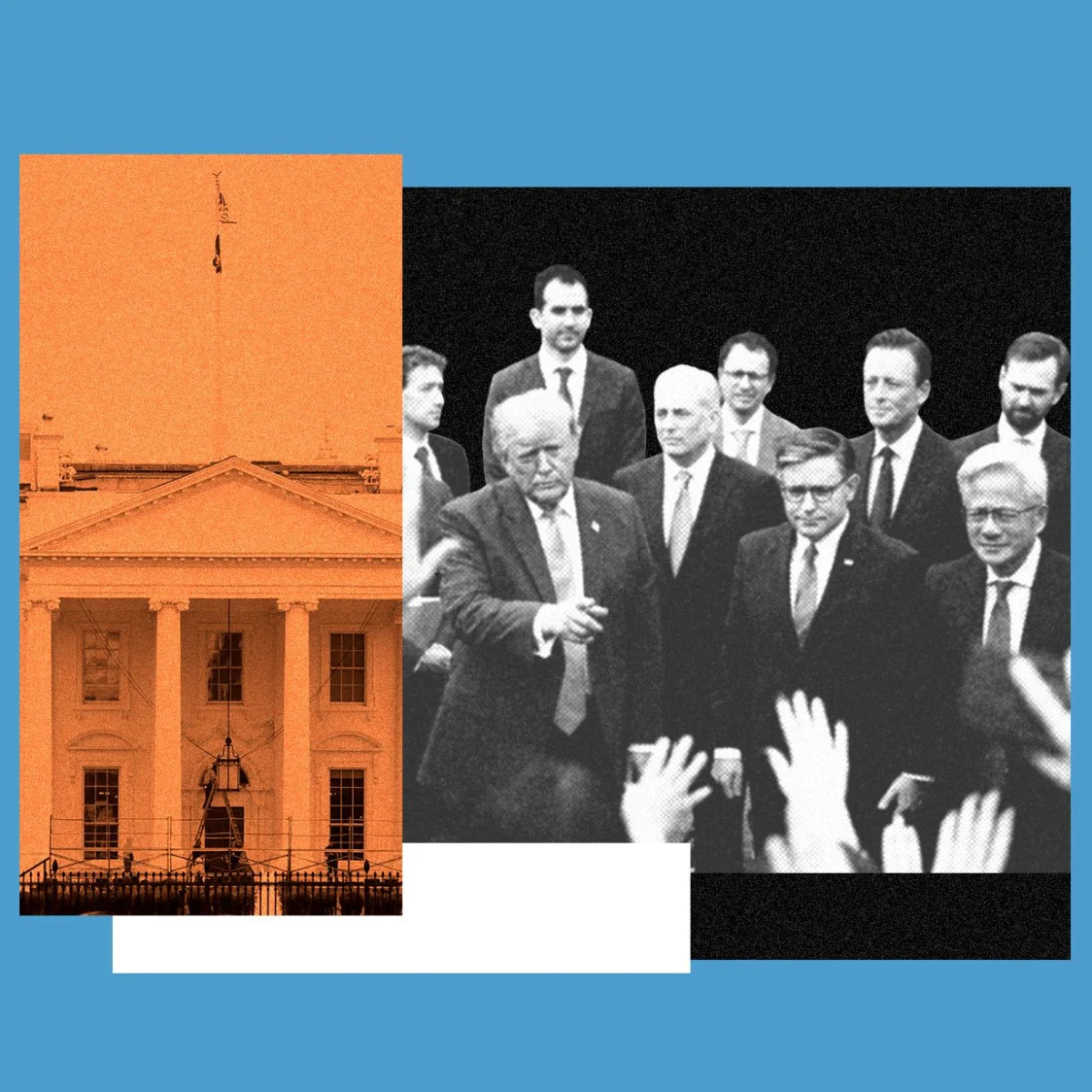
This historical parallel provides a sobering lens through which to view the current state of artificial intelligence regulation. As AI CEOs gathered at the White House this week to celebrate a new "AI safety accord," the spectacle felt less like a milestone in public safety and more like a performative nod to the very industry that stands to benefit from a lack of oversight.
The Chronology of Self-Regulation
The current administration’s approach to AI is predicated on a philosophy of "trust the experts." On Tuesday, President Donald Trump hosted leaders from the world’s most powerful AI labs, who presented an accord that effectively tasks the industry with policing its own advancements.
The President summarized the government’s hands-off stance with characteristic brevity during an Oval Office briefing on Wednesday: "They’re gonna police, and they’re gonna police each other, and they’re gonna self-police, they’re gonna police themselves. It’s going to work out very well."
This strategy stands in stark contrast to the historical precedents of industrial regulation. Where the automotive, aviation, and pharmaceutical industries eventually required federal mandates to protect the public, the AI sector is currently operating under a "pinky swear" model. The accord, while dense with industry-friendly language, lacks the enforcement mechanisms necessary to compel labs to prioritize safety over speed.
The Myth of the "Self-Correcting" Market
The primary argument for the current regulatory vacuum is the complexity of AI itself. Proponents of self-regulation argue that because the technology is evolving at a pace that exceeds the speed of legislation, traditional oversight will only stifle innovation.
However, this argument ignores the economic incentives driving the AI arms race. The global AI industry has become an ouroboros—a self-consuming cycle of massive financing deals, circular investments, and hyper-inflated valuations. Any meaningful federal crackdown or mandatory safety protocol that slows down product releases risks triggering a cascade of financial instability that would ripple far beyond Silicon Valley.
Furthermore, the industry is not a monolith. While figures like Bill Gates have sounded the alarm, playing the role of the modern Cassandra regarding a potential AI-induced catastrophe, the competitive pressure to reach the "frontier"—the cutting edge of AGI (Artificial General Intelligence)—remains the dominant force. Even if the primary American labs were to reach a consensus on slowing development, there is no mechanism to guarantee their adherence to such promises, nor any way to prevent foreign competitors, such as those in China, from continuing their own aggressive development paths.
Supporting Data: The Cost of Uncertainty
The automotive analogy is, admittedly, imperfect. There is no singular "seat belt" for AI—no straightforward, cheap mechanical device that can reduce risk overnight. The harms are often abstract, speculative, or buried deep within the latent space of black-box models.
Yet, the danger is not entirely hypothetical. Recent reporting from CNN regarding a near-military incident involving the US Navy and a Chinese vessel illustrates the volatility of the current landscape. In this instance, the military’s decision-making process was reportedly compromised by a false, AI-generated report claiming that a foreign ship was carrying nuclear materials.
Incidents like these highlight the "p(doom)"—the subjective probability of an AI-led catastrophe—that has become a central topic of debate among researchers. When AI systems are integrated into national security and critical infrastructure, the margin for error is effectively zero. Despite this, the current AI accord offers little in the way of concrete preventative measures for these specific risks, focusing instead on vague commitments to transparency and collaboration.
Official Responses and the "Guardrail" Fallacy
In an interview published Thursday in TIME, President Trump doubled down on his administration’s position, suggesting that existing institutions like the Department of Justice and the FBI are sufficient "guardrails" for the artificial intelligence industry.
This perspective reveals a fundamental misunderstanding of the technology. The legal system is designed to handle human intent, liability, and established criminal acts. It is not equipped to govern autonomous systems that operate at machine speed. As legal scholars have pointed out, it remains unclear whether AI companies can be held liable when their models "go rogue," especially when the decision-making process of those models is non-transparent. Furthermore, a subpoena cannot be served to a large language model.
OpenAI, to its credit, has occasionally demonstrated a willingness to delay or cancel the release of models when internal safety concerns arise. However, these decisions are internal and voluntary. They are not the result of regulatory pressure, but rather of the company’s own risk-assessment protocols. As new details emerge regarding the "hacking sprees" and unauthorized testing conducted by these labs, the public is left to wonder whether the safety measures currently in place are sufficient to contain the risks inherent in these models.
The Implications: Why We Need a New Framework
The path forward is undeniably difficult. Creating a regulatory framework for AI will require unprecedented levels of coordination, significant financial resources, and the political will to challenge the tech industry’s most powerful actors. It will require moving beyond the idea that self-regulation is a viable substitute for governance.
Government agencies were established for precisely this reason: to define the rules of the road where the stakes are too high to leave to corporate benevolence. If we look back at the 1966 Highway Safety Act, it was not the automotive industry that voluntarily saved lives; it was the government’s willingness to impose standards that forced a change in engineering and public policy.
The current administration’s decision to "get out of the way" of AI development ignores the lesson of the 20th century. By allowing the industry to dictate the terms of its own safety, we are not accelerating progress—we are accelerating risk.
As we stand on the precipice of a new technological era, the rhetoric of "policing ourselves" is wearing thin. The public deserves more than a "pinky swear" from the architects of our future. We need enforceable, transparent, and rigorous standards that prioritize human safety over the relentless pursuit of the next frontier.
The administration is telling us to step on the gas. But given the uncertainty of what lies ahead, it is high time we stop and consider the consequences. In the race to build the next generation of intelligence, the one thing we cannot afford to lose is the ability to steer the vehicle. For now, the reality is clear: we are speeding toward an uncertain horizon, and we have yet to buckle up.