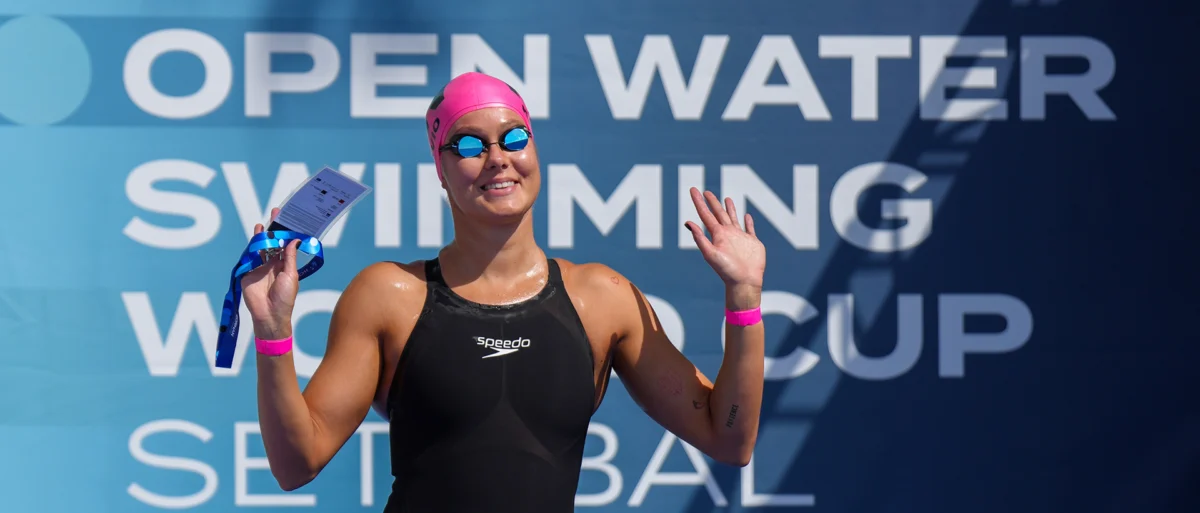
At the Leppävaara swimming pool, the morning air is thick with the dampness of low pressure, but the atmosphere on the pool deck is electric. Cutting through the water with a stroke that balances effortless fluidity with high-octane power, Louna Kasvio—the solitary star of Finnish open-water swimming—reaches the wall.
As her hand strikes the tiles, she surfaces, a subtle smile playing on her lips. "I’m sorry, could you move just a bit? I need to keep an eye on that wall clock," she says with a light chuckle. "I’m not quite done yet."
She has already been in the water for nearly two hours. It is her standard morning routine, a drop in the bucket of a training regimen that defines her existence. For Kasvio, this is not merely a sport; it is a full-time, professional commitment that demands every waking moment of her life.
The Architecture of a Champion: A Life Defined by 35 Hours a Week
To understand Louna Kasvio is to understand the staggering mathematics of elite endurance sport. Her life is partitioned into precise blocks of exertion and recovery. A typical week involves 80 to 100 kilometers of swimming, supplemented by three strength training sessions and four bouts of dry-land aerobic work. In total, she logs between 30 and 35 hours of focused training per week. The remaining time is not "leisure"; it is dedicated exclusively to recovery, nutritional management, and mental preparation for the next session.
"The best thing about sports is everything," Kasvio reflects, drying off after a grueling session. "The training, the competitions, the entire lifestyle. It is a natural choice for me. I’ve never questioned it. It comes from within—a desire that is entirely my own."
There is a weight to her voice when she speaks about her path. As a scion of Finland’s most storied swimming dynasty, the pressure to conform to a legacy is immense. Yet, Kasvio is determined to be known for her own merit. "When I was younger, it used to irritate me when people would constantly compare me to my father, or my grandparents, or even their parents. I decided early on that I wanted to carve out my own career and achieve my own results."
A Four-Generation Legacy: Navigating the Weight of History
To appreciate the magnitude of Louna Kasvio’s ambition, one must acknowledge the lineage. Her father and coach, Antti Kasvio, is a household name in Finland: a World Champion, European Champion, and Olympic bronze medalist in freestyle swimming. Her grandfather, Matti Kasvio, represented Finland in the 1964 Olympics, and her grandmother, Ulla Patrikka, competed in backstroke at the 1968 Games. Even further back, her great-grandparents, Einari and Rauha Patrikka, were elite-level swimmers, and the family patriarch, Taisto Kasvio, served as a national team coach.
Despite this unprecedented pedigree—four generations of elite performance—Louna remains grounded. She does not avoid the topic of her family history, but she refuses to let it define her. "In our family, we’ve always talked about swimming. It’s been the center of our lives. But no one forced me into the pool. I don’t dwell on the past or feel the weight of the family name; I look forward to my own career."
Chronology: From School Races to International Waters
Kasvio’s journey to the pinnacle of open-water swimming was not a straight line. While she learned to swim before the age of three, it took years for the competitive fire to ignite. "I wasn’t particularly athletic when I was little," she admits. "I preferred reading, talking, and doing other things."
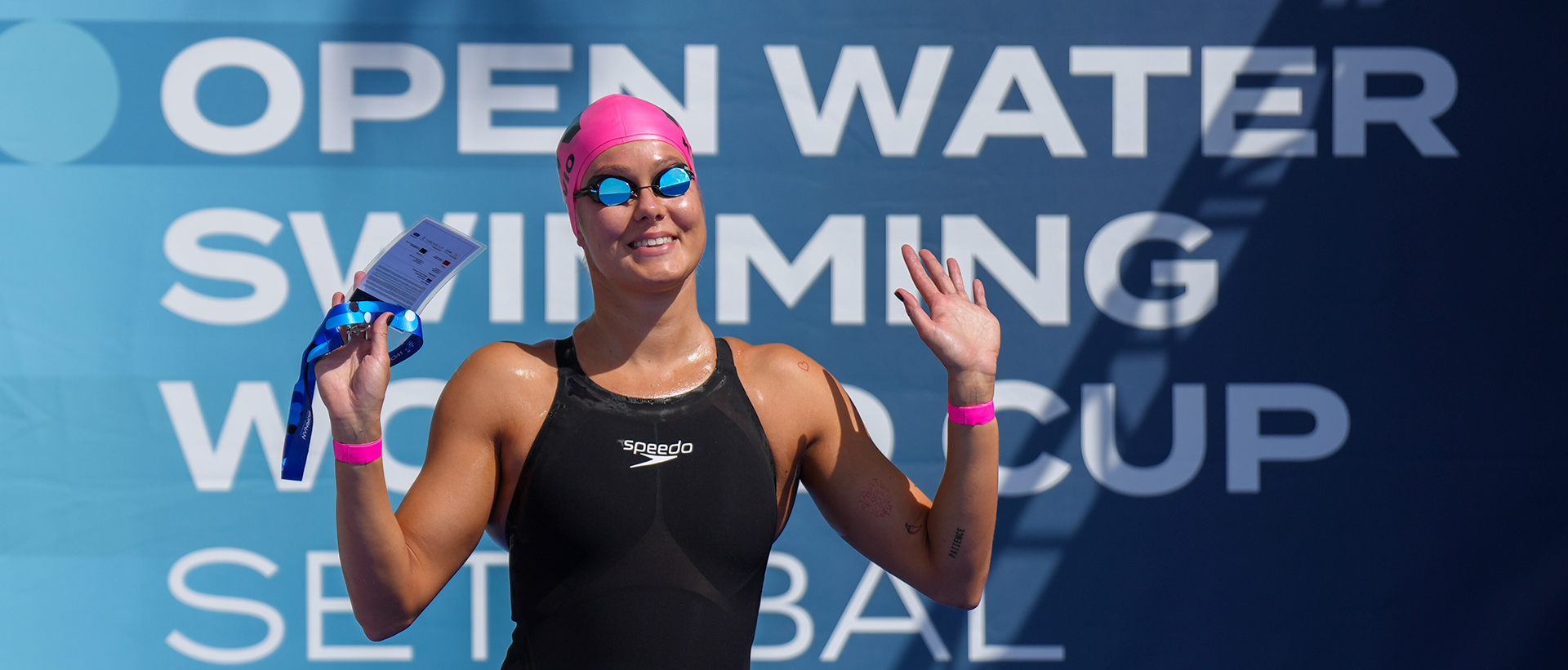
The turning point came in the first grade, when she won a 25-meter race in a school competition. That initial taste of success triggered a shift in mindset. By age 10, she was participating in her first age-group championship meets. Her development was linear and rapid; by 17, she was a Junior European medalist and a senior-level European Championship finalist in pool swimming.
However, the year following her breakout was fraught with illness and setbacks. It was then that her father suggested she try open-water swimming at the Finnish Championships in Raseborg. "It was cold and raining, but I finished second among all men and women in the race," she recalls. "I loved the feeling. I went to the Junior European Championships shortly after and finished fifth. Suddenly, there was a new dimension to my life. Open-water racing was more interesting, and I was hooked."
The Tactical Brutality of Open Water
Transitioning from the controlled, sterile environment of a pool to the unpredictable chaos of the open ocean has been the defining challenge of Kasvio’s career. Unlike pool swimming, where lanes provide a sanctuary of solitude, open-water racing is a tactical, physical, and often claustrophobic battle.
"The biggest difference is the competition itself," Kasvio explains. "Technically, you have to look forward constantly, and your stroke frequency must be higher because the waves and current dictate your pace. You can’t just decide your own speed; you have to stay with the lead pack from the start."
The "drafting" element—the ability to swim behind another athlete to save energy—is essential, but it comes with a price. "There can be 80 swimmers in close proximity, and you have to hold your ground. But being aggressive is counterproductive; it raises your heart rate, increases lactic acid, and ruins your technique. You have to be calm."
The logistical hurdles are equally daunting. Athletes must navigate "feeding zones" where coaches offer hydration bottles on the end of long fishing poles. The swimmer must grab the bottle, hydrate, and return it while maintaining full speed—all within a two-to-three-second window.
Supporting Data: The Logistics of Elite Performance
The Kasvio team functions as a tightly knit unit: Louna swims, Antti coaches, and her mother, Hanna Kasvio, manages the complex logistics that make such a high-level career possible.
"The requirements are high, and we are all prepared to invest everything into Louna’s career," Hanna explains. "We spend more than a third of the year abroad. It requires a massive amount of planning and constant adjustments."
The lack of specialized training facilities in Finland remains a significant hurdle. "To train for marathon swimming properly, we need a lane in a pool for two hours, twice a day, reserved exclusively for us," Hanna notes. "In municipal pools, that’s not always possible. Our international competitors don’t have these challenges; they have private training centers or reserved lanes. Louna is giving away a small margin in training conditions, but she’s closing that gap with sheer determination."
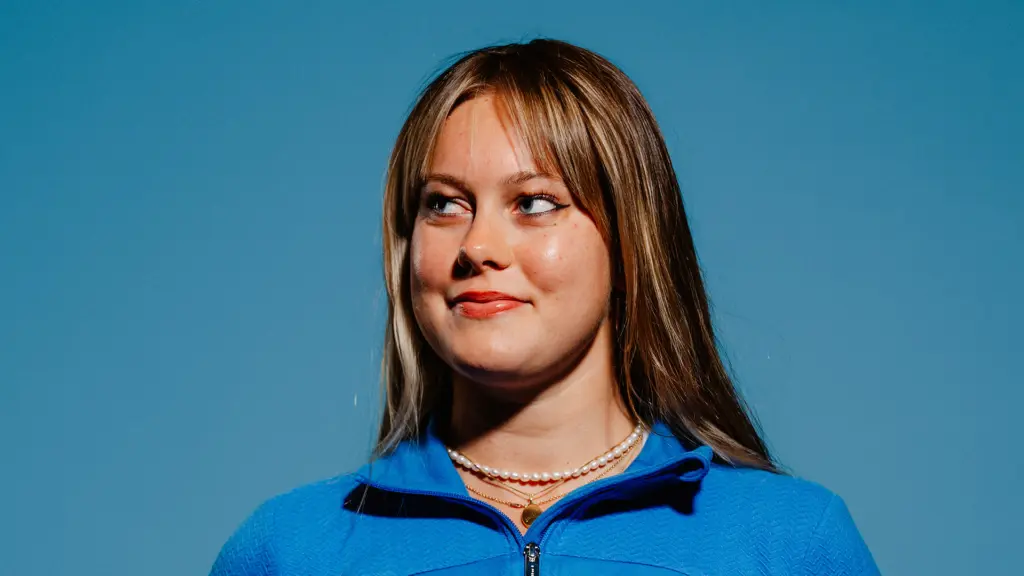
Despite these challenges, the results are speaking for themselves. In the 2025 season, Louna won the overall Junior World Cup and finished 19th at the senior World Championships. This summer, she secured 8th place in the 10km and 10th in the 5km at the European Championships.
Official Responses and Strategic Development
The Finnish Olympic Committee has recognized Kasvio’s potential by including her in the Next Generation Team Finland program. This initiative, aimed at athletes aged 15–22, provides a tailored support package valued at over €10,000, including expert resources and financial backing.
Antti Kasvio, reflecting on his dual role as father and coach, acknowledges the evolution of the sport. "I trained for 2-to-4-minute events; Louna’s races last 120 minutes. You can’t use the same training," he says. "Her process is arguably more brutal than anything I experienced. We focus on technical mastery so she can hold an anaerobic threshold for the entire race and still have a kick at the end."
Implications: The Path to the Top
Open-water swimming is a sport of maturity. Unlike sprint events in the pool, where champions often emerge in their teens, Olympic-level success in marathon swimming typically arrives between the ages of 24 and 25. At 20, Kasvio is perfectly positioned for the coming Olympic cycle.
She remains remarkably composed about the road ahead. "I believe my fitness and technical skills are already near the world elite," she says. "I’ve trained with medalists and I know I can match their speed. The jump to the podium requires constant refinement of my tactical sense and the routine that comes with experience."
For Louna Kasvio, the "monotony" of the pool—the early mornings in the dark, cold Finnish autumn—is not a burden but a necessity. She views herself as a resilient athlete who thrives on challenge. "I don’t look for an easy way out," she says. "If I’m not sick or injured, I always deliver a quality performance. Success is just a natural consequence of that."
As she looks toward the future, her goals are clear, yet broader than just medals. "I want to have as long a career as possible and enjoy the sport from start to finish. I want to fully realize my potential. I don’t feel like I’m missing out on anything else in life. There’s plenty of time for that later."
In the silence of the Leppävaara pool, the clock ticks on. For Louna Kasvio, the race isn’t just against the clock or the other swimmers—it’s about the quiet, relentless pursuit of her own greatness, one stroke at a time.