With exactly 58 days remaining until the 2026 Mr. Olympia, the bodybuilding community is currently besieged by a familiar, albeit tiresome, ritual: the relentless demand for early predictions. As the countdown clock ticks toward the most prestigious weekend in professional bodybuilding, fans and pundits alike have flooded social media and private inboxes, seeking a definitive answer on who will hoist the Sandow trophy.
However, in the eyes of seasoned observers, attempting to predict a winner two months out is a fool’s errand. Current physique updates are often misleading, lacking the final polish and “dryness” that only the final weeks of prep can provide. At this stage, any assessment is less an objective analysis and more a popularity contest. While many would point to the reigning elite—such as the formidable Derek Lunsford—the true story of the 2026 Olympia lies not in the names, but in the structural evolution of the sport itself.
The Chronology of Bodybuilding’s Structural Evolution
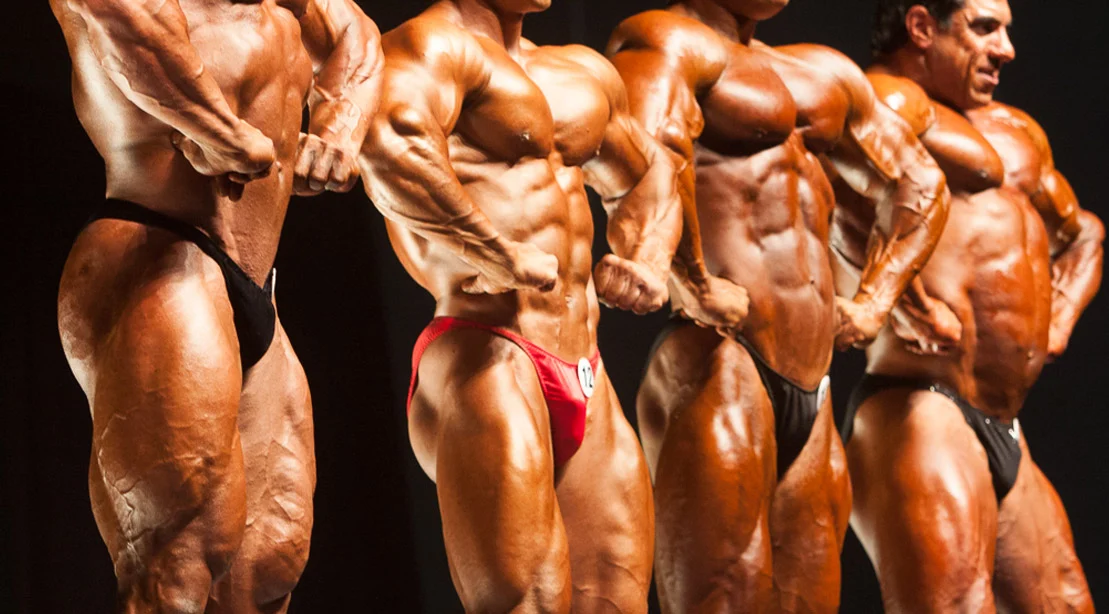
To understand the stakes of the upcoming Olympia, one must look at the trajectory of the sport over the last decade. Historically, the Mr. Olympia stage was defined by the “X-Frame”—the classic silhouette characterized by wide clavicles, a narrow waist, sweeping quads, and a V-taper that projected the image of a larger-than-life superhero.
However, the sport underwent a significant shift around the early 2020s. We entered what can be described as the “Wedge Era.” Drawing a parallel to the 1970s automotive industry—where companies like Triumph, Lamborghini, and Lotus abandoned curves for aggressive, angular geometry—modern bodybuilding began prioritizing density and compactness over traditional flow.
The battle between Hadi Choopan and Derek Lunsford over the past two years serves as the primary case study for this transition. Both athletes are shorter, incredibly dense, and possess a blocky, powerful aesthetic that judges found easy to compare because they occupied the same stylistic lane. It was a "wedge vs. wedge" dynamic that effectively sidelined the traditional tall, aesthetic frame in favor of sheer, pressurized muscle mass.
Supporting Data: The Rise of the X-Men
As we look toward the 2026 Olympia, the landscape is shifting once again. The emergence of athletes like Samson Dauda and the reigning Arnold Classic champion, Andrew Jacked, has reset the standard. These competitors represent a reclamation of the X-frame—a structural archetype that arguably aligns more closely with the historical identity of the Mr. Olympia title.
The Anatomy of the New Standard
- The X-Frame Revival: Dauda and Jacked possess the long limbs and broad structures that create a dramatic, aesthetic taper. Unlike the “wedge” athletes, who rely on mass-to-height density, these competitors utilize their height to create an illusion of greater scale.
- Aesthetics as a Deciding Factor: When conditioning levels are equal, the judges have historically favored the physique that offers the most “flowing” structure. The sheer visual impact of a tall, symmetrical athlete—someone who looks like a statue brought to life rather than a “human fire hydrant”—is beginning to reclaim its dominance in the eyes of the judging panel.
- The "Apples to Apples" Comparison: For the second consecutive year, we are seeing a balanced lineup. The presence of multiple top-tier athletes with similar structural profiles (Dauda and Jacked) forces the judges to move away from comparing disparate shapes and focus on the finer details of symmetry and proportion.
The Role of the Wild Card: Nick Walker
Amidst the debate between the “Wedge” champions and the “X-Men,” Nick Walker remains the ultimate variable. Walker occupies a unique space in the current hierarchy. He does not fit neatly into the X-frame mold, nor is he a traditional wedge. He is a high-density, high-definition anomaly.
If the 2026 Olympia becomes a battle of structural aesthetics, Walker wins through chaos. His ability to hit a level of conditioning that borders on the anatomical—showing every fiber and striation—can force the judges to ignore structural shortcomings. If the frontrunners, Dauda or Jacked, falter in their peak week, or if the wedge-based champions like Lunsford or Choopan are slightly off-balance, Walker is positioned to capitalize. He remains the standard-bearer for "maximum impact," and he will be the barometer by which the judges decide whether the sport truly wants to return to the X-frame ideal.
Implications for the Future of the Sport
The 2026 Olympia is shaping up to be a referendum on what the IFBB Pro League considers the "ideal" physique. If the judges opt to crown a winner who embodies the classic X-frame—such as an Andrew Jacked or a Samson Dauda—it will send a clear message that the “Wedge Era” has concluded.
Why Aesthetics May Win the War
The core implication of this shift is the return to the “superhero” silhouette. Historically, bodybuilding thrives when the public can look at the Mr. Olympia and see an aspirational, larger-than-life figure. The wedge physique, while undeniably impressive in its density, often lacks the artistic elegance that made the sport a cultural phenomenon in the golden era.
If Andrew Jacked, in particular, arrives on stage at 100% capacity, he poses a threat to every previous Mr. Olympia winner currently in the lineup. His combination of height, structural balance, and modern conditioning creates a “ceiling” that is difficult for shorter, wedge-based competitors to reach. The logic is simple: when conditioning is equal, the better frame wins.
Official Expectations and Expert Consensus
While industry experts continue to dismiss the “who will win” questions as premature, there is a growing consensus that the 2026 judging panel faces a crossroads. The expectations for this year’s show are high, with the top five expected to be comprised of at least three former Mr. Olympias and the current Arnold Classic champion.
The pressure is on the athletes to demonstrate that they can balance the extreme mass requirements of the modern era with the visual grace of the past. The “Shape of Things to Come,” a phrase once used to market the radical wedge cars of the 70s, now feels ironically appropriate for bodybuilding—only this time, the "shape" is reverting to the classic, flowing proportions that defined the sport’s most iconic years.
As we move closer to the event, the focus must shift from pure mass to the synthesis of conditioning and structure. If the X-Men truly take the stage at their peak, the 2026 Olympia will not just be another contest; it will be a historic correction, signaling the end of the wedge-dominated era and a return to the heroic, aesthetic beauty that once set the standard for the world’s most muscular men.