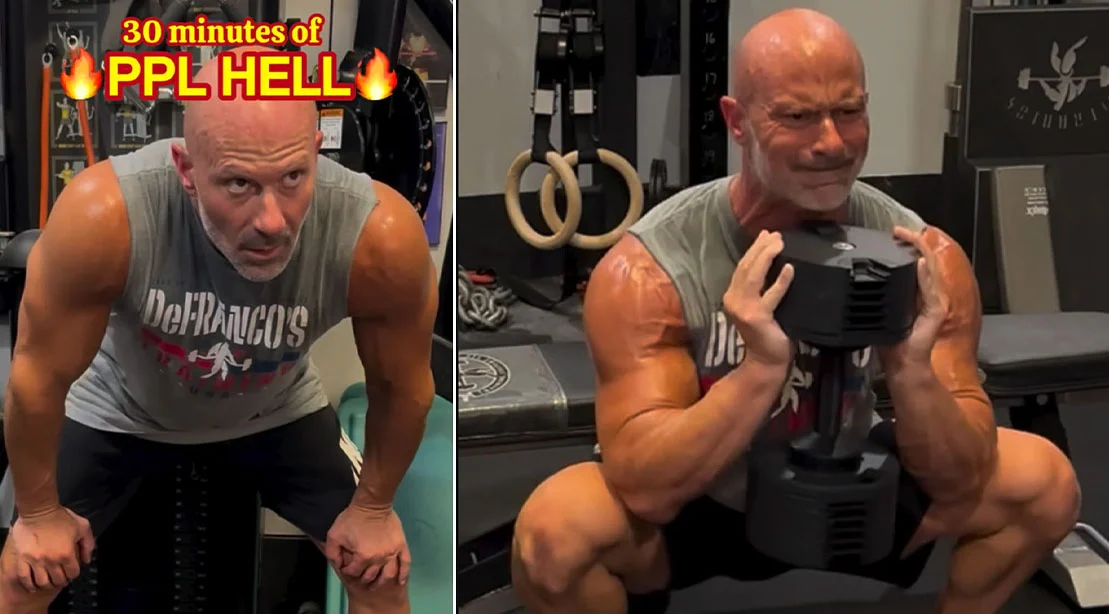
While the sweltering heat of late summer often encourages the masses to trade iron for pool loungers, the fitness industry’s elite are finding ways to generate their own heat. Joe DeFranco, the mastermind behind the magazine-cover physiques of NFL, UFC, and WWE superstars, has recently shifted the focus of his digital community back to the basics of raw, unadulterated effort. With a reputation for transforming athletes into physical juggernauts, DeFranco has unveiled a high-intensity, time-compressed routine he calls "30 Minutes of PPL (Push-Pull-Legs) Hell."
For the time-starved professional or the athlete looking to refine their metabolic conditioning, this protocol offers a masterclass in efficiency. By merging strength acquisition with cardiovascular demand, DeFranco is challenging the modern trend of mindless, high-repetition circuit training, replacing it with a structure that prioritizes mechanical tension and progressive overload.
The Anatomy of "PPL Hell": A Chronology of the Workout
The beauty of DeFranco’s protocol lies in its deceptive simplicity. Designed to be performed as an AMRAP (As Many Rounds As Possible) style workout within a 30-minute window, the circuit relies on three foundational movements.
The Execution Strategy
- Bench-Assisted Dumbbell Rows (Pulling): The circuit commences with a heavy pulling movement. By utilizing a bench for support, the lifter minimizes lower-back strain while maximizing isolation of the lats, traps, and rhomboids. This is a critical corrective move for the modern office worker, whose posture is often compromised by hours of hunched desk work.
- Goblet Squats (Pushing/Legs): Transitioning directly into the lower body, the goblet squat forces the athlete to maintain an upright torso, engaging the quads, glutes, hamstrings, and the often-neglected adductors. Because the load is held anteriorly, the core and lower back are forced to act as stabilizers throughout the entire range of motion.
- Shoulder Tap Pushups (Pushing): The final movement shifts the focus to the chest and shoulders. The addition of the "tap" introduces a dynamic anti-rotation component to the standard pushup, forcing the deep core muscles to fire to prevent the hips from swaying, while the pectoral muscles are subjected to continuous tension.
Supporting Data: Why This Protocol Works
The efficacy of DeFranco’s approach is rooted in the physiological principles of "Metabolic Resistance Training" (MRT). Unlike traditional steady-state cardio, which often sacrifices muscle mass for calorie expenditure, MRT aims to keep the heart rate elevated while maintaining high levels of tension on the muscle fibers.
Mechanical Tension and Hypertrophy
DeFranco emphasizes that this is not a routine for the lightest dumbbells in the rack. By instructing athletes to select a weight equivalent to 30–35% of their body weight for the rows and squats, he ensures that the lifter remains in the hypertrophy and strength-building zone. When you lift heavy under fatigue, you stimulate Type II muscle fibers—the fibers responsible for size and power—while the short rest periods between movements keep the metabolic cost high.
Addressing the Postural Crisis
Scientific literature consistently highlights that the modern sedentary lifestyle leads to "Upper Crossed Syndrome," characterized by tight chest muscles and weakened back muscles. By prioritizing the dumbbell row, DeFranco’s circuit acts as a remedial tool. The lats and rhomboids are the primary antagonists to the muscles tightened by desk work; strengthening them helps pull the shoulders back into a neutral, athletic position.
Official Insights: The Philosophy of Joe DeFranco
In a recent address to his 220,000-plus followers on Instagram, DeFranco offered a candid look at why he believes so many people fail at traditional gym workouts. "Unlike most ‘circuit training,’ the goal here isn’t to grab the lightest dumbbells in the gym and mindlessly bang out reps," he noted.
The philosophy is clear: conditioning should be a byproduct of your strength training, not a separate, diluted event. By keeping the movements heavy and the transitions short, the lifter is forced to develop "mental toughness." DeFranco’s coaching style has always been about "trusting the process," and his latest advice to his followers is to treat the 30-minute block not just as a physical test, but as a mental one.
"The load is heavy enough to challenge your strength and build muscle… while the format takes care of the conditioning," DeFranco explains. "Simple on paper. HELL in practice."
Implications for Modern Fitness and Longevity
The implications of adopting a "PPL Hell" approach extend far beyond the aesthetic benefits of a better physique. In an era where "busy" is the primary excuse for inactivity, the ability to pack a full-body stimulus into a 30-minute window is a vital skill.
Adaptability for All Levels
One of the most profound aspects of this protocol is its inherent scalability. While the "Hell" version is intended for seasoned athletes, it is easily modified for the general population:
- For the Beginner: Reducing the total time to 15 or 20 minutes allows the nervous system to adapt to the stimulus without excessive overtraining.
- For the Advanced: Elevating the feet during the shoulder tap pushups increases the vertical load on the shoulders, turning a standard movement into a more challenging, decline-angle exercise that targets the upper chest and deltoids with higher intensity.
- Progressive Overload: As the weeks progress, the athlete is encouraged to track the total number of reps achieved in the 30-minute window. This introduces a quantitative element to the training, providing a clear marker for improvement that is far more motivating than subjective "feeling."
The Importance of Recovery and Hydration
DeFranco’s call for "hydration" in his commentary is more than just a passing remark. High-intensity, heavy-load circuits lead to significant sweat loss and electrolyte depletion. For those looking to replicate this level of intensity, adequate recovery—including sleep, proper nutrition, and electrolyte balance—is not optional; it is the foundation upon which the "heavenly results" are built.
The Future of High-Efficiency Training
The "PPL Hell" circuit serves as a reminder that the fitness industry is moving away from the bloated, two-hour "gym sessions" of the past. As our lives become increasingly complex, the most effective training programs will be those that prioritize density.
By focusing on compound movements that recruit the maximum amount of muscle mass, DeFranco provides a template that can be used for a lifetime. Whether you are an NFL hopeful or a corporate executive looking to reclaim your fitness, the principles remain the same: lift heavy, keep the intensity high, and keep your form impeccable under pressure.
DeFranco’s methods are not for the faint of heart, but they are undeniably effective. He has successfully distilled the complexities of athletic performance into a 30-minute block of work. For those willing to walk through the "hell" of the circuit, the promise of a stronger, more resilient, and more capable body awaits on the other side.
As you prepare to step into the gym, keep DeFranco’s parting advice in mind: Think positive, and trust in the process. The results, much like the sweat, will follow.
Key Takeaways for Your Next Session:
- Equipment: Select dumbbells that are 30-35% of your body weight.
- Tempo: Do not rush the eccentric (lowering) phase. Maintain control to maximize time under tension.
- Frequency: This workout is taxing on the Central Nervous System (CNS). Limit to 2-3 times per week to ensure adequate recovery.
- Mindset: Treat the 30-minute clock as an opponent. Your goal is to increase your total output over time, proving that your work capacity is expanding alongside your strength.
To stay updated with the latest training modalities from Joe DeFranco, you can follow his ongoing journey and educational content on his official Instagram page.