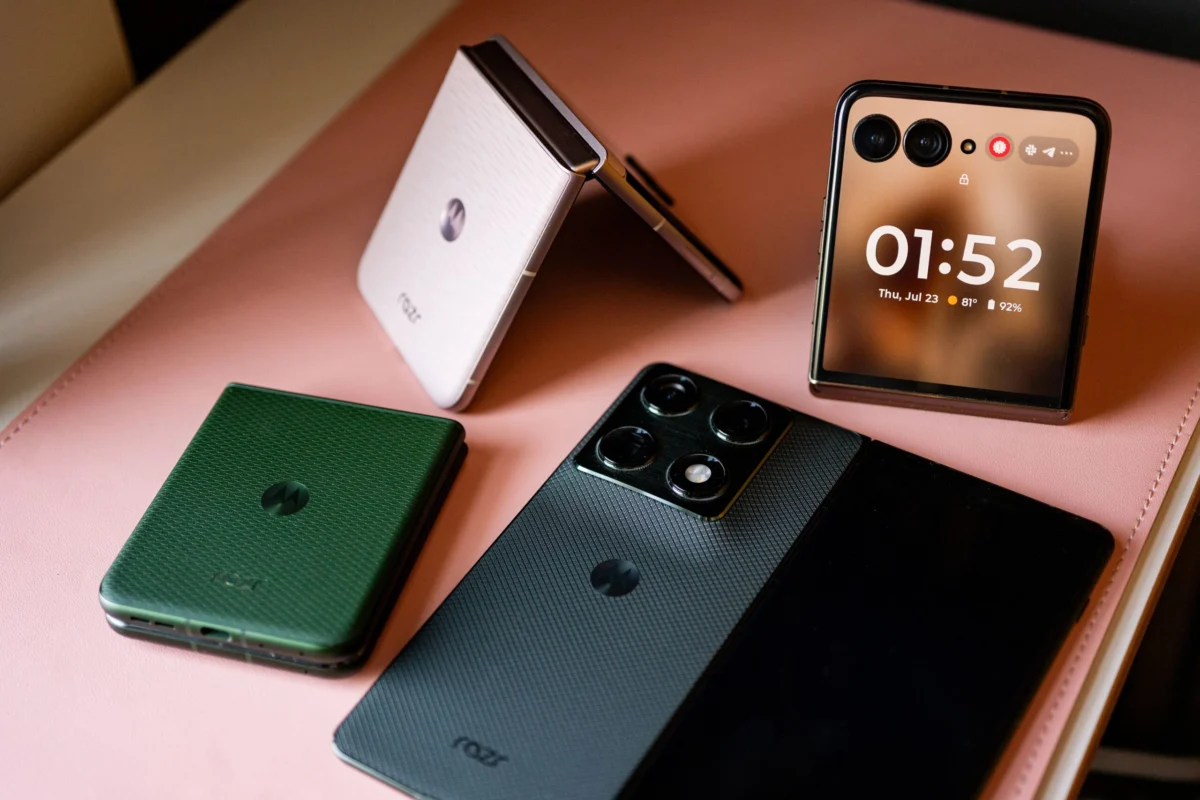
For years, Motorola occupied a precarious position in the North American smartphone market, often relegated to the background while industry titans like Samsung and Google dominated the discourse. However, the narrative has shifted dramatically. Today, Motorola stands as one of the fastest-growing mobile manufacturers globally, reclaiming its status not just as a budget-friendly alternative, but as a genuine innovator in the folding-phone space. With its Razr lineup leading the charge and a refreshed Moto G series focusing on accessibility and unique textures, Motorola has successfully distanced itself from the sea of monochromatic, uninspired glass slabs that define much of the modern mobile market.

The State of the Market: Why Motorola is Rebounding
Motorola’s current strategy is twofold: aggressive hardware experimentation paired with a "no-nonsense" software approach. Unlike its competitors, who often shroud Android in heavy, resource-draining proprietary skins, Motorola continues to offer a clean, streamlined interface. While bloatware has become a persistent nuisance, the company remains one of the few that allows users to easily uninstall extraneous apps, maintaining the purity of the Android experience.
.jpg)
Furthermore, Motorola has addressed a long-standing consumer frustration: storage capacity. By standardizing 256 GB of internal storage across much of its lineup—even in mid-range devices—the company has set a benchmark that many flagships from other manufacturers still struggle to meet. The retention of the microSD card slot and, in the G-series, the 3.5mm headphone jack, signals a company that listens to the "power user" demographic that other brands have largely abandoned.

Chronology of the 2026 Expansion
The year 2026 has been a pivotal one for the manufacturer. The following developments mark their recent expansion:
-reframe.jpg)
- January 2026: Kickoff of the annual Moto G refresh, emphasizing hardware accessibility.
- Spring 2026: Launch of the flagship Razr folding series, designed to challenge the dominance of the Samsung Galaxy Flip and Fold series.
- July 2026: Mid-year refresh cycle, including the debut of the Moto G Stylus 2026 and the expanded capabilities of the Motorola Edge 2026.
Flagship Innovations: The Razr Ultra (2026)
The Razr Ultra (2026) is the centerpiece of Motorola’s current portfolio. It is, unequivocally, the most compelling reason to choose a Motorola device today. Far from being a mere tech demonstration, the Razr Ultra is a fashion-forward statement, available in sophisticated finishes like Alcantara or elegant wood.
.jpg)
The hardware is equally impressive. The 4-inch OLED external cover screen is a masterclass in utility, allowing users to interact with widgets and glanceable information without needing to flip the device open. When unfolded, the 7-inch AMOLED display shines with a 165-Hz refresh rate, providing an exceptionally smooth visual experience. The integration of Gorilla Glass Ceramic 3 on the exterior ensures that the device is not just beautiful, but durable.

The standout technical achievement, however, is the 5,000-mAh silicon-carbon battery. In a compact folding form factor, this is a feat of engineering, comfortably offering two-day battery life for most users. While it retains the Snapdragon 8 Elite chipset seen in its predecessor, the 2026 model benefits from significant software optimization, resulting in sustained performance that feels snappier and more consistent.
.jpg)
The Best Cheap Folding Phone: The Razr (2026)
For those who desire the folding experience without the $1,500 price tag, the standard Razr (2026) offers a compelling entry point at $800. While it sacrifices some of the premium build materials found in the Ultra, it maintains the core folding functionality. The MediaTek chipset, while not top-tier, handles daily tasks with grace. It remains an incredible value proposition in a market where other folding phones have seen year-over-year price increases.
.jpg)
The Moto G Series: Balancing Utility and Price
The Moto G Stylus 2026 serves as the apex of the G-series. Priced at $500, it is one of the few smartphones in the world to feature a built-in stylus, a luxury otherwise reserved for the $1,300 Samsung Galaxy S26 Ultra.
.jpg)
Despite a slight increase in price this year, the Stylus remains a vital tool for note-takers and creatives. Its 5,200-mAh battery is a powerhouse, frequently lasting through two days of moderate use. While the camera performance in low-light environments remains a point of contention, the overall package—including wireless charging and an AMOLED screen—makes it a strong contender for those who find the flagship market too expensive.

A Bigger Ambition: The Razr Fold (2026)
Motorola has finally entered the "book-like" folding market with the Razr Fold (2026). It is an ambitious device, boasting a massive 8.1-inch interior display and a 6,000-mAh battery. Its ability to run three apps simultaneously makes it a legitimate productivity device. However, at $1,900, it faces stiff competition. While its battery life is class-leading, the software experience and camera system, while solid, do not yet surpass the refined polish offered by the Google Pixel 10 Pro Fold or the latest Samsung Galaxy Fold8.

The "Budget-Conscious" Alternatives
For those looking under the $300 threshold, the Moto G Power 2026 and Moto G 5G 2026 remain the go-to devices.

- Moto G Power 2026: Solid, reliable, and featuring a comfortable, grippy textured back. It is arguably the best "workhorse" phone in the company’s lineup, even if the removal of wireless charging this year is a regrettable oversight.
- Moto G 5G 2026: A balanced budget option that offers 5G connectivity and a headphone jack. It is designed for the patient user who values utility over cutting-edge speed.
Supporting Data: The Trade-offs
It is essential to be realistic about Motorola’s shortcomings. Despite their growth, the company consistently lags behind Google and Samsung in software support. While the flagship Razr Ultra receives better treatment, the standard G-series devices are often capped at two Android OS updates and three years of security patches. In a world where seven-year support windows are becoming the gold standard, this remains Motorola’s "Achilles’ heel."
.jpg)
Additionally, their camera software remains prone to over-processing. In high-contrast scenes, the algorithms often struggle to balance shadows and highlights, resulting in images that look slightly artificial. For the casual user, these photos are more than adequate, but for photography enthusiasts, Motorola still has room to grow.

Official Stance and Future Outlook
Motorola’s leadership has emphasized the rollout of "Qira," their next-generation AI assistant. Unlike previous iterations, Qira is designed as a cross-device ecosystem, integrating with Lenovo laptops and mobile hardware to create a unified user experience.
.jpg)
The company also continues to push the boundaries of "Moto Gestures." From the iconic "double-chop" to activate the flashlight to the "double-twist" camera launch, these physical shortcuts remain a beloved part of the Motorola identity. They represent a philosophy that technology should be intuitive and responsive to the user’s physical presence.

Implications for the Consumer
What does this mean for you? If you are in the market for a new phone, the landscape is shifting.
%2520Reviewer%2520Photo%2520SOURCE%2520Julian%2520Chokkattu.jpg)
- Wait for the Sales: Never purchase a Motorola phone at MSRP. Their pricing strategy is highly dynamic, and deep discounts are frequent within weeks of any major launch.
- Prioritize Your Needs: If you value the novelty and utility of a folding phone, the Razr Ultra is currently unmatched. If you are a productivity-focused user who needs a stylus, the G Stylus is a unique bargain.
- Consider the Ecosystem: If you are a power user who requires long-term software support and industry-leading camera processing, you may still find yourself gravitating toward a Pixel or a Samsung Galaxy. However, if you are tired of the "boring" phone market and want a device that feels unique, tactile, and highly capable, the 2026 Motorola lineup is the most exciting collection of phones they have produced in a decade.
Motorola has successfully transitioned from a legacy brand to a modern, competitive force. By leaning into their strengths—unique design, long battery life, and clean software—they have carved out a niche that is both sustainable and highly attractive to a wide swath of the smartphone-buying public.