While Crete is globally celebrated for its sun-drenched Mediterranean beaches and the remnants of the ancient Minoan civilization, the island’s true heart beats within its rugged interior. Towering above the Aegean Sea, the White Mountains—known locally as Lefka Ori—form a formidable spine across the island. Within this limestone labyrinth lies one of Europe’s most spectacular natural wonders: the Samaria Gorge. A site of profound geological beauty and historical significance, it serves as both a premier destination for global trekking enthusiasts and a sacred symbol of Cretan resilience.

Main Facts: The Anatomy of a Natural Masterpiece
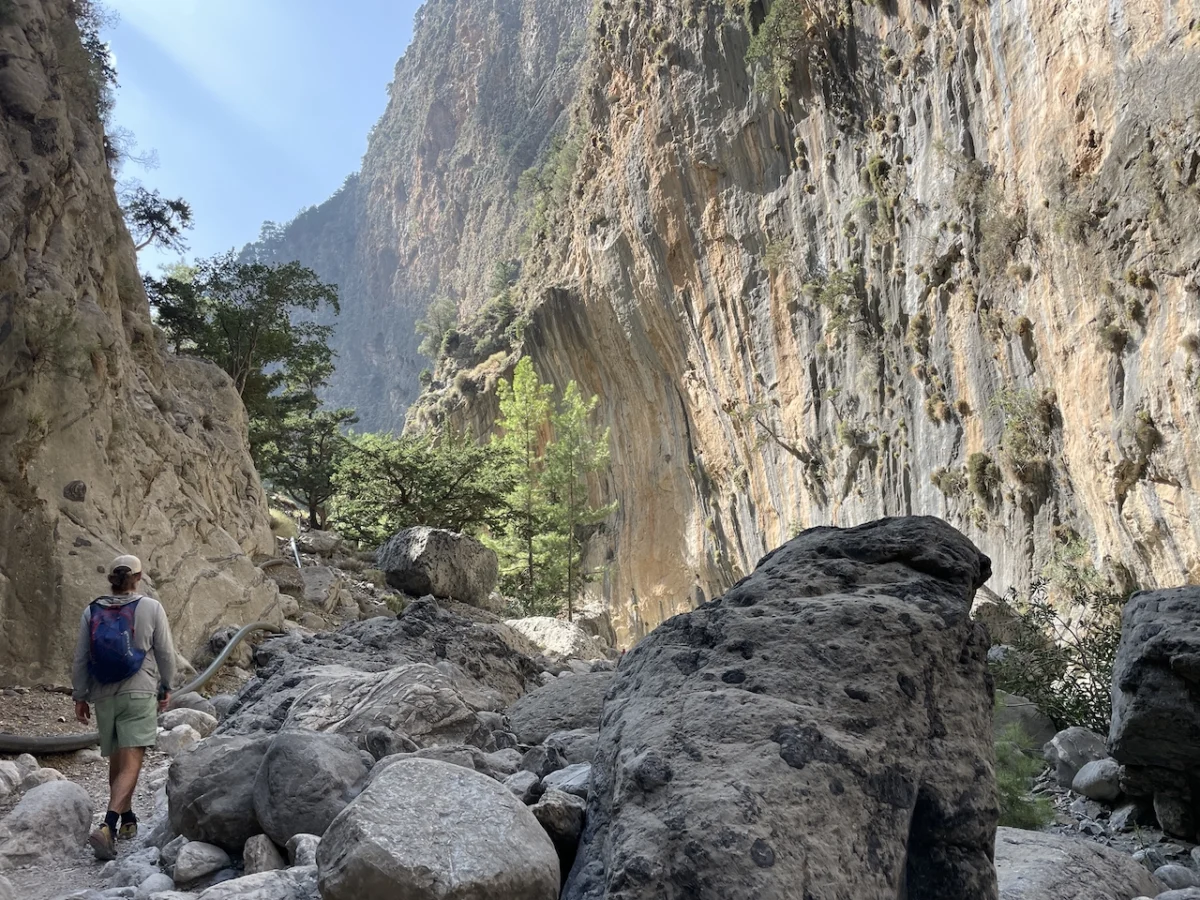
The Samaria Gorge is not merely a trail; it is a 16-kilometer (9.9-mile) traverse that descends from the alpine heights of the White Mountains to the azure waters of the Libyan Sea. As the second-longest gorge in Europe, it offers a dramatic cross-section of Mediterranean ecosystems. The walls of the canyon soar to heights of nearly 300 meters (984 feet), creating a sense of scale that humbles even the most experienced hiker.

The trail begins at the Xyloskalo trailhead, perched at an elevation of approximately 1,200 meters. From here, hikers descend through a series of steep, switchbacking paths that wind through forests of pine and cypress. The limestone, which gives the White Mountains their name—appearing bone-white under the harsh summer sun and glistening with snow from late fall through spring—provides a stark, monochromatic backdrop to the vibrant flora that thrives in the gorge’s microclimate.

Vital Statistics
- Total Distance: 14.5 km (8.9 miles)
- Elevation Change: 1,099 m (4,285 ft) gain; 2,327 m (7,635 ft) loss
- Difficulty: Moderate (due to distance and terrain, though technically accessible)
- Average Duration: 5–6 hours for a one-way trek
Chronology: A Journey Through the Canyon Floor
The experience of hiking Samaria is a journey through time as much as it is a physical endeavor. The trail begins in the crisp, thin air of the alpine zone. As the sun rises over the peaks, the temperature remains mild, offering perfect conditions for the initial descent.

The Upper Reaches and Ayios Nikolaos
Approximately 4 kilometers into the hike, travelers reach the rest area of Ayios Nikolaos. This site is anchored by a centuries-old chapel and a cluster of ancient cypress trees. Historically, the area was significant as far back as the 1st Century B.C., serving as the site of a temple dedicated to the Greek god Apollo. It acts as a necessary respite for hikers to hydrate and prepare for the deeper, more confined sections of the gorge.

The Ghost Village of Samaria
At the 7-kilometer mark, hikers arrive at the abandoned settlement of Samaria. Once a thriving Byzantine-era village, it served as a vital community hub until the 1960s. When the gorge was designated a National Park in 1962, the residents were relocated, leaving behind a collection of stone dwellings. Today, these structures are maintained as a medical station, a base for forest rangers, and a research facility for environmentalists. The village serves as a poignant reminder of human endurance in one of the most inaccessible parts of the island.

The Iron Gates
Perhaps the most iconic section of the hike is the "Iron Gates" (Sideroportes). Here, the gorge reaches its narrowest point—a mere three meters wide—flanked by vertical cliffs rising 300 meters skyward. It is here that the geological narrative of Crete is most visible, with layers of limestone documenting millennia of seismic activity.

Supporting Data: The Guardians of the Gorge
The ecosystem of Samaria is unique, and its most famous inhabitant is the Kri-kri, or Cretan Goat. These agile creatures, recognizable by their dark dorsal stripes and sweeping horns, were once on the brink of extinction.

In the early 1960s, the population had dwindled to roughly 200 individuals. However, the designation of the gorge as a National Park served as a successful conservation intervention. Today, there are an estimated 2,500 Kri-kri roaming the cliffs. While they are often associated with the Cretan wilderness, archaeological evidence suggests they were likely introduced by the Minoans thousands of years ago, making them an integrated, albeit non-native, part of the island’s biological heritage.

A Sanctuary in Troubled Times: Historical Implications
The Samaria Gorge has historically functioned as a "fortress of nature." During the centuries of Ottoman occupation, the gorge’s impenetrable geography provided a sanctuary for Cretan rebels and civilians alike.

The most celebrated event in this history occurred in 1770, during a period of intense conflict. As Turkish forces advanced, approximately 4,000 Cretan women and children retreated into the safety of the gorge. Protected by the legendary resistance leader Giannis Bonatos and a small force of 200 fighters, they successfully held the Iron Gates. By utilizing the bottleneck topography, the defenders were able to repel the invading forces, turning the gorge into a symbol of Cretan freedom and an enduring source of national pride.

Official Responses and Safety Protocols
Hiking the Samaria Gorge requires careful planning and an awareness of the park’s strict regulations. Because the gorge is a protected environment, hikers are required to adhere to strict entry and exit times, typically closing by 6:00 p.m. to ensure the safety of visitors and the protection of wildlife.

The "Out-and-Back" Challenge
While the standard itinerary is a one-way hike from the northern entrance to the village of Agia Roumeli (followed by a ferry ride), some intrepid hikers attempt the "out-and-back" journey. This is a significantly more strenuous undertaking that involves a round trip of nearly 30 kilometers.

Park officials are often skeptical of this attempt, prioritizing safety over individual athletic ambition. Hikers attempting this feat are frequently met with warnings from rangers, who monitor the trail to ensure that visitors do not become stranded as the sun sets. The official stance is one of caution: the gorge is unforgiving, and rapid weather changes or unexpected fatigue can quickly transform a manageable trek into a dangerous situation. However, for those who are adequately prepared and physically conditioned, the out-and-back route offers a rare opportunity to experience the silence of the gorge after the day-tripping crowds have departed.

Conclusion: The Enduring Legacy of Samaria
The Samaria Gorge remains a masterclass in natural majesty and human history. Whether you are walking it as a casual visitor enjoying the ferry ride at the end or tackling the full round trip, the experience is transformative. The combination of the sheer, looming limestone walls, the crystalline streams, and the constant presence of the Kri-kri creates an atmosphere that is truly timeless.

For those planning to visit, the experience is best approached with respect for both the environment and the history of the people who once called this canyon home. As the sun dips behind the White Mountains and the cool air rushes through the Iron Gates, it is easy to understand why the Cretans hold this place so dearly. It is more than just a hike; it is a testament to the resilience of the natural world and the enduring spirit of those who sought refuge within these ancient, towering stone walls.

For those interested in further exploration, the Samaria Gorge is featured extensively in the title "Wanderlust Mediterranean," published by Gestalten. The book serves as a comprehensive guide for those looking to experience the most iconic landscapes of the Mediterranean basin.