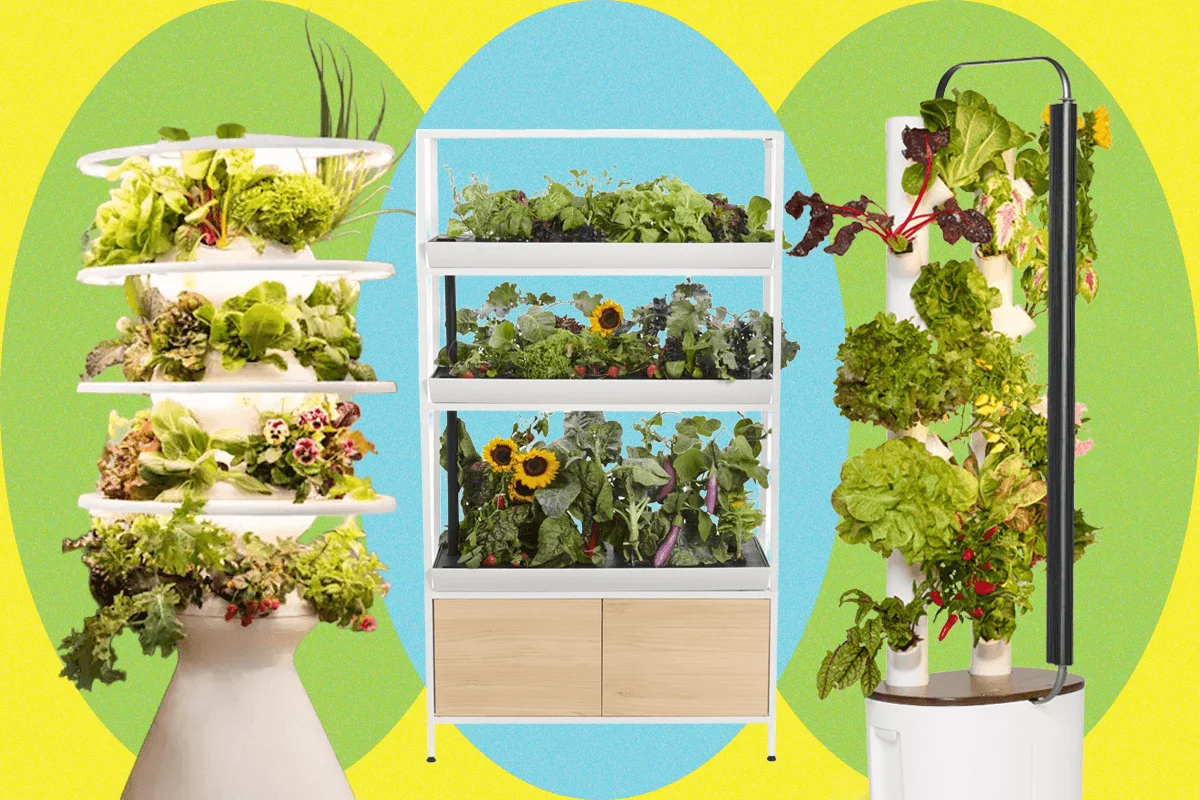
The rise of the "smart home" has extended beyond automated lighting and voice-activated thermostats; it has firmly planted its roots in the kitchen. Indoor hydroponic gardening systems, which promise year-round harvests of fresh herbs, leafy greens, and even flowering plants, have become a staple for urban dwellers and gardening enthusiasts alike. However, the gap between the polished marketing images of lush, vibrant greenery and the reality of home-based agricultural technology is often significant.
For the busy professional or the space-constrained apartment dweller, these systems offer a tantalizing proposition: the ability to grow produce without the mess of soil, the uncertainty of weather, or the frustration of weeds. Yet, as our testing reveals, not all systems are created equal. From the simplicity of wick-based setups to the complex, albeit flawed, "fogponic" machines, we have evaluated the current landscape of indoor farming to help you determine if these systems are a legitimate harvest solution or merely a countertop ornament.
The Evolution of Domestic Agriculture: A Chronology of Growth
The shift toward indoor hydroponics didn’t happen overnight. It began with the democratization of the "Kratky method," a passive hydroponic technique developed by Dr. Bernard Kratky, which allows plants to sit in a nutrient-rich reservoir without the need for complex pumps or electricity.
Over the last decade, this foundational science was packaged into consumer-friendly devices. Early adopters were introduced to rudimentary setups that required constant manual intervention. By 2018, companies began integrating "smart" features: automated LED grow lights with timers, mobile app connectivity to monitor water levels, and subscription-based seed pod services.
Today, we are seeing the third generation of these products. These newer models attempt to solve the aesthetic and noise issues of their predecessors, moving toward sleek, lab-inspired designs. However, the industry has also hit a wall. As we have seen with recent high-end releases, there is a tension between making a device look like a piece of high-end furniture and ensuring it functions as a reliable biological system.
Performance Analysis: The Top Contenders and Their Flaws
Our evaluation process focused on ease of assembly, long-term maintenance, and, most importantly, yield consistency.

The Low-Maintenance Entry: Click & Grow Smart Garden
The Click & Grow Smart Garden 9 represents the "set it and forget it" philosophy. Its design is undeniably convenient: using nutrient-packed "smart soil" pods that resemble Nespresso capsules, users simply drop the pods into the unit, fill the reservoir, and wait. A physical "bobber" indicates water levels, making it arguably the most user-friendly system tested.
However, simplicity comes at the cost of speed. Our testing showed this to be one of the slowest-growing systems available. In one instance, a lettuce pod failed to sprout entirely. While it remains a suitable choice for decorative flowers, those looking for a steady supply of salad greens may find the germination rates and growth speed underwhelming.
Aesthetic Minimalism: Lettuce Grow Counterstand
For those who prioritize design, the Lettuce Grow Counterstand offers a refined, academic look. Comprised of three amber beakers, this system uses the Kratky method to sustain plants. It is visually striking, but it faces the classic "form over function" hurdle. While it provides a controlled, stylish environment, the yield is limited to a small handful of leaves per week. It is an excellent conversation piece, but for a household looking to supplement their grocery bill, the space-to-yield ratio is poor.
Niche Utility: Vego EZ Microgreens Planter
Sometimes, the best technology isn’t "smart" at all. The Vego EZ Microgreens Planter avoids complex sensors and pumps in favor of a straightforward capillary mat system. By utilizing bamboo-fiber mats to draw water to the seeds, it successfully grows nutrient-dense microgreens with minimal fuss. While it lacks the automated prestige of a high-end hydroponic unit, its consistency makes it a reliable addition to any kitchen.
The Cautionary Tale: When Innovation Fails
Innovation is a double-edged sword in the world of indoor farming. The Plantaform Smart Indoor Garden, priced at a premium $900, promised a revolution in "fogponics"—a method of aerosolizing nutrients to accelerate growth. Despite its CES 2025 Innovation Award, our testing revealed a different reality.
Beyond the limitation of only being able to grow one type of crop at a time, the unit presented a significant environmental concern. Independent testing found that the aerosolization process negatively impacted indoor air quality. Because the container is not perfectly airtight, the nutrient mist—and potentially particulate matter—is released into the living space. Until manufacturers can reconcile the biological needs of the plants with the safety requirements of a home environment, such high-tech solutions remain difficult to recommend.

Similarly, the LetPot Smart Seed Starter, while feature-rich on paper, suffered from fundamental quality control issues. High-pitched electrical noise from the power adapter and sensor instability underscore the risks of purchasing "smart" gardening hardware that hasn’t undergone rigorous long-term testing.
The Economics of Indoor Gardening: What You Should Know
One of the most frequent questions we receive is, "Will I save money?" The short answer is no. When accounting for the initial purchase price, the cost of electricity for 16-hour light cycles, and the recurring cost of proprietary seed pods, these systems are rarely a replacement for the grocery store.
However, the value proposition lies elsewhere:
- Convenience: These systems remove the guesswork of gardening.
- Quality Control: You gain total control over pesticides and soil-borne pathogens.
- Educational Value: They offer a unique, hands-on look at plant biology, particularly for families.
Technical Considerations for the Modern Gardener
For those looking to invest in a system, several variables must be weighed before purchase:
- Noise Profiles: Systems with pumps, such as the Lettuce Grow or Gardyn, produce a distinct hum. If your garden is destined for an office or a living room, silence-focused units like the Auk are preferable.
- Light Sensitivity: Most systems require 16 hours of bright, full-spectrum light. These lights are intense; placing them near a bedroom is generally ill-advised.
- Maintenance: Hydroponics is not maintenance-free. Algae growth and pump blockages are common issues that require routine cleaning. Furthermore, power outages can quickly turn a flourishing garden into a stagnant one, as these systems lack the buffer that soil provides.
Expert Insights: Beyond the Marketing
We consulted with industry creators, including FX Rouxel, the founder of Gardyn, regarding the limitations of home hydroponics. When asked about what can be grown, the consensus is clear: if it has massive roots (like carrots or parsnips) or is a fruit-bearing tree, it doesn’t belong in a countertop unit. Everything else—from herbs to leafy greens and small cucumbers—is fair game.
The industry is currently at an inflection point. As consumers become more sophisticated, the demand for "smart" features is being eclipsed by the demand for "reliable" features. The future of the space likely lies in better integration of AI to monitor plant health, coupled with more robust hardware that can withstand the corrosive nature of nutrient-heavy water.

Final Assessment: The Path Forward
Indoor gardening is a hobby, not a utility. If you approach these systems as a way to engage with nature, experiment with botany, and enjoy the aesthetic of living greenery in your home, you will likely find them rewarding. If you approach them as a financial investment to offset food costs, you will likely be disappointed.
As we continue to monitor this sector, we urge readers to prioritize systems with proven track records of reliability over those that rely on "innovation" that has yet to be stress-tested in a home environment. The best smart garden is not the one with the most sensors, but the one that consistently produces a harvest without requiring a support call to the manufacturer.
Summary of Reviewed Systems
| System | Best For | Verdict |
|---|---|---|
| Click & Grow 9 | Beginners/Flowers | Slow but simple; best for low-effort hobbyists. |
| Lettuce Grow | Design enthusiasts | Beautiful but low yield; expensive for the space. |
| Vego Microgreens | Nutrient-focused | A non-smart, highly reliable alternative. |
| Plantaform | Tech enthusiasts | Not recommended due to air quality concerns. |
| LetPot Starter | Seed propagation | Poor quality control; proceed with caution. |
Disclaimer: Most units tested were provided by manufacturers as samples. Affiliate relationships do not influence our testing standards or the final editorial outcome of our reviews.