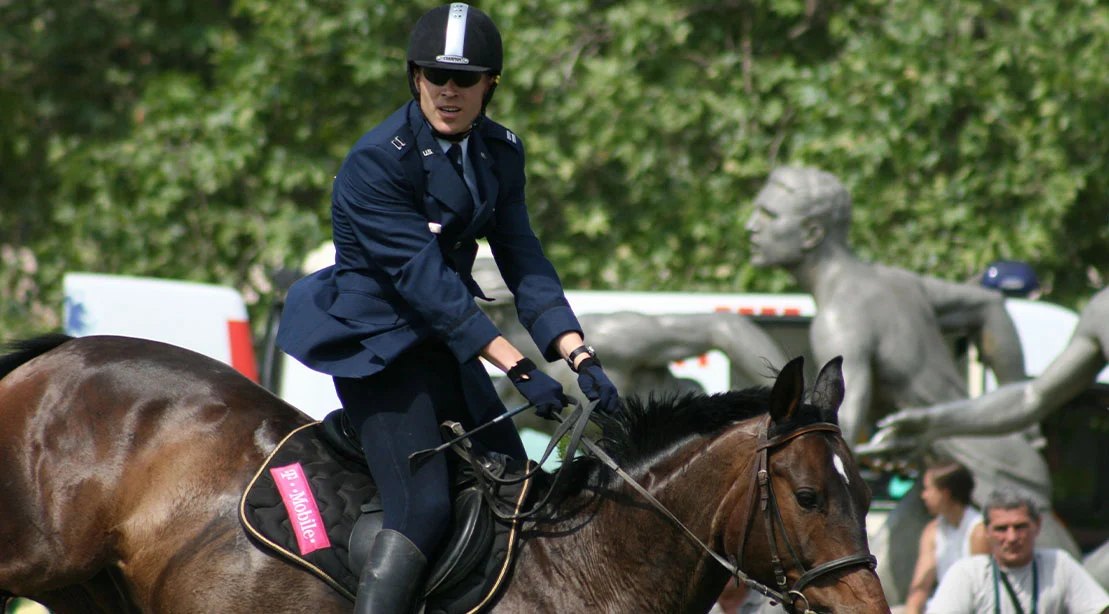
For most, the aspirations of youth are divided by a clear, binary choice: the disciplined, regimented life of a military officer or the singular, ego-driven pursuit of Olympic glory. For Major Eli Bremer of the Air Force Reserve Command, this dichotomy never existed. Where others saw a crossroads, Bremer saw a singular path. To him, the question was never "or"—it was always "and."
Today, as an Olympian, a decorated Air Force officer, and a vocal advocate for institutional reform, Bremer stands as a living embodiment of how service and high-performance athleticism can coexist to forge not just elite competitors, but transformative leaders.
The Foundation: A Childhood in the Shadow of the Academy
Growing up in the periphery of the United States Air Force Academy in Colorado Springs, Colorado, Bremer was immersed in a culture of excellence. The Academy served as more than just a local landmark; it was his North Star.
"All my childhood mentors were cadets at the Academy," Bremer recalls. This proximity allowed him to witness the grit required for military service firsthand. However, Bremer also possessed an innate, burning desire for international competition. Rather than forcing a choice, he leveraged the unique infrastructure provided by the U.S. military. He identified the World Class Athlete Program (WCAP) early in his development, going so far as to draft a letter to his future self during his freshman year of college, explicitly stating his intent to join WCAP and compete on the global stage.
Chronology of a Dual Career
Bremer’s journey is defined by a series of strategic milestones that bridged the gap between the training field and the military installation:
- The Early Ambition: Immersed in the Air Force Academy environment, Bremer identified the WCAP as the bridge to his dual-career goals.
- The Global Stage: In 2008, his long-standing ambition reached its apex at the Summer Olympics in Beijing. Representing the United States in the modern pentathlon, Bremer faced the world’s elite, finishing 22nd.
- The Institutional Pivot: Following his Olympic debut, Bremer transitioned deeper into his role within the Air Force Reserve Command, eventually rising to become the chair of the Advisory Board for the Air Force’s WCAP.
- The Advocacy Era: Following his competitive career, Bremer leveraged his platform to challenge the governance of American sports, becoming a central figure in the aftermath of the Larry Nassar scandal.
- The International Legacy: Most recently, as co-chair of the bid committee, Bremer successfully helped secure the 2027 Military World Games for Charlotte, North Carolina—a massive undertaking that solidified his influence on the international military sports stage.
Supporting Data: The Value of the WCAP Model
The World Class Athlete Program is not merely a sports initiative; it is a recruitment and retention tool that provides the U.S. military with uniquely skilled leaders. Bremer is adamant that the program benefits both the institution and the individual.
"The athletes we bring into the Air Force really like it because they understand the three years of job training they get in a skill outside of their sport," Bremer explains. This vocational training ensures that when an athlete retires from competition, they are not left without a purpose or a career path. They enter the civilian workforce—or continue their military service—with the mental fortitude of an Olympian and the technical expertise of an Air Force professional.
Governance and Reform: Beyond the Uniform
Bremer’s most significant impact may have occurred after he retired his competitive gear. During the height of the Larry Nassar sexual abuse scandal, which rocked the foundations of the U.S. Olympic and Paralympic Committee (USOPC), Bremer emerged as a sharp critic of the existing power structure.
"I had been a vocal critic of the governance model because it predisposed ways to cover up issues like abuse," he says. Bremer was not merely observing; he was actively pushing for legislative reform. When the scandal broke, his prior critiques were vindicated. Rather than taking credit for "predicting" the crisis, Bremer maintains a humble, analytical stance: "People thought I was Nostradamus, but I wasn’t; I just know governance."
Bremer’s work involved coordinating with bipartisan lawmakers to overhaul the USOPC’s systemic failures. While he acknowledges that the legislative changes haven’t solved every issue, he views the effort as a critical correction—a necessary step toward ensuring athlete safety and institutional accountability.
The 2027 Military World Games: A Global Vision
The trajectory of Bremer’s international involvement reached a significant milestone through his relationship with Colonel Nilton Rolim. Their connection dates back to 2000, during the Military Championships in Switzerland, where they shared a beer as peers. Twenty-four years later, with Rolim serving as President of the International Military Sports Council (CISM), the two collaborated to bring the Military World Games to the United States.
Scheduled for June 25th to July 4th, 2027, in Charlotte, the event represents a massive logistical and diplomatic victory. For Bremer, this isn’t just about hosting a tournament; it’s about showcasing the synergy between the world’s military forces through the lens of sport.
Implications: The Evolution of Purpose
Today, Bremer’s life is defined by professional consulting through his firm, Pure Performance, and his leadership as CEO of Mytikas Industries. While the high-intensity demands of the modern pentathlon are behind him, his philosophy on fitness has evolved from performance-based metrics to longevity and presence.
"My thinking now is not on how fast I can run, but if I can keep up with my son and be there for my 83-year-old father," he shares.
This evolution carries a profound lesson for veterans and aging athletes alike: the goalposts must move. The danger, according to Bremer, is the refusal to adapt. He warns that failing to recalibrate one’s relationship with health and fitness leads to a life where one "sells themselves short." By adopting golf, cycling, and low-impact training, Bremer remains as disciplined as ever, even if the objective has shifted.
A Call to Service
Bremer remains a steadfast advocate for the Air Force and the WCAP, encouraging younger generations to view military service not as a limitation, but as a vehicle for self-actualization. He views the "and" in his own life—the ability to be both an athlete and a soldier—as a standard that more young Americans should aspire to reach.
"It makes you a better person," Bremer concludes. "Your time in service will fundamentally transform you."
As the United States prepares to host the 2027 Military World Games, the influence of leaders like Major Eli Bremer will be on full display. He serves as a reminder that the most effective way to serve a country is often to maximize one’s own potential, creating a ripple effect that touches governance, international relations, and the next generation of service members. His story is not just one of athletic success; it is a blueprint for how a life defined by "and" can create a legacy that lasts long after the uniform is put away.
For more information on the upcoming Military World Games, visit the official CISM website. You can follow Major Eli Bremer’s ongoing work and leadership insights on LinkedIn.