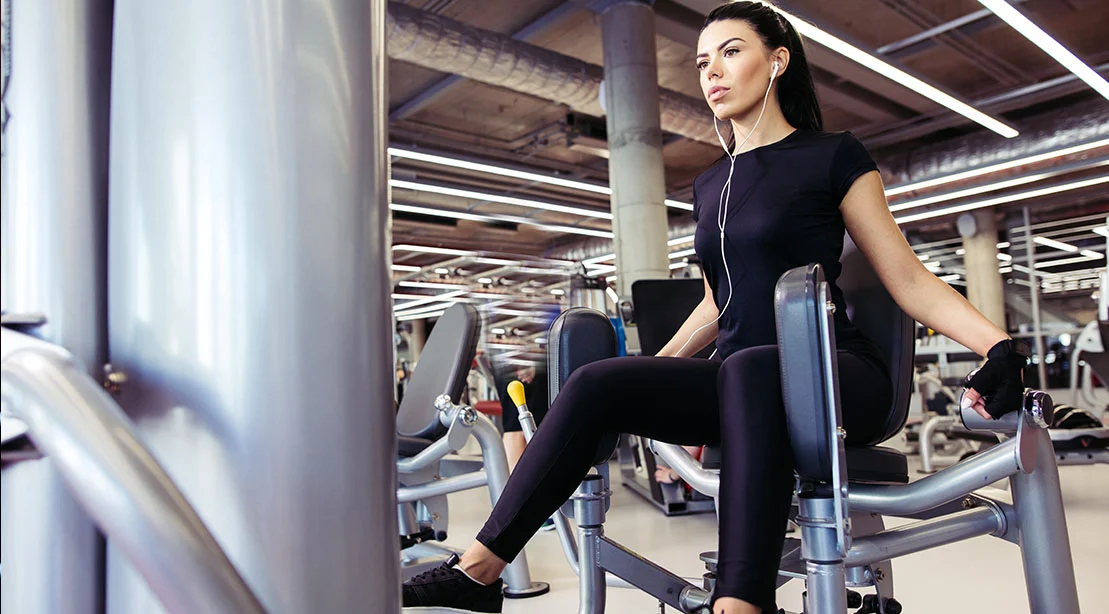
The hip adduction machine—often colloquially dubbed the "yes/no machine" due to the repetitive motion of opening and closing the legs—has long occupied a precarious position in the fitness world. It is the gym’s perennial wallflower, tucked away in a corner, often ignored by serious strength trainees and relegated to the "toning" section of outdated fitness magazines.
For many, the machine represents a trifecta of gym faux pas: it is a fixed-path machine, it is widely dismissed as a specialized rehab tool, and it possesses an inherent, awkward social profile that leaves users wondering where exactly they should direct their gaze. But beneath this reputation of "fluff" and "non-functionality" lies a significant anatomical reality. The adductor complex is a powerhouse of the lower body, and the machine provides a rare, efficient pathway to load these muscles directly. Is it time to end the boycott?
Main Facts: Deconstructing the Anatomy
To understand why the adduction machine deserves a place in your rotation, we must first dispel the myth that the adductors are merely "inner-thigh muscles." This term is a vast simplification of a group of muscles—the adductor longus, brevis, and the massive adductor magnus—that serve as critical stabilizers for the pelvis and key contributors to locomotion.
The adductor magnus, in particular, is a workhorse. Anatomically, it possesses two distinct heads: the adductor head and the hamstring head. Because of this, it is not just a mover of the thigh toward the midline; it is a profound hip extensor. When we squat or deadlift, the adductors are firing to stabilize the femur and provide force. By dismissing the machine as "unnecessary," lifters are ignoring a potential opportunity to overload a muscle group that is frequently the "weak link" in heavy compound lifts.
Chronology of a Reputation
The decline of the hip adduction machine’s status can be traced back to the rise of the "functional fitness" movement. In the late 2000s and early 2010s, the fitness industry underwent a paradigm shift. Trainers began moving away from the bodybuilding-centric machines of the 1970s and 80s toward movements that prioritized "real-world" athletic performance—crawling, jumping, Olympic lifting, and multi-planar lunges.
As the industry pivoted, the "fixed-path" machine was rebranded as "non-functional." The argument was simple: because life does not involve sitting in a chair and squeezing your knees together against a weighted resistance, the exercise was deemed a waste of time. This criticism, while rooted in sound athletic philosophy, created a vacuum of nuance. It suggested that if an exercise didn’t mimic a sport-specific movement, it had no value. This binary thinking led to the marginalization of the very machines that could provide the hypertrophy and localized strength needed to support those more complex, athletic movements.
Supporting Data: What the Science Says
The research on adductor health is becoming increasingly difficult to ignore. In a 2025 study examining the mechanical output of the hip musculature, researchers found that the torque-producing capacity of the adductors for hip extension was more than double their capacity for adduction. This finding is a game-changer; it confirms that the adductors are not just decorative inner-thigh muscles—they are primary drivers of hip power.
Furthermore, clinical research into injury prevention provides a compelling case for direct training. A landmark study published in the British Journal of Sports Medicine demonstrated that male soccer players who engaged in a consistent, direct adductor-strengthening protocol (using the Copenhagen side plank) saw a 41% reduction in groin-related injuries over the course of a competitive season.
While the machine itself was not the specific intervention in that study, the principle remains: the adductors are a high-risk area for athletes, and they require targeted, progressive overload to remain resilient. The machine offers a controlled environment to achieve this overload, providing a safer, more repeatable stressor than more technical movements for beginners or those recovering from injury.
Expert Perspectives
Physical therapist Dan Swinscoe notes that while the machine is a relic of the bodybuilding era, its utility is misunderstood. "The hip adductors are a huge muscle mass," Swinscoe explains. "Once you understand how functionally important they are, the argument that they don’t need direct training falls apart."
However, he acknowledges the limitations. "It was built for bodybuilding. If bodybuilding is your goal, it works fine. But it doesn’t challenge your balance or trunk control like a lateral lunge or a Cossack squat."
Physical therapist Dr. Justin Farnsworth adds a necessary caveat: "Stronger muscle isolation is still a stronger muscle, but the adductors do more to stabilize the hip than to squeeze your knees together." Farnsworth argues that while the machine is a valuable tool, it should be viewed as a supplement to a program that includes multi-planar, weight-bearing exercises. The machine builds the capacity for strength, but it does not teach the neurological coordination required to stabilize the pelvis during high-intensity athletic tasks.
Implications for Your Training Program
Should you keep the "yes/no" machine in your program? The answer depends on your goals.
Who Should Use It:
- Bodybuilders and Hypertrophy Enthusiasts: If your goal is maximal muscle growth in the legs, the adduction machine is an efficient, low-fatigue way to add volume to the inner thigh without taxing the lower back.
- Recovery-Focused Lifters: For those who hit their "systemic fatigue" cap early in a workout, this machine allows for direct work that doesn’t require the nervous system to coordinate a complex movement pattern.
- Injury-Prone Athletes: If you suffer from frequent groin tightness or strains, using this machine for high-rep, controlled sets can help bulletproof the adductor group when combined with other, more functional movements.
Who Should Skip It:
- Time-Crunched Athletes: If you only have three hours a week in the gym, your time is better spent on compound, multi-joint movements like back squats, Romanian deadlifts, and split squats.
- Athletes with Severe Pelvic Imbalances: If you have significant hip dysfunction, you should prioritize dynamic stability exercises (like the Copenhagen plank or lateral step-ups) before moving to fixed-path machines.
How to Program the Machine for Success
To integrate the adduction machine effectively, treat it as an accessory movement—never as a primary lift. The risk-versus-reward ratio is highly favorable if you maintain discipline regarding range of motion. The most common error is "ego lifting," where users pile on weight and force their legs open past their current mobility limits, putting undue stress on the groin tendons.
The Recommended Protocol:
- Placement: Perform this at the end of your leg day, after all heavy compound lifting is complete.
- Volume: Aim for 2 to 4 sets of 12 to 25 repetitions. The higher rep range is preferred here to minimize the chance of connective tissue strain.
- Tempo: Utilize a slow eccentric (the opening phase) and a controlled concentric (the closing phase). Avoid using momentum or "bouncing" the weight stack.
- Progression: Progressive overload is key. Increase the weight only when you can complete the upper end of your rep range with perfect, slow, and deliberate form.
The Final Verdict
The hip adduction machine is neither a magic bullet for athletic performance nor a useless waste of floor space. It is a tool—a specialized one designed to address a specific, large muscle group that is frequently neglected in standard "squat-heavy" programming.
In the modern gym, we often conflate "complex" with "effective." We assume that because a movement is difficult to balance or requires immense core stabilization, it must be superior to a movement that isolates a muscle. This is a fallacy. Sometimes, the most effective way to build a muscle is to isolate it, load it, and fatigue it safely.
If you are looking to round out your leg development, support your heavy compound lifts, or simply add a bit of durability to your groin, the "yes/no" machine is waiting for you in the corner. Just remember: it’s not about how much weight you can move; it’s about how much quality tension you can create. And, for the sake of everyone else in the gym, please, keep your eyes on the horizon.