In a landmark move for the European renewable energy sector, BW Ideol and the civil engineering giant NGE have officially entered into an exclusive strategic partnership to establish a large-scale industrial facility dedicated to the production of floating offshore wind foundations. The joint venture, centered on the "Fos3F" project, represents a pivotal shift in the Mediterranean’s energy landscape, aiming to transform the port of Fos-sur-Mer, France, into a global hub for the serial manufacturing of floating wind technology.
Main Facts: Industrializing the Horizon
The collaboration between BW Ideol, a renowned specialist in floating offshore wind design, and NGE, a powerhouse in infrastructure delivery, signals the transition of floating wind from prototype-heavy innovation to mass industrial production.
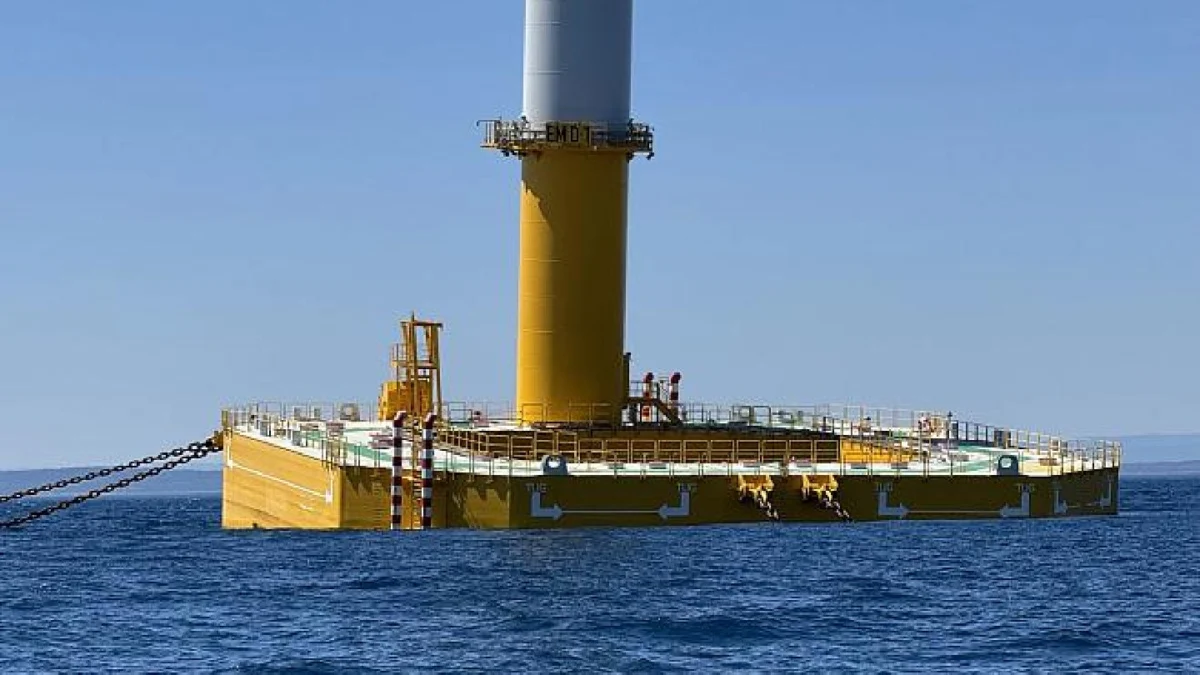
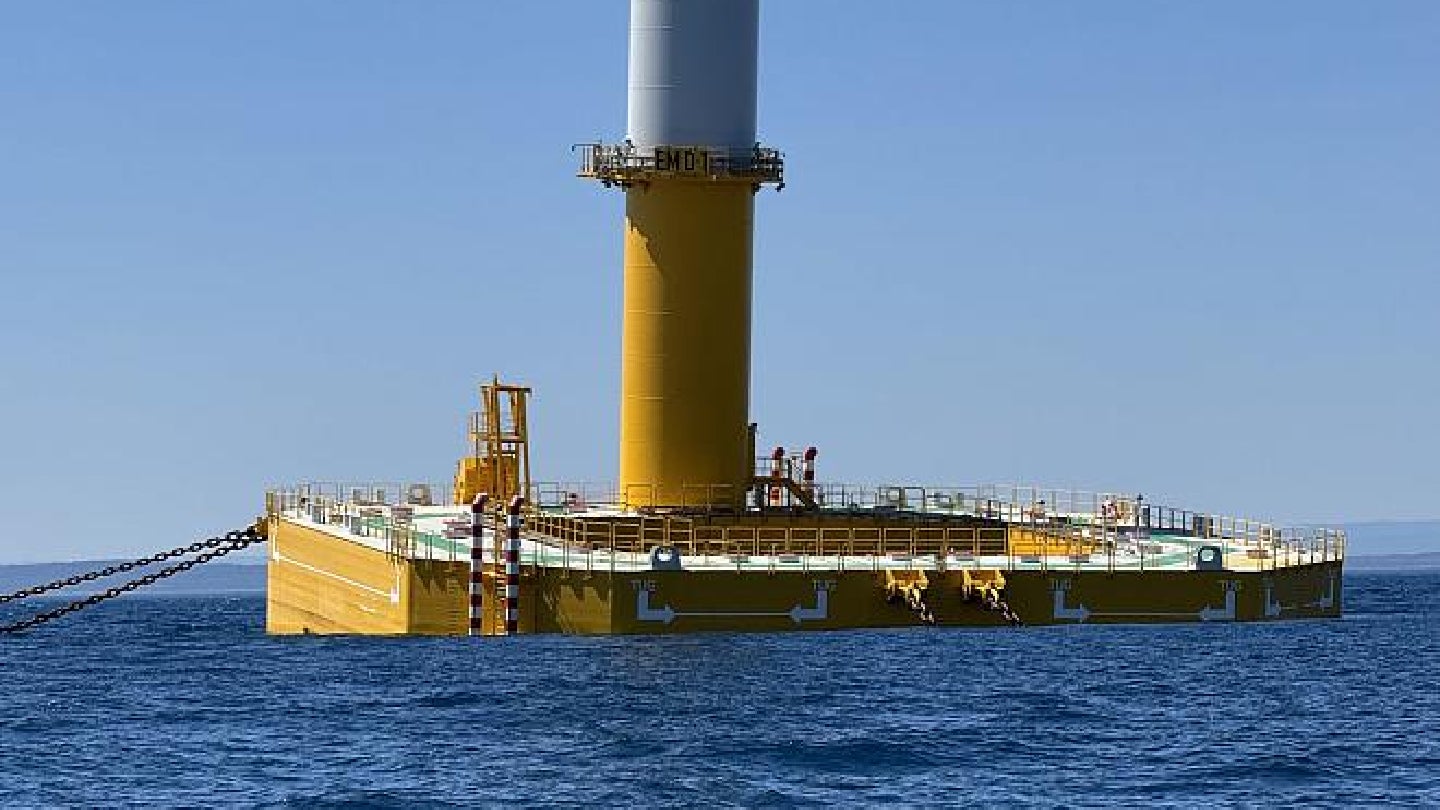
The centerpiece of this partnership is the Fos3F facility, to be situated on the DEOS platform within the Grand Port Maritime de Marseille. The facility is specifically engineered to meet the urgent demand for renewable energy infrastructure, with a design capacity to manufacture approximately 30 floating foundations per year. This output translates into an estimated 500MW of annual capacity, providing the backbone for France’s ambitious offshore wind goals.
To facilitate this massive industrial undertaking, the partners have jointly submitted a bid to the Grand Port Maritime de Marseille for the allocation of 30 hectares of strategic industrial land. The site requirements are significant, featuring 400 linear meters of accessible quay space, essential for the transport and assembly of the massive concrete structures that form the basis of BW Ideol’s proprietary "Damping Pool" technology.
Chronology: From Concept to Construction
The trajectory of the Fos3F project is the result of years of meticulous planning and strategic policy alignment.
- Mid-2024: Following extensive research into site suitability, the Fos3F project gains momentum as a viable solution for the industrialization of floating foundations.
- Late 2024: The project receives a major financial boost, securing €126 million ($143 million) in public funding. This critical injection comprises a €74 million grant from the European Union’s Innovation Fund, complemented by a €52 million potential tax credit under the French government’s "C3IV" green industry investment scheme.
- December 2025: A supply chain cornerstone is set when BW Ideol and NGE sign a landmark agreement with building materials leader Holcim. This contract ensures a steady supply of low-carbon concrete and specialized materials, essential for maintaining the project’s environmental credentials and structural integrity.
- Mid-2026: The partnership is formally solidified into an exclusive joint venture, timed strategically with the launch of the French government’s "AO10" tender.
- 2030–2037: The operational phase is projected to span these years, during which the partners anticipate the delivery of over 200 floating foundations, positioning the facility as a central pillar of the French Mediterranean energy strategy.
Supporting Data: Economic and Technical Scope
The technical prowess behind this project rests on the marriage of BW Ideol’s engineering and NGE’s logistical capabilities. The Damping Pool technology is designed to stabilize wind turbines in deep-water environments where traditional fixed-bottom foundations are not viable. By utilizing low-carbon concrete, the project minimizes the embodied carbon of the wind farm infrastructure, a key requirement for modern European green tenders.
The economic impact of the Fos3F project is equally substantial:
- Production Capacity: 30 units per year.
- Energy Contribution: ~500MW annual capacity per year of operation.
- Land Requirement: 30 hectares of industrial waterfront.
- Employment: The initiative is expected to generate approximately 1,300 direct, high-skilled jobs in the Fos-sur-Mer region.
- Market Context: France’s AO10 tender is the largest of its kind, targeting a total development of 5GW of floating wind, with the Mediterranean coast hosting 3.7GW of that total. The Fos3F project is uniquely positioned to capture a significant share of this supply chain.
Official Responses: A Strategic Mandate
The leadership of both organizations has framed this partnership as a turning point for the French industrial sector.
Paul de la Guérivière, President of BW Ideol, emphasized the necessity of moving beyond pilot projects. "With NGE, we are taking a decisive step: the transition to industrial scale for French floating offshore wind," he stated. "This partnership brings to life, in Fos-sur-Mer, the creation of a new industrial sector for the serial fabrication of floating foundations, at a time when the State is launching AO10, the largest tender ever undertaken for offshore wind."
From the perspective of NGE, the partnership highlights the company’s ability to scale civil engineering solutions for the energy transition. By leveraging their expertise in infrastructure, NGE is effectively mitigating the supply chain risks that have historically hampered the offshore wind sector, providing a repeatable, modular construction method that reduces lead times and costs.
Implications: A New Era for Mediterranean Wind
The implications of the Fos3F project extend far beyond the borders of France.
1. The Industrialization of "Blue" Energy
The primary implication is the shift from "bespoke" engineering to "series" production. By creating a dedicated facility, BW Ideol and NGE are standardizing the production of complex offshore structures. This modular approach is essential for reducing the Levelized Cost of Energy (LCOE) for floating wind, making it competitive with traditional fossil fuel-based energy generation.
2. Strategic Energy Sovereignty
The French government’s commitment to the AO10 tender and its support via the C3IV scheme underscore a broader geopolitical trend: energy sovereignty. By manufacturing foundations domestically in Fos-sur-Mer, France reduces its reliance on international supply chains and imports for critical renewable components. This ensures that the economic value—and the skilled labor force—remains within the European Union.
3. Environmental Stewardship
The use of low-carbon concrete from partners like Holcim illustrates that the renewable energy sector is increasingly focused on the "whole-life" carbon footprint of its assets. If the construction process itself is carbon-intensive, the long-term climate benefits are diminished. By prioritizing low-carbon materials, the Fos3F project sets a high standard for future sustainable infrastructure projects across the Mediterranean.
4. Regional Economic Revitalization
The promise of 1,300 direct jobs represents a significant socio-economic uplift for the Fos-sur-Mer area. As the region pivots away from legacy industrial activities toward high-tech renewable manufacturing, the project serves as a model for "Just Transition" strategies, where traditional industrial hubs are repurposed to serve the needs of the 21st-century green economy.
5. Setting a Global Precedent
As the world looks toward deep-water wind as the next frontier for renewable expansion, the success of the Fos3F facility will be closely watched by international developers. If this model proves successful in delivering 200+ units on schedule, it will likely provide a blueprint for similar projects in the North Sea, the Atlantic, and the Pacific, where deep-water conditions demand innovative, scalable floating solutions.
Conclusion
The partnership between BW Ideol and NGE is more than a construction agreement; it is a declaration of intent. By aligning industrial capacity with ambitious governmental targets, the Fos3F project is positioning itself as the heartbeat of France’s floating offshore wind industry. As the facility prepares to break ground, the message to the market is clear: the era of floating wind has moved from the laboratory to the assembly line, and the Mediterranean is leading the charge.