Executive Summary: A Unified Vision for Sustainable Travel
The International Ecotourism Society (TIES) has released the findings of a comprehensive global survey aimed at gauging the current state, challenges, and future trajectory of the ecotourism sector. With 971 viable responses collected from 91 countries spanning every continent, the data offers a panoramic view of an industry at a critical crossroads. The resounding takeaway from this global cohort is one of overwhelming optimism: the ecotourism market is not merely surviving; it is expanding at a rapid pace.
The survey results highlight a shift in industry priorities, moving away from purely institutional policy-making toward grassroots education, destination-based advocacy, and a desperate need for better traveler-facing booking tools. As TIES prepares to integrate these findings into its strategic roadmap, the global community of tourism professionals appears more aligned than ever on the necessity of sustainable development.
Chronology: From Outreach to Insight
The journey toward this report began in the mid-2019 newsletter cycle, where TIES extended an invitation to its diverse membership base—ranging from seasoned tour operators to independent consultants and academic researchers.
- Phase I: Global Outreach: TIES distributed the survey to its international network, aiming for a representative cross-section of the tourism profession.
- Phase II: Data Collection: Over a period of several weeks, the organization received responses from a geographically diverse array of nations, including traditional tourism hubs like the USA, alongside emerging ecotourism markets in Sudan, Bhutan, Montenegro, Bosnia and Herzegovina, Nepal, Côte d’Ivoire, Iran, and the Palestinian territories.
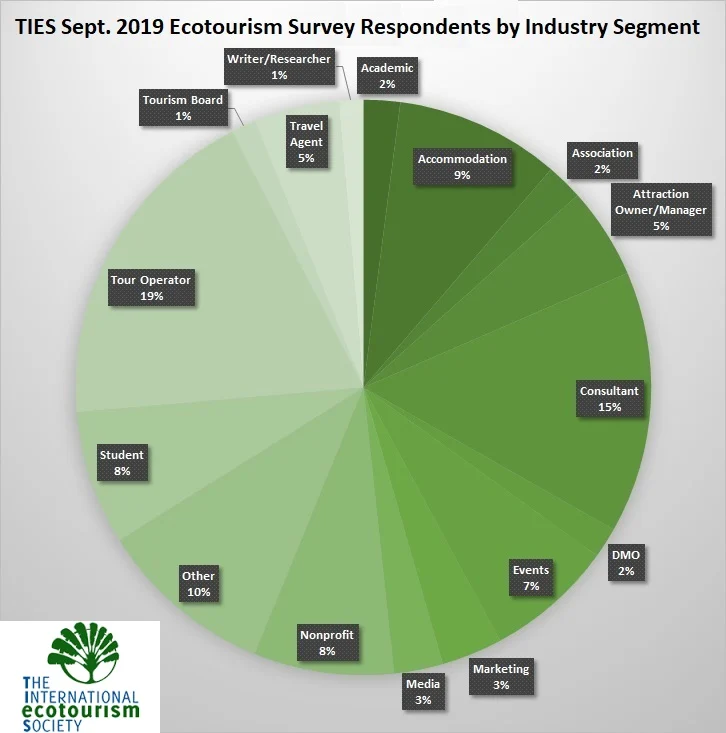
- Phase III: Validation and Categorization: Data was cleaned to ensure 971 viable entries. Respondents were asked to self-classify their industry segment to provide a clear map of the professional landscape.
- Phase IV: Synthesis and Analysis: Throughout late 2019, TIES analyzed the qualitative and quantitative feedback, leading to the current roadmap for organizational reform and language expansion.
Supporting Data: Mapping the Industry Landscape
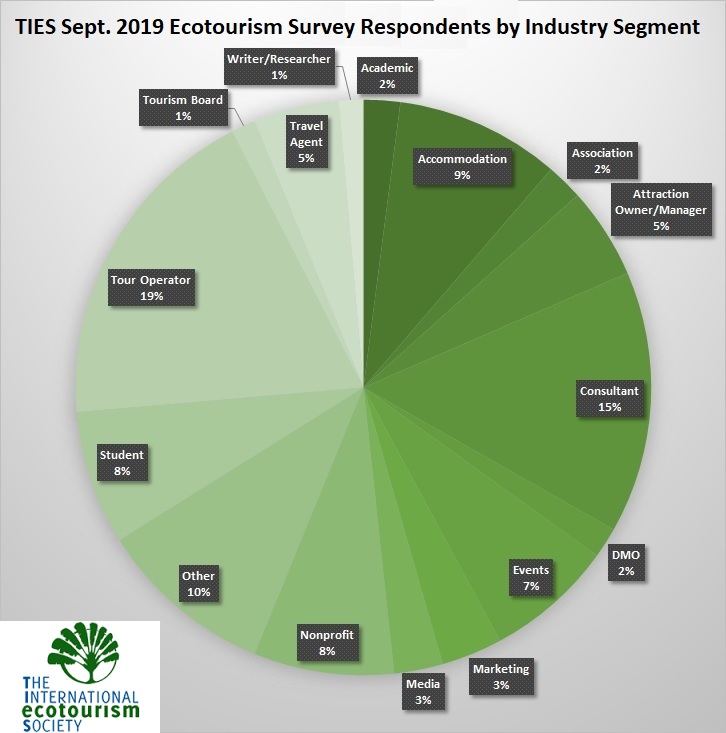
The survey provided a granular look at who exactly is driving the ecotourism narrative today. While 90% of respondents were able to classify their roles within the provided industry segments, the survey revealed an important insight: the modern tourism professional is rarely siloed. Many respondents requested the ability to select multiple industry segments, reflecting the "multitasking" nature of the contemporary sustainable travel entrepreneur.
The Growth Consensus
Perhaps the most striking data point from the survey is the near-unanimous agreement regarding market trajectory. Out of 971 respondents, fewer than 0.5% (only four individuals) suggested that ecotourism growth was slowing. The overwhelming majority characterized the industry as growing "rapidly" or "fast."
This data aligns with broader market shifts documented by industry giants like Booking.com, which have similarly identified a surge in consumer demand for sustainable travel experiences. The consensus suggests that ecotourism has transitioned from a niche, alternative market segment into a mainstream priority for global travelers.
Demographic Disparities
While the response rate was robust, TIES noted a surprising under-representation of the academic community. Given that academics comprise a significant portion of TIES membership, their lower participation rate suggests a potential gap in the current dialogue between theoretical research and practical, on-the-ground industry application. This is an area TIES has earmarked for future engagement to ensure that industry growth remains grounded in scientific rigor.
Official Perspectives: Challenges and Strategic Pivots
The survey was not merely a celebration of growth; it served as a diagnostic tool for the hurdles currently inhibiting the sector. The respondents were vocal about the "darker" side of rapid expansion.
The Barriers to Sustainability
Participants identified a laundry list of challenges that the industry must confront:
- Systemic Issues: Greed, overdevelopment, and the lack of comprehensive regulations.
- Operational Hurdles: Difficulty in securing financing, complex permit processes, and a general lack of knowledge or awareness regarding sustainable best practices.
- The "Overtourism" Crisis: As destinations become popular, the very essence of ecotourism—preservation and low-impact interaction—is threatened by volume.
- The Consumer Gap: Most notably, respondents emphasized the lack of traveler ability to book ecotourism experiences "fairly." There is a clear call for more transparent, user-friendly platforms that allow travelers to distinguish genuine eco-initiatives from "greenwashed" marketing.
A Linguistic Expansion Strategy
One of the most actionable findings concerned the accessibility of information. Respondents made it clear that to truly represent the global community, TIES must transcend English-only content. A majority identified Spanish as a critical priority, citing the robustness of ecotourism development in Latin America and the Iberian Peninsula.
Beyond Spanish, the survey revealed strong recommendations for French and Mandarin, with 39 other languages suggested by the cohort. TIES has committed to a phased rollout of multilingual support, beginning with Spanish, as a foundational step toward becoming a truly polyglot resource for the industry.
Implications: The New Roadmap for TIES
The most profound revelations came from the question: "What initiatives should TIES prioritize?" The results forced a shift in organizational focus, revealing that members are less concerned with high-level UN partnerships or administrative policy and more concerned with actionable, tangible support.
The Prioritization Hierarchy:
- Education (41%): The clear mandate is for TIES to serve as an educational hub, providing training, certification, and knowledge-sharing platforms.
- Conservation and Partnerships (18%): A focus on the intersection of climate change and biodiversity protection.
- Ecodestinations (14%): A desire for detailed, country-by-country profiles that help professionals and travelers identify legitimate eco-hubs.
- Publications (11%) and Social Media (9%): Tools for dissemination and branding.
- Policy and Membership (Low priority): Surprisingly, very few respondents listed traditional organizational activities like "increasing membership" or "UN partnerships" as primary concerns.
Moving Forward
TIES has taken these findings to heart. In response to the 41% who demanded an educational focus, the organization has already initiated outreach to key partners in the global education sector. These plans, aimed at professional development and capacity building, are scheduled for unveiling in the coming months.
Conclusion: The Path Ahead
The 2019 survey acts as both a mirror and a compass for the global ecotourism industry. It reflects a community that is deeply optimistic about its potential to reshape how humanity experiences the planet. Yet, it also reveals a pragmatic group of professionals who are tired of the theoretical and hungry for the practical.
As the industry faces the dual threats of climate change and unsustainable over-commercialization, the mission of organizations like TIES becomes increasingly vital. By pivoting toward education, multilingual accessibility, and tangible booking solutions, the society is positioning itself to bridge the gap between intent and impact.
The future of ecotourism, according to the 971 voices represented here, is not just about observing the world—it is about actively stewarding it. Through informed development, transparent booking, and a commitment to shared knowledge, the ecotourism sector is well-poised to continue its rapid growth, providing a superior, more responsible way to traverse the globe.
As TIES looks toward the next decade, the message from the field is clear: keep the focus on the ground, keep the education flowing, and ensure that the "eco" in ecotourism remains the primary driver of all future development.
For further information on the survey data, methodology, or upcoming educational initiatives, please visit the official International Ecotourism Society website at www.ecotourism.org.