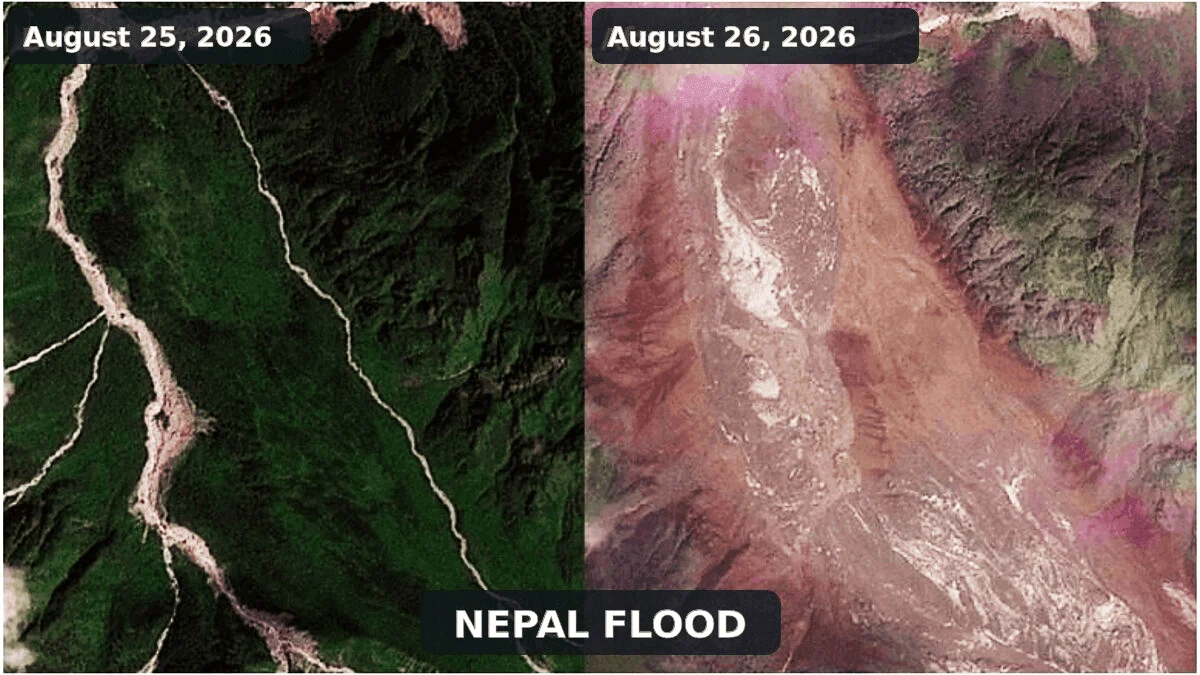
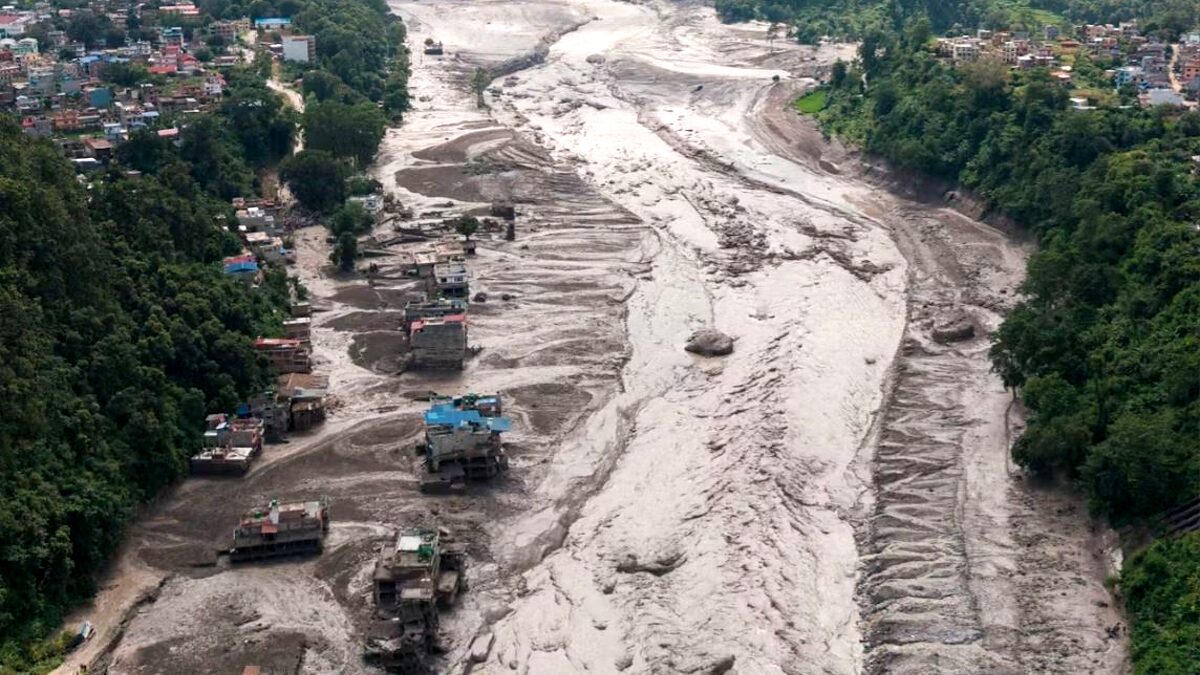
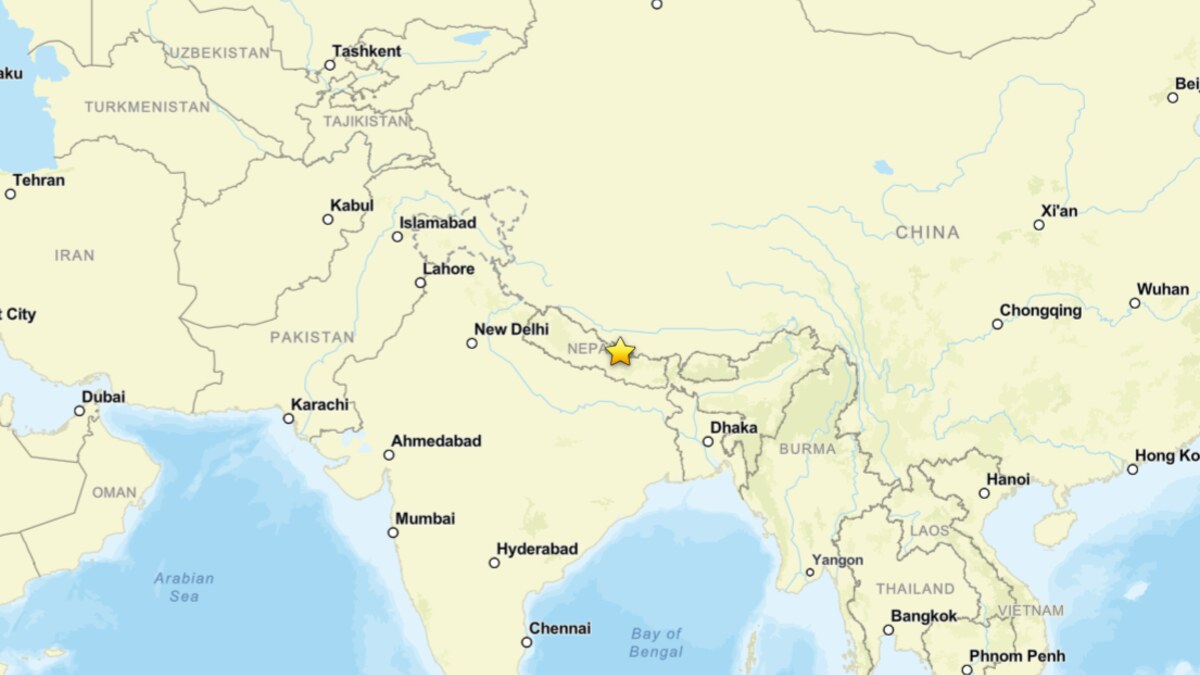
On August 26, 2026, a catastrophic geophysical event transformed the serene, rugged landscape of the Nepal-Tibet border into a scene of ruin. A massive surge of water, mud, and boulders tore through the transboundary Bhote Koshi-Trishuli river system, obliterating infrastructure and devastating remote mountain settlements. As rescue teams continue to navigate the treacherous terrain, scientific analysis has begun to peel back the layers of this complex disaster, revealing a deadly cascade of events that highlights the growing vulnerability of high-mountain regions in a warming world.
Main Facts: A Cascading Disaster
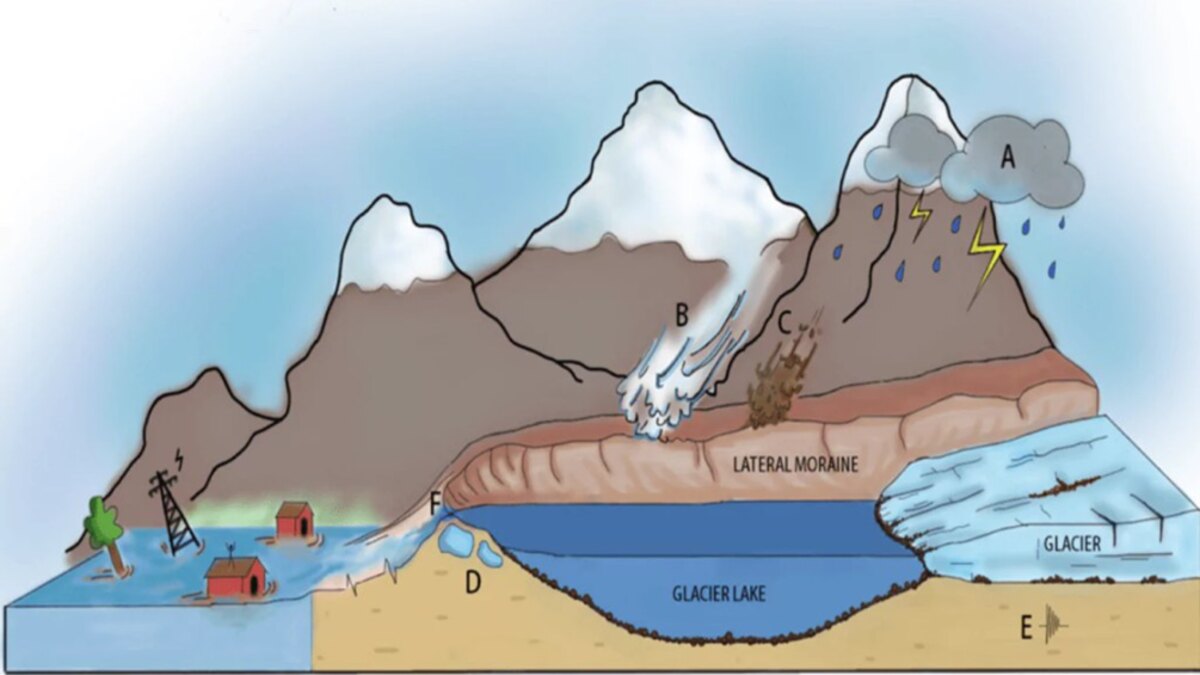
The disaster began in the upper reaches of the Lhende Khola, a tributary of the Bhote Koshi. Satellite imagery and seismic data indicate that a significant ice and rock avalanche detached from a glaciated slope, plummeting into the valley below. This mass movement did not merely cause direct impact damage; it effectively dammed the Lhende Khola, creating a temporary, unstable reservoir. When this improvised dam failed, it released a violent, debris-heavy flood wave that surged downstream with terrifying force.
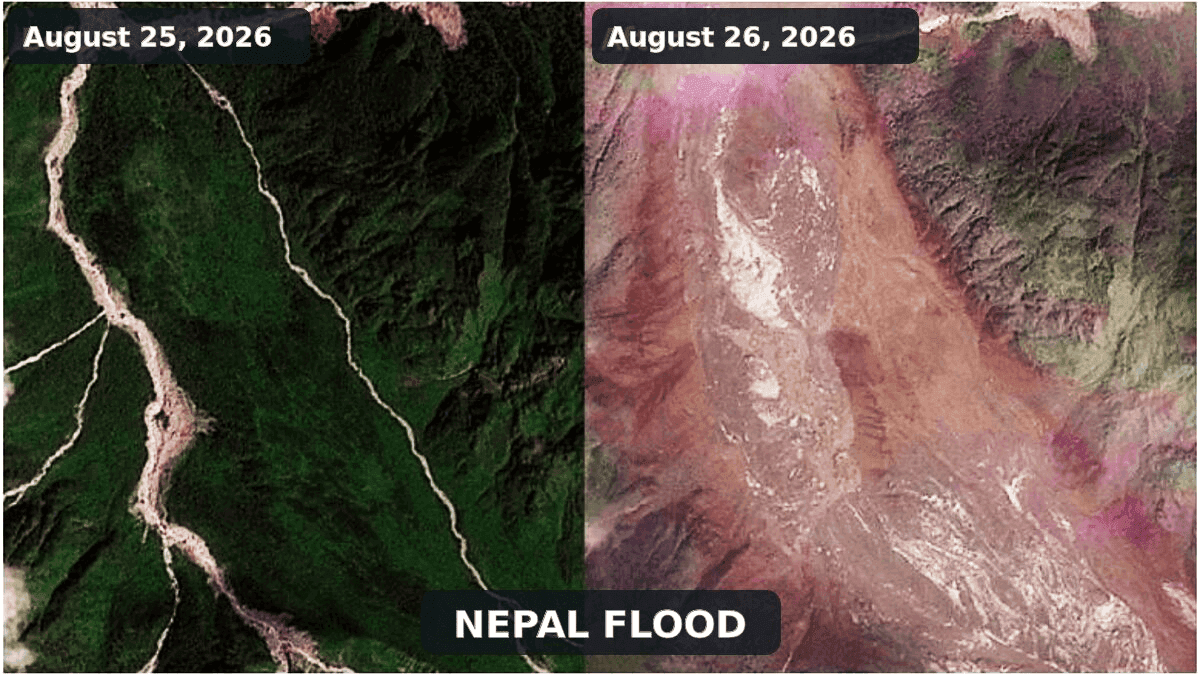
Initial reports from the Associated Press cited at least 160 fatalities across Nepal and China, with hundreds more reported missing. However, officials warn that these figures are likely conservative. The destruction of vital roads, bridges, and hydropower facilities has rendered the border region nearly inaccessible, hampering search and rescue efforts. The surge, which reportedly saw water levels on the Trishuli River rise by as much as nine meters in just 30 minutes, caught downstream communities entirely off guard.
Chronology of the Event
The timeline of the disaster is defined by a rapid succession of physical processes, often referred to as a "hazard cascade."
- Pre-Event Conditions: For months leading up to August 2026, the region experienced exceptionally warm temperatures. This atmospheric forcing contributed to glacier thinning, the degradation of ice-bearing permafrost, and an increase in meltwater, pre-conditioning the steep slopes for failure.
- The Initial Failure (c. August 26): A steep, glacierized slope in the upper Lhende Khola reached a critical failure point. A massive volume of bedrock, glacial ice, and snow detached, accelerating rapidly as a granular flow.
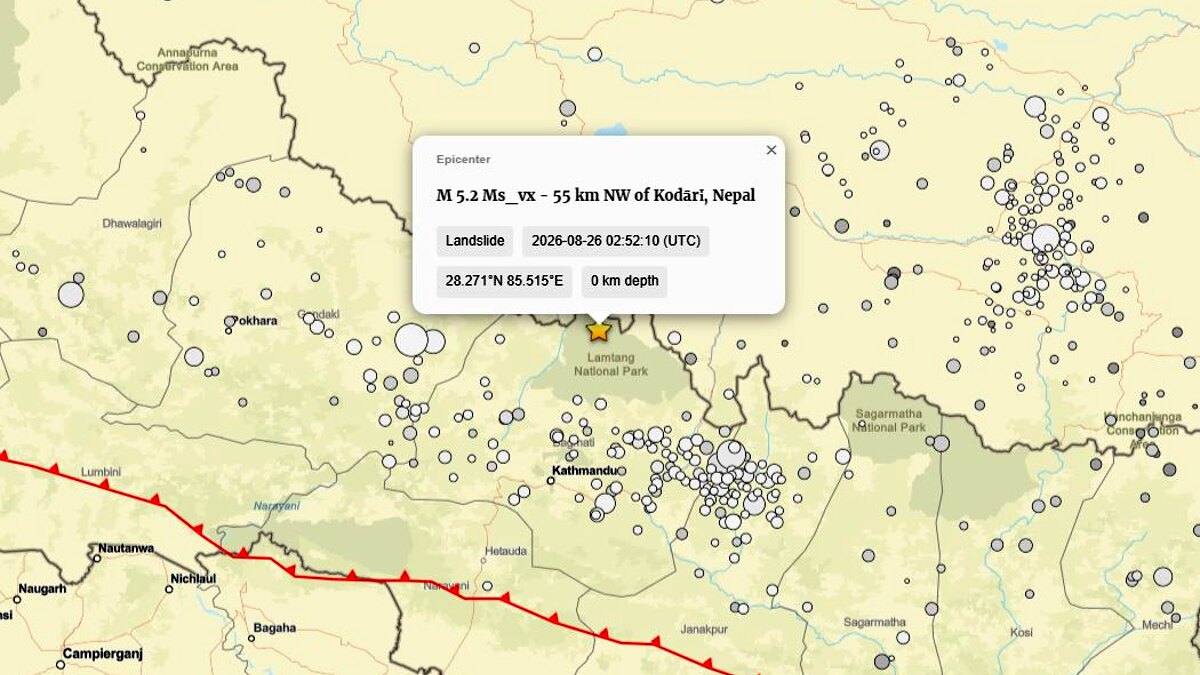
- Seismic Signature: At the onset, global seismic networks—including the U.S. Geological Survey (USGS)—detected a significant disturbance. Initially categorized as a magnitude 4.4 tectonic earthquake, the event was later reclassified as a magnitude 5.2 landslide. This correction is vital: it confirms that the shaking was the result of the mass movement, not the cause.
- River Blockage and Dam Failure: The avalanche reached the valley floor, depositing millions of cubic meters of debris, effectively damming the river. The resulting temporary lake quickly overtopped the unstable barrier, triggering an outburst flood that entrained even more sediment, boulders, and vegetation as it surged toward lower-lying settlements.
Supporting Data and Scientific Reclassification
The reclassification of the event by the USGS (event us7000tbwb) serves as a cornerstone for understanding the disaster. While tectonic earthquakes are common in the Himalayas, the waveform and frequency content of the August 26 event were characteristic of a massive, shallow mass movement. By stripping away the "earthquake" label, scientists have clarified that this was a purely geomorphological failure rather than a tectonic one.
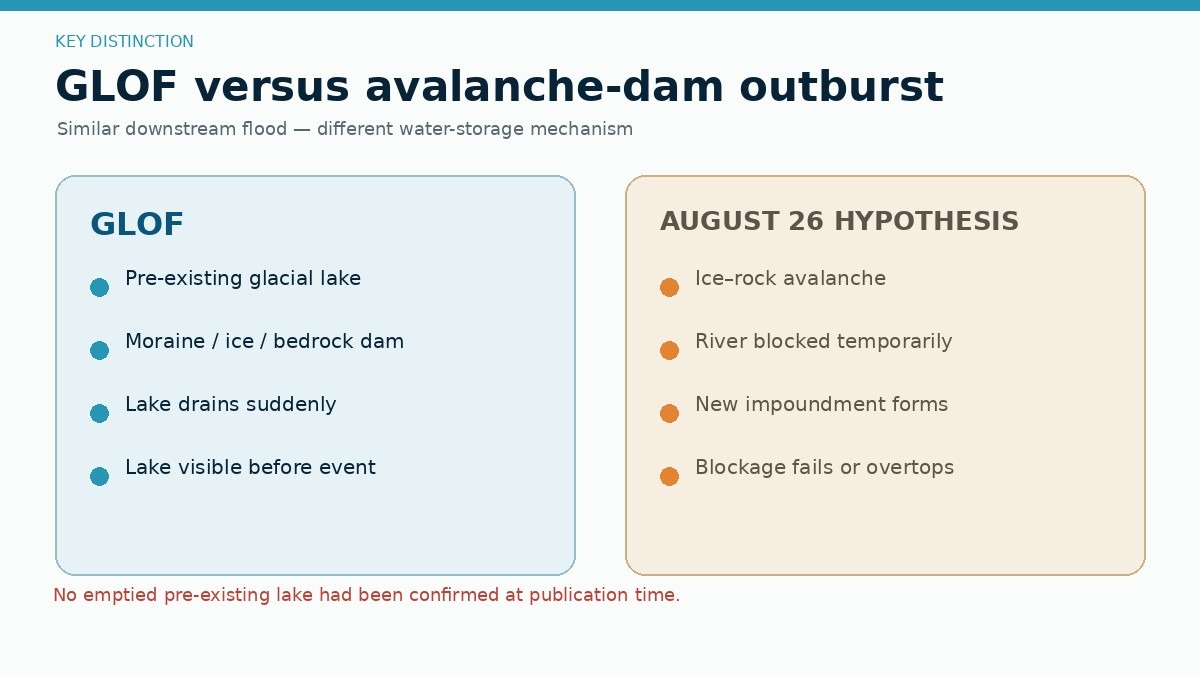
Furthermore, the International Center for Integrated Mountain Development (ICIMOD) has been instrumental in clarifying the nature of the flood. While many initial reports labeled the event a Glacial Lake Outburst Flood (GLOF), evidence suggests this is inaccurate. A GLOF requires the sudden drainage of a pre-existing glacial lake. In this instance, the "lake" was a secondary feature, created only after the avalanche blocked the river. Distinguishing between these two is critical for future monitoring, as known glacial lakes can be mapped and instrumented, whereas landslide-dammed rivers are unpredictable and transient.
Comparative Case Studies: Marmolada and Blatten
To understand the mechanics of the Lhende Khola disaster, geologists are looking toward recent precedents in the Alps.
The Marmolada Lesson (2022)
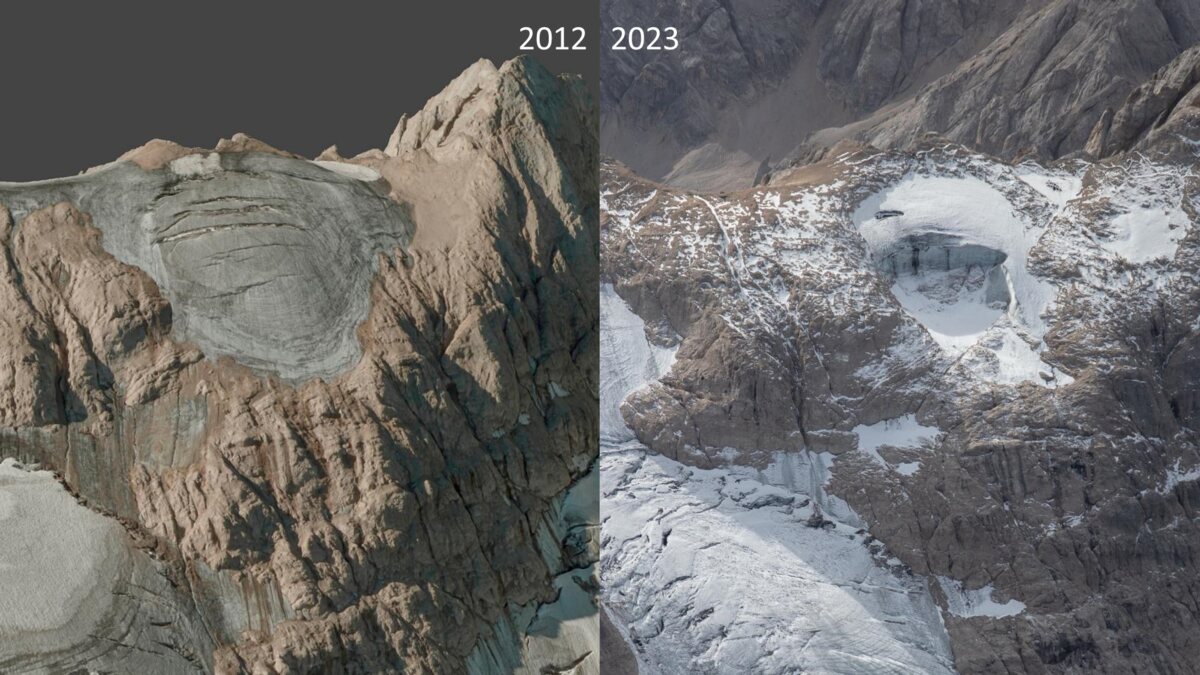
The 2022 collapse of the Marmolada glacier in Italy provides a sobering comparison. That event, which killed 11 people, was driven by water-filled crevasses and hydrostatic pressure—a result of anomalous heat. Like the Nepal event, it was not triggered by an earthquake, and it demonstrated that even "stable" glaciers can reach a breaking point when environmental baselines shift.
The Blatten Disaster (2025)
The most striking analog is the 2025 disaster in Blatten, Switzerland. In that event, rockfall from the Kleines Nesthorn loaded the Birch Glacier, causing it to accelerate before a massive, multi-million-cubic-meter collapse occurred. The Blatten disaster mirrors the Lhende Khola event in its "domino-style" progression: rock instability leads to ice failure, which leads to a massive debris flow and a subsequent river blockage. The Swiss experience highlights the urgency of monitoring slope movement, as advanced detection at Blatten allowed for the evacuation of over 300 residents, potentially saving dozens of lives.
Implications for the Future
The August 26 disaster carries profound implications for mountain safety and climate policy.
The Warning Challenge
One of the most pressing issues is the transboundary nature of Himalayan rivers. Hazards like the Lhende Khola outburst do not respect international borders; they move faster than human communication can respond. The disaster underscores a critical need for an integrated, multi-national warning system. Such a system must move beyond tracking static glacial lakes and toward real-time monitoring of unstable glacierized slopes, seismic detection networks, and automated river gauging that can broadcast alerts in seconds.
Climate Change and Attribution
While the Hindu Kush Himalaya is warming at a rate that is indisputably modifying the cryosphere, scientists are cautious about direct attribution. Climate change is undeniably altering the baseline—creating longer melt seasons, deeper permafrost degradation, and increased hydro-geological stress—but the final trigger for a specific slope failure remains a complex mix of local geology, fracture geometry, and weather. The scientific community emphasizes that while climate change creates the conditions for these disasters, it is premature to label every individual event as a direct result of global warming.
Infrastructure and Urban Planning
As tourism, hydropower, and settlement expand into narrow Himalayan valleys, the risk to human life increases exponentially. The destruction of infrastructure on August 26 serves as a warning that current safety margins for hydropower installations and transport routes may be insufficient for a future characterized by more frequent and intense mass movements.
Conclusion: A New Reality in the High Mountains
The Nepal-Tibet border disaster is a defining moment for modern mountain management. It challenges the assumption that mountain hazards are either purely tectonic or purely glaciological, proving instead that they are increasingly characterized by complex, cascading failures.
Moving forward, the priority must be a more nuanced understanding of these hazards. We must stop viewing GLOFs, ice avalanches, and landslide-dam outbursts as synonymous. Each requires a different monitoring strategy and a different emergency response protocol. As the climate continues to shift the mountain baseline, the survival of downstream communities will depend on our ability to monitor the "hidden" signals of the high peaks—the shifting rock, the thinning ice, and the silent, growing instability of the world’s highest mountains.
The recovery in Rasuwa and Tibet will be long and arduous, but the scientific lessons learned from this tragedy are essential. By refining our understanding of these geophysical cascades, we can hope to build a more resilient future for those who call the high mountains home.