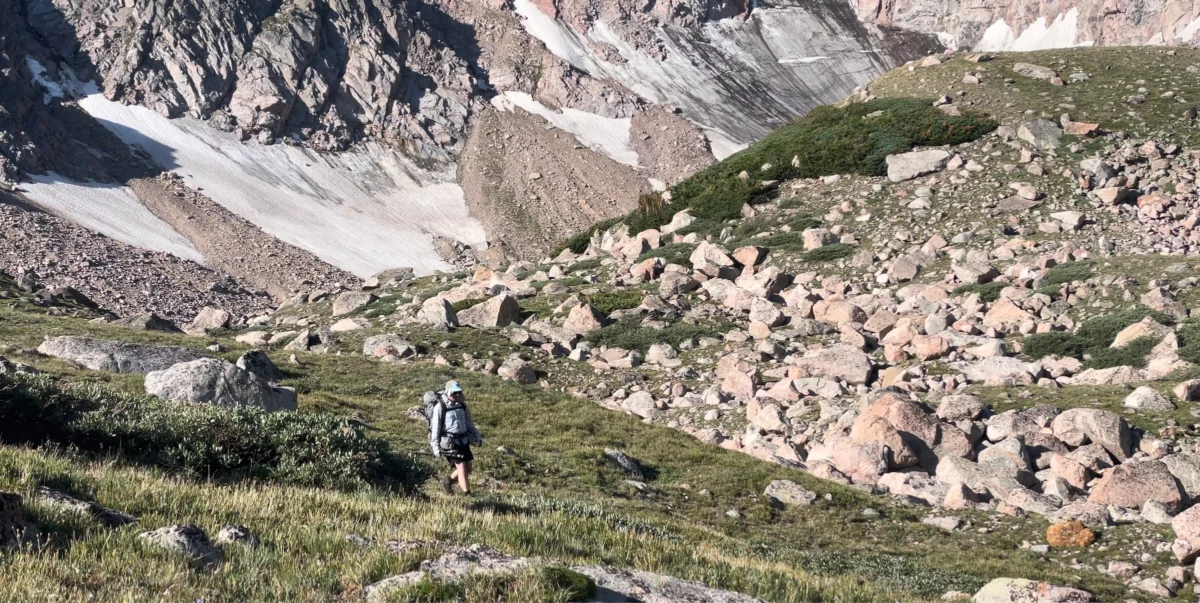
Jotunheimen, the "Home of the Giants," stands as the crown jewel of Norway’s 47 national parks. Spanning 1,151 square kilometers, it is a realm of superlatives: it hosts the country’s 23 highest peaks, massive, ancient glaciers, and a pristine wilderness that serves as the last sanctuary for the wild mountain reindeer, alongside moose, wolverines, and lynx.
For the serious trekker, Jotunheimen represents more than just a destination; it is a pilgrimage into the heart of Nordic mountain culture. In late September 2022, I embarked on an 80-kilometer loop that captured the essence of this high-altitude terrain. This report serves as both a reflection on that journey and a practical guide for those looking to navigate one of Europe’s most formidable landscapes.

Main Facts and Overview
The Jotunheimen Loop is a moderate-to-challenging trek that demands respect for unpredictable weather and rugged terrain. While the distance is a manageable 80 kilometers (49.7 miles), the cumulative elevation gain of 3,941 meters (12,930 feet) ensures that every kilometer is earned.

- Distance: 80 km (49.7 mi)
- Duration: 3 Days
- Difficulty: Moderate
- Total Elevation Gain: 3,941 m (12,930 ft)
- Start/Finish: Gjendesheim Mountain Hut
The park is defined by its deep, U-shaped valleys and razor-sharp ridges. The infrastructure—managed largely by the Norwegian Trekking Association (DNT)—is world-class, offering a network of well-maintained mountain huts that provide shelter, food, and community to weary travelers.

Chronology of the Expedition
My journey began at the iconic Gjendesheim Mountain Hut, the gateway to the eastern sector of the park.

Day 1: The Ferry and the Valley Floor
The loop begins not with a climb, but with a voyage. A 45-minute ferry ride across the turquoise waters of Lake Gjende drops hikers at the Gjendebu Hut, the oldest in the DNT system (established in 1871). Upon disembarking, the trail leads northwest into the Storådalen Valley.

The initial trek is a study in transition: from the enchanting, low-lying birch forests to the exposed, austere tundra above the treeline. Six kilometers in, the trail ascends steeply beside the 60-meter Hellerfossen waterfall. The path then levels out, tracing the edge of Langvatnet (“Long Lake”), a body of water that reflects the surrounding jagged peaks. The day concludes at Leirvassbu Hut, where the menu features locally harvested delicacies—reindeer, elk, and wild berries—providing a vital caloric intake after the 20-kilometer push.

Day 2: The High Altitude Passage
The second stage, spanning 16 kilometers to Spiterstulen, offers a reprieve in intensity but elevates the scenery. Passing the pyramid-shaped Kyrkja Peak, the route enters the Visdalen Valley. The valley floor is a tapestry of late-season wildflowers and glacial debris, flanked by 2,000-meter giants like Store Bukkeholstinden and Styggehøe.

Spiterstulen, a former summer farm turned mountain lodge, serves as the base camp for those attempting to summit Galdhøpiggen, Scandinavia’s highest peak. While I had conquered the peak in a previous decade, the atmosphere at the lodge remains a constant: a bustling hub of international adventurers.

Day 3: The Plateau and the Ridge
The final, most dramatic stage covers 16 kilometers between Spiterstulen and the finish at Gjendesheim. The climb from Spiterstulen to the Skautflye plateau is relentless, but the reward is a panoramic view of the Veobrean glacier.

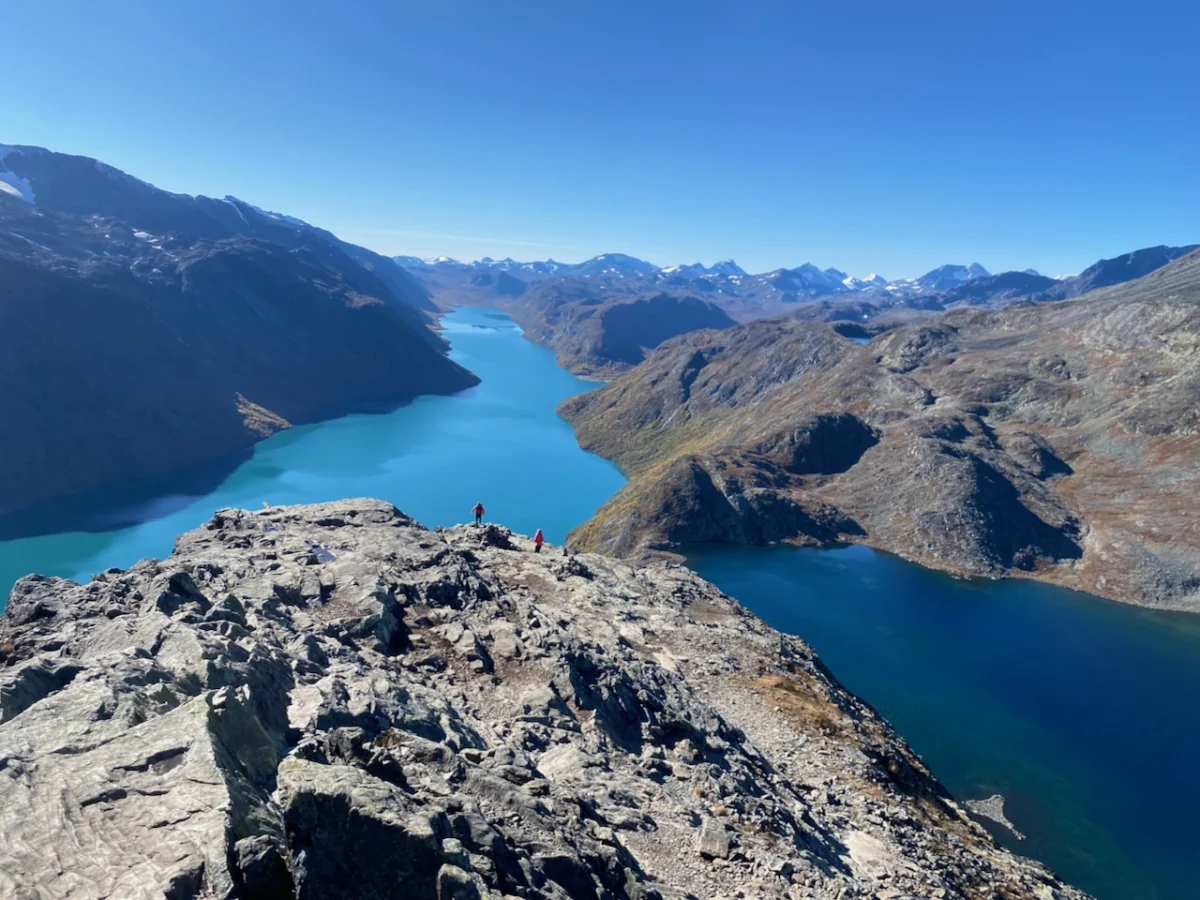
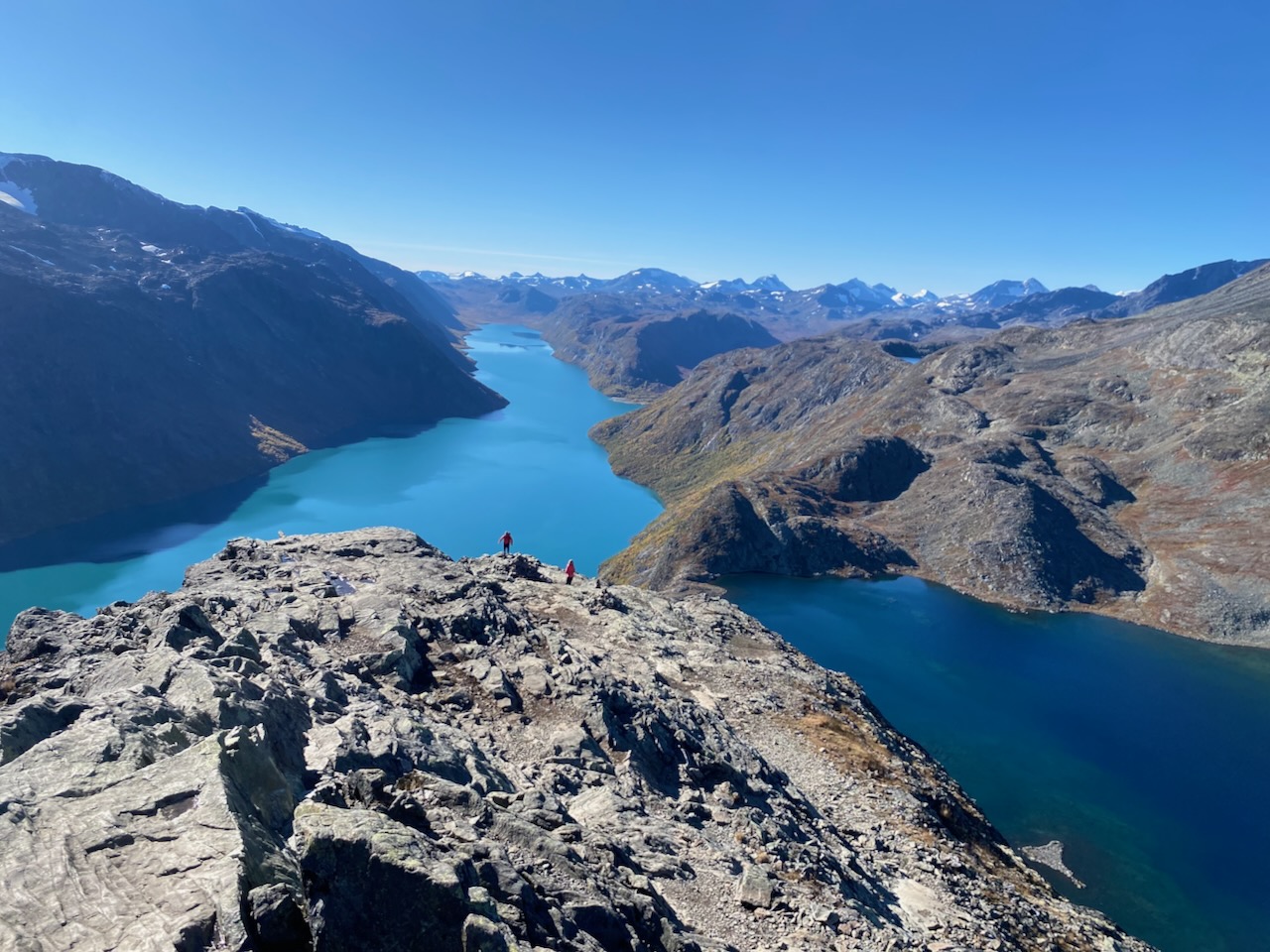
The route descends into the Veodalen Valley—a favorite haunt for reindeer herds—before climbing toward the legendary Besseggen Ridge. The Besseggen is not merely a trail; it is a rite of passage. Its narrow, knife-edged spine offers a terrifyingly beautiful perspective: to one side, the turquoise, glacier-fed waters of Lake Gjende; to the other, the dark, sapphire depths of Bessvatnet, which sits hundreds of meters higher. The final stretch to Gjendesheim is a victory lap, a descent from the heights back into the heart of the Norwegian lowlands.

Supporting Data and Logistics
For those planning their own journey, the following logistical framework is essential:

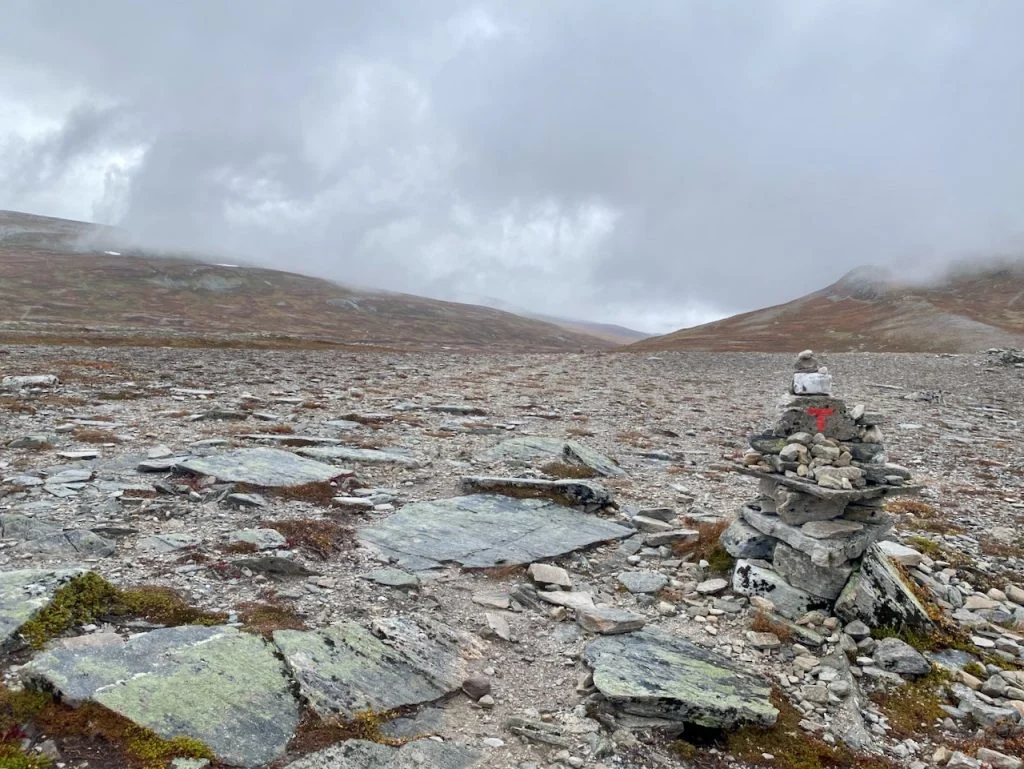
- Navigation: The trail is marked with the classic red "T" symbols and stone cairns, but GPS is highly recommended for late-season treks when early snow can obscure markers.
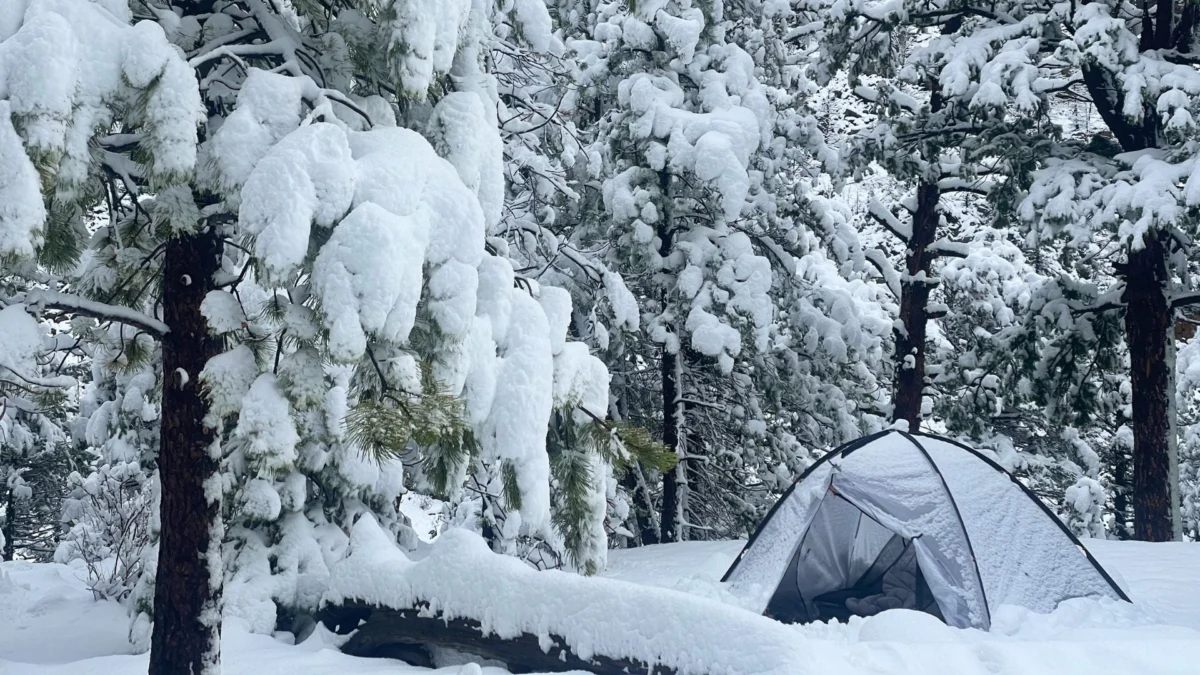
- Seasonality: September is a "shoulder season." While the summer crowds have dissipated and the fall colors are spectacular, the weather can turn from sunshine to snow in a matter of minutes.
- Gear Requirements: Given the potential for rapid temperature drops, a layered clothing system is non-negotiable. My setup mirrored that of my Greenland expeditions: high-performance, lightweight synthetic and wool layers, a sturdy Hilleberg or MLD-style shelter, and a reliable sleeping system rated for sub-zero temperatures.
- Culinary Experience: The DNT hut system is unique in that it offers full-service meals. For many, this removes the need for heavy food carries, allowing for a lighter, more agile pack.
Cultural and Literary Implications
The fame of the Besseggen Ridge is inextricably linked to the literary history of Norway. Henrik Ibsen, the titan of Norwegian drama, immortalized this specific stretch in his 1867 masterpiece, Peer Gynt.

In the play, the protagonist recounts a wild ride on the back of a reindeer across the "Gendin-Edge." Ibsen’s description of the ridge—stretching like a scythe, with depths of seven hundred fathoms on either side—still resonates with every hiker who stands on that precipice today. It serves as a reminder that the mountains are not just geographical features; they are cultural touchstones that have shaped the Norwegian identity for centuries.

The Alpine Congregation: A Social Analysis
One of the most profound aspects of the Jotunheimen experience is the social ecosystem within the mountain huts. During my 2022 trek, I found myself sharing the emergency hut at Spiterstulen with a diverse cohort: British mountaineers, a Dutch ultralight enthusiast, German families, and a seasoned Chilean traveler.

These encounters are the heartbeat of long-distance trekking. In a world increasingly dominated by digital isolation, the mountain hut acts as a "third space." Here, the hierarchies of the outside world—nationality, profession, and age—are stripped away. We are united by a singular, shared pursuit: the appreciation of the wilderness. This "Alpine Congregation" is a vital part of the preservation of these lands; those who walk the trails are the most likely to advocate for their protection.

Conclusion and Recommendations
The Jotunheimen Loop is a microcosm of the Nordic outdoor experience. It combines physical challenge with deep geological history and a warm, welcoming social culture.

For those looking to replicate this journey, I recommend the following:

- Preparation: Do not underestimate the vertical gain. Train with a weighted pack to prepare for the steep ascents to the Skautflye plateau.
- Respect: The reindeer herds are wild and sensitive. Keep a respectful distance and maintain noise discipline.
- Flexibility: The weather in the "Land of the Giants" is the ultimate authority. Always have a "zero-day" built into your itinerary in case of severe storms.
Whether you are a seasoned veteran of the Appalachian Trail or a newcomer looking for your first multi-day European trek, Jotunheimen offers an experience that is as humbling as it is exhilarating. It is a place where you can feel, quite literally, as if you are walking on the roof of the world, following in the footsteps of legends, and finding a bit of yourself in the vast, silent beauty of the North.