For mountaineers and adventure seekers worldwide, Mount Kilimanjaro stands as a beckoning giant—a snow-capped monolith rising majestically from the heart of Tanzania. While there are several paths to the "Roof of Africa," the Lemosho route has emerged as the premier choice for those seeking a blend of solitude, breathtaking biodiversity, and superior success rates.
As the global demand for sustainable travel grows, the Lemosho route is increasingly recognized not just as a trekking path, but as a sanctuary for ecotourism. Kilimanjaro Tanzanite Safaris, a reputable local destination management company (DMC), highlights this trail as a cornerstone for travelers aiming to minimize their environmental footprint while maximizing their summit prospects.
The Lemosho Advantage: Main Facts and Appeal
The Lemosho route is celebrated by veteran climbers and conservationists alike for its "low traffic" status. Unlike the more heavily congested Marangu or Machame routes, Lemosho offers a pristine wilderness experience, allowing trekkers to immerse themselves in the untouched flora and fauna of the Kilimanjaro ecosystem.
Beyond the scenery, the route is mathematically superior. Success on Kilimanjaro is often dictated by one’s ability to acclimatize to the thinning air. The Lemosho route’s gradual ascent profile provides the body with the necessary time to adjust, significantly reducing the risks associated with Acute Mountain Sickness (AMS). While a 7-day trek is the standard, experts strongly advocate for an 8-day itinerary. That extra 24-hour window at higher altitudes is the difference between a triumphant summit and an aborted attempt, offering the highest statistical success rate for climbers.
The 8-Day Odyssey: A Detailed Chronology
Choosing the 8-day Lemosho adventure is an investment in safety and photographic opportunity. The following itinerary outlines the progression from the tropical foothills to the arctic summit.
The Forest and Moorland: Days 1–3
The journey begins with a transit from Moshi or Arusha to the Londorosi Park Gate. After registration, a 4WD vehicle maneuvers through rugged forest tracks to the Lemosho Glades. The initial trek leads to Mti Mkubwa (Big Tree) camp at 2,750 meters, a lush introduction to the mountain’s vertical biodiversity.
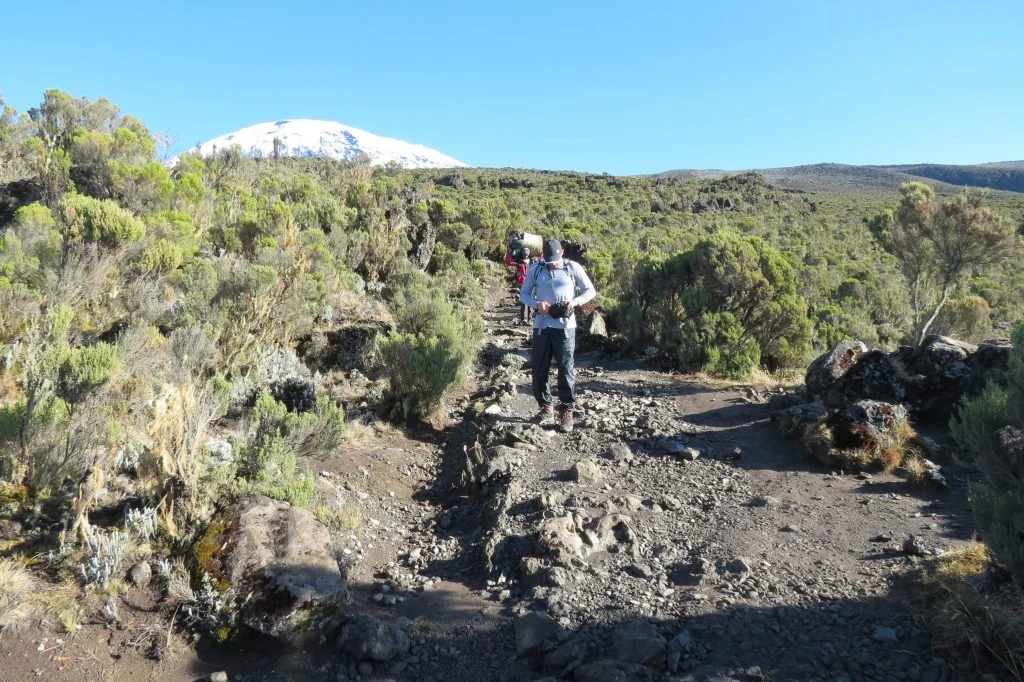
As the trail steepens, hikers enter the giant heather moorland zone. Day 2 offers a traverse across the Shira Ridge, eventually descending to the Shira 1 camp. Day 3 is the "secret weapon" of the 8-day itinerary. By crossing the Shira Plateau to Shira 2 camp, climbers engage in vital active recovery. These gentle walks across the plateau are essential for physiological acclimatization, preparing the body for the technical challenges that lie ahead.
The High-Altitude Challenge: Days 4–5
On Day 4, the path turns eastward toward the iconic Lava Tower. Following the descent to the Barranco Hut, the 8-day itinerary distinguishes itself. Climbers spend a dedicated night at the Karanga Camp. This extra time at 4,000 meters is critical; it allows the heart and lungs to adjust to the 4,000+ meter threshold before the final, brutal ascent.
Day 5 involves a scramble to the top of the Great Barranco Wall, followed by a trek over scree and ridges to the Barafu Hut. Perched at 4,600 meters, this is the base camp. Here, the landscape turns desolate and rocky, signaling the transition into the alpine desert. Sleep is the priority at Barafu, as the final push begins in the dead of night.
The Summit and Descent: Days 6–7
The ascent to Uhuru Peak—the true summit—starts under the cover of darkness. Climbers navigate between the Rebmann and Ratzel Glaciers, often utilizing ice axes or trekking poles for stability. Reaching the rim of the Kibo Crater and eventually the 5,895-meter Uhuru Peak is a life-defining moment. With views extending toward the jagged Mawenzi peak and the distant Mount Meru, the summit provides the ultimate reward for the arduous journey.
The descent is rapid but structured, passing through the Mweka Hut zone before reaching the park gate on Day 7, where transport awaits to carry weary but victorious trekkers back to civilization.
Supporting Data and Ecotourism Integrity
What makes the Lemosho route a "photographic safari" in the truest sense? It is the exposure to varied ecological zones. From the dense, mist-shrouded rainforests teeming with endemic species to the alien landscapes of the alpine desert, Lemosho offers a visual narrative of climate and geography.
Kilimanjaro Tanzanite Safaris notes that for those specifically interested in ecotourism, the Northern Circuit (9 days) and the Rongai route via the Mawenzi Saddle are also world-class alternatives. However, Lemosho remains the most balanced choice for those who value both comfort and conservation.
Essential Logistics and Inclusions
Professional expeditions are not merely about the climb; they are about safety. Modern, responsible operators provide:
- Emergency Infrastructure: Portable oxygen bottles and pulse oximeters to monitor blood-oxygen saturation levels.
- Rescue Coverage: Comprehensive AMREF Flying Doctor air rescue insurance.
- Support Staff: Salaries for qualified guides, porters, and cooks, ensuring the socio-economic health of the local community.
- Certification: Official climbing certificates awarded upon the successful completion of the trek.
It is important to note that while prices for 8-day packages are higher than 7-day versions, the investment covers higher safety margins and better logistical support. Discounts are often available for educational groups, students, and recognized ecotourism members.
Official Stance on Safety and Sustainability
Safety remains the paramount concern for any reputable operator. Kilimanjaro Tanzanite Safaris emphasizes that potential climbers must be physically prepared and properly equipped. While they provide comprehensive service, they explicitly recommend that climbers choose their own eco-resorts in Moshi to ensure the accommodation aligns with their specific values regarding sustainability and local engagement.
The inclusion of AMREF Flying Doctor services and mandatory pulse oximetry reflects a shift toward a more clinical and data-driven approach to high-altitude trekking. By utilizing these tools, guides can make informed, real-time decisions about a climber’s health, ensuring that the dream of reaching the summit does not come at the cost of personal safety.
Implications for the Future of Kilimanjaro
The shift toward longer, better-acclimatized routes like Lemosho has significant implications for the tourism industry in Tanzania.
- Economic Sustainability: By encouraging 8-day trips rather than "fast-track" 5 or 6-day attempts, the tourism sector supports more local jobs, as longer treks require more support staff and more time spent within the local economy.
- Environmental Stewardship: Lower traffic routes like Lemosho are easier to manage from a conservation standpoint. By distributing the volume of climbers away from the saturated Marangu route, the National Park can better protect the delicate high-altitude tundra.
- The "Photographic Safari" Trend: The rise of high-quality, long-form travel documentation has made the Lemosho route a target for content creators and nature photographers. This helps to promote Tanzania as a premier destination for sustainable, nature-focused tourism rather than just a "bucket-list" item.
Conclusion: Planning Your Expedition
Mount Kilimanjaro is more than a mountain; it is a test of character and a testament to the raw beauty of the African continent. For those planning their journey, the Lemosho route offers the most reliable path to the summit while upholding the principles of ecotourism.
Whether you are a seasoned mountaineer or an enthusiast looking for your first major summit, the 8-day Lemosho adventure provided by experienced DMCs like Kilimanjaro Tanzanite Safaris offers the best possible blend of safety, scenery, and satisfaction. By choosing the right route, you are not just booking a trip; you are ensuring that your presence on the mountain contributes positively to the preservation of this natural wonder for generations to come.
For those ready to embark on this journey, the key is preparation. From physical training to selecting an ethical operator, every detail matters. The summit of Uhuru Peak awaits—ensure your path there is as responsible as it is unforgettable.