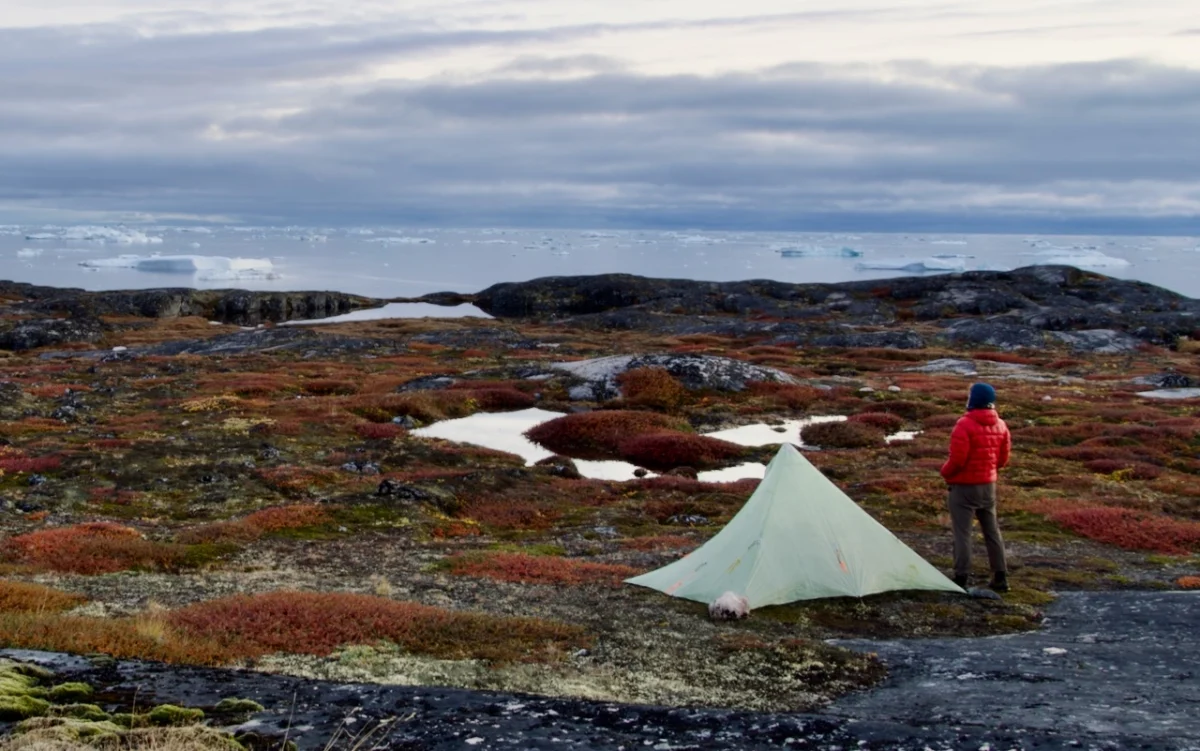
In the world of ultralight backpacking, true innovation is rarely found in the marketing departments of corporate giants. Instead, it flourishes in the workshops of the "cottage gear" community—a tight-knit ecosystem where designers are also the primary end-users. When a developer spends hundreds of days a year on the trail, the gap between a design flaw and a field-tested solution vanishes.
This year, Backpacking Light has partnered with Garage Grown Gear to codify these advancements through the 2026 Cottage Gear Innovation Awards. By evaluating over 100 nominations, the panel sought to identify products that move beyond novelty, focusing instead on utility, weight reduction, and the fundamental improvement of the hiker’s experience. From tent stakes that weigh less than a nickel to modular bear canisters, these winners represent the current vanguard of wilderness equipment design.
The Philosophy of "Cottage" Innovation
To understand why the cottage industry has become the crucible of outdoor innovation, one must look at the feedback loop. Unlike large-scale manufacturers, who often operate on multi-year development cycles, cottage designers maintain a direct, intimate dialogue with their customers. A frustration expressed on a forum or via email can, in a matter of months, manifest as a revised seam, a new fabric choice, or a redesigned buckle.
Innovation in this space is defined by the resolution of compromises. Every piece of backpacking gear involves a trade-off between weight, durability, and comfort. The 2026 award winners were selected because they successfully "hack" these trade-offs, providing high-performance solutions that don’t sacrifice the structural integrity required in harsh, remote environments.
2026 Award Winners: A Deep Dive
1. Pachallama 2g Tent Stakes: The Geometry of Weight
The humble tent stake is often an afterthought, yet for the thru-hiker, the total weight of a "stake kit" can be significant. The Pachallama 2g stakes address a specific problem: the need for supplementary anchors that don’t add mass. By utilizing a slim, high-strength profile, these stakes are designed for guylines—lines that don’t require the massive holding power of primary shelter anchors but still need to be secure. The inclusion of glow-in-the-dark caps is a classic example of "cottage" intuition; it solves the perennial midnight issue of tripping over a guyline in the dark.
2. BearVault BV ONE: The Modular Revolution
Bear canisters are notoriously cumbersome—they are fixed-volume cylinders that occupy the same space in a pack whether they are full of five days of food or empty at the end of a trip. The BearVault BV ONE disrupts this category with a simple, robust volume-adjustment mechanism. By allowing the user to collapse the canister, the BV ONE increases internal pack efficiency. This is a game-changer for gear organization, as it allows hikers to consolidate food supplies as the trip progresses, effectively shrinking the "dead space" that usually haunts a backpacker’s loadout.
3. Holey Hiker Bidet Cap: Precision in Utility
The Holey Hiker bidet is a testament to the fact that innovation doesn’t have to be complex to be transformative. By engineering a specific four-hole nozzle for standard water bottles, the designer has turned a common trash item (a plastic bottle) into a highly efficient hygiene tool. The addition of a directional arrow is a hallmark of user-centric design, ensuring that the spray pattern is predictable even in low-light conditions. It is a small, inexpensive detail that drastically improves the reliability of an essential hygiene tool.
4. Gossamer Gear Mirage 40: The Fabric Frontier
Material science is the engine of the Mirage 40. By integrating ALUULA Graflyte—a high-modulus, ultra-lightweight fabric—with heat-applied seam taping, Gossamer Gear has pushed the envelope of what a 19-ounce pack can do. The innovation here isn’t just the fabric; it is the synthesis of that fabric with a carbon fiber frame. The pack manages to maintain structural load transfer and comfort while operating at a weight that was, until recently, reserved for frameless "sacks."
5. Alpenglow Gear Alpenflow Fuel Transfer Valve
Managing fuel is a repetitive, often messy task for long-distance hikers. The Alpenflow Fuel Transfer Valve streamlines the consolidation of partially used isobutane canisters. By moving away from complex, threaded, multi-piece systems to a simple press-fit design, Alpenglow has removed the friction—both physical and mental—from the process. The recent refinements in the valve’s alignment ensure a secure seal, making it safer and more efficient to squeeze every last drop of fuel from multiple canisters.

6. Durston Gear X-Dome Tents: Redefining Geometry
The "freestanding" tent market has long been stagnant, often forcing hikers to choose between weight and livable space. The Durston X-Dome series changes this by utilizing a crossing-pole geometry that optimizes the inner tent’s footprint. The result is a double-wall tent where the vestibules are fully integrated into the supported structure, meaning they don’t collapse or sag when stakes aren’t perfectly placed. This is a masterful application of architectural geometry to solve the "climbing over your gear" problem inherent in many dome tent designs.
Lifetime Achievement: Ron Bell and Mountain Laurel Designs
The 2026 awards would be incomplete without acknowledging the legacy of Ron Bell of Mountain Laurel Designs (MLD). For decades, Bell has been a steadying hand in the cottage industry. His work, ranging from the iconic DuoMid shelter to the Prophet pack, has defined the "ultralight" aesthetic.
What makes Bell’s career noteworthy is his refusal to compromise on quality in the face of scaling. By keeping production within the United States and maintaining a hands-on approach to design, he has created a template for what a sustainable, innovative cottage business looks like. His Lifetime Achievement Award is a recognition of the fact that innovation is not just about the new; it is about the sustained, iterative improvement of the essential.
Official Perspectives: The Collaboration
The collaboration between Backpacking Light and Garage Grown Gear is significant because it bridges the gap between technical expertise and the marketplace.
"The goal of these awards is to highlight the ‘how’ behind the ‘wow,’" notes Ryan Jordan, founder of Backpacking Light. "We aren’t just looking for the lightest gear; we are looking for gear that solves problems in a way that respects the reality of the trail."
Lloyd Vogel of Garage Grown Gear adds, "When you watch these designers work, you realize they aren’t just making products; they are documenting their own survival and success in the wilderness. Every one of these winners represents a moment where a designer realized there had to be a better way to do something, and then went out and built it."
Implications for the Future of Gear
As we look toward the remainder of the decade, the implications of these awards are clear. The industry is moving toward a model of "Modular Simplicity." Hikers are no longer satisfied with gear that does one thing poorly; they want gear that is multi-functional, field-repairable, and adaptable to changing conditions.
The success of the 2026 winners suggests three primary trends:
- Material Integration: Expect to see more high-performance textiles like ALUULA being utilized in structural, load-bearing capacities, rather than just as lightweight shells.
- Geometry-Driven Storage: The success of the Durston X-Dome indicates that users are willing to carry slightly more weight if the internal volume and "usability" of the shelter are significantly improved.
- Human-Centered Details: From the directional arrow on a bidet cap to the glow-in-the-dark caps on stakes, the industry is increasingly focused on the ergonomics of the campsite. Small, thoughtful features that reduce user error are becoming just as important as raw weight savings.
The cottage gear community remains the most vital R&D laboratory in the outdoor industry. While corporate brands may dominate the retail shelves, the actual evolution of how we traverse the backcountry is being written in small shops across the country. As the 2026 Innovation Awards demonstrate, the future of backpacking is not about adding more features; it is about refining the connection between the hiker and the environment, ensuring that when the miles get long and the weather turns, the gear simply disappears into the background, doing exactly what it was designed to do.