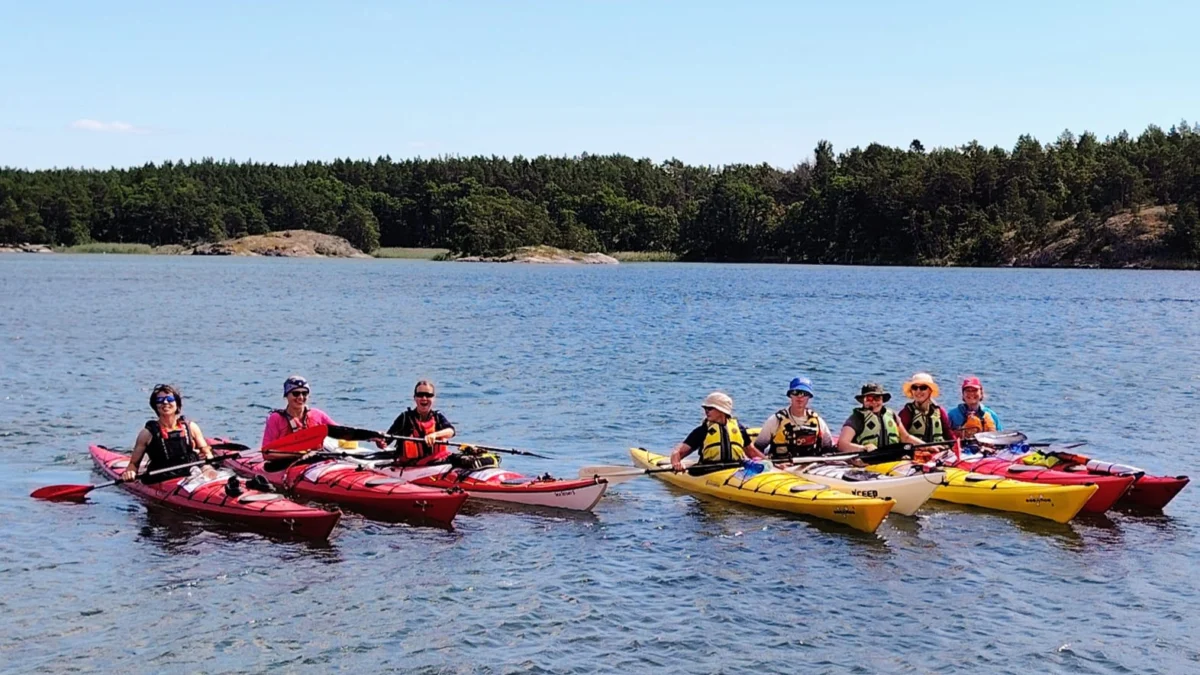
ARCHIPELAGO SEA, FINLAND – In a testament to the enduring appeal of wilderness exploration and the power of collective spirit, a team of eight seasoned kayakers from the Eura Canoe Club, led by acclaimed wilderness guide and Finnish kayaking ambassador Marja Kares-Oksman, recently completed a challenging multi-day expedition across the vast and intricate Finnish Archipelago Sea. Over three and a half days, the intrepid group paddled more than 80 kilometers, confronting formidable winds, embracing the serene beauty of remote islands, and forging an unbreakable bond amidst the stunning marine landscape.
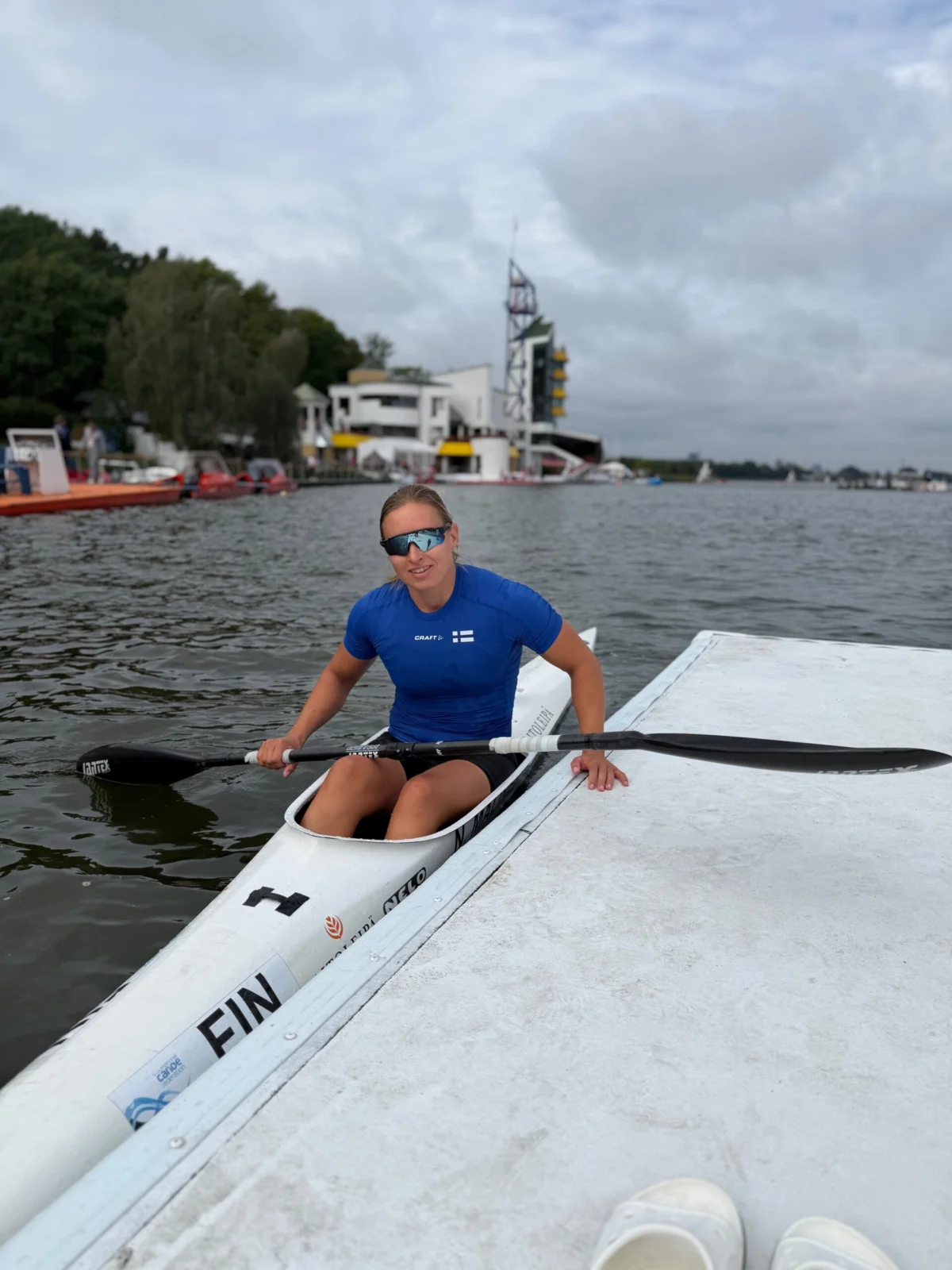
The expedition, a highlight of the Finnish Canoe and Rowing Federation’s initiative to share diverse paddling experiences, showcased the raw allure and logistical complexities of sea kayaking in one of the world’s most unique archipelagos. Kares-Oksman, a multi-talented professional whose expertise spans outdoor guiding, photography, and content creation from her bases in Satakunta and Ruka, embodies the passion for nature and shared experiences that drives such adventures. Her journey, meticulously documented and shared through her platform avecmarja.fi, offers an inspiring glimpse into the challenges and triumphs of long-distance paddling.
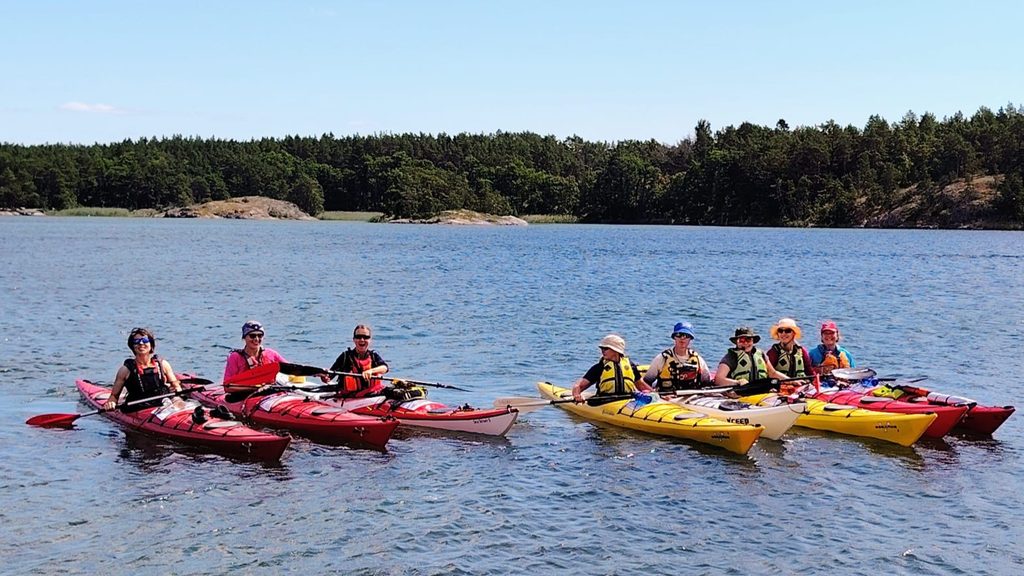
The Finnish Archipelago Sea, a labyrinthine expanse of over 40,000 islands, islets, and skerries, offers an unparalleled environment for sea kayaking. Its ever-changing character – from sheltered, river-like passages to exposed, wind-battered stretches of open water – demands respect, careful planning, and a robust team dynamic. This particular journey was a long-anticipated "experience trip" for the Eura Canoe Club members, a group comprising individuals from Eura, Köyliö, Nakkila, and Pori, united by their shared passion for paddlesports.
The Journey Begins: Anticipation and a Forceful Welcome
The morning of the departure was charged with a mix of excitement and apprehension. Weeks of monitoring wind and weather forecasts had set a tense backdrop, hinting at the challenging conditions ahead. Early on a Monday, the convoy of cars, kayaks strapped firmly to their roofs, converged at Korpoström harbor, the designated starting point. Despite the need to navigate two car ferries en route, the team arrived almost simultaneously, a testament to their coordinated planning and eagerness.
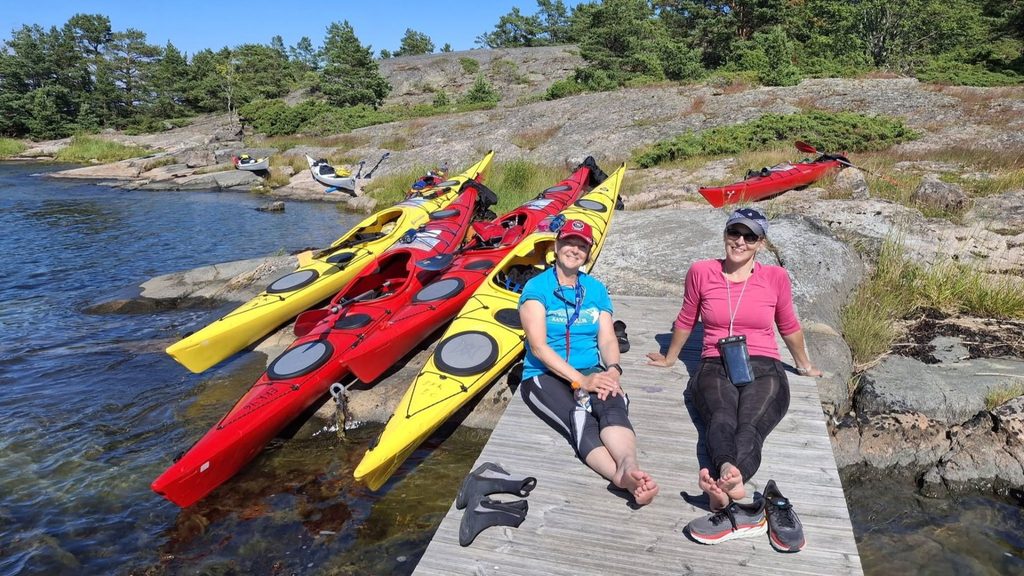
The harbor buzzed with activity as the eight kayakers, a joyful yet focused cohort, meticulously packed their vessels. Each waterproof bag, every piece of gear, was carefully stowed, anticipating the demands of over 80 kilometers of paddling. Before pushing off, the team gathered for a final pre-paddle lunch at the guest harbor restaurant, knowing a sustained period of paddling awaited them without immediate breaks. The atmosphere was light, underscored by a touching gesture: Taru’s parents, whose cottage was nearby, had come to see them off, Taru’s father capturing a poignant departure photograph of the smiling, expectant faces.
Day 1: Battling the Elements to Birskär and Konungsskär
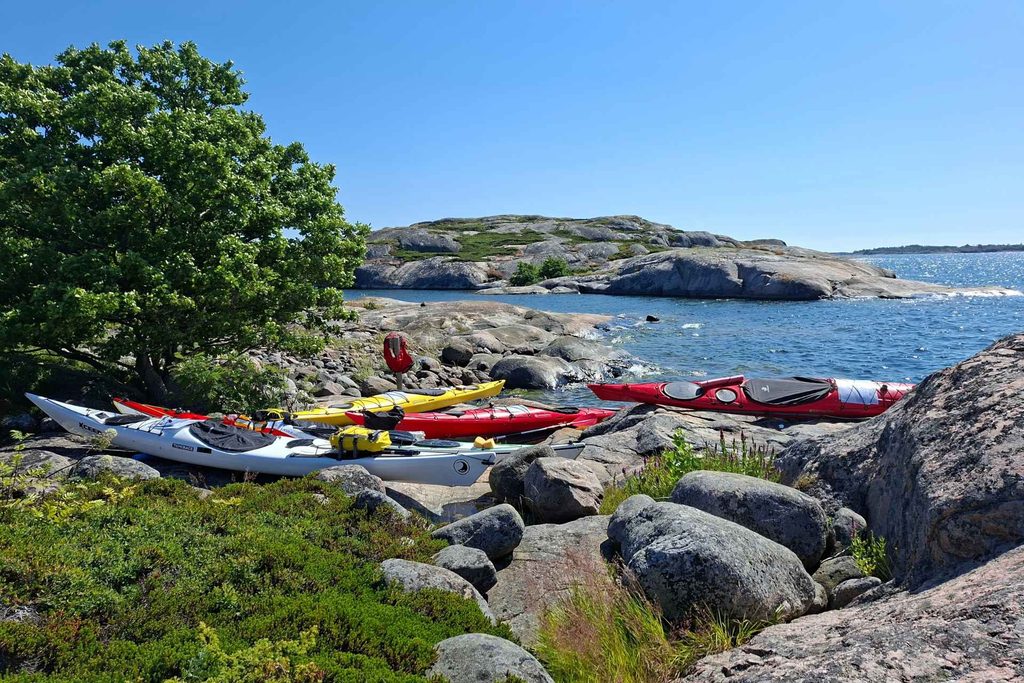
The expedition wasted no time in revealing its true character. The initial leg of the journey was nothing short of exhilarating, as the kayakers were immediately confronted by gusts reaching up to 12 meters per second. The wind forecasts, which had been "in the red," proved accurate, necessitating a swift adjustment to the meticulously planned route. Under the leadership of Petri, whose last-minute tactical changes proved crucial, the team altered course, setting their sights on the rugged, granite-faced islands of Birskär and Konungsskär, a deviation from the original, longer trajectory.
Paddling in the Archipelago Sea is an exercise in constant adaptation. One moment, the kayakers found themselves gazing upon a seemingly endless expanse of open sea; the next, their vessels glided through narrow channels flanked by ancient cliffs, countless islets, and smaller islands. The sea could appear deceptively calm, only for the wind’s full force to assert itself behind the next rocky outcrop. The Eura Canoe Club team maintained a brisk pace, prioritizing safety above all else. Fortunately, their collective effort paid off, and they reached their destination just as the wind intensified and the waves began to build.
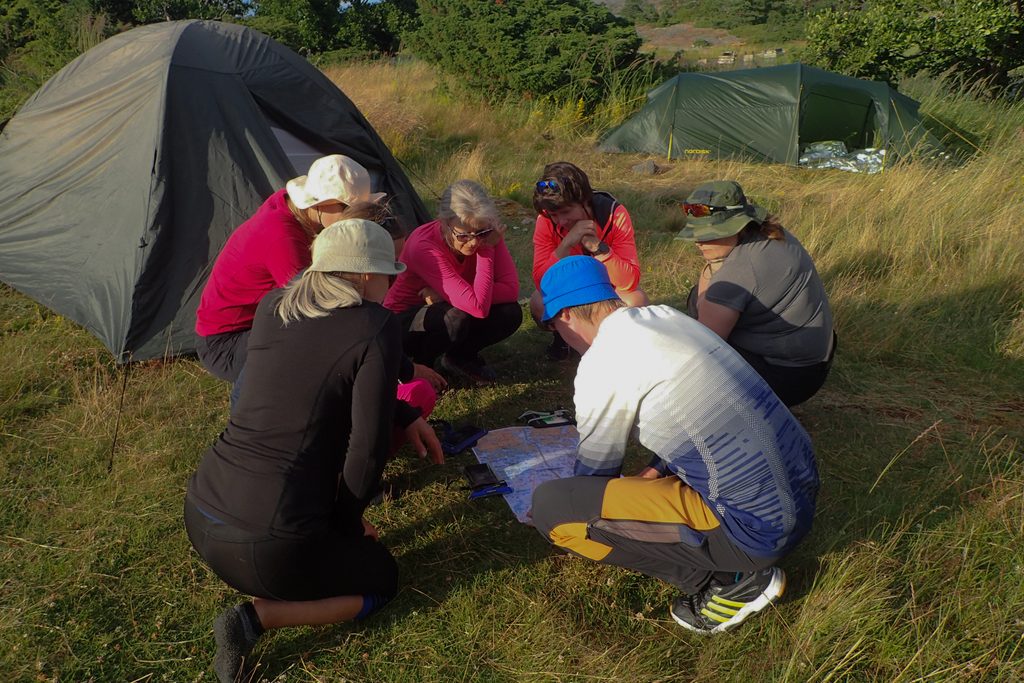
The ferocity of the wind dictated the evening’s logistics. Marja prudently decided to pitch her tent on the Birskär side later in the evening, waiting for the gusts to subside. This afforded the team ample time to explore both islands, delving into their rich history and natural wonders.
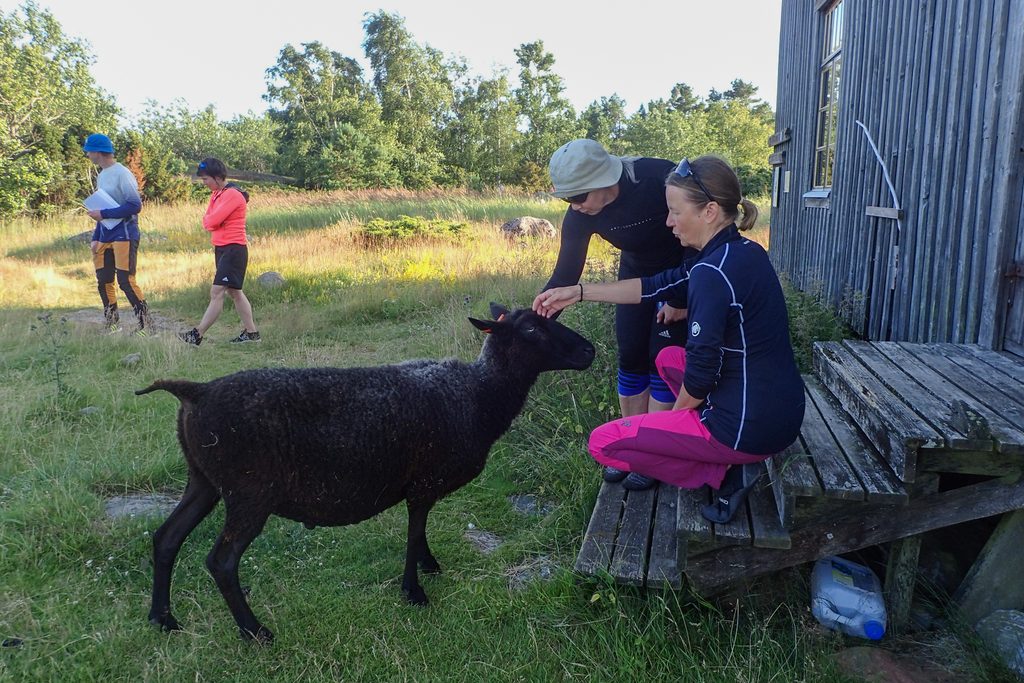
Birskär and Konungsskär are connected by a shallow, walkable causeway, a unique feature that speaks to the region’s dynamic geology. Permanent settlement on Konungsskär ceased in 1916, after which the island served as a base for hunting and fishing expeditions. Its historical significance is underscored by a visit from none other than Marshal Mannerheim in September 1926. The old croft, now operating as an open wilderness hut, is nestled amidst a beautiful meadow. Here, the team encountered a gentle and friendly flock of sheep, whose amiable presence added a pastoral charm to the rugged surroundings. The island’s natural beauty was further explored via a short 0.4 km nature trail, offering panoramic views and a deeper connection to this secluded outpost.
Day 2: Aspö’s Charm and the Jewel of Björkön
An early start was once again dictated by the persistent wind forecast. By a little past eight in the morning, the kayaks were ready, and the team set off towards Aspö, an island known for its intimate community. Aspö is home to just 11 year-round residents, a number that triples during the summer months.
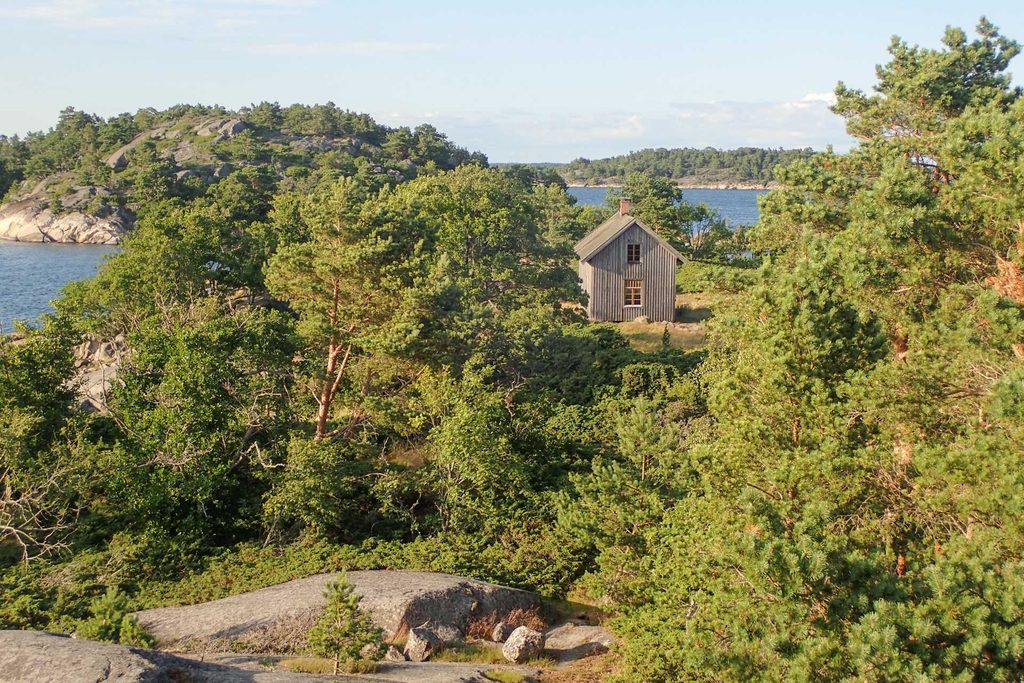
Upon arrival, finding a suitable landing spot proved challenging, a common occurrence in the archipelago where private properties often line the shores. However, the warmth of the islanders shone through, as the kayakers were welcomed even onto private grounds. The team took a well-deserved lunch break and managed a quick dash to the local shop just before it closed, discovering the delightful tradition of an afternoon siesta. A quirky detail emerged as they refilled their water containers from a tap on the shop’s wall: the water, for reasons unknown, was distinctly yellowish, yet perfectly acceptable to the thirsty adventurers.
From Aspö, the expedition pressed on towards Björkön, their next campsite and a renowned "pearl of the Archipelago Sea." The exact location of the campsite was initially unclear, and as the wind began to pick up again, the team decided to make an interim landing to wait out the stronger gusts. This landing proved arduous, requiring significant effort to haul all the kayaks onto the rocky shore. With time on their hands, some members opted to explore the island on foot, while others, undeterred by the wind, continued paddling towards the campsite.
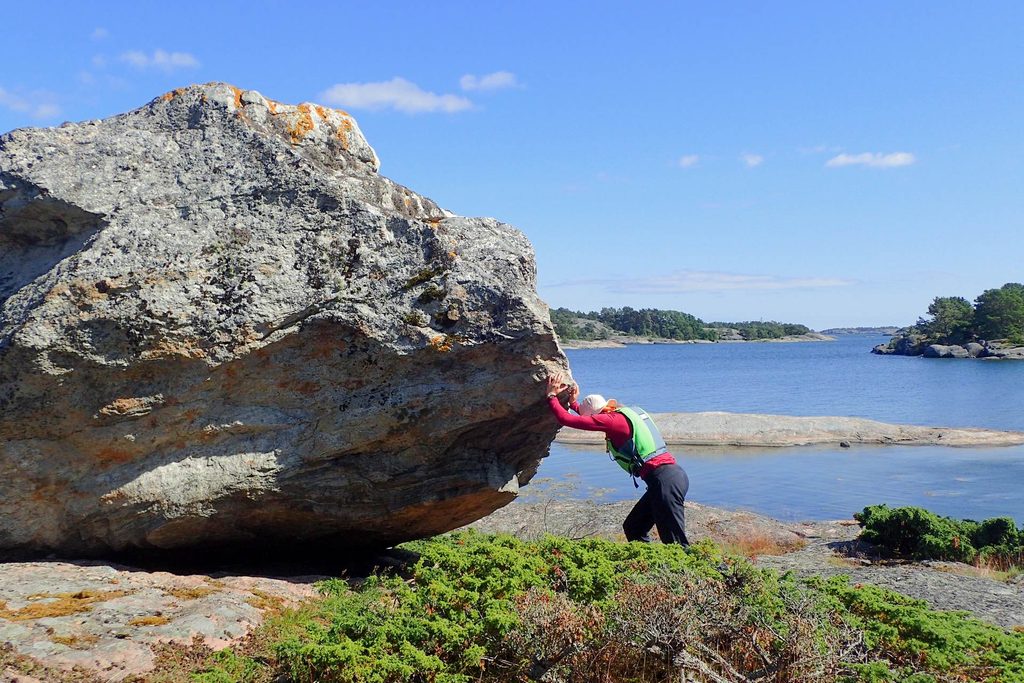
Communication proved tricky in the patchy mobile network coverage, leading to moments of uncertainty about each other’s whereabouts. Eventually, a call came through: Milka and Johanna had successfully located the campsite, perched high on a cliff behind the harbor. The rest of the team then paddled through a truly magnificent natural harbor, where dozens of exquisite sailboats lay moored, their masts swaying gently in the breeze.
The ascent to the campsite was steep, requiring a collective effort. Johanna, with her seemingly inexhaustible supply of gear, proved invaluable. She rigged a towing rope from her kayak, transforming the arduous climb into a manageable task for everyone to haul their camping essentials up the cliffs. Petri, impressed by her preparedness, light-heartedly remarked, "Johanna is a caravaner; the rest of us are just campers."
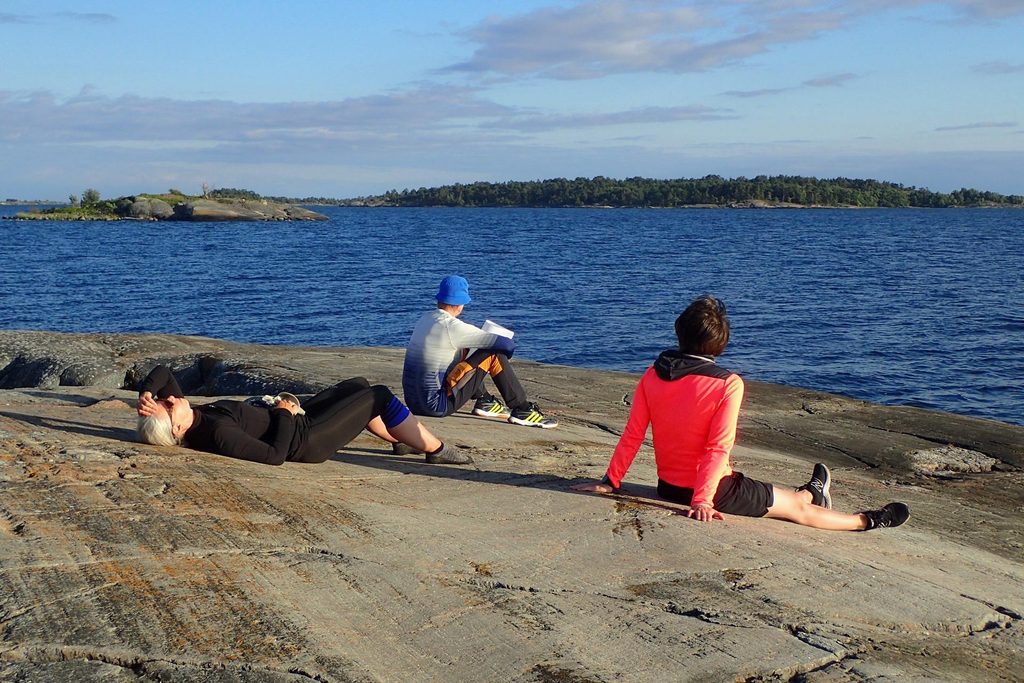
As evening descended, the camp was finally established, and individual cooking endeavors began. The air was warm, the sun still high, inviting the team for an evening swim. Björkön truly lived up to its reputation as a gem. The island’s inner lake, Insjön, is a remarkable natural phenomenon, formed around 250 years ago in the 18th century due to land uplift, which separated a sea bay from the open sea, creating a freshwater lake. A freshwater lake in the middle of a sea island, combined with a sunset and warm water – it was an idyllic moment, encapsulating the Archipelago Sea at its finest.
Björkön’s southern harbor, Byviken, is a popular natural harbor in the southern Archipelago. The island’s nature is diverse and stunning, boasting a rich geological tapestry best explored via its comprehensive nature trail. This trail winds through deciduous forests, meadows, and smooth bedrock formations. While some members circumnavigated the entire island, others opted for shorter walks, all captivated by the incredibly rugged and dramatic landscapes.
Day 3: Island Life, Quirky Encounters, and the Lure of Bodö’s Burgers
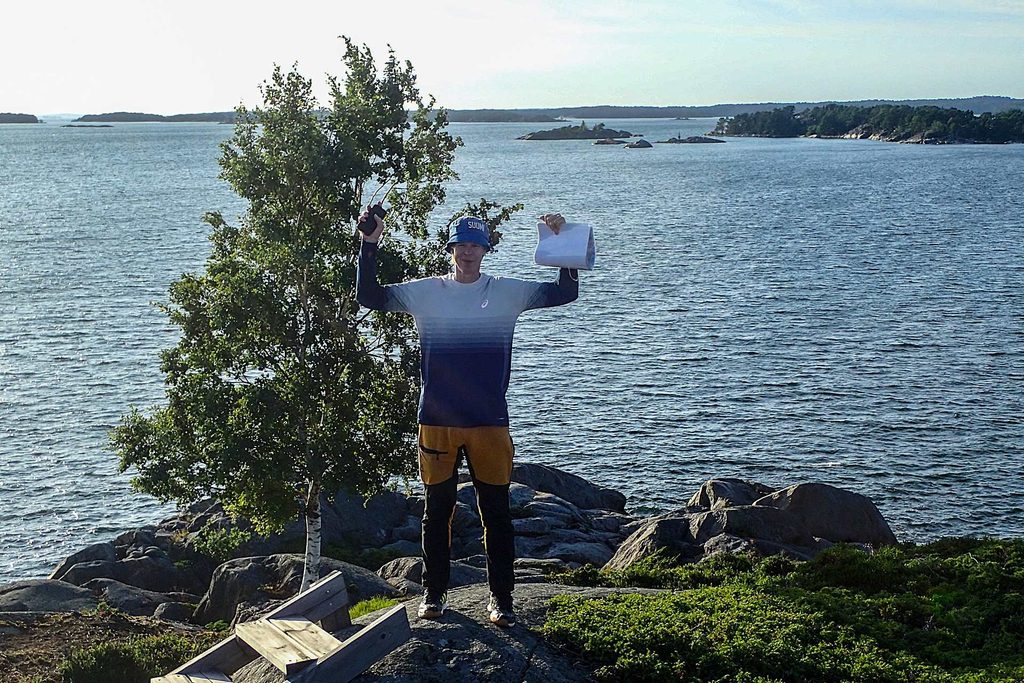
The third day began with a more leisurely pace, a welcome respite. The team agreed to paddle only after midday, allowing everyone to enjoy a relaxed morning, cook breakfast, and further explore Björkön. A short walk led them to Café Björkön, a charming summer café situated on the island’s main farm. Here, the authentic atmosphere of old-time island culture was palpable. Marja, an animal lover, couldn’t resist photographing a pony, seemingly exhausted by the heat, adorned in a playful zebra-striped outfit.
Refreshed, the kayakers launched their boats. The waves were not severe, but intermittent gusts of wind still made paddling challenging. At one point, the lead kayakers spotted several water voles swimming. Johanna’s kayak even carried an unexpected passenger for nearly 24 hours: a grasshopper. A few ticks also hitched a ride, but these unwelcome companions were swiftly dispatched.
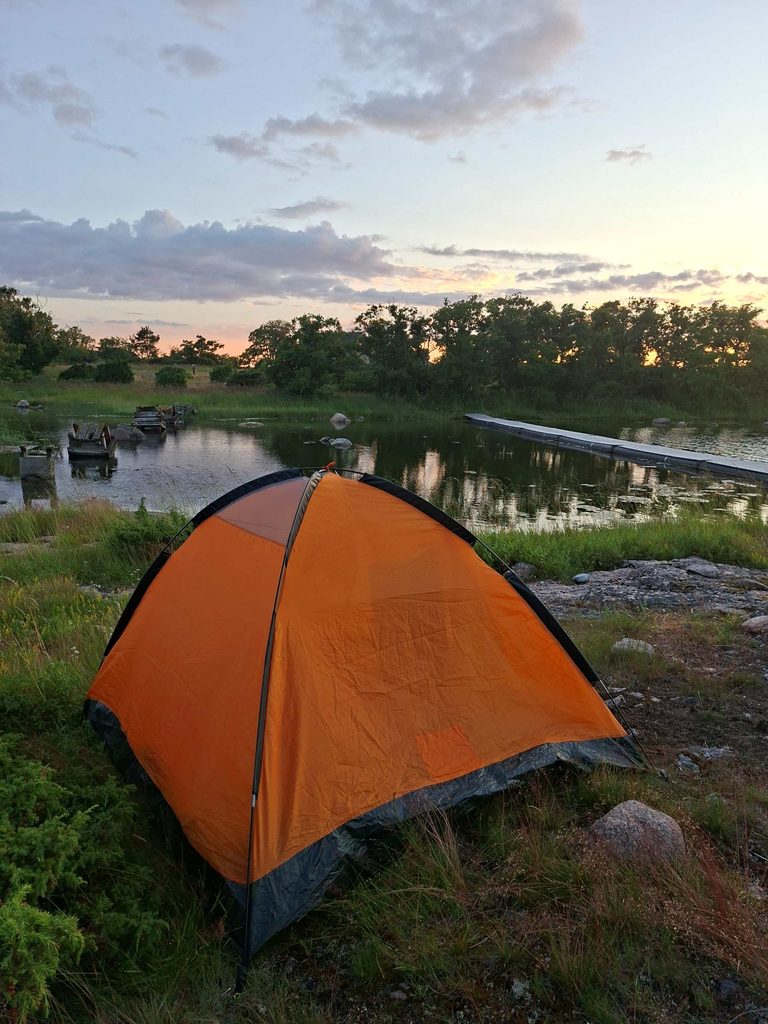
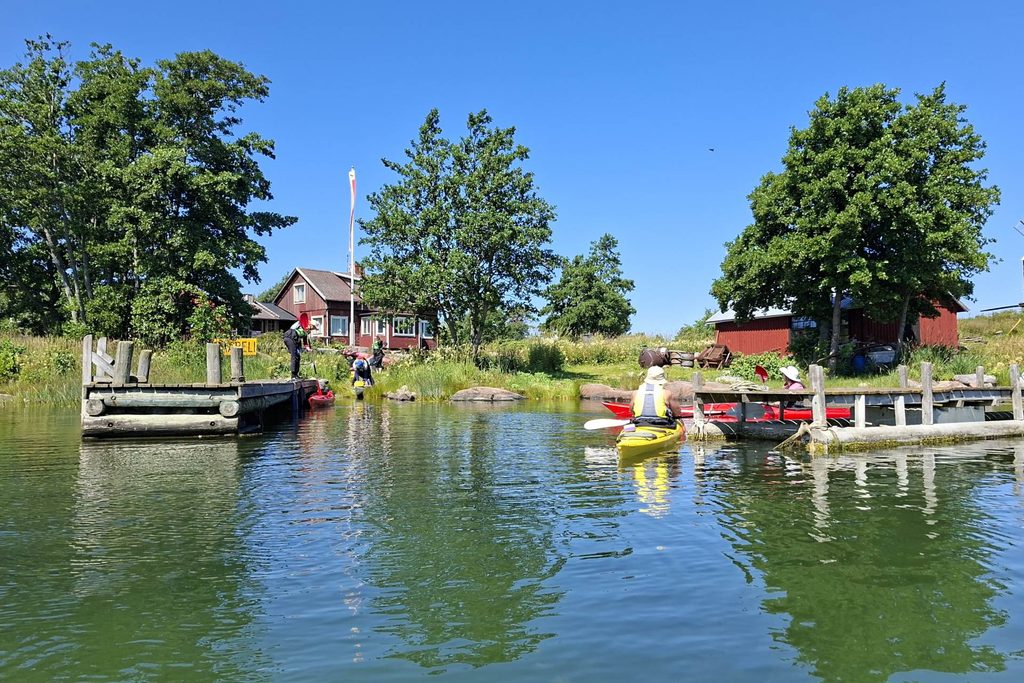
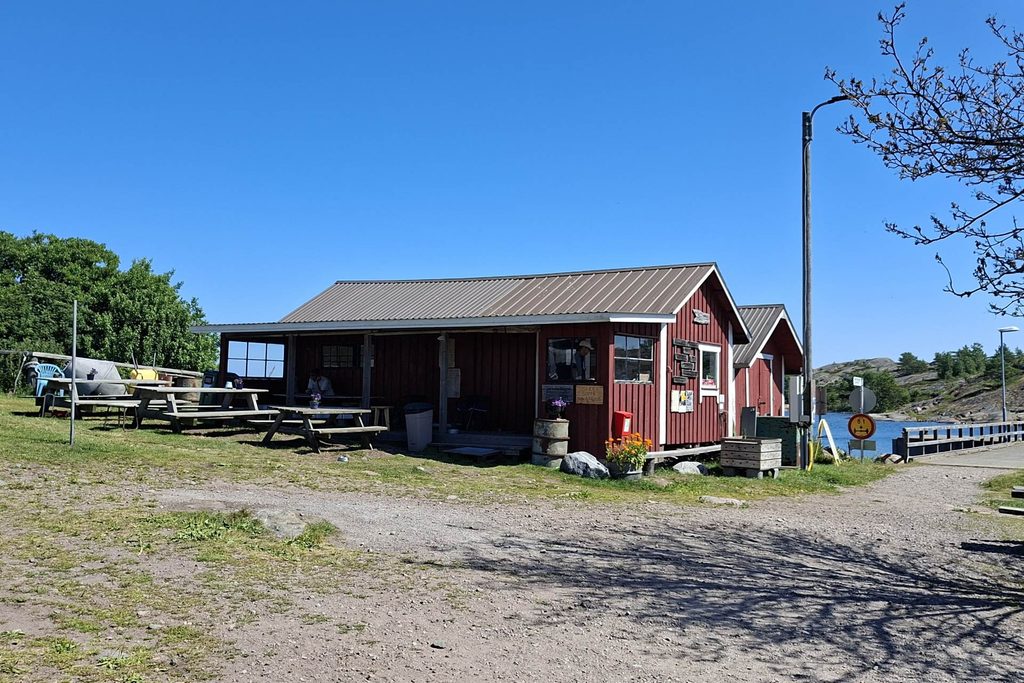
Their next destination was Bodö, prompted by Petri’s fond memory of an excellent burger from its bistro café the previous summer. Bodö’s website proudly states that its guest harbor celebrated its tenth anniversary this year. What was once a marine coast guard station has been transformed into a warm and welcoming stop for boaters and island enthusiasts, known for its good food, tranquil atmosphere, and genuine hospitality. The facilities include a guest harbor, bistro café, a floating sauna, and a charming guesthouse.
Their initial attempt to land near the floating sauna was met with an unexpected sight: a group of nude men enjoying their sauna experience. To avoid disturbing them, the kayakers wisely continued towards the guest harbor. However, finding a suitable landing spot for kayaks proved tricky, and to their dismay, "Roska-Roope" (the Keep the Archipelago Tidy association) was in the process of emptying waste bins, blocking access. A considerable wait ensued before the shore was clear, finally allowing the hungry group to indulge in Bodö’s renowned delicacies.
After the satisfying burgers, the team continued their search for a suitable campsite. They paddled around for a while, exploring various options, until they discovered the Nötö island campsite. Its sheltered location amidst a pine forest provided perfect protection from the wind, promising a much-needed good night’s sleep before the significant paddling challenge that awaited them the next day.
Day 4: The Long Haul Back to Korpoström
The final day dawned with a mirror-calm sea, a stark contrast to the earlier days. Departing from Nötö, the kayakers navigated through a serene maze of islands and islets, heading back towards Korpoström. They knew that the wind was forecast to pick up again later in the day, so they strategically chose a more sheltered route, one that at times resembled a winding river. Despite efforts to take regular breaks, the 33-kilometer paddle proved demanding, particularly on the hips.
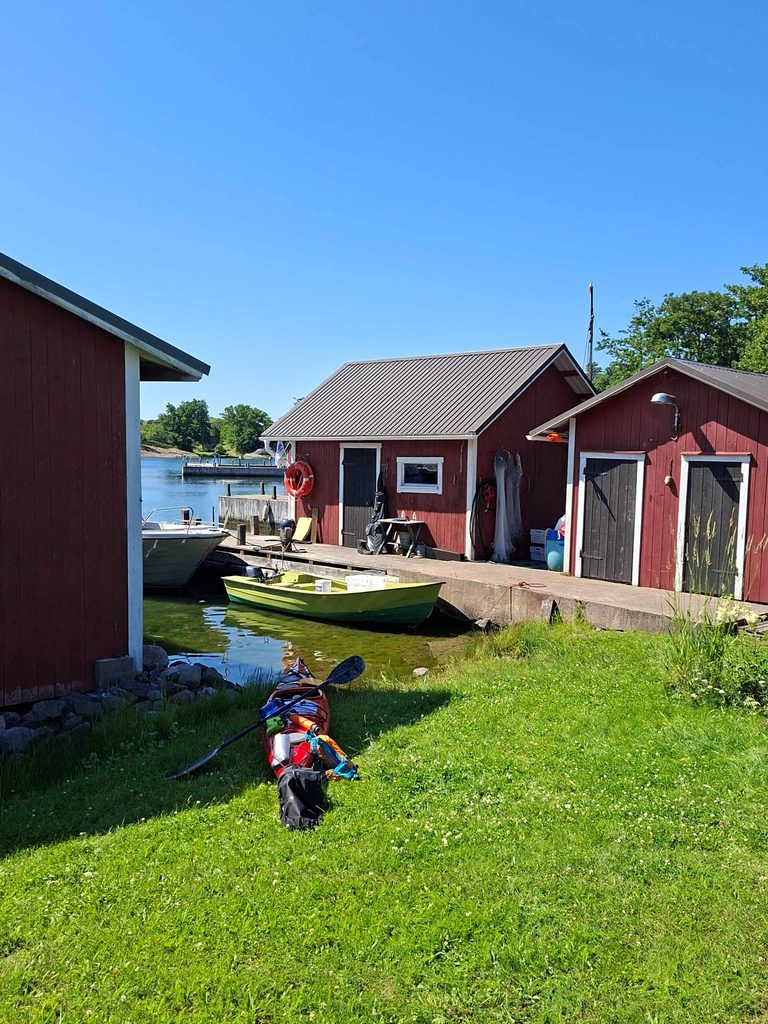
A longer lunch break was taken at Boskär. The landing here was challenging, as they had to contend with a significant bloom of blue-green algae, the high cliffs elsewhere making other spots inaccessible. Boskär is known for its magnificent deciduous meadows, a nature trail, and panoramic views from the island’s highest point – a perfect spot for a wilderness picnic. However, time constraints meant they couldn’t explore the nature trail, and swimming remained an unfulfilled wish due to the algae. Fortunately, towards the end of their journey, they discovered a delightful rest stop where a refreshing dip in the cooling waters offered a final burst of invigoration before their arrival back at Korpoström.
Over 80 Kilometers Later: More Than Just Paddling
Beyond the physical exertion and the stunning scenery, this kayaking expedition was profoundly about human connection. When an eight-person group, many of whom were previously near-strangers, spends over four days together in the wilderness, a powerful transformation occurs. The group coalesces into a tight-knit, highly functional team.
During the journey, two lead kayakers took responsibility for navigation and setting the course, while two others ensured the rear was covered. Open water channels were crossed side-by-side, a symbol of their unity. Challenging landings saw everyone assisting each other, pulling kayaks ashore and setting up tents collaboratively. Each individual found their vital role within the collective, contributing to the seamless operation of the expedition.
The lasting impression of this Eura Canoe Club expedition was one of humor, a strong willingness to help, and an overall relaxed and positive atmosphere. The Archipelago Sea itself left an indelible mark, living up to its reputation as a place of vastness, rugged beauty, and ever-changing moods – at times windy and wild, at others perfectly serene.
This journey serves as a powerful reminder of the joy and profound experiences that await those who venture into Finland’s unparalleled natural landscapes. It underscores the Finnish Canoe and Rowing Federation’s mission to inspire and enable such adventures, fostering a deeper appreciation for the country’s unique waterways and the camaraderie that outdoor pursuits can build.
Special thanks were extended to Johanna, Marjaana, Taru, Kirsi, Milka, and Heidi for their contributions, and especially to Petri, who, with good humor and leadership, endured the company of seven women throughout the memorable journey. Their expedition is not just a story of paddling; it is a narrative of teamwork, resilience, and the unforgettable magic of the Finnish Archipelago.