In the rapidly evolving landscape of satellite communications (SATCOM), the ability to deploy high-performance, electronically steerable array (ESA) antennas is the primary driver of the next generation of LEO, MEO, and GEO connectivity. However, as these antennas grow in size and complexity, the physical infrastructure required to test them has become a significant bottleneck.
In a landmark collaborative trial, industry giants Rohde & Schwarz and Greenerwave have successfully demonstrated a near-field measurement solution that captures the full radiation pattern of a 50 cm Ku-band ESA antenna in just 30 minutes. This breakthrough not only challenges the status quo of large-scale chamber testing but also offers a scalable, cost-effective roadmap for manufacturers struggling with the spatial constraints of modern antenna development.
The Core Challenge: The Geometry of Performance
To understand the significance of this development, one must first look at the physics of antenna testing. Traditionally, characterization of high-frequency antennas requires "far-field" testing—a method where the measurement probe is placed far enough away from the Antenna Under Test (AUT) to ensure the waves have stabilized into a plane wave. For a 50 cm aperture antenna operating in the Ku-band, this distance is significant, often necessitating enormous anechoic chambers that are prohibitively expensive and logistically difficult to maintain.
While Compact Antenna Test Ranges (CATRs) were developed to emulate far-field conditions in smaller footprints, they remain cumbersome for many modern research labs. Furthermore, mapping a full radiation pattern using conventional dual-axis positioning is a time-intensive process that can consume days of production time. For companies like Greenerwave, which specialize in Reconfigurable Intelligent Surfaces (RIS)—a technology that replaces traditional semiconductor-heavy beamforming with passive, energy-efficient structures—the need for a faster, more agile testing methodology was paramount.
Chronology of the Joint Measurement Campaign
The collaboration between Rohde & Schwarz and Greenerwave was designed to validate whether near-field measurements—traditionally considered less precise for large-aperture SATCOM antennas—could match the rigor of far-field and CATR data.
Phase 1: Infrastructure Integration
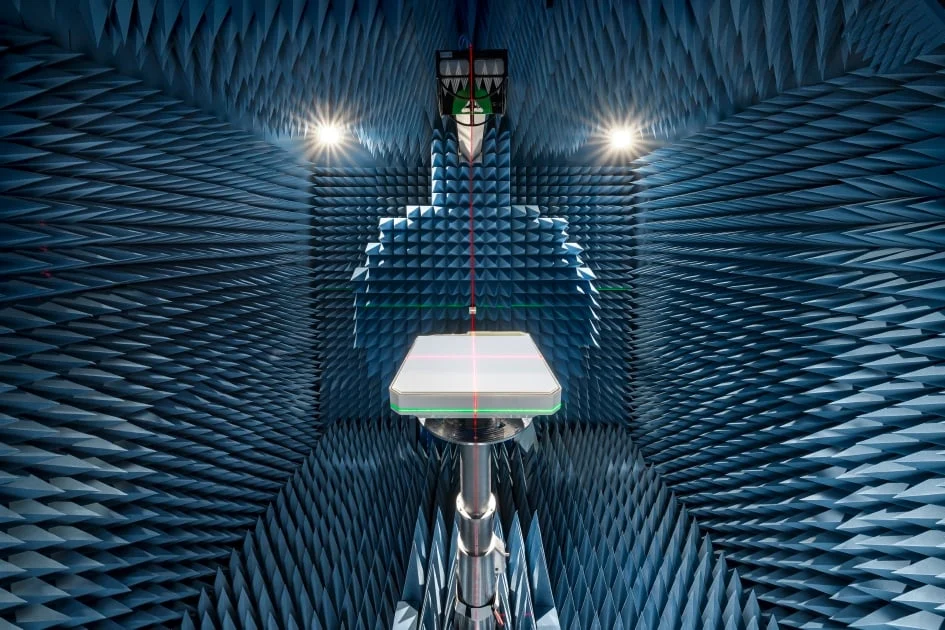
The trial utilized the Rohde & Schwarz TS8991 over-the-air (OTA) antenna measurement system. This system was specifically configured with a conical cut positioner and integrated with the R&S ZNA vector network analyzer. This combination provided the high-precision signal excitation and data acquisition required to handle the complexity of an ESA.
Phase 2: The Measurement Procedure
The test subject was a 50 cm x 50 cm passive single-aperture ESA, a Greenerwave unit utilizing RIS technology. The team established a measurement protocol covering an extended upper hemisphere, reaching down to a polar angle of 120 degrees with a strict one-degree step size.
Phase 3: Data Acquisition and Transformation
Using the system’s hardware trigger function, the team recorded ten distinct Ku-band frequencies. The entire process concluded in 32 minutes—a fraction of the time required for standard far-field mapping. The raw near-field data was then processed through the R&S AMS32 antenna measurement software, which applied a sophisticated Fast Iterative Algorithm for Near-Field to Far-Field Transformation (FIAFTA).
Phase 4: Validation
The final results were cross-referenced against the original simulation models (the "numerical twin") and existing data from Greenerwave’s own CATR setup. The findings were striking: the near-field solution demonstrated a deviation of only 0.3 dB in typical scenarios, with a maximum variation of just 1 dB.
Technical Implications: Why This Matters
The validation of this near-field methodology has profound implications for the SATCOM supply chain.
Bridging the Simulation-Reality Gap
The ability to achieve results within a 1 dB margin of a numerical twin model provides engineers with a "gold standard" for design iteration. When simulation models accurately predict physical performance, the entire development cycle—from concept to final hardware release—is accelerated. The fact that the output data is exportable to industry-standard tools like CST Microwave Studio or MATLAB means that this new measurement workflow integrates seamlessly into existing R&D pipelines.
The Rise of RIS Technology
Greenerwave’s approach to beamforming, which relies on RIS rather than power-hungry semiconductor phase shifters, represents a paradigm shift in SATCOM sustainability. By reducing the power footprint of the antenna, these devices are ideal for small-form-factor user terminals. However, the unique nature of RIS antennas—which are often more sensitive to environmental variables—requires precise characterization. The Rohde & Schwarz testing method proves that next-generation hardware can be verified without the need for specialized, proprietary testing facilities.
Supporting Data and Performance Metrics
The performance of the R&S TS8991 in this trial highlights several critical metrics:
- Time Efficiency: Full hemispherical radiation pattern characterization completed in 32 minutes.
- Frequency Agility: Simultaneous recording of 10 Ku-band frequencies via hardware triggering.
- Spatial Accuracy: Mapping down to 120-degree polar angles with 1-degree resolution.
- Measurement Fidelity: Maximum gain/directivity variance of 1.0 dB; typical variance of 0.3 dB.
These numbers confirm that the near-field measurement is not merely a "rough estimate" but a viable, high-precision alternative to traditional methods.
Industry Perspectives and Official Responses
Representatives from both organizations underscored that this project was driven by a need for agility in a market characterized by rapid innovation.
For Greenerwave, the success of this trial validates their choice of RIS technology for high-performance connectivity. By moving away from conventional semiconductors, they are lowering the barrier to entry for high-speed satellite connectivity. The ability to verify these antennas quickly allows them to iterate on designs at a speed that traditional manufacturers cannot match.
Rohde & Schwarz emphasized the versatility of the TS8991. By demonstrating that a system typically used for smaller-scale testing can successfully characterize a 50 cm SATCOM array, the company is effectively lowering the barrier to entry for the wider SATCOM ecosystem. Smaller players in the IoT, backhaul, and broadband space can now invest in an internal testing setup that is both space-efficient and cost-effective, effectively bringing the "chamber" into the lab.
Future Implications: The Path to 2030 and Beyond
As the LEO satellite market continues to expand, the demand for user terminals will grow exponentially. Manufacturers are now facing the "scaling challenge": how to produce thousands of high-precision antennas while ensuring every unit meets strict regulatory and performance standards.
Reducing Development Costs
Traditional far-field chambers are not only expensive to build but expensive to operate. The energy requirements for climate control and power in a large chamber are significant. By shifting to a near-field, lab-integrated setup, companies can significantly reduce their overhead, allowing for more resources to be diverted toward antenna design and software optimization.
Accelerating Deployment
The speed of the 32-minute test cycle is perhaps the most critical takeaway. In a production environment, test-time is synonymous with cost-per-unit. If an manufacturer can verify an antenna in half an hour rather than several hours, they can theoretically increase their throughput by a factor of four or more. This is the difference between a prototype that remains in the lab and a product that is successfully deployed to global markets.
Flexibility for Multi-Orbit Applications
The trial specifically noted the application of this method for broadband, IoT, and backhaul antennas. As these applications increasingly demand flexible beam control and high data rates, the ESA will become the standard. The R&S and Greenerwave setup provides a flexible "plug-and-play" characterization environment that can adapt to different frequencies and beam steering requirements, future-proofing the R&D labs of tomorrow.
Conclusion
The joint trial between Rohde & Schwarz and Greenerwave serves as a roadmap for the future of antenna testing. By proving that near-field measurements can achieve far-field precision, they have effectively democratized the testing process for sophisticated SATCOM hardware.
As the satellite industry moves toward a more dense and high-speed future, the ability to characterize complex antenna systems with speed and accuracy will be the ultimate competitive advantage. With this breakthrough, the industry has a new, validated standard for performance verification that is faster, smaller, and more cost-effective than ever before. The days of relying solely on massive, stationary chambers appear to be drawing to a close, replaced by a new era of agile, lab-based characterization that is ready to meet the demands of the global satellite revolution.