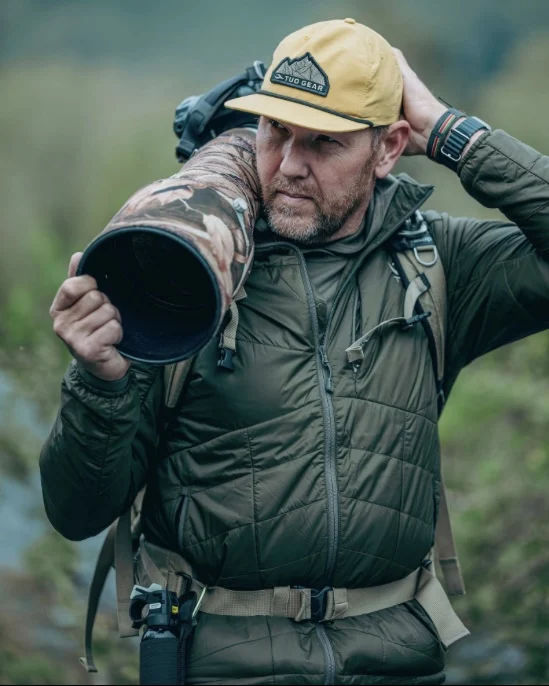
In the realm of wilderness photography, the line between a portfolio-defining shot and a catastrophic wildlife encounter is often measured in inches. Recently, professional photographer and filmmaker Matt Addington found himself straddling that precise line in the remote wilderness of Alaska’s Katmai National Park. A video of the encounter, which has since gone viral, depicts Addington remaining unnervingly still as a group of massive grizzly bears graze their way toward his position, passing mere feet from his camera lens.
While the footage provides a breathtaking window into the lives of North America’s largest land predators, it has also sparked a necessary conversation regarding the ethics, risks, and specialized logistics involved in high-stakes wildlife photography.
The Anatomy of an Encounter: Chronology of the Event
The encounter, which occurred in July 2026, was not a result of reckless wandering, but rather a calculated, albeit intense, exercise in wildlife observation. Addington, a Minnesota-based visual storyteller known for his work in rugged outdoor environments, was participating in a specialized wildlife photography excursion.
The Setup
The day began in the sprawling, untamed landscape of Katmai, a park renowned globally for its high density of brown bears. Unlike many other national parks where bears are skittish or highly avoidant of human presence, the bear population in Katmai is often accustomed to the presence of humans who follow strict safety protocols.
The Approach
The group, which included expert guides Scott and Jackie Stone, identified a cluster of bears grazing approximately 100 yards away. Recognizing the potential for a "behavioral capture"—where the goal is to document natural feeding patterns without influencing the animal—the team established a stationary, low-profile position.
As the minutes passed, the grizzlies continued their routine, oblivious to the humans, and slowly closed the distance. The footage shows the bears moving with singular focus, their massive frames dwarfing the camera equipment. Addington remained entirely motionless, a core tenet of bear safety, allowing the bears to dictate the flow of the interaction. The result was a sequence of high-definition, intimate footage that captures the raw power of the apex predator, culminating in a moment where the bears pass so closely that the photographer’s proximity becomes almost claustrophobic for the viewer.
The Science of the "Close Encounter"
To the uninitiated, the video looks like a brush with death. To a wildlife expert, it is a masterclass in reading animal behavior. Katmai National Park is a unique biological anomaly. During the peak salmon runs and sedge-grass grazing seasons, the caloric demands of the bears are so intense that they often prioritize feeding over human interaction, provided those humans do not pose a threat.

Why Katmai is Unique
Katmai is home to one of the world’s most protected and studied grizzly populations. Because visitors are managed strictly—staying in designated zones and under the constant supervision of rangers and guides—the bears have developed a "habituation" that is distinct from "food conditioning." They do not associate humans with food; they associate humans with a neutral, non-threatening presence that can be ignored.
However, this does not mean the bears are tame. A grizzly bear can reach speeds of up to 35 miles per hour and possesses a bite force capable of crushing bone. The safety of the group relied entirely on their ability to remain non-confrontational, maintaining a profile that suggested they were neither a threat nor a competitor for the bear’s food source.
Expert Perspectives: The Role of Professional Guidance
The success of Addington’s shoot was largely due to the presence of his guides, Scott and Jackie Stone. In the world of professional wildlife photography, the guide is not merely a navigator; they are the primary safety officer.
"People see the viral video and assume the risk is inherent to the photographer," notes one wildlife management consultant. "In reality, the risk is mitigated by years of experience and the presence of professional guides who understand the specific body language of these individual bears."
The "Do Not Try This" Factor
The viral nature of the video has drawn a wave of concern from park officials and conservationists who fear "copycat" behavior. The standard recommendation for any hiker in bear country—whether in Yellowstone, Glacier, or the backcountry—is to make noise, carry bear spray, and maintain a distance of at least 100 yards.
Addington’s experience was a highly curated professional operation. Attempting to replicate this in a non-controlled environment, such as a local national forest where bears may be less habituated and more prone to defensive aggression, would be a fatal error. As the disclaimer on the footage notes, individuals attempting to get "the perfect shot" in the wrong environment are likely to find themselves in a position where the bear’s survival instincts trigger a defensive—or predatory—response.
Implications for Conservation and Tourism
This footage highlights a broader trend in outdoor media: the appetite for "extreme" nature content. While such videos generate massive engagement, they also pose a challenge for park management.

The Balance of Accessibility and Safety
National parks are tasked with a dual mandate: preservation and public enjoyment. When viral videos showcase close encounters, it creates a psychological "availability bias," where tourists feel that such proximity is the norm rather than the exception. This leads to an increase in "selfie-driven" wildlife harassment, where visitors approach animals to get a closer look, which in turn forces park rangers to close off more areas or implement stricter, more restrictive policies.
Ethical Wildlife Photography
The ethics of this encounter have been debated in photography circles. The consensus among professionals is that Addington followed the "golden rules":
- Prioritize the animal: If the animal changes its behavior because of your presence, you are too close.
- Professional supervision: Never attempt high-stakes wildlife observation alone.
- Preparedness: Being equipped with non-lethal deterrents (like bear spray) is non-negotiable, even if they remain in their holsters.
Conclusion: A Lesson in Respect
Matt Addington’s footage is a testament to his skill as a filmmaker, but it is also a cautionary tale wrapped in a beautiful package. It serves as a reminder that the wilderness is not a zoo, and the creatures within it are not performers.
The video is a rare, once-in-a-lifetime capture that highlights the beauty of the Alaskan grizzly. However, the most important lesson from the encounter is not how to get close to a bear, but how to respect the space of an animal that deserves to be left in peace. For those inspired by the images, the best way to support this kind of work is not to head into the woods with a camera, but to support the professional guides and conservation organizations that ensure these bears remain wild, healthy, and undisturbed in their natural habitat.
As Addington himself might suggest, the best footage is the kind that captures the animal in its true, natural state—a feat that can only be achieved through patience, professional guidance, and an unwavering respect for the boundaries of the wild.