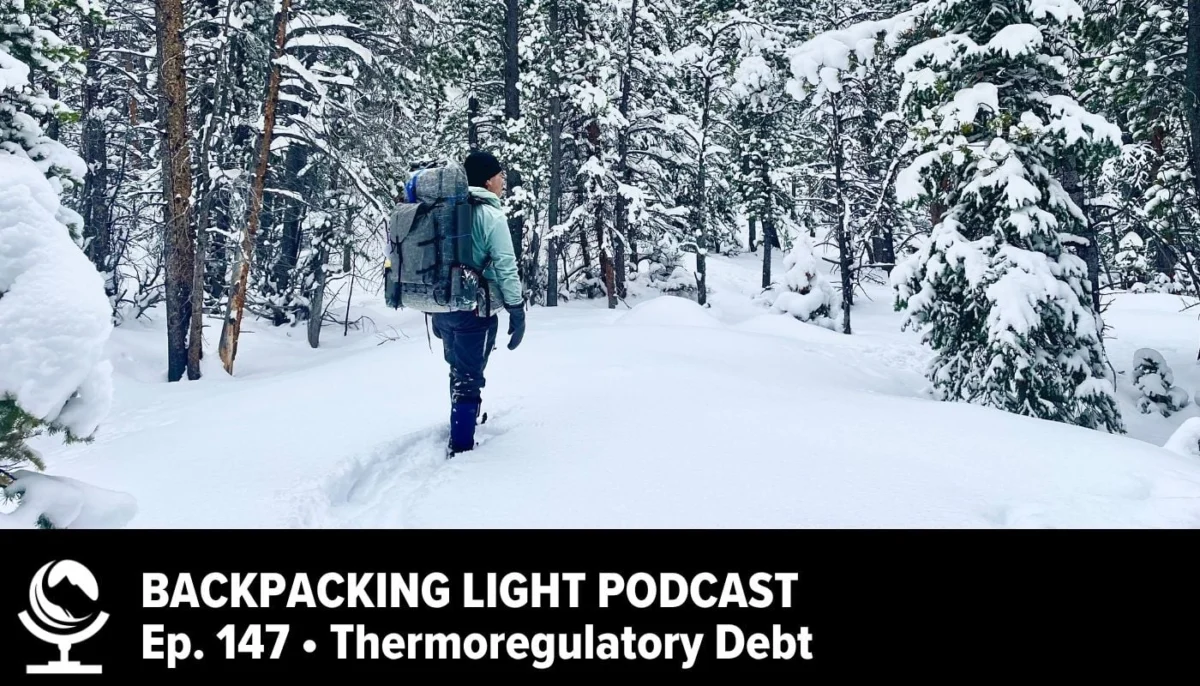
In the world of backcountry exploration, the difference between a successful expedition and a life-threatening emergency often boils down to a series of micro-decisions. For years, outdoor enthusiasts have been taught to "layer up" or "vent out," but a recent deep dive by the Backpack Light Podcast (Episode 147) has reframed these essential skills through a compelling new lens: the concept of Thermoregulatory Debt.
Hosted by industry expert Ryan Jordan, the episode posits that the physical misery often felt at the end of a long day of hiking is not a sudden occurrence, but the result of a compounding financial-style deficit. By treating body heat and moisture management like a credit system, hikers can better understand how small, seemingly inconsequential delays in layering adjustments accumulate into a dangerous physiological crisis.
The Core Concept: Why "Debt" Matters in the Backcountry
The analogy of debt is more than just a linguistic tool; it is a structural framework for survival. When a hiker fails to vent a jacket during a steep climb or neglects to add a mid-layer before a planned stop, they are effectively "borrowing" from their body’s future capacity to stay warm.
Much like financial interest, these small, ignored decisions compound. By the time a hiker feels the acute symptoms of cold—shivering, numbness, or lethargy—they have already accrued a massive "debt." At this point, the "interest" is high, and the physiological cost to reverse the situation becomes exponentially higher. Reversing this state in the backcountry, where resources are limited and environmental conditions are unforgiving, is a task that few hikers are equipped to handle effectively once the deficit reaches a critical threshold.
Chronology of a Crisis: The Three Phases of Impairment
To understand how this debt builds, one must observe the progression from a state of balance to one of total failure. The Backpack Light team breaks this down into three distinct, sequential phases:
1. The Decision Phase: The Moment of Neglect
The process begins with the "Decision Phase." This is where the hiker ignores the early warning signs. Perhaps the ambient temperature has dropped, or the terrain has shifted from a flat meadow to a steep, heat-generating ascent. Failing to vent, add or remove a layer, or ingest calories during this window is the "loan" taken from the body. It is the failure to manage moisture and core temperature at the exact moment conditions change.
2. The Physiological Imbalance: The Accumulation of Deficit
Once the decision window is missed, the body enters a state of Physiological Imbalance. Here, the body’s internal climate control system begins to struggle. It starts trapping moisture or losing heat faster than it can compensate. If the hiker continues to move without adjustment, the "interest" on the debt begins to accrue. The internal environment of the clothing system shifts, and the thermal efficiency of the insulation begins to degrade due to rising moisture levels.
3. Delayed Impairment: The Final Reckoning
The final phase is "Delayed Impairment." This is the moment the hiker finally stops—perhaps to pitch a tent or eat lunch. Because the hiker has been running a deficit for hours, the body is no longer able to generate sufficient heat to compensate for the sudden drop in activity. This manifests as acute discomfort, shivering, or a dangerous loss of physical capability. The debt has come due, and the hiker is now physically ill-equipped to perform the necessary tasks to stay alive.
Supporting Data: The Three Types of Thermoregulatory Debt
The podcast outlines three specific categories of debt that interact with one another, creating a cascading failure in the field.
Moisture Debt
Moisture is the primary enemy of insulation. When a hiker generates sweat that cannot escape—either because the outer shell is too restrictive or the layering system is improperly managed—that moisture migrates into the insulating layers. Once the insulation becomes damp, its thermal efficiency plummets. This increases heat loss through conduction and evaporation, effectively turning the hiker’s own clothing into a cooling system rather than a heating one.
Heat Debt
Heat debt occurs when the total environmental heat loss (via radiation, convection, conduction, and evaporation) outstrips metabolic heat production. This is the most dangerous form of debt because it is often masked by the heat generated by intense physical movement. Once a hiker stops moving, the realization of heat debt is often immediate and violent. If the clothing is already saturated with moisture from a previous "moisture debt," reversing the heat loss becomes nearly impossible without external intervention.
Performance Debt
The final, and most critical, category is Performance Debt. This is the direct result of the first two. As the body prioritizes keeping the core organs warm, it reroutes blood flow away from the extremities. This leads to reduced fine motor skills and impaired cognitive function. A hiker with severe performance debt may find themselves unable to light a stove, zip a sleeping bag, or tie their boots. In extreme cases, this leads to poor decision-making, which can prove fatal in high-altitude or remote environments.
Official Recommendations and Practical Interventions
The consensus among experts is that proactive, rather than reactive, management is the only way to avoid the "bankruptcy" of hypothermia.
- Vent Early and Often: Don’t wait for the sweat to pool. If you feel the internal heat rising, open your vents, loosen your collar, or shed a layer before you feel "warm."
- Anticipate the Change: If you know a long, arduous climb is approaching, strip a layer before you start. If you are approaching a planned break, put on your insulating jacket before you stop moving.
- Protect Your "Dry" Insulation: Never let your dedicated camp insulation get wet. Keep it sealed in a waterproof bag and save it exclusively for when you are stationary.
- Fuel the Furnace: Caloric intake is the fuel that powers the body’s internal heater. Eat before you are hungry and drink before you are thirsty to maintain the metabolic baseline required to combat the cold.
- Continual Reassessment: Treat temperature management like navigation. Every time the terrain changes, the wind picks up, or the sun dips behind a ridge, check your system.
A Note on Peripheral Protection
While the podcast focuses on the core, listener feedback underscores a vital point regarding frost nip and frostbite. Experienced outdoorsmen note that continuing to use numb fingers can lead to permanent sensitivity and tissue damage. If blood is being rerouted away from the extremities to protect the torso, the hands become the first to suffer. The key takeaway: if your hands are numb, stop and re-warm them immediately. Never treat your extremities as expendable assets.
Implications for Modern Gear and Technique
The episode also touches upon the role of specialized gear. Sponsoring brands like Brynje advocate for fishnet-style base layers (polypropylene or merino wool). The structural design of these garments creates a layer of dead air space against the skin, which facilitates moisture transfer and keeps the user dry even during high-exertion activities.
This highlights a shift in industry thinking: the focus is moving away from "warm" clothing and toward "moisture-management" systems. By utilizing materials that prevent the accumulation of moisture debt, hikers can effectively increase their margin of error.
Conclusion
The Backpack Light analysis provides a necessary reality check for the modern adventurer. In an era where gear technology is more advanced than ever, it is easy to assume that our clothing will "save" us. However, as Episode 147 demonstrates, technology is no substitute for human agency.
Thermoregulatory debt is a reminder that the mountains do not care about your gear list; they only care about your ability to manage your biological reserves. By viewing every hike through the lens of an investment—where every layering adjustment is a deposit and every moment of neglect is a high-interest loan—hikers can ensure they reach their destination safely, effectively, and with their warmth, dexterity, and judgment intact.