The pull-up and the chin-up occupy a hallowed space in the pantheon of strength training. Often referred to as the "upper-body squat," these movements are the ultimate litmus test for relative strength. They require no external load, no complex machinery, and no spotter—only your body weight and the iron resolve to move it against gravity. When performed with precision, they are the gold standard for developing a wide, dense back, powerful biceps, and a crushing grip.
Yet, despite their ubiquity in gyms worldwide, the vast majority of lifters leave significant gains on the table. They treat the pull-up as a race to get the chin over the bar, prioritizing quantity over quality. In doing so, they bypass the fundamental biomechanics that transform a simple "swing and pull" into a masterclass in muscular recruitment. To unlock true growth, one must realize that the first rep begins long before the elbows bend; it starts the moment your skin makes contact with the steel.
The Anatomy of the Setup: A Systematic Approach
Many lifters view the setup as a mere formality—a hurdle to clear before the "real" work begins. This is a critical error. The difference between a mediocre set of five and a high-quality set of ten lies in the intentionality of the preparation. By establishing full-body tension, you transform your frame from a dangling mass into a rigid, efficient machine capable of maximum force production.
Step 1: The Grip and Intent
The choice between a pull-up (pronated, palms facing away) and a chin-up (supinated, palms facing you) changes the focus of the movement. The pull-up tends to place a greater emphasis on the lats and the mid-back, while the chin-up recruits the biceps more heavily due to the supinated position of the forearm. Regardless of your choice, the internal state must remain the same: intent.
Do not simply hang from the bar; dominate it. Apply an external cue to "leave your fingerprints on the bar." By squeezing the bar with maximal effort for two seconds before the initiation of movement, you utilize the principle of irradiation—a neurological phenomenon where gripping hard increases the recruitment of the muscles up the kinetic chain, including the shoulders and the lats.
Step 2: Optimizing Hand Position and Width
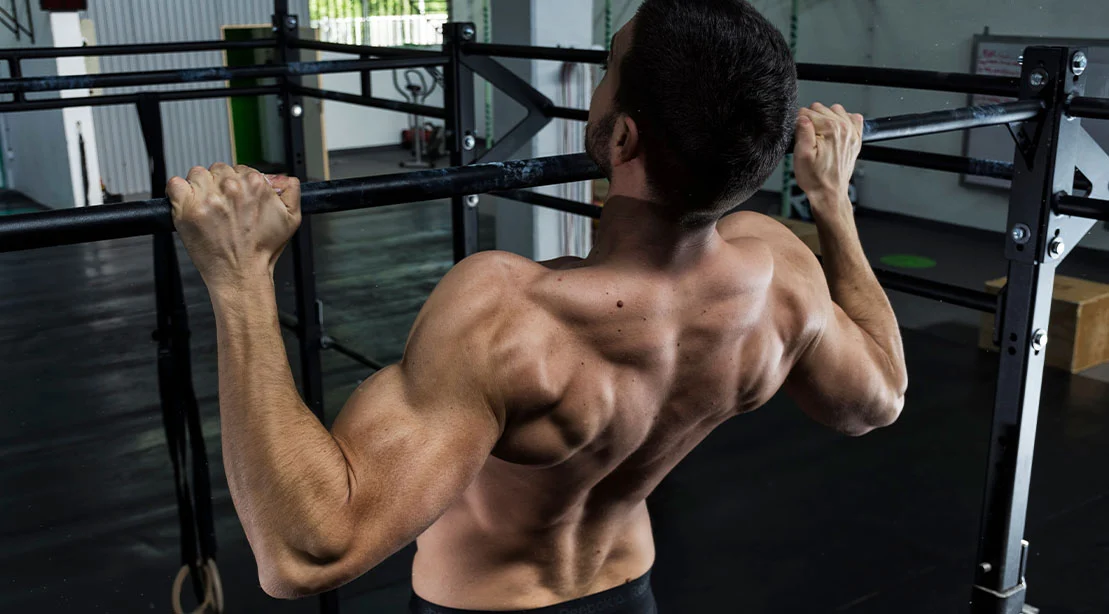
A common misconception is that a wider grip is inherently superior for lat development. While wide grips can isolate the lats, they often place the shoulder in a mechanically disadvantaged position and artificially shorten the range of motion. For the majority of lifters, a grip slightly wider than shoulder-width is the "sweet spot."
When gripping, aim for the "knuckles to the ceiling" cue. This external focus encourages a neutral, powerful wrist position that allows for better force transfer. If you feel the bar sliding or your wrists bending excessively, you are losing energy before the pull has even begun.
Step 3: Rooting and Tension
Your hands are your only point of contact with the bar. Consequently, they are the foundation of your stability. "Rooting" involves pulling the bar apart as if you were trying to bend it. This simple isometric action activates the rotator cuff and the muscles surrounding the scapula, ensuring that when you begin to pull, you are already "locked in." If you struggle to maintain this during a full hang, practice these steps while standing on a box or a bench until the motor pattern becomes subconscious.
Step 4: The Active Hang vs. The Dead Hang
The "dead hang"—a completely passive position where the shoulders are shrugged up toward the ears—is a common starting point, but it is not the starting point for a strength rep. The "active hang" is the secret to protecting your shoulders and engaging your lats.
By initiating "scapular depression"—pulling your shoulder blades down into your back pockets—you create a pre-loaded state. This subtle, one-inch movement is the difference between pulling with your biceps and pulling with your back. If you cannot hold an active hang, incorporate "scapular pull-ups" into your warm-up routine to build the necessary scapular control.
Step 5: Core and Gluteal Bracing
A frequent mistake is allowing the legs to dangle aimlessly. This creates "energy leaks," where the momentum of a swinging lower body dissipates the tension required for a controlled pull. Your body must act as a single, rigid lever.
By bracing your core as if you were about to take a punch and squeezing your glutes, you stiffen the entire torso. This "plank on a bar" approach ensures that 100% of the force generated by your back is applied directly to the movement, rather than being lost to oscillation.
Step 6: Cervical Alignment and Gaze
The position of the head is often overlooked, yet it dictates the path of the spine. Looking too far upward can cause "rib flare," which compromises your core brace and arches the lumbar spine. Conversely, looking down can cause the thoracic spine to round, limiting your range of motion.
The goal is a neutral spine. Keep your chin packed and your neck long. Focus your gaze slightly ahead rather than at the bar. Think about driving your elbows toward your hips rather than pulling your chin over the bar; this cue naturally guides your body into a better path and prevents the common "reaching with the neck" error.
The Green Light Checklist: Ensuring Quality
Before initiating the ascent, run this mental checklist:
- Grip: Squeezing with intent.
- Width: Shoulder-width or slightly wider.
- Shoulders: Depressed (active hang).
- Core: Braced and rigid.
- Glutes: Squeezed and engaged.
- Neck: Neutral and long.
If you cannot confirm these six points, do not pull. The time spent setting up is an investment in the quality of the rep.
Common Pitfalls and How to Correct Them
Even with a perfect setup, the execution can falter. Recognizing these errors is the final step in achieving mastery.
The "Bicep-Dominant" Trap
Many lifters initiate the pull by flexing the elbows. This forces the biceps to perform the bulk of the work, leading to premature fatigue and suboptimal back development.
- The Fix: Always start with the scapular depression. Imagine your arms are merely hooks connecting your back to the bar. Drive the elbows down and back, as if you are trying to put them in your back pockets.
The "Body English" Phenomenon
Swinging the legs to gain momentum is the hallmark of a lifter who has exceeded their current strength capacity. While this may get your chin over the bar, it does nothing for your muscular hypertrophy.
- The Fix: If you cannot complete a rep without swinging, you need to regress. Use a resistance band for assistance or focus on eccentric-only pull-ups until your base strength catches up.
The Chin-Reach Reflex
The ego often demands that the chin clear the bar at all costs, leading to a craning of the neck that places immense strain on the cervical spine.
- The Fix: Focus on pulling the chest to the bar. If your chest reaches the bar, your chin will clear it automatically. By maintaining a neutral neck, you protect your vertebrae and ensure the lats do the heavy lifting.
Implications for Training Longevity
The implications of mastering these techniques extend far beyond a single training session. By prioritizing full-body tension and strict form, you significantly reduce the risk of common shoulder and elbow injuries, such as tendonitis. A body that moves as one integrated unit is a body that stays injury-free for the long term.
Furthermore, this systematic approach turns the pull-up into a cognitive exercise. It demands focus, spatial awareness, and discipline—traits that translate to every other movement in your training regimen, from the barbell deadlift to the overhead press.
Conclusion: The Path to a Wider Back
The pull-up and chin-up remain the most effective tools for building a wide, V-tapered physique. However, they are not merely exercises of effort; they are exercises of control. The lifter who understands the mechanics of the active hang, the necessity of the core brace, and the power of deliberate intent is the lifter who will build a back that stands out.
Do not rush your reps. Respect the setup. Own the bar. When you begin to view the pull-up as a total-body engagement rather than a simple arm movement, you will find that the "gains" you were missing were there all along, waiting for you to unlock them with better form. Master the setup, and the lat spread will follow.