The final week of May 2026 will be etched into European meteorological history as a watershed moment. While the continent is accustomed to summer heat, the intensity of the heatwave that descended upon Western and Central Europe during the last days of May was not merely a seasonal anomaly—it was a systemic disruption of historical norms. Driven by a gargantuan, persistent high-pressure system, this “heat dome” event effectively bypassed the temperate transition of late spring, plunging millions into conditions more characteristic of the scorching mid-July peak.
As global temperatures continue their upward trajectory, with Europe warming at roughly twice the global average rate, the May 2026 heatwave serves as a visceral, early-season demonstration of a new climatic reality. Records were not simply broken; they were systematically demolished, with temperature spikes exceeding long-standing benchmarks by significant margins.

The Mechanics of the Heat Dome: A Atmospheric Lid
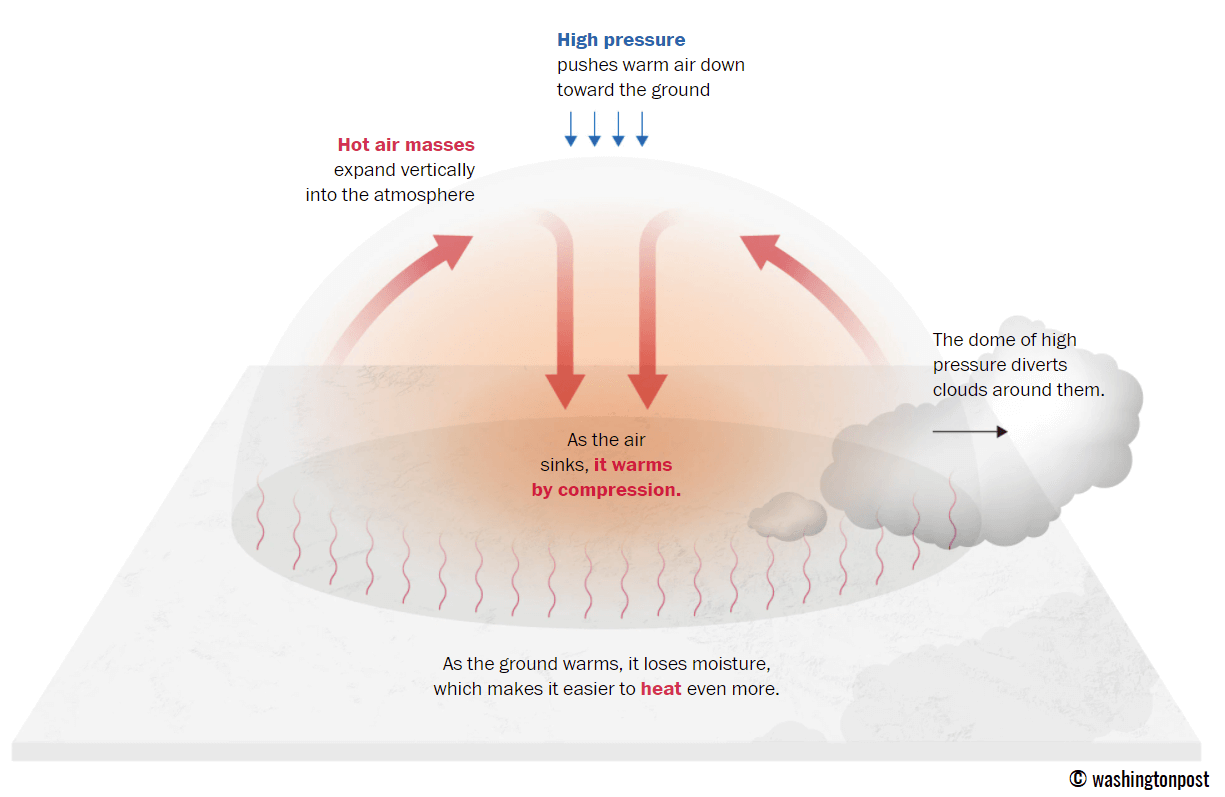
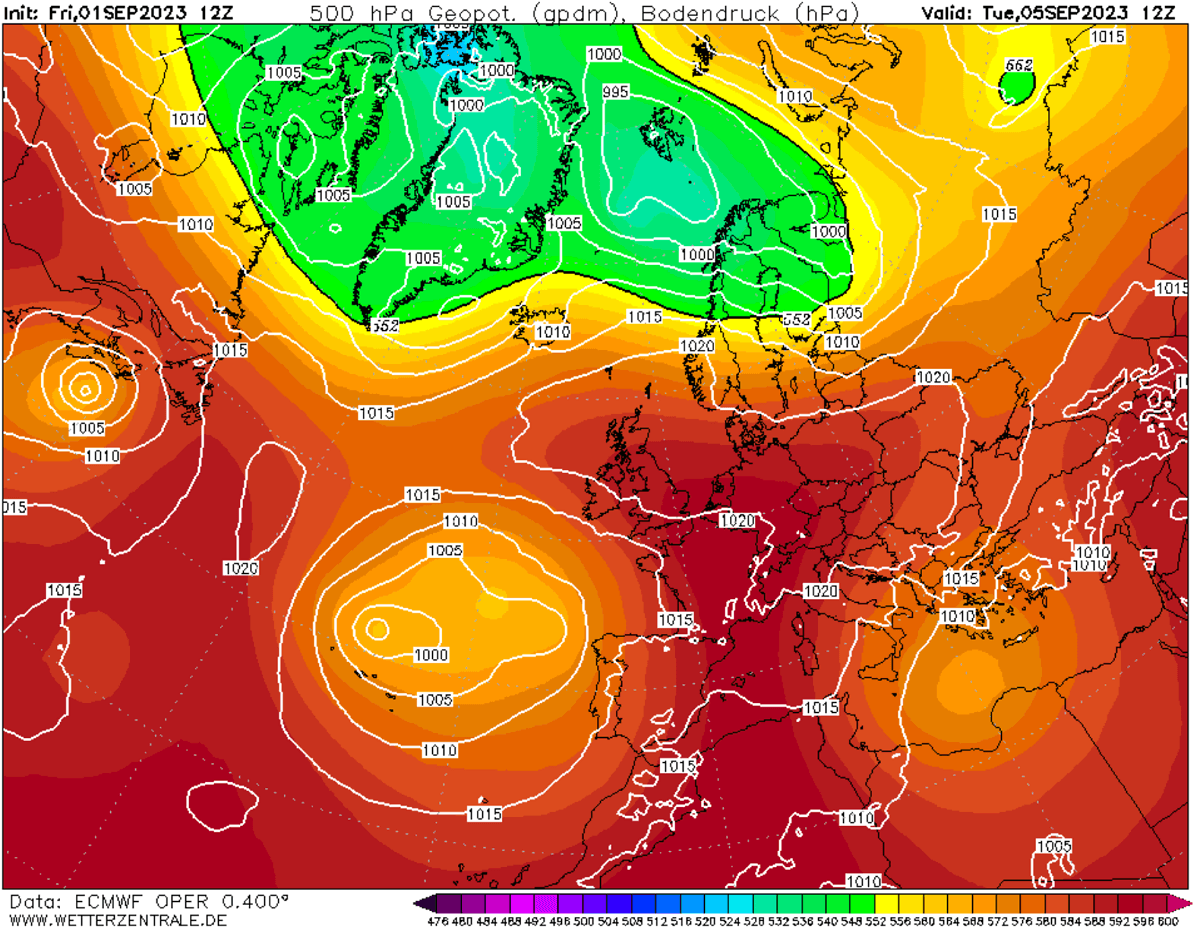
To understand the severity of this event, one must look to the "Heat Dome" phenomenon. An upper-level ridge—a blocking high-pressure system—parked itself over the continent, acting much like the lid on a boiling pot. This atmospheric structure trapped a massive plume of hot air that had been advected northward from the Sahara and North African regions.
The physics are straightforward but devastating: high-pressure systems force air to sink. As this air descends, it compresses and warms, further heated by the intense May sun. Because the high-pressure system remained stationary, it prevented any cooler, maritime air from moving in to provide relief. This "omega blocking" pattern created a feedback loop, turning the lower atmosphere into an oven that intensified over several days.
Chronology of the Crisis
The heatwave did not arrive gradually; it struck with alarming velocity. By the final week of May, the transition from below-average temperatures to extreme heat occurred in a matter of hours.
- May 25th: The onset of the heat dome began to manifest in the Iberian Peninsula, with temperatures in Portugal and Spain hitting the 40°C threshold earlier than any recorded spring in modern history.
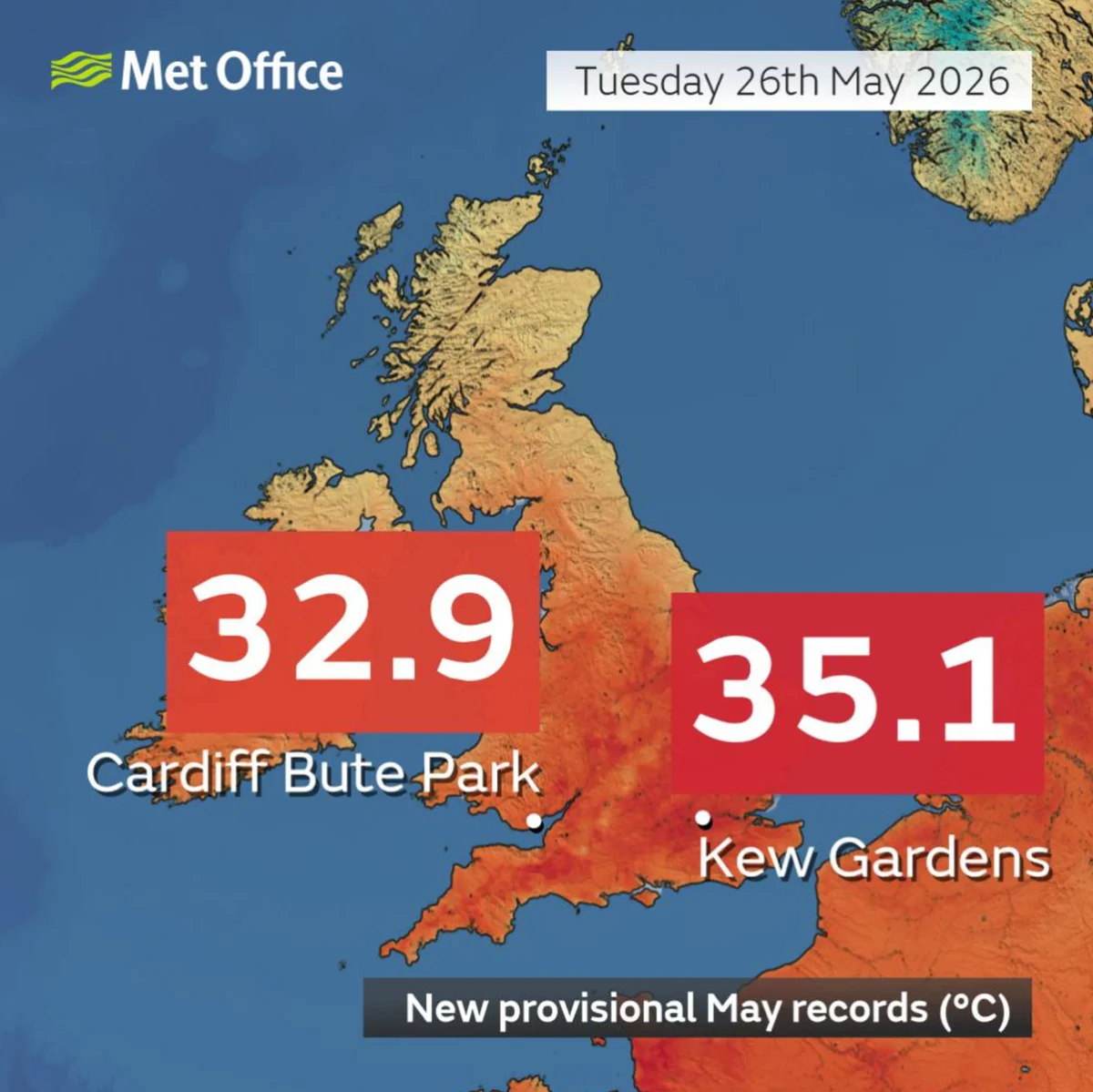
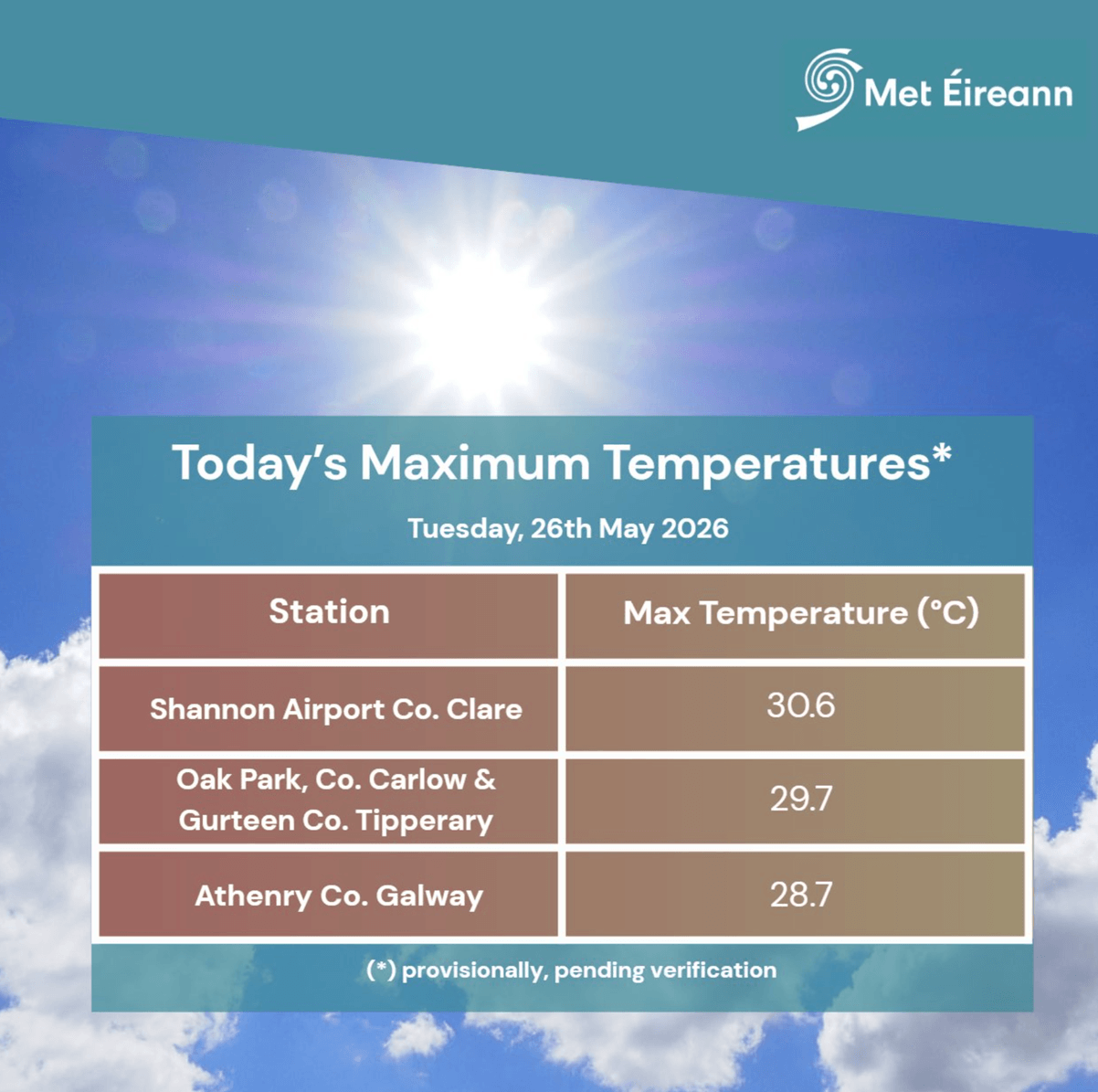
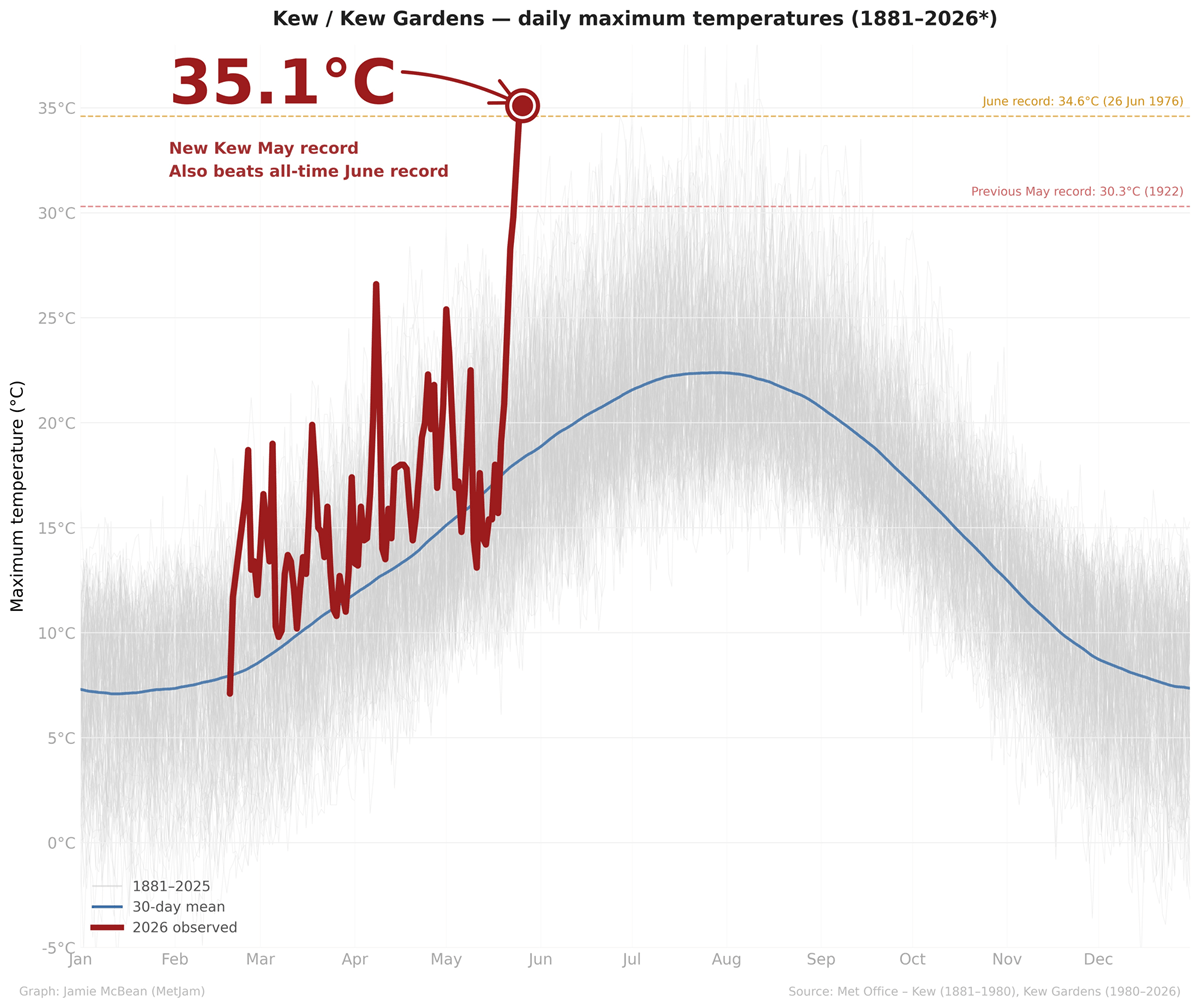
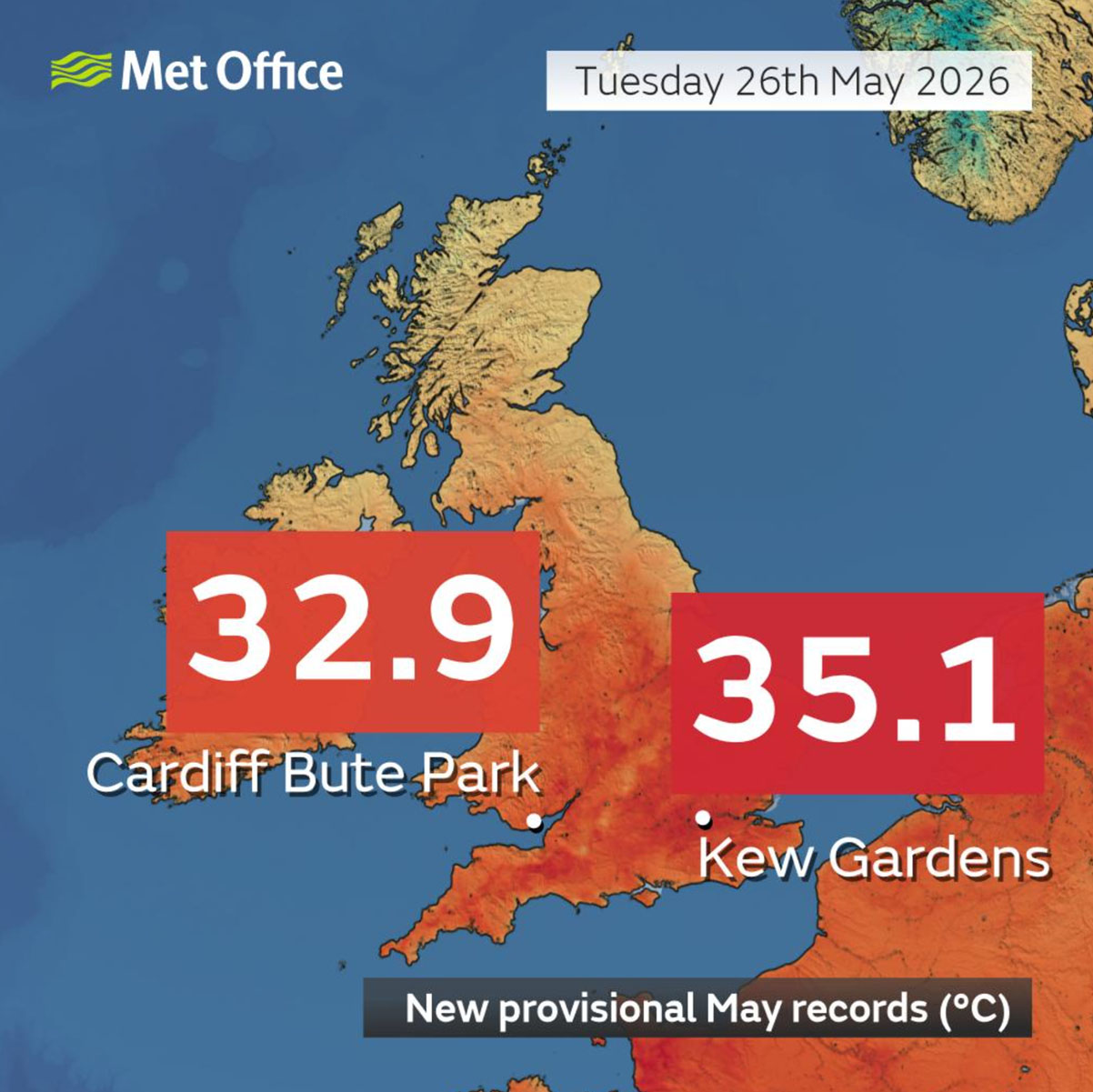
- May 26th–27th: The heat plume pushed aggressively north and west. Ireland, the UK, and France bore the brunt of this advancement. Shannon Airport in Ireland set a new national May record, while the UK saw its earliest-ever 35°C reading at London’s Kew Gardens.
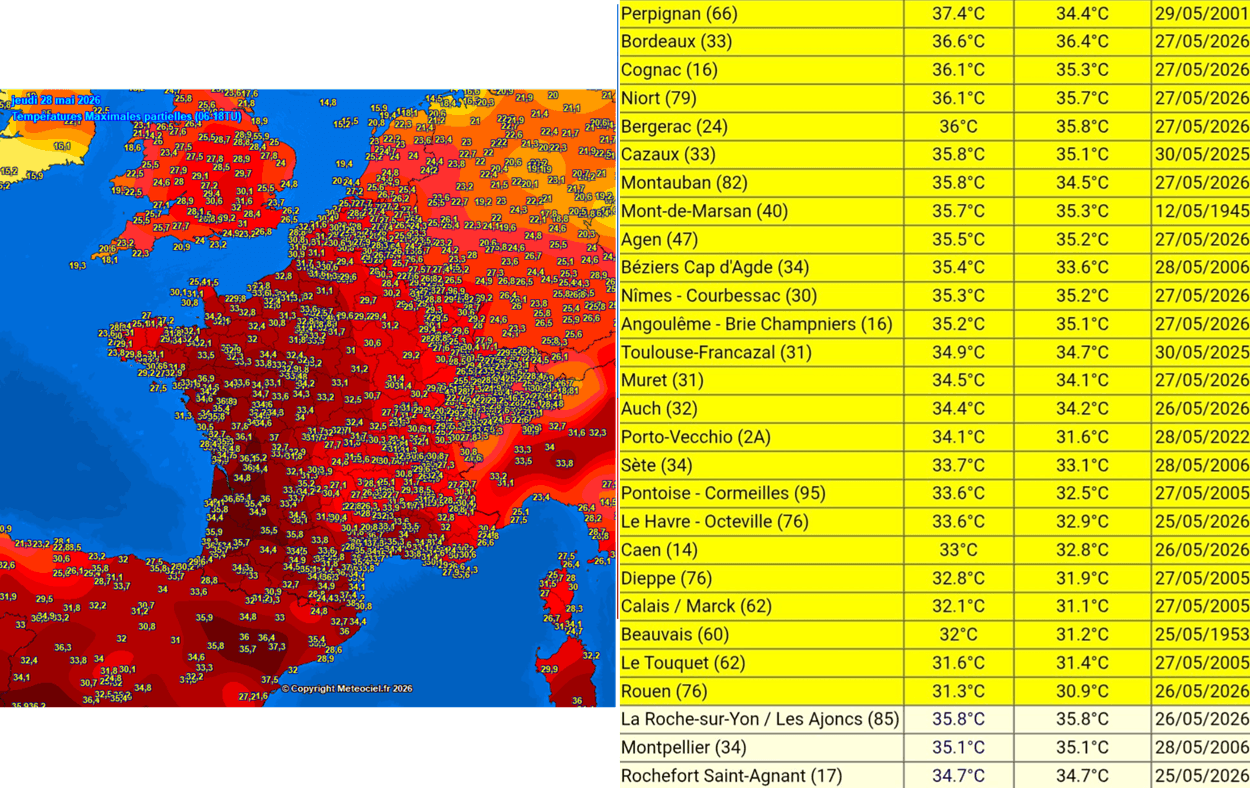
- May 28th: The heat reached its peak in France, where the national network recorded over 1,350 broken records in a single day.
- May 29th and beyond: The heat began a slow eastward migration, impacting Austria, Slovenia, and Italy, leaving a trail of shattered monthly and all-time spring records in its wake.
Regional Breakdown: Shattering the Records
The British Isles: An Unprecedented Surge
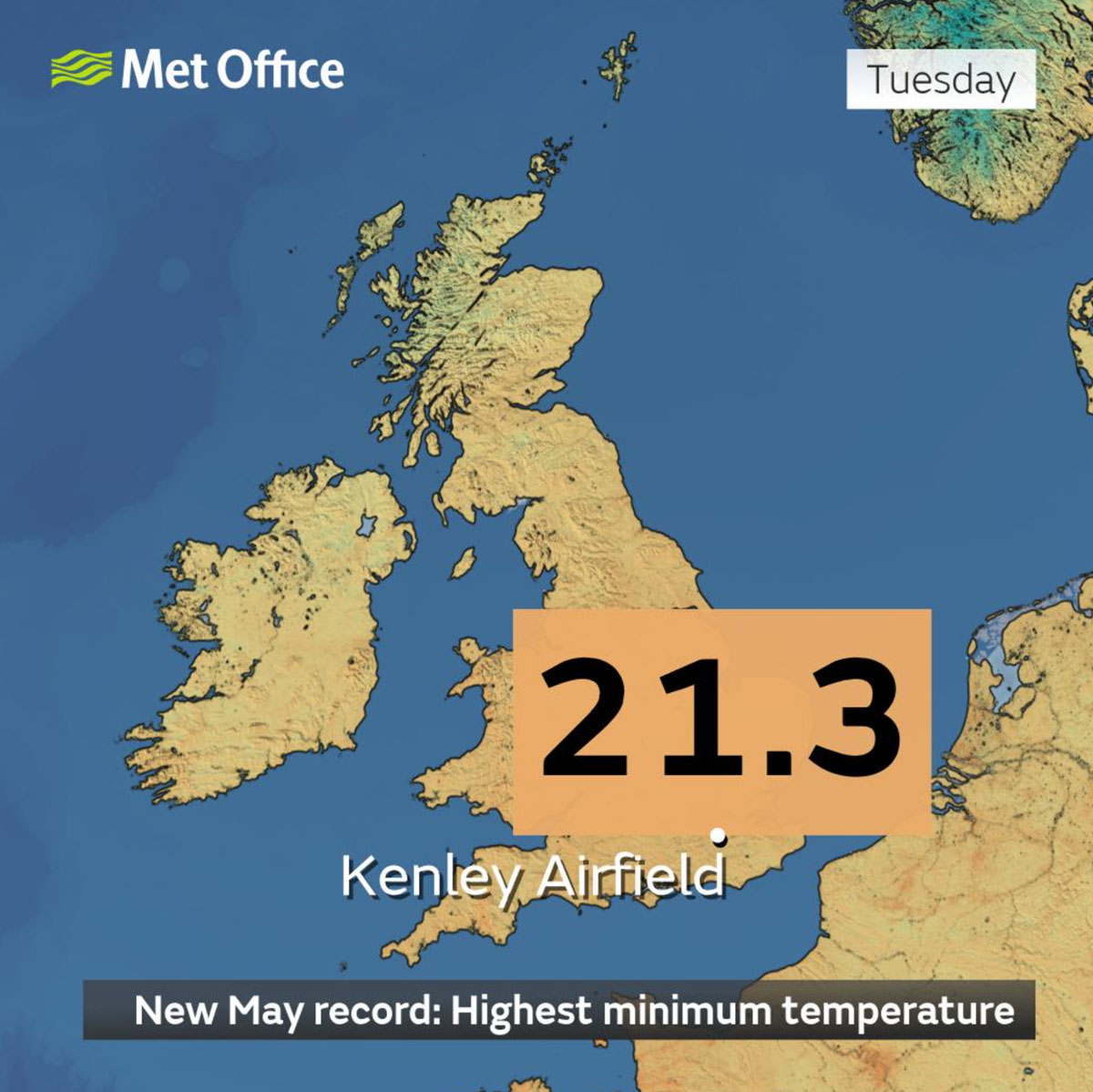
The United Kingdom and Ireland, historically cooler maritime climates, were arguably the most shocked by the intensity of the heat. In England, the 35.1°C reading at Kew Gardens did more than break a record; it obliterated a 1922 benchmark by nearly 5°C. Furthermore, the UK experienced "tropical nights," where temperatures failed to drop below 20°C—a rare phenomenon in May that prevents the cooling of buildings and exacerbates health risks. In Wales, Cardiff saw a new national record of 32.9°C, a stark departure from the typical spring temperatures for the region.
The French Conflagration
France witnessed what can only be described as a meteorological collapse of historical precedents. Across the country, from Bordeaux to the northern regions of Brittany, the heat was unrelenting. Brest, usually known for its mild, oceanic climate, reached 33.5°C—a staggering 4°C above its previous record. The sheer volume of records—over 1,350 stations reporting new highs—indicates the sheer geographic scale of the heat dome’s coverage.
Iberia: The Front Line
Spain and Portugal were the first to feel the brunt of the North African air mass. Portugal set a national May record of 40.3°C in Mora. In Spain, cities like Zamora and Santander, which have maintained data series for over a century, saw their long-standing May records vaporize. The heat was so pervasive that even nighttime temperatures in Catalonia remained above 28°C, providing no respite for the population.
Central Europe’s Alpine Heat
The heat wave’s reach extended into the heart of Europe. Austria recorded its hottest May day in over 200 years, with Lienz hitting 32.7°C. Similarly, Slovenia and Luxembourg saw record after record fall as the heat dome maintained its structural integrity across the Alps, preventing the usual cooling effects of higher elevations.
Implications for Public Health and Society
The human cost of such an extreme event is often delayed but profound. Heat exhaustion and heat stroke are the primary acute risks, but the broader public health implications are extensive.
Vulnerable populations—the elderly, children, and those with pre-existing cardiovascular or respiratory conditions—are the first to suffer. Furthermore, the structural design of European cities, many of which utilize concrete and dense urban architecture, creates "urban heat islands." These surfaces absorb solar radiation during the day and re-radiate it at night, preventing the cooling necessary for the human body to recover from daytime stress.
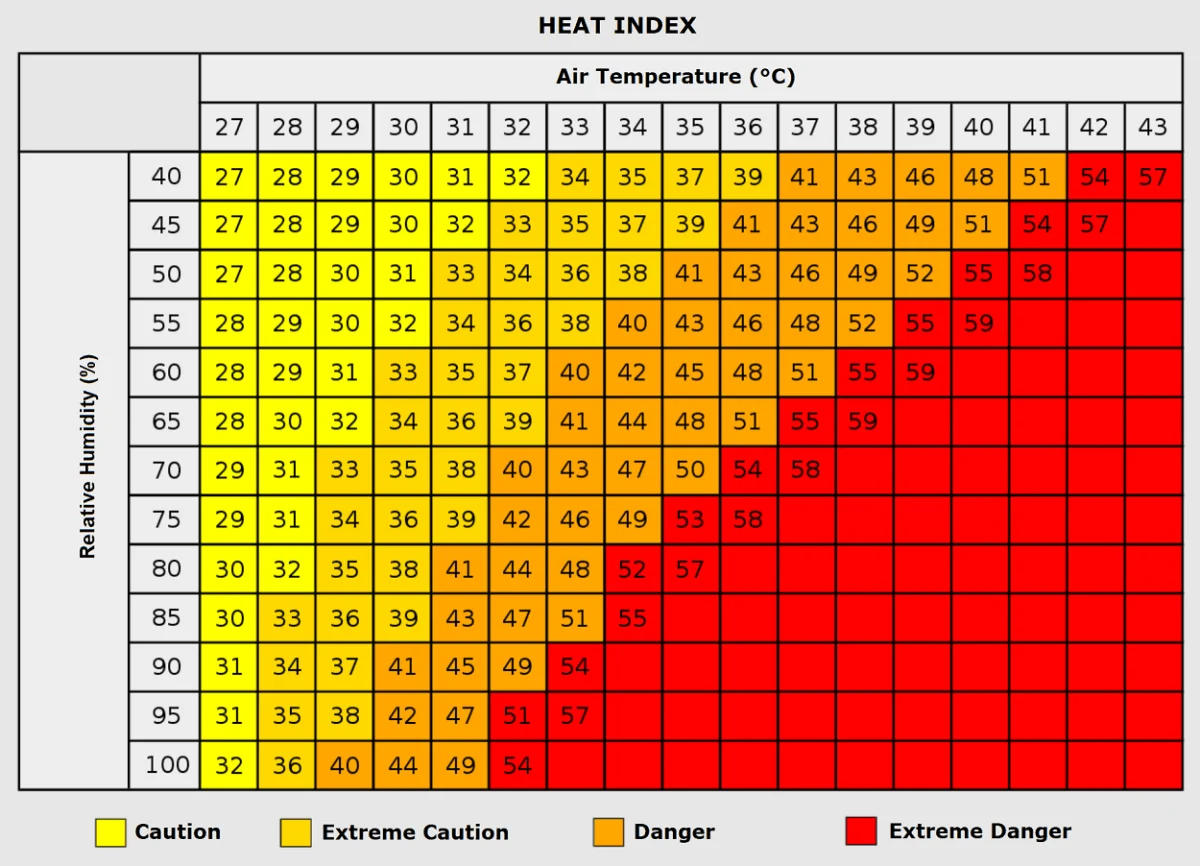
Outdoor workers, including those in agriculture and construction, faced extreme occupational hazards. The "Heat Index," which factors in humidity, became a critical metric during this event. In areas where the heat was accompanied by humidity, the human body’s primary cooling mechanism—sweating—became ineffective, leading to a rapid rise in core body temperature and a significantly higher risk of collapse.
Economic and Agricultural Stress
The timing of the heatwave—late May—is particularly problematic for agriculture. Crops across Western Europe, currently in their critical growth stages, faced sudden, intense dehydration. The lack of soil moisture, coupled with record-breaking heat, has likely caused significant stress to wheat, corn, and vineyard yields. Economic experts are already signaling that the costs associated with this event will be felt in the supply chain for months, if not years, to come.
Official Responses and Future Outlook
As of this writing, national weather services, including Météo-France and the UK Met Office, are finalizing the data. While the initial figures are historic, experts emphasize that these numbers will likely be subject to further validation.
The primary question facing policymakers is one of adaptation. The 2026 May heatwave has demonstrated that the historical "safety buffers" used for infrastructure planning are no longer sufficient. From power grid stability—which faced massive strain due to air conditioning demand—to urban planning and agricultural water management, the event has forced a re-evaluation of national resilience strategies.
Looking ahead, meteorologists warn that the establishment of these intense, blocking high-pressure systems appears to be occurring with greater frequency. The transition into meteorological summer suggests that the atmosphere remains in a highly volatile state. While the heat dome has begun to shift, it has left behind a landscape that is significantly drier and more prone to severe weather, including potential thunderstorms as the trapped heat eventually clashes with encroaching cooler air masses.
The May 2026 heatwave was not an isolated freak occurrence; it was a loud, clear signal from a changing climate. As Europe looks toward the coming summer months, the primary lesson is one of urgency: the era of "unprecedented" heat has become the new normal, and the continent must prepare for the heat to only increase in intensity and frequency.
Data sources for this report include the National Meteorological Service of Andorra, Météo-France, and independent meteorological data platforms including Windy, Pivotal Weather, and WXcharts. Further updates will be provided as official national reports are finalized.