By [Your Name/Editorial Desk]
In the relentless hum of modern life, characterized by digital screens, concrete urban landscapes, and the accelerating pace of global consumerism, humanity has found itself drifting further from its ancestral roots. As our societies evolve, the once-intimate bond between humans and the natural world is fraying. This growing "nature deficit" is more than a social phenomenon; it is a fundamental shift in how we perceive our place within the biosphere.
William E. Simpson II, a noted naturalist, author, and conservationist, argues that this disconnect poses an existential threat to our environment. As we consume resources at an unprecedented rate, our capacity to empathize with the wild—and by extension, our motivation to protect it—is diminishing. While documentaries and digital media provide a window into the wonders of the earth, Simpson maintains that they are mere shadows of the truth. To truly heal this rift, we must embrace the immersive power of ecotourism.
The Sensory Imperative: Why Immersion Matters
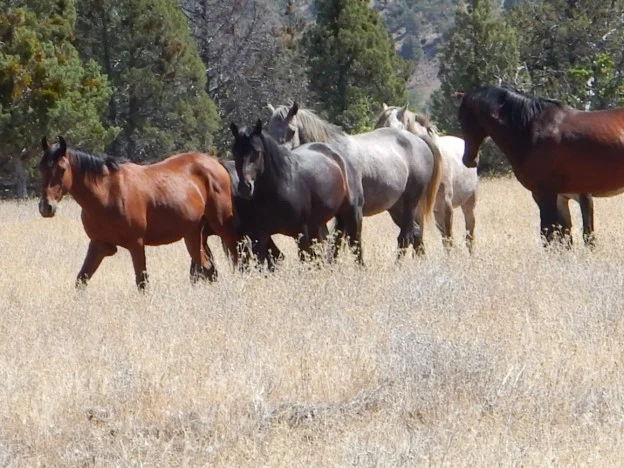
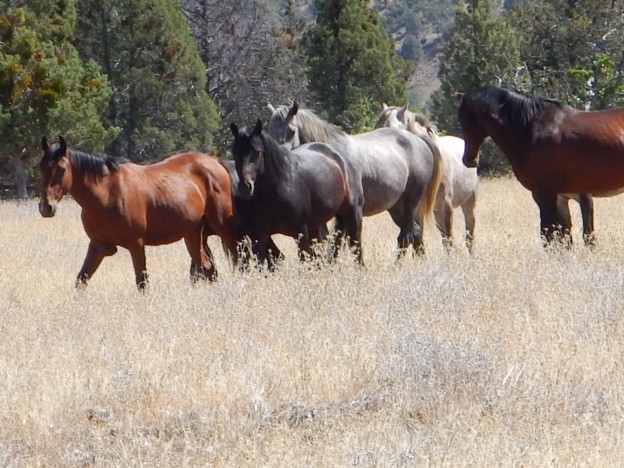
The modern experience is largely visual and auditory, delivered through high-definition filters. However, true nature is a multisensory encounter. It is the sharp, bracing scent of a pine forest after a rain, the rhythmic, guttural communication between eagles circling a mountain peak, or the sight of a wild stallion, muscles rippling under a sun-drenched coat, standing vigilant over his band.
According to Simpson, these experiences do more than provide entertainment; they inform our biological consciousness. "There is no substitute for ecotourism programs that uniquely provide actual immersion into nature and the experience of the wonders that exist therein, firsthand," Simpson asserts.
Ecotourism serves as a bridge, transforming nature from a static backdrop into a living, breathing partner in our existence. When individuals step out of their comfort zones and into the wild, they undergo an educational transformation. This "communion" fosters a level of compassion that textbooks and television programs cannot replicate. When a person witnesses the majesty of a wild animal in its natural habitat, they are no longer an observer of a resource; they become a steward of a legacy.
Chronology: From Exploitation to Coexistence
To understand the current state of conservation, one must look at the historical trajectory of land management in the United States.
- 19th–Early 20th Century: The era of expansion and resource extraction. Wilderness was viewed as a frontier to be conquered or a resource to be harvested.
- 1960s–1980s: The rise of the modern environmental movement. Legislation like the Wild Free-Roaming Horses and Burros Act of 1971 marked a turning point, recognizing that wild animals held intrinsic value beyond their utility as livestock or meat.
- 1990s–2010s: The expansion of the "green economy." Ecotourism began to emerge as a viable economic alternative to traditional extractive industries like logging and mining.
- 2020–Present: The post-pandemic shift. There is a surging demand for "slow travel" and outdoor experiences, as people seek refuge from the pressures of technology. Conservationists are now advocating for "Rewilding"—the active restoration of ecosystems—as a means to combat climate change and biodiversity loss.
Supporting Data: The Case for Wild Horses
One of the most compelling arguments for intelligent resource management is the rewilding of American wild horses. These animals, often relegated to the status of "nuisance" by livestock producers, are actually powerful tools for ecological health.
Economic Viability
The Bureau of Land Management (BLM) currently faces immense fiscal pressure in managing wild horse populations. Traditional "round-up and remove" strategies are costly, involving capture, transport, and long-term storage in holding facilities. Statistics suggest that transitioning to a model of managed rewilding could save the agency nearly $100 million annually.
Furthermore, local economies stand to gain significantly. A survey regarding Moffat County, Colorado, illustrates that wild horse tourism generates substantial revenue for local businesses, including hotels, restaurants, and tour operators. When horses are managed in their natural range, they become an "economic engine" that thrives on preservation rather than extraction.
Environmental Stewardship
Beyond economics, wild horses serve a critical ecological function: fire mitigation. By grazing on grass and brush, these animals reduce the fuel loads that contribute to catastrophic wildfires. In an era where climate change is fueling larger, more destructive fire seasons, utilizing natural grazers is a low-cost, high-impact strategy to protect sensitive wilderness areas.
Official Responses and Policy Perspectives
The debate over the management of public lands remains heated. On one side, agricultural lobbyists argue that wild horses compete with cattle for forage, leading to overgrazing. On the other side, conservationists like Simpson advocate for a "holistic range management" approach.
The International Ecotourism Society (TIES) maintains that the conflict is often one of perception rather than reality. They argue that when ecosystems are managed for their natural complexity, the "carrying capacity" for both wildlife and limited livestock can be optimized through better grazing techniques and rotational management.
Government agencies are slowly pivoting. Recent discussions within the Department of the Interior have touched upon the necessity of "multi-use" land management. However, progress is often hampered by bureaucratic inertia and the influence of powerful industrial lobbies. The push for ecotourism is essentially a push for a more democratic use of public land—one that favors the collective interest of the public and the health of the planet over the short-term profit of a few.
Implications: The Path Toward a Better Future
What are the long-term implications of failing to integrate ecotourism into our conservation strategies?
- Ecological Collapse: Without a public that values nature, it is unlikely that sufficient political capital will be generated to protect endangered habitats.
- Economic Stagnation: Communities reliant solely on extractive industries are vulnerable to global market fluctuations. Ecotourism offers a diversified, resilient economic base.
- The Psychological Toll: As the "nature deficit" deepens, public health outcomes—ranging from mental health to cardiovascular fitness—may continue to decline.
The integration of ecotourism into national land-use policies is not just a "nice-to-have" amenity for the affluent; it is a fundamental pillar of sustainable development. By reintroducing native species like wild horses into appropriate wilderness areas, we are not just saving animals; we are saving ourselves.
Conclusion
The "abyss of understanding" that William E. Simpson II describes is not an insurmountable chasm. It is a distance that can be bridged by the curiosity and feet of the public. Every dollar spent on an ecotourism experience is a vote for the preservation of our natural world. Every hour spent in the wilderness is a lesson in humility and interconnectedness.
As we look toward the future, the choice is clear: we can continue to treat the natural world as a commodity to be depleted, or we can treat it as a classroom and a sanctuary. Through the strategic implementation of ecotourism and thoughtful rewilding efforts, we have the opportunity to redefine our relationship with the Earth. It is time to step out of the office, away from the screen, and back into the wild.
For more information on the intersection of wild horse conservation and ecological stewardship, visit www.WHFB.us.
For further resources on global best practices in nature-based travel, visit www.ecotourism.org.