Introduction: A Strategic Pivot for Armenia’s Natural Heritage
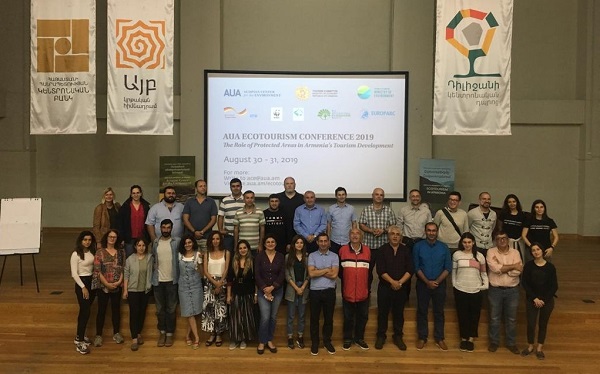
On August 30–31, the fourth annual AUA Ecotourism Conference brought together a diverse cohort of policymakers, international conservation experts, and tourism stakeholders to chart a new course for Armenia’s environmental and economic future. Hosted by the American University of Armenia (AUA) Acopian Center for the Environment, the event served as a high-level platform to address the intersection of biodiversity conservation and the burgeoning global demand for sustainable travel.
In an era where climate change and habitat loss pose existential threats to global ecosystems, the conference underscored a critical message: protected areas are not merely "cost centers" or regulatory burdens; they are vital economic engines capable of driving national growth, fostering rural development, and preserving the unique cultural identity of the Armenian landscape.
The Architecture of the Conference: Partnerships for Progress
The summit was the result of a robust multi-stakeholder collaboration. Key organizers included the AUA Acopian Center for the Environment in partnership with the Tourism Committee of the Ministry of Economy, the Ministry of Environment of the Republic of Armenia, WWF Armenia, and the Transboundary Joint Secretariat (TJS)—the latter of which operates with support from the KfW German state-owned development bank. Furthermore, the inclusion of The International Ecotourism Society (TIES) elevated the discussions to a global standard, bringing in world-renowned experts from the EUROPARC Federation and the International Union for Conservation of Nature (IUCN).
The gathering was designed to bridge the gap between abstract policy and practical implementation, drawing in a wide spectrum of attendees ranging from protected area managers and tour operators to government officials tasked with national economic planning.
Chronology and Key Deliberations
The two-day event was structured to provide both theoretical frameworks and practical, on-the-ground insights.
Day One: Economic Valuation and Global Trends
The conference opened with a focus on the economic imperatives of conservation. Dr. Thiago Souza of the IUCN Commission on Protected Areas’ Tourism Specialists Group challenged the traditional, narrow view of conservation funding. He argued that government officials often fail to recognize the value of protected areas because they rely on simplistic accounting—viewing only entrance fee revenue against operational budgets.
As the conference transitioned into global trends, Jon Bruno, Executive Director of TIES, provided a sobering look at the rapid expansion of the sector. He noted that over 90 nations have institutionalized ecotourism at the national or regional level in the last 30 years—a trajectory unmatched by any other industrial sector.
Day Two: Standardization and Site Inspection
The second day focused on the "how-to" of sustainable management. Representatives from the EUROPARC Federation, including Executive Director Carol Richie and council member Paulo Castro, introduced participants to the European Charter for Sustainable Tourism. The day concluded with immersive site visits to the Dilijan Tourism Information Center, the Dilijan National Park Visitor Center, and the Caucasian Red Deer Reintroduction Center. These visits allowed participants to evaluate existing infrastructure and identify the gaps between Armenia’s current capabilities and international best practices.
Supporting Data: The Case for Investing in Nature
One of the most compelling aspects of the conference was the data-driven argument for shifting public investment toward protected areas.
The Multiplier Effect of Conservation
Dr. Souza presented a compelling counter-narrative to the idea that protected areas are drains on the national budget. In Brazil, for example, budgets for protected areas can be nine times higher than the revenue collected from entrance fees. However, when economists apply a broader analysis—factoring in visitor spending, tax revenue, and the "multiplier effect" of tourism dollars circulating through local communities—the return on investment is extraordinary.
"In Brazil, we’ve been able to show that for every dollar budgeted and spent on protected areas, the national economy gains 15 dollars," Dr. Souza explained. Europe mirrors this trend, where every euro invested in infrastructure for protected areas yields 7 to 10 euros in GDP activity.
Global Market Scale
The sheer scale of the ecotourism market is staggering. According to a 2015 study by Balmford et al., protected areas worldwide facilitate an estimated 8 billion visits per year. This volume of traffic generates roughly US$600 billion in direct, in-country expenditures, confirming that nature-based tourism is a primary driver of the global service economy.
The Global Perspective: Why Armenia Must Adapt
Jon Bruno emphasized that Armenia is at a pivotal crossroads. With 70% of travelers under the age of 30 citing sustainability as a priority, the "ecotourism" label is no longer a niche market; it is the industry standard.
"Travelers have greatly increased both their awareness of ecotourism and their willingness to increase payment to ensure a sustainable travel experience," Bruno noted. For a country like Armenia, which possesses significant, largely untapped natural assets, the potential for economic development through sustainable tourism is vast. By pivoting toward this model, Armenia can provide the strongest possible revenue streams for rural communities while simultaneously incentivizing local populations to act as stewards of their natural environment.
The Need for Networks, Guidelines, and Standards
A central theme of the conference was that good intentions are not enough; rigorous standards are required to prevent the "over-tourism" that has plagued other nations.
The EUROPARC Model
Carol Richie of the EUROPARC Federation warned of the dangers of poorly managed tourism. "Poorly managed tourism allows societal tensions to persist, weakens local communities’ connection to their heritage, landscape and environment, erodes cultures and values, and does irreparable damage and change to nature, wildlife, and the environment," she cautioned.
To mitigate these risks, EUROPARC promotes the European Charter for Sustainable Tourism in Protected Areas. This program requires a high degree of commitment and long-term planning. As Paulo Castro explained, it is a multi-stakeholder process. Protected area managers must create permanent forums for local residents, business owners, and government officials to ensure that tourism products are developed responsibly and based on local resources rather than mass-market exploitation.
Official Responses and Strategic Implications
The Armenian Ministry of Environment deemed the conference a resounding success, citing it as the catalyst for a new, growth-oriented strategy for the nation’s protected areas. The implications of this gathering are multifaceted:
- Policy Alignment: The government is now positioned to harmonize its environmental protection laws with international tourism standards, specifically by looking toward the membership requirements of the EUROPARC Federation.
- Infrastructure Development: The site visits to Dilijan served as a diagnostic tool. It is clear that while Armenia has the natural beauty, it requires a sustained investment in visitor centers, trail maintenance, and interpretive signage that meets international benchmarks.
- Community Engagement: The conference highlighted that for ecotourism to succeed, it must be decentralized. The economic benefits must reach the villagers, farmers, and small-scale artisans living on the periphery of protected areas.
- Data-Driven Governance: By moving away from simple entrance-fee accounting, the Armenian government has the potential to justify larger budget allocations for the Ministry of Environment, proving that environmental protection is a savvy, high-yield economic policy.
Conclusion: A Path Toward Sustainable Prosperity
The fourth annual AUA Ecotourism Conference was more than a series of presentations; it was an urgent call to action. By aligning with global networks like TIES and the EUROPARC Federation, and by adopting rigorous, data-backed economic strategies, Armenia is well-positioned to transform its protected areas into centers of sustainable, long-term economic growth.
The road ahead will require patience and a commitment to multi-stakeholder dialogue, but the potential rewards are clear: a resilient tourism sector that safeguards Armenia’s breathtaking landscapes for generations to come, while simultaneously providing a robust and inclusive economic future for its people. As the world increasingly seeks authentic, sustainable experiences, Armenia’s natural heritage may well become its most valuable national asset.