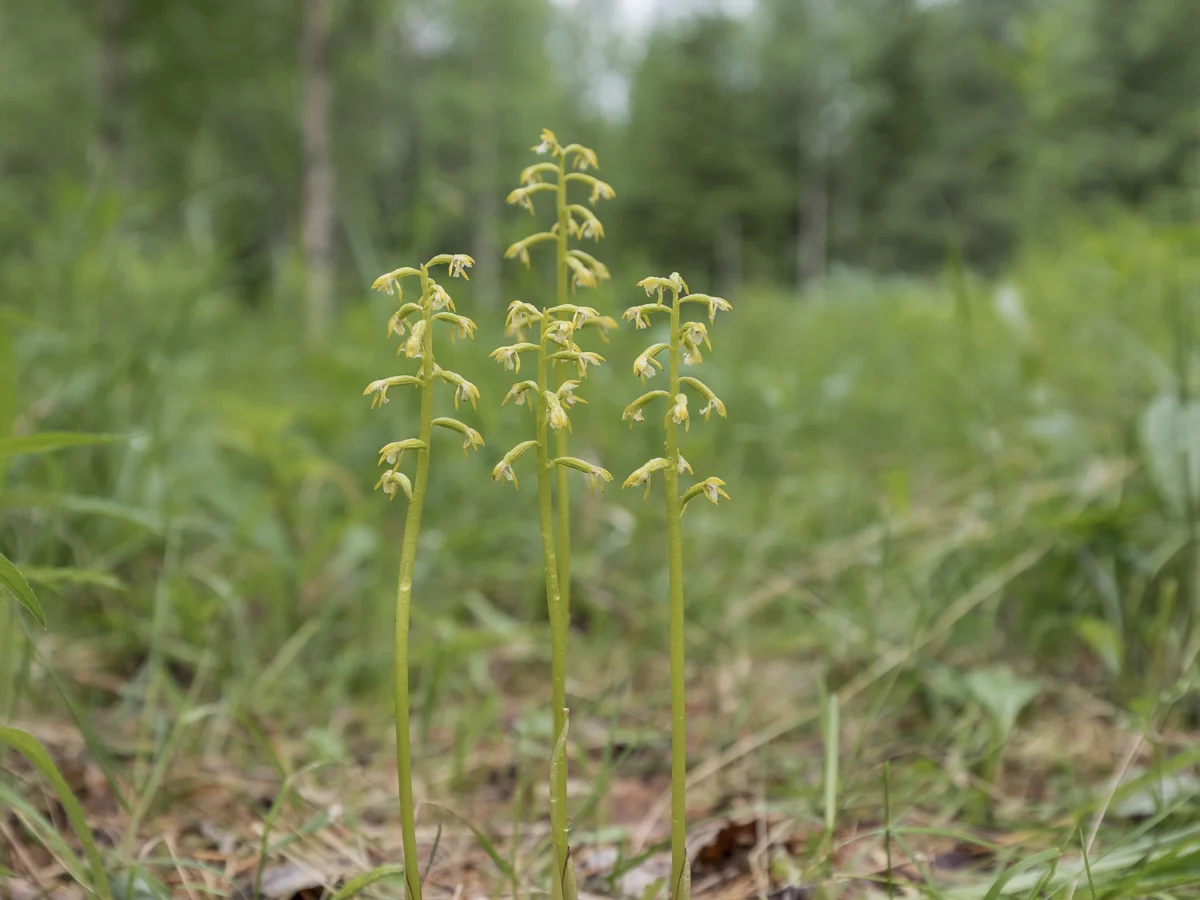
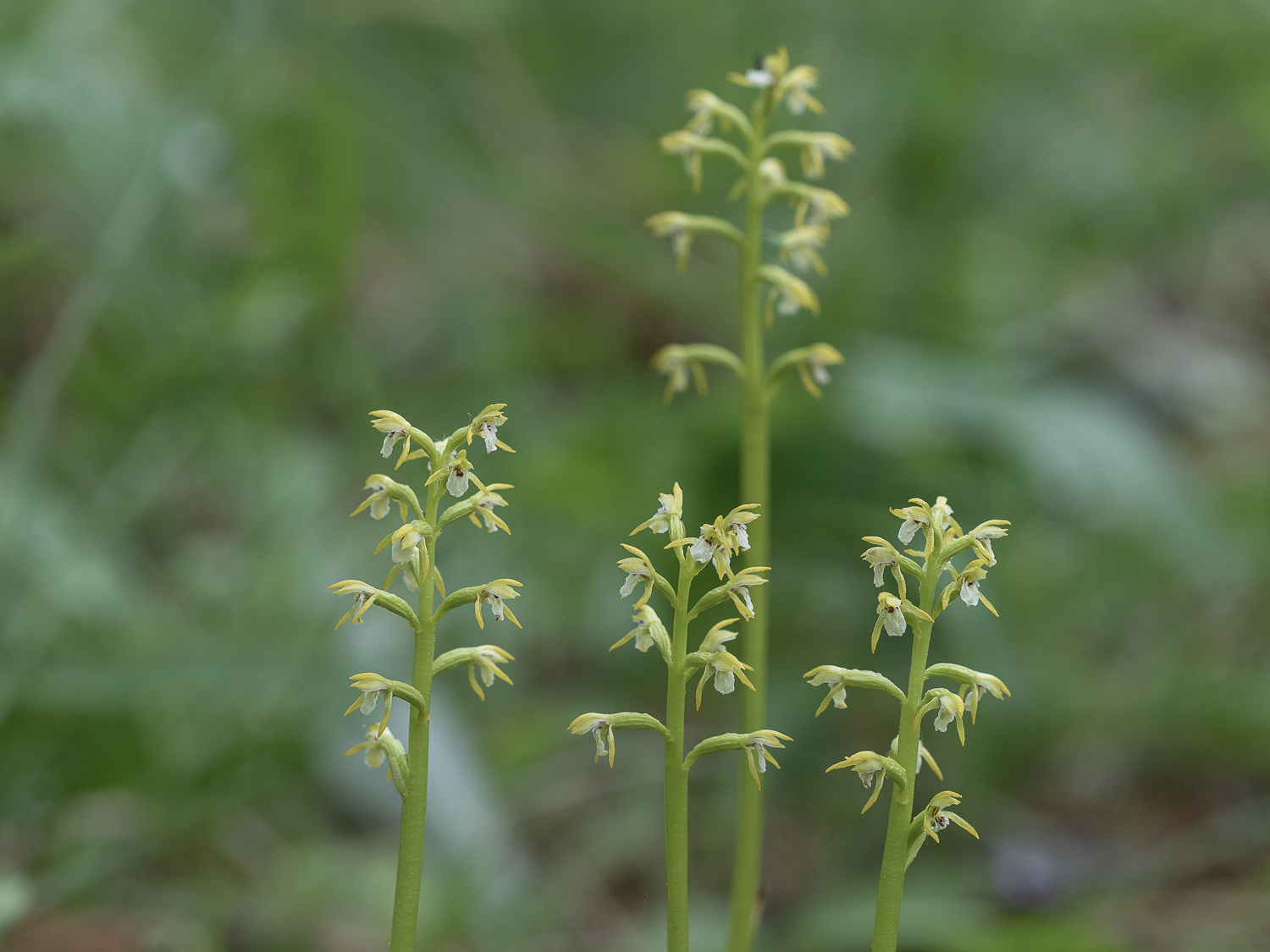
In the world of mystery novels, the discovery of a dead body by a dog walker is a trope as tired as the rain-slicked streets of a noir thriller. Fortunately, such grim occurrences remain firmly within the realm of fiction for most of us. However, a recent morning walk with my dog, Vekku, led to a discovery of a different sort—one that felt, in its own quiet way, just as miraculous as a literary plot twist. Tucked away on our own property, I stumbled upon a small, delicate cluster of orchids in full bloom.
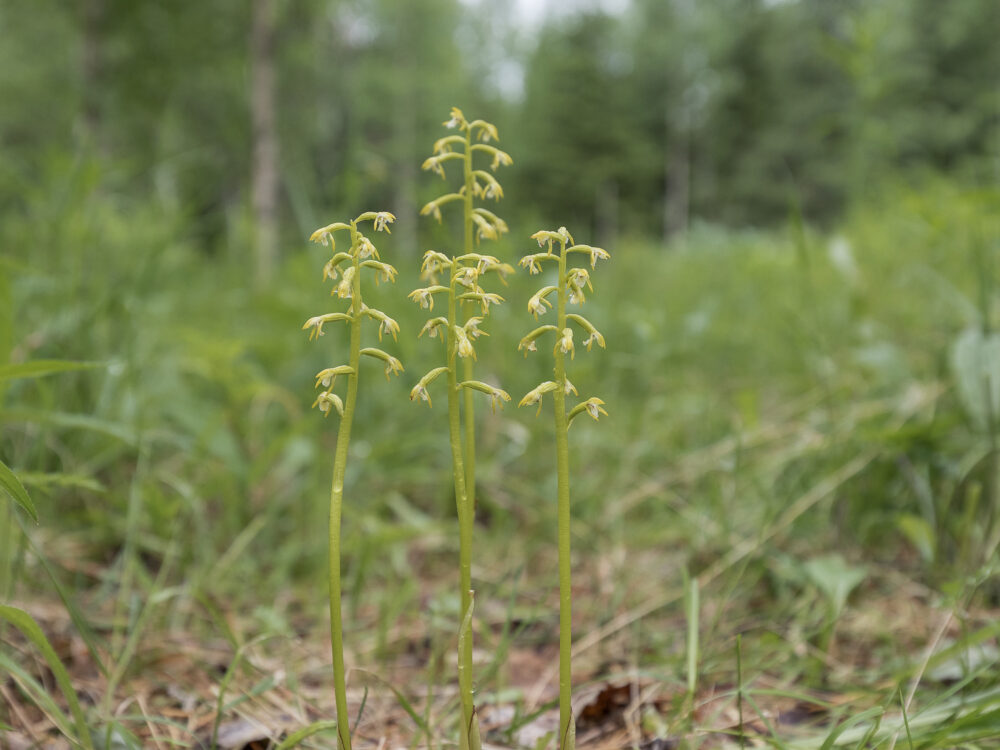
This was no ordinary garden variety. It was the Corallorhiza trifida, commonly known as the coralroot orchid. What began as a single sighting quickly expanded; as my partner Risto joined the search, we realized the forest floor was dotted with nearly twenty of these elusive specimens. To find something so rare, so fleeting, and so biologically fascinating is a moment that stays with a naturalist long after the flowers have faded.
The Biology of the Shadow-Dweller
The coralroot is a member of the Orchidaceae family, yet it bears little resemblance to the showy, vibrant phalaenopsis orchids that line the shelves of supermarket floral aisles. It is small, unassuming, and humble in its stature. Perhaps it is this very modesty that makes it so captivating.
Its common name is somewhat ironic, as the plant lacks a traditional root system. Instead, it possesses a rhizome that has evolved into a branching, coral-like structure—a physical manifestation that inspired its scientific genus name, Corallorhiza. This subterranean "coral" is, in fact, a complex mycorrhizal network. The orchid is a myco-heterotroph, meaning it relies on a symbiotic relationship with fungi to extract nutrients from its environment, often drawing resources from nearby trees such as spruce or birch.
While the plant is often described as lacking chlorophyll, this is only partially true. As its seeds begin to ripen, the coralroot develops a subtle green hue, indicating that it retains a limited, vestigial capacity for photosynthesis. However, its primary existence remains tethered to the dark, nutrient-rich soil of the forest floor, where it can remain dormant for years, hiding in the shadows until the precise ecological conditions trigger a sudden, transient bloom.
A Decade-Long Mystery: A Chronology of Sightings
The timing of this year’s discovery is a matter of particular interest. Our five-hectare plot last hosted these orchids on June 6, 2016—almost exactly ten years ago to the day. This year, the first specimens appeared on June 10.
The geography of the encounter, however, tells a more complex story. In 2016, the orchids were found on a damp, birch-covered meadow. Since that time, the area has remained largely undisturbed, yet we have not seen a single specimen there since. This year’s population appeared on the opposite side of our property, along a grassy slope interspersed with young pines, a lone juniper, and a few stunted birches.
This habitat is, by all traditional accounts, quite atypical. Experts often characterize the ideal home for Corallorhiza trifida as a "korpi"—a type of swampy, nutrient-rich woodland. Renowned naturalist Risto Sulkava, in his own field observations, describes the classic habitat as "a slope where flowing water maintains a thick, soft carpet of sphagnum moss, with small spruces providing the perfect dappled shade. The coralroot thrives on nutrient-rich water, usually indicating the presence of groundwater seepage."
The fact that these plants have migrated across our property, selecting a slope that deviates from the "textbook" definition of a swampy forest, underscores how little we truly understand about the dispersal and survival strategies of these botanical enigmas.
The Fragile State of Forest Orchids
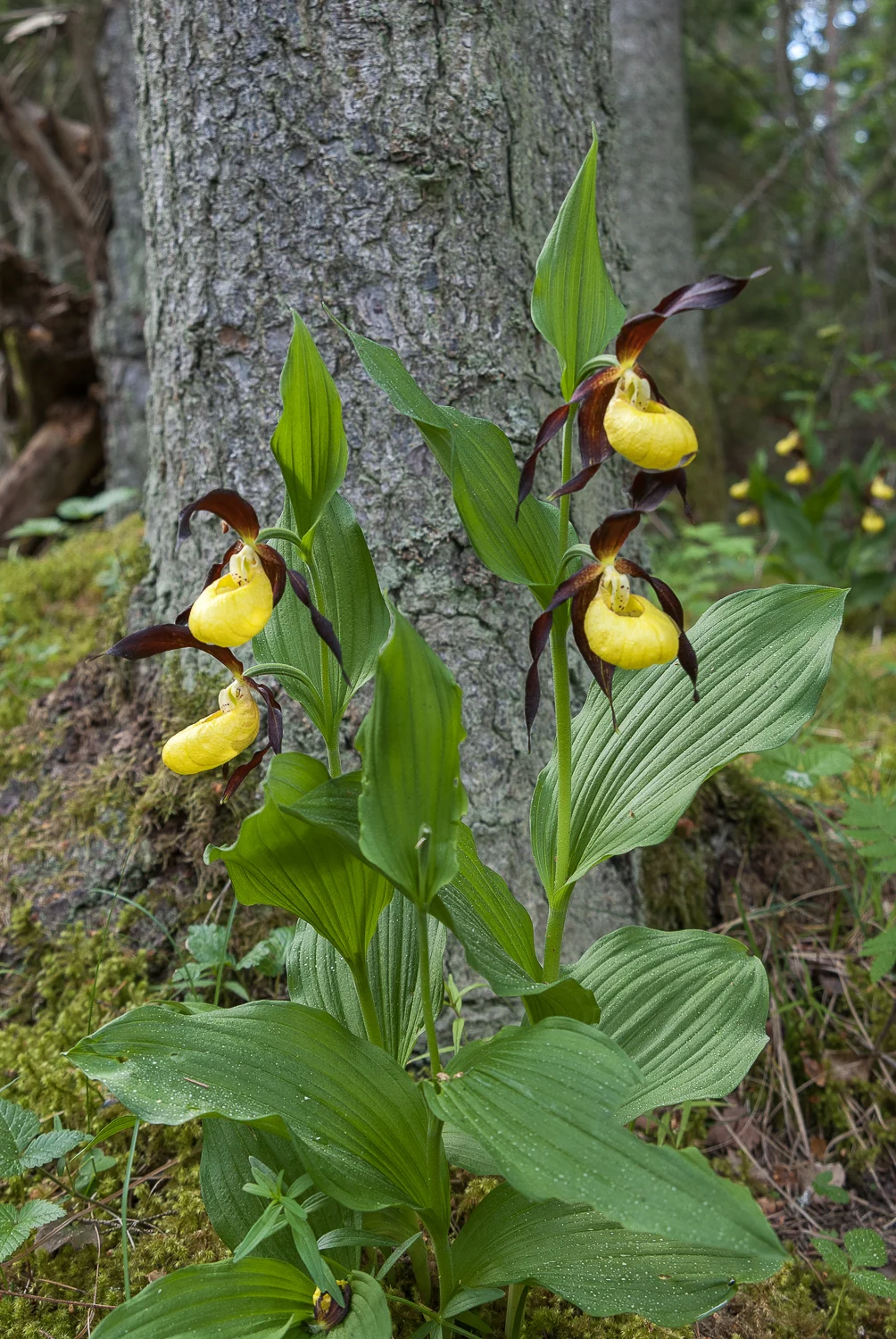
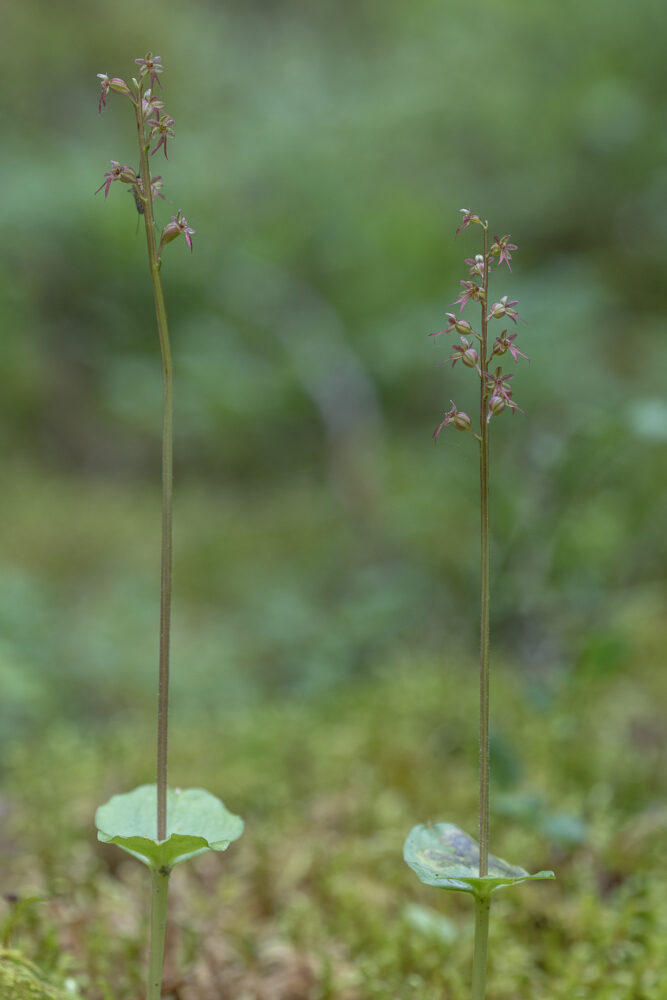
The coralroot is not alone in its struggle; it belongs to a suite of small, fascinating forest orchids, including the lesser twayblade (Neottia cordata) and the creeping lady’s-tresses (Goodyera repens). These plants are the "canaries in the coal mine" of the boreal forest.
While botanical field guides often categorize the coralroot as "common," this label masks a more troubling reality. The species has seen a dramatic decline across its range. The primary culprit is industrial forestry. For a plant that requires the specific moisture regimes of groundwater-fed forests, modern silviculture is a catastrophe. Drainage ditches, clear-cutting, and the mechanical churning of forest soil destroy the delicate fungal networks that these orchids rely on for survival.
The lesser twayblade and the creeping lady’s-tresses are even more sensitive. In our own excursions through the southern Kainuu region, we have found that these species are now restricted almost exclusively to the protected confines of old-growth forests. Outside of these sheltered enclaves, their habitat has been systematically dismantled.
Voices from the Field: The Human Cost of Habitat Loss
The decline of these species is not merely a data point in an environmental report; it is a loss felt deeply by those who spend their lives in the woods. In her 2013 book Musta orkidea (The Black Orchid), author Elina Grundström captures this sense of loss through her interviews with sisters Zoja and Tamara Pienimäki, residents of Lohjansaari.
The Pienimäkis, who are passionate cultivators of exotic orchids, possess a profound reverence for their native counterparts. During their conversations with Grundström, they lamented the vanishing of the forest orchids they once knew well. They spoke of the creeping lady’s-tresses, which they had not seen in years, despite frequent trips to the forest to pick berries.
"And we go out for blueberries so often!" Zoja remarked. "Even the patch where there might still be a few [creeping lady’s-tresses] left has been marked for logging."
Grundström’s book was published over a decade ago. Since then, the pace of industrial logging has not slowed; if anything, the pressure on remaining forest fragments has intensified. The stories of the Pienimäkis reflect a broader, nationwide tragedy: the steady erasure of the intricate, small-scale biodiversity that defines the Finnish landscape.
Implications: Can We Protect the Small and Silent?
The discovery of the coralroot on our property serves as both a celebration and a warning. It is a reminder that nature is resilient, capable of reappearing after a decade of silence when the conditions are just right. However, it also highlights the precariousness of that existence. If a species can disappear from a stable habitat for ten years only to pop up in an unlikely, unmanaged corner of a private plot, what does that say about the species that have been entirely stripped from our managed forests?
The implications for land management are clear: if we wish to preserve the Corallorhiza trifida and its peers, we must shift our focus away from viewing forests solely as timber factories. We need to prioritize the protection of groundwater-rich sites, refrain from draining peatland forests, and leave sufficient buffer zones around sensitive habitats.
The coralroot does not demand large-scale spectacles; it asks only for the continued presence of the fungal networks and the clean, flowing water that its ancestors have relied on for millennia. As we continue to enjoy the brief, yellow-tinged beauty of these orchids on our hillside, we are reminded that our role is not just to observe, but to ensure that the silent inhabitants of the forest floor have a future in a changing landscape.
The mystery of the coralroot is not in how it appears, but in whether we will choose to preserve the conditions that allow it to keep appearing. As we look to the future of our forests, we must ask ourselves: are we prepared to manage our land in a way that respects the smallest, most silent lives among us? If we fail, we may find that the next time we go for a walk in the woods, the only thing left to find is the absence of what once was.