LIEKSA, FINLAND – June 13, 2026 – The tranquil waters of Neitikoski in Lieksa, Finland, erupted with fervent excitement this past Saturday as the European Freestyle Canoeing Championships concluded with a series of breathtaking finals across all categories. For the Finnish contingent, the championships culminated in an unprecedented display of national prowess, highlighted by Taru Terni’s historic gold medal in the Women’s K1 category, marking the nation’s most successful outing in a major freestyle canoeing event to date. The home crowd’s high expectations, fueled by all three Finnish representatives qualifying second in their respective semifinals, were not only met but spectacularly surpassed, cementing Finland’s burgeoning status in the sport.
Main Facts: A Golden Milestone for Finnish Paddling
The 2026 European Freestyle Canoeing Championships concluded with jubilant scenes for the host nation, Finland. The pinnacle of this success was Taru Terni’s dominant performance in the Women’s K1 final, where she secured the European Championship title with a personal best score of 626.67 points. This momentous achievement was complemented by strong showings from her compatriots: Nea Rautio clinched a respectable fourth place in the Junior Women’s category, while Visa Rahkola battled fiercely to a fifth-place finish amidst an incredibly competitive Men’s K1 field.
The event, held on the challenging yet newly optimized Neitikoski wave, saw athletes execute intricate maneuvers in a "best of three runs" format, pushing the boundaries of skill and athleticism. The collective performance – three finalists and one gold medal – has been hailed by Jyri Hämäläinen, the Freestyle Canoeing Sports Manager, as the most successful European Championships for Finland in the sport’s history, a testament to years of dedicated investment and the strategic advantage of competing on home waters.
Chronology: A Day of High Stakes and Triumphs
Saturday, June 13th, dawned with a palpable buzz of anticipation over the Neitikoski rapids. The competition wave, known for its dynamic character, had been meticulously reclassified to ensure optimal conditions for high-scoring, acrobatic maneuvers, setting the stage for an unforgettable day of finals. The format, allowing athletes three attempts to post their best score, added an element of strategic planning and resilience to the already demanding discipline.
Nea Rautio’s Energetic Display in Junior Women’s K1
The day’s events for Finland commenced with the Junior Women’s K1 final, featuring the effervescent Nea Rautio. Entering the final ranked second from her semifinal performance, expectations for the young Finn were understandably high. Rautio, known for her infectious energy and fearless approach, wasted no time in attempting ambitious, high-scoring moves from her very first run. Her strategy was clear: to go big and push the limits.
Throughout her runs, Rautio demonstrated remarkable determination, attacking the feature with a blend of power and agility. While her attempts at complex aerial maneuvers, particularly the highly coveted voltes (flips), remained tantalizingly close to completion, they ultimately did not fully connect for the points she sought. Despite this, her best performance of 58.33 points showcased her immense potential and growing skill set. In a category dominated by exceptional talent, Rautio’s spirited effort earned her a commendable fourth place. The gold medal in the Junior Women’s K1 was ultimately claimed by Germany’s Linn Schaefer, who delivered a masterful performance, amassing an impressive 156.67 points and setting a high benchmark for the competition. For Rautio, this fourth-place finish at a European Championship final represents a significant step in her burgeoning career, providing invaluable experience and motivation for future competitions.
Taru Terni’s Golden Moment in Women’s K1
Following Rautio’s inspiring start, the focus shifted to the Women’s K1 final, where all eyes were on Taru Terni. Terni had acknowledged after the previous day’s semifinals that there was still room for improvement in her execution, a clear indication of her relentless pursuit of perfection. This self-assessment proved to be a harbinger of what was to come.
From her initial drop into the Neitikoski wave, Terni exuded an unparalleled level of focus and precision. Her movements were characterized by their cleanliness and fluidity, a hallmark of a seasoned athlete performing at their peak. Each trick, from intricate spins to dynamic aerials, was executed with an artistry that captivated both judges and spectators. Her efforts culminated in a phenomenal run that garnered over six hundred points, a score that immediately propelled her into a commanding lead.
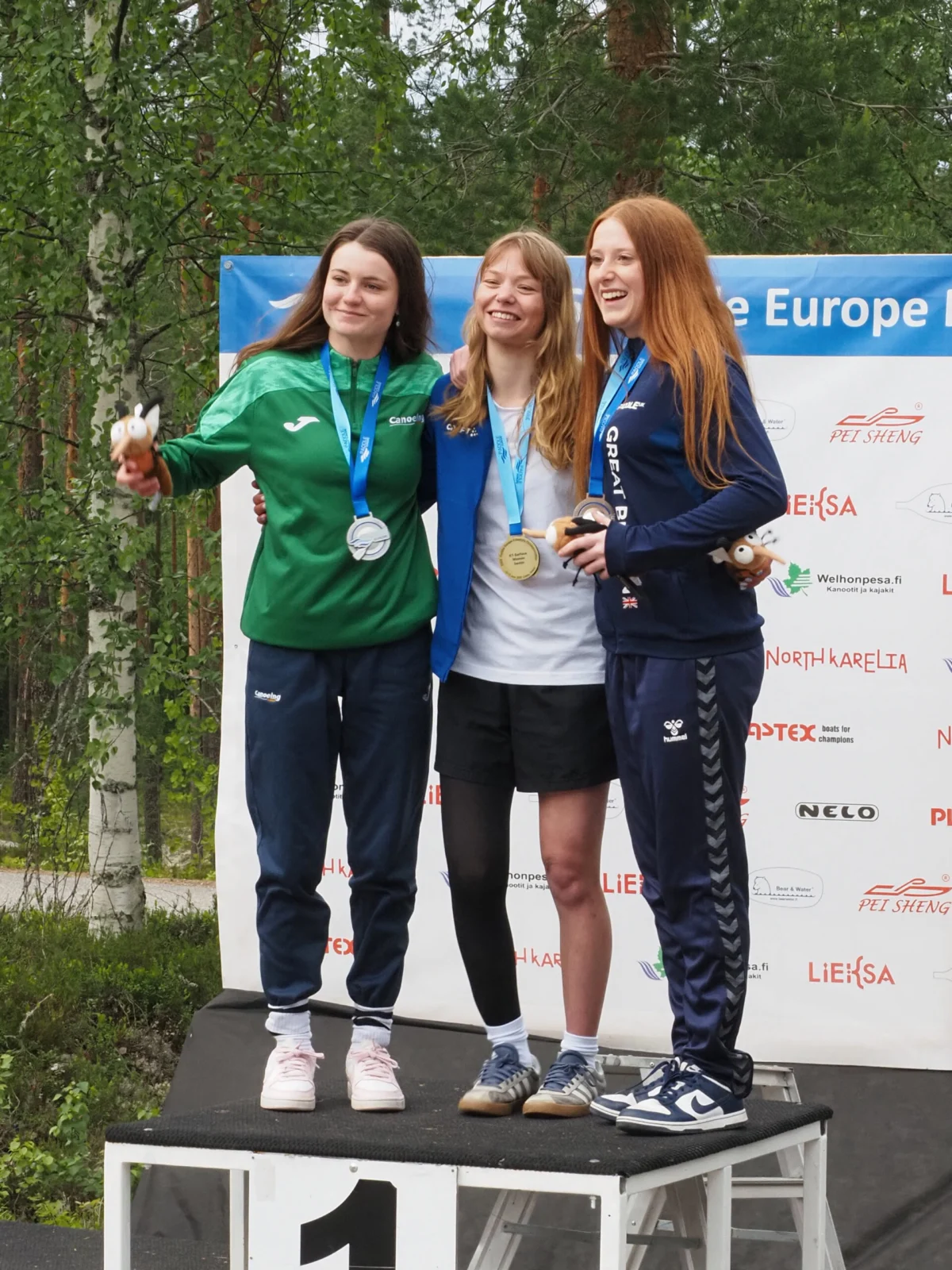
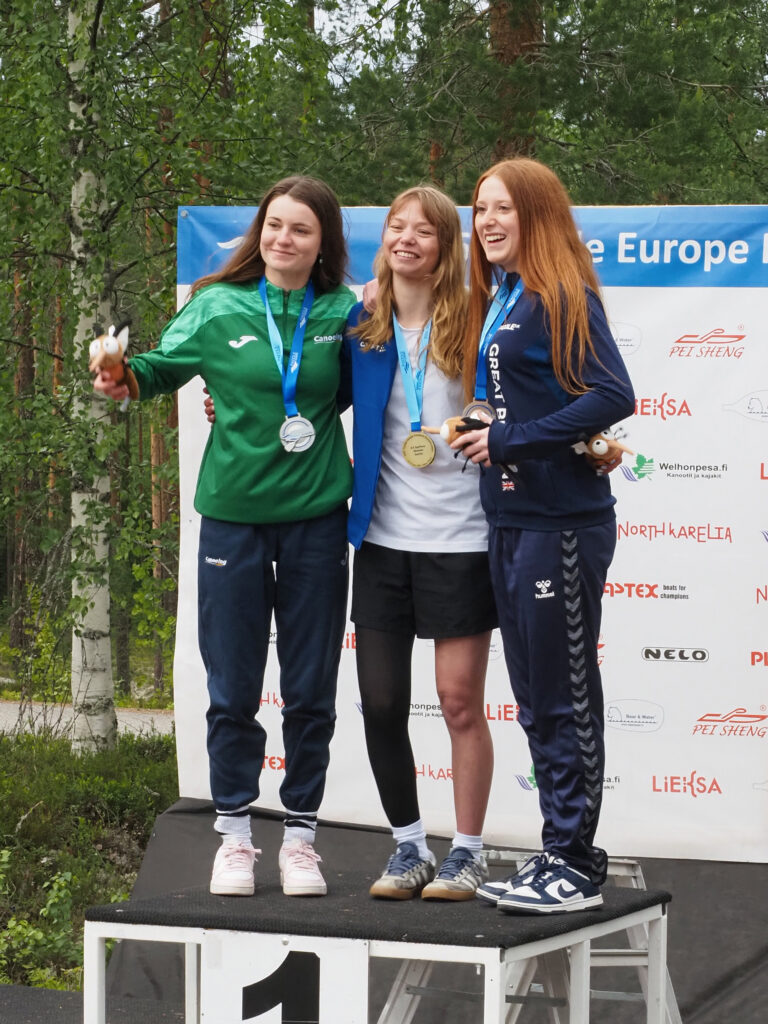
The tension, however, remained palpable until the very last competitor. Ireland’s Leah Hough, a formidable rival, delivered her strongest performance in her final run, demonstrating incredible skill and nerve. The crowd held its breath, with Finnish supporters on the banks of Neitikoski gripped by suspense, as Hough’s score was tallied. Despite a valiant effort, Hough’s score, while impressive, was not enough to unseat Terni. In a dramatic flourish, Terni then unleashed her ultimate performance on her very last run, setting a new personal best of an astounding 626.67 points. This magnificent display not only solidified her lead but also underscored her absolute dominance in the category, securing her the coveted title of European Champion.
The moment the final scores were announced, a wave of elation swept through the Finnish camp. Surrounded by jubilant teammates and congratulatory loved ones, a visibly overwhelmed Taru Terni could only utter, "Super happy. I can’t say anything else," her words perfectly capturing the profound joy and disbelief of achieving such a monumental feat. Her gold medal was not just a personal triumph but a landmark achievement for Finnish freestyle canoeing, igniting celebrations across the host nation.
Visa Rahkola’s Strong Showing in the Men’s K1 Gauntlet
The day’s grand finale was the Men’s K1 competition, a notoriously fierce category that promised and delivered an electrifying contest. Visa Rahkola, like Terni, had meticulously analyzed his semifinal performance, identifying areas for refinement. His strategy for the final was to execute his runs with greater precision and to maximize the "huge bonuses" awarded for larger, more impactful maneuvers – a critical element in the high-scoring world of men’s freestyle.
The men’s final quickly evolved into a thrilling spectacle, mirroring the intensity of the previous day’s semifinals. Competitors consistently posted astonishingly high scores, pushing each other to new limits with every passing run. The level of athleticism and technical mastery on display was truly world-class. France’s Tom Dolle, who had already claimed gold in the C1 class earlier in the day, immediately set a blistering pace with an incredible first run exceeding 1500 points. Not to be outdone, Poland’s Tomasz Czaplicki responded with an even more spectacular performance, posting an astounding 1701 points, a score that ultimately proved insurmountable for the rest of the field. The battle for bronze was also intensely fought, with Poland’s Bartosz Czauderna ultimately securing the third spot on the podium.
In this incredibly stacked field, where margins were razor-thin and scores soared into unprecedented territories, Finland’s Visa Rahkola delivered a strong and composed performance. Despite facing off against some of the sport’s most dominant figures, Rahkola maintained his composure and executed his refined strategy, ultimately securing a commendable fifth-place finish. His performance underscored the rising standard of Finnish male freestyle paddlers and their ability to contend at the highest echelons of European competition.
Supporting Data: The Mechanics of a Championship Wave
The Neitikoski wave, a natural feature of the Lieksa rapids, underwent a crucial "reclassification" prior to the championships. This process involved careful assessment and potentially minor modifications (e.g., strategic placement of natural or artificial obstacles) to ensure the wave was perfectly suited for elite-level freestyle canoeing. A reclassified wave typically offers a more consistent and dynamic feature, allowing athletes to reliably execute high-difficulty tricks such as loops, spins, cartwheels, and aerial moves, which are the backbone of freestyle scoring. The goal is to create a "playable" and accessible wave that rewards technical precision and power.
The "best of three runs" format is standard in freestyle canoeing finals. It provides athletes with multiple opportunities to perform under pressure, allowing them to adapt to changing water conditions, recover from an initial mistake, or progressively increase the difficulty of their routines. Each run is typically 45 seconds long, during which athletes aim to score as many points as possible by executing a variety of predefined maneuvers. "Huge bonuses" are awarded for tricks that are performed with exceptional amplitude, power, or difficulty, often involving significant airtime or highly complex combinations. These bonuses are critical in differentiating top-tier performances, especially in a men’s final where multiple athletes are capable of executing the base tricks.
Taru Terni’s personal best of 626.67 points is a significant benchmark in women’s freestyle canoeing. For context, Linn Schaefer’s winning score of 156.67 in the junior category highlights the progression and increasing complexity of tricks as athletes move through the ranks. The men’s scores, exceeding 1500 and 1700 points, demonstrate the incredible athleticism and technical mastery required at the absolute elite level, where combinations of multiple aerial and rotational tricks are performed with breathtaking speed and power.
Official Responses: A Vision Realized
Jyri Hämäläinen, the Freestyle Canoeing Sports Manager for the Finnish Canoeing and Rowing Federation, was a constant presence throughout the competition week in Lieksa, witnessing firsthand the rollercoaster of emotions that comes with elite sports. His pride and elation were palpable as he reflected on the team’s performance.
"These championships have been the most successful major competition for Finns in the sport to date," Hämäläinen declared, his voice brimming with satisfaction. "To achieve final placements in three categories and, crucially, an invaluable gold medal in one of them – it’s simply phenomenal. This isn’t just a stroke of luck; it’s the culmination of years of strategic planning and dedicated effort. Our investments in athlete development, coaching, and training have consistently brought our athletes closer to the European elite, and now, that vision has truly materialized: we have reached the pinnacle. It’s an absolutely fantastic feeling for the entire team and the wider Finnish paddling community."
Hämäläinen specifically praised the entire national team, not just the finalists, for their collective strength and resilience. "Every member of the national team delivered a strong performance, skillfully leveraging their familiarity and routine with the unique characteristics and quirks of our home wave. This home advantage, combined with their unwavering dedication, was undoubtedly a significant factor in our success."
He also extended heartfelt gratitude to the unsung heroes behind the scenes: "A massive thank you must also go to the entire competition organization and the incredible legion of volunteers. Their tireless efforts and commitment were instrumental in making these championships a reality, enabling us to host such a world-class event in the stunning natural beauty of Lieksa." Hämäläinen’s words underscored not only the athletic achievements but also the profound community spirit and organizational excellence that underpinned the championships’ success.
Implications: A New Dawn for Finnish Freestyle Canoeing
The unprecedented success at the 2026 European Freestyle Canoeing Championships carries profound implications for the sport in Finland. Taru Terni’s gold medal is more than just a shiny piece of hardware; it is a powerful symbol of inspiration and a clear indicator of the sport’s upward trajectory in the nation.
Boosting National Profile and Participation
Firstly, this historic achievement will undoubtedly elevate the profile of freestyle canoeing within Finland. A European Championship title, particularly on home soil, generates significant media attention and public interest. This increased visibility can serve as a catalyst for greater participation, especially among younger generations. Aspiring paddlers, seeing Terni and her teammates excel on the international stage, will be motivated to take up the sport, ensuring a robust pipeline of talent for years to come. The image of Finnish athletes dominating a highly technical and dynamic discipline can shatter preconceived notions about niche sports and demonstrate the diverse athletic talents within the country.
Validating Investment and Securing Future Support
Hämäläinen’s comments about "investments" reaching the "peak" highlight the strategic planning that has gone into developing Finnish freestyle canoeing. These investments likely encompass professional coaching, specialized training camps, access to state-of-the-art equipment, and perhaps even psychological support for athletes. The success at Lieksa unequivocally validates these past efforts and provides a compelling argument for continued, and potentially increased, funding from national sports bodies and private sponsors. This financial backing is crucial for maintaining competitive edge, facilitating international travel for training and competitions, and supporting the next generation of athletes. The "home wave" advantage at Neitikoski also emphasizes the importance of utilizing and developing local natural resources for athletic training, potentially leading to further investment in specific training facilities or programs around such features.
Setting a New Benchmark for Performance
The collective performance – three finalists and a gold medal – establishes a new benchmark for Finnish freestyle canoeing. Future national teams will now aspire not just to compete, but to contend for medals consistently at major international events. This success can foster a culture of excellence, pushing athletes and coaches to continually innovate and refine their techniques. The experience gained by Nea Rautio and Visa Rahkola in their respective finals, competing against the very best in Europe, is invaluable. It provides them with critical insights into the competitive landscape, highlighting areas for personal improvement and reinforcing their belief in their ability to reach the podium in the future.
The Role of Lieksa as a Host City
The successful hosting of the European Championships in Lieksa also shines a spotlight on regional Finland as a capable and picturesque venue for international sporting events. The appreciation expressed by Hämäläinen for the local organizers and volunteers underscores the critical role that community engagement plays in such undertakings. This positive experience could pave the way for Lieksa, and other Finnish regions with suitable natural features, to host future major competitions, further boosting local economies and promoting sports tourism.
Looking Ahead: World Championships and Beyond
While freestyle canoeing is not currently an Olympic discipline, the level of competition at the European Championships is incredibly high, often featuring athletes who also excel in other paddling disciplines. This success positions Finland strongly for upcoming World Championships, where the ultimate global titles are contested. The confidence gained from a European gold medal will be a formidable asset. The broader implication is that Finnish paddling, as a whole, is demonstrating significant growth and competitive spirit, contributing to the nation’s overall sporting prestige.
In conclusion, the 2026 European Freestyle Canoeing Championships in Lieksa will be etched into the annals of Finnish sports history. Taru Terni’s golden run, complemented by the impressive performances of Nea Rautio and Visa Rahkola, represents a coming-of-age for Finnish freestyle canoeing. It is a testament to dedicated athletes, visionary sports management, and the unwavering support of a passionate community, setting the stage for an even brighter future for the sport in Finland.