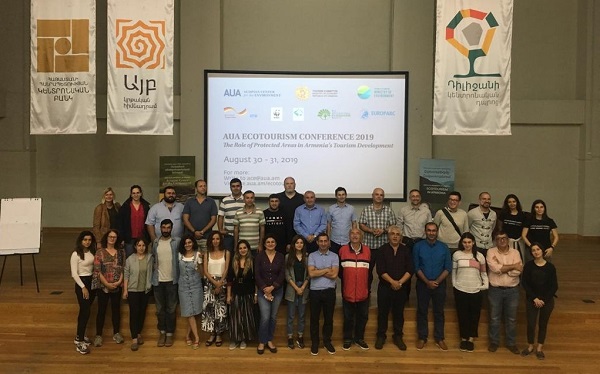
The global landscape of tourism is undergoing a seismic shift. As traditional mass tourism faces increasing scrutiny for its environmental footprint and social impact, a more sustainable alternative—ecotourism—is moving from a niche interest to a fundamental pillar of the global economy. This transformation was the central theme of the fourth annual AUA Ecotourism Conference, held on August 30–31, where international experts, policymakers, and conservationists gathered to map out a sustainable future for Armenia’s natural heritage.
The Foundation of Collaboration
The two-day summit was spearheaded by the AUA Acopian Center for the Environment, marking a collaborative milestone in Armenian conservation. The event was organized in strategic partnership with a coalition of influential stakeholders: the Tourism Committee of the Ministry of Economy of the Republic of Armenia (RA), the RA Ministry of Environment, WWF Armenia, the Transboundary Joint Secretariat (funded by the German development bank KfW), and The International Ecotourism Society (TIES).
This multi-sectoral approach reflects the growing recognition that protecting the environment is no longer just a task for environmentalists; it is a critical economic and social mandate that requires the cooperation of government bodies, private sector tour operators, and the local communities that serve as the stewards of the land.
Chronology of the Summit: A Deep Dive into Sustainability
The conference served as a platform for knowledge exchange, drawing speakers from the world’s most prestigious conservation bodies, including the International Union for Conservation of Nature (IUCN) and the EUROPARC Federation.
Day One: Economic Paradigms and Global Trends
The opening sessions were dedicated to shifting the narrative around protected areas. For decades, governments have viewed national parks and reserves primarily as budgetary burdens—line items that require funding but produce little direct revenue.
Dr. Thiago Souza of the IUCN Commission on Protected Areas’ Tourism Specialists Group challenged this perspective directly. He argued that the political hesitation to invest in protected areas stems from a fundamental failure in economic analysis. "Politically, the value of investing in protected areas is often lost because we typically don’t make an adequate economic analysis," Dr. Souza noted. He highlighted that while financial accounting—comparing entrance fees to park budgets—often paints a bleak picture, a true economic analysis reveals a different reality. By accounting for visitor spending, tax generation, and multiplier effects, the return on investment (ROI) becomes staggering. Using Brazil as a case study, he illustrated that for every dollar spent on protected areas, the national economy gains $15. In Europe, the return is similarly robust, with every euro invested yielding 7 to 10 euros in GDP activity.
Day Two: Strategy, Networking, and Field Application
The second day focused on the practical implementation of sustainable tourism. The conversation moved toward the necessity of global standards. Carol Richie and Paulo Castro of the EUROPARC Federation emphasized that without proper management frameworks, tourism poses an existential threat to the very sites it seeks to celebrate.
The conference concluded with site visits to the Dilijan Tourism Information Center, the Dilijan National Park Tourism Visitor Center, and the Caucasian Red Deer Reintroduction Center. These excursions allowed delegates to witness the intersection of policy and practice, observing how tourism infrastructure can be integrated into natural landscapes to provide educational experiences without compromising ecological integrity.
Supporting Data: The Economic Weight of Nature
The arguments presented at the conference were bolstered by significant global data. A seminal 2015 study by Balmford et al. estimated that protected areas receive approximately 8 billion visits annually worldwide, generating an astonishing US$600 billion in direct in-country expenditures.
Jon Bruno, executive director of TIES, provided context for this growth, noting that the rise of ecotourism is unprecedented in the history of global industry. "Over 90 nations now have an ecotourism or sustainable tourism initiative nationally or at a regional level," Bruno stated. "This has happened in the last 30 years; there is no other form of tourism or industry that has become so fundamental to the global economy so quickly."
The shift is being driven by a change in consumer behavior. Younger demographics, in particular, are prioritizing sustainability; current data suggests that 70% of travelers under the age of 30 consider sustainable travel a non-negotiable priority. This demographic shift provides a clear signal to policymakers in countries like Armenia: the market for high-value, low-impact tourism is not only growing—it is demanding excellence.
Official Responses and Strategic Implications
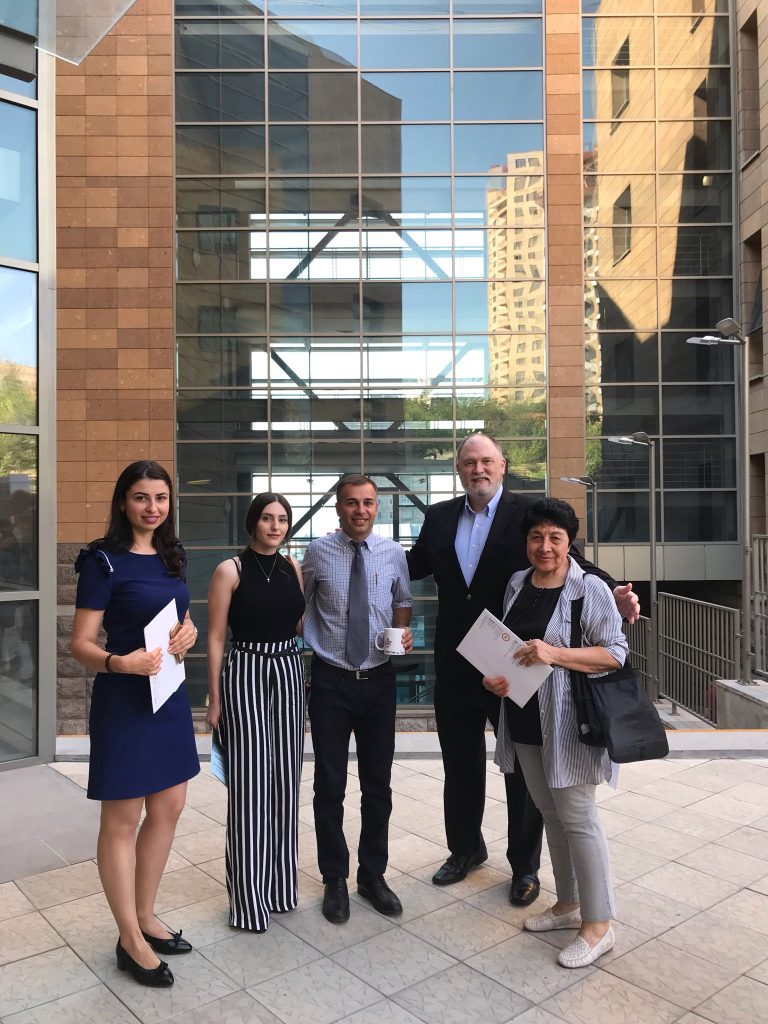
The Armenian government has responded to these insights with a commitment to long-term reform. Representatives from the Ministry of the Environment signaled that the conference was not merely a forum for discussion, but a catalyst for policy change. Initiatives are already being drafted to create a robust growth strategy that balances the protection of Armenia’s natural assets with the economic potential of the tourism sector.
The Role of International Standards
A significant takeaway for the Armenian delegation was the potential for integration into the European network of protected areas. The EUROPARC Federation, which counts over 380 members across 37 countries, offers a roadmap for excellence through the European Charter for Sustainable Tourism in Protected Areas.
Carol Richie warned of the risks of unmanaged growth: "Poorly managed tourism allows societal tensions to persist, weakens local communities’ connection to their heritage, landscape and environment, erodes cultures and values and does irreparable damage and change to nature, wildlife and the environment."
To mitigate these risks, the Federation proposes a multi-stakeholder model. As Paulo Castro explained, becoming a chartered protected area is a rigorous, long-term commitment. It requires the creation of a permanent forum where local communities, tourism businesses, and public administrations can coordinate. It is not merely about attracting more tourists, but about creating tourism products that are rooted in local resources, thereby ensuring that the economic benefits remain within the communities living adjacent to the protected areas.
Implications for Armenia’s Future
The fourth annual AUA Ecotourism Conference has set a new benchmark for how Armenia approaches its natural capital. The implications are three-fold:
- Economic Diversification: By moving away from a reliance on volume-based tourism and toward value-based ecotourism, Armenia can create a more resilient economic model. The multiplier effects described by Dr. Souza suggest that the state will see significantly higher returns by investing in the maintenance and infrastructure of its parks.
- Community Empowerment: The focus on local revenue streams ensures that the residents of regions like Dilijan become partners in conservation rather than spectators. When communities benefit directly from the preservation of their natural heritage, the incentive for illegal resource extraction decreases, and the incentive for stewardship grows.
- Global Integration: By pursuing membership in international networks like the EUROPARC Federation, Armenia positions itself as a premier destination for the growing global market of environmentally conscious travelers. This alignment with international standards—such as the European Charter—not only improves the quality of the tourism product but also facilitates knowledge transfer and technical support from global experts.
Conclusion: A Path Forward
As the conference concluded, the consensus among participants was clear: the path to sustainable development is not through the exploitation of natural resources, but through their careful, managed appreciation.
The success of the fourth annual AUA Ecotourism Conference lies in its ability to bridge the gap between abstract conservation theory and concrete economic practice. For Armenia, the challenge ahead is to maintain this momentum, transforming the strategic insights shared in late August into a national framework that protects the wild heart of the country while ensuring its people thrive. By embracing the principles of sustainable tourism, Armenia is not just protecting its landscape—it is securing its economic future.