In the world of professional photography, the L-bracket has long been the unsung hero of the tripod workflow. It is the tool that allows a photographer to switch from landscape to portrait orientation in a fraction of a second without losing the center of gravity or compromising the stability of their setup. However, for years, the design has remained static: a rigid, bulky, and often cumbersome piece of metal that photographers are forced to keep attached to their camera bodies, whether they need it or not.
On July 21, 2026, Peak Design—the San Francisco-based company synonymous with innovation in camera carry solutions—announced a radical departure from this tradition. The company has officially launched a Kickstarter campaign for the Field Bracket™, a modular L-bracket system that promises to redefine how photographers interact with their support gear. By prioritizing adaptability, modularity, and seamless integration, Peak Design aims to eliminate the "permanent compromise" that has defined the L-bracket category for decades.
The Core Innovation: A Modular Philosophy
At its heart, the Field Bracket is not just a single piece of hardware; it is an ecosystem. Traditionally, L-brackets are machined to fit a specific camera body, providing a fixed "L" shape that, while effective for tripod work, often blocks access to battery doors, cable ports, or adds unnecessary weight when the photographer is shooting handheld.
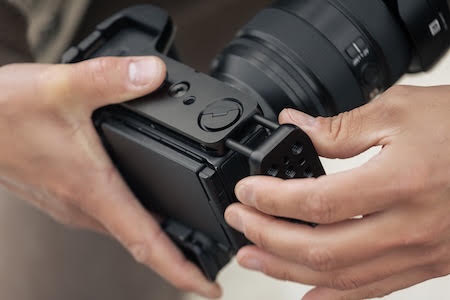
The Field Bracket changes this dynamic through its proprietary Field Latch™ mechanism. This system allows photographers to detach the vertical upright of the L-bracket in mere seconds, without the need for Allen keys or specialized tools. This transforms the setup from a full L-bracket configuration to a low-profile baseplate instantly.
The baseplate itself is a masterpiece of precision engineering. Machined from high-grade recycled aluminum, it is sculpted to hug the unique contours of specific camera bodies, ensuring a rock-solid connection that prevents any "play" or rotation. By utilizing recycled materials, Peak Design continues its commitment to sustainability, ensuring that the hardware is as environmentally conscious as it is functional.
Chronology of a Redesign
The development of the Field Bracket did not happen in a vacuum. Peak Design has spent years gathering feedback from its community of professional photographers, many of whom expressed frustration with the "one-size-fits-all" approach of existing L-brackets.
- Early 2025: Conceptualization begins, with the primary design goal of creating a "disappearing" accessory—gear that is there when needed but unobtrusive when it isn’t.
- Late 2025: Prototyping focuses on the Field Latch mechanism, testing the structural integrity of a modular connection that must maintain the rigid stability required for long-exposure landscape photography.
- Spring 2026: Beta testing with select photographers reveals that the ability to reposition the upright—providing clearance for tethered shooting—is a game-changer for studio and commercial photographers.
- July 21, 2026: The official launch of the Kickstarter campaign, marking the transition from R&D to public production.
Supporting Data and System Expandability
What truly separates the Field Bracket from its competitors is its status as a foundational platform rather than a static accessory. The system is designed to grow with the photographer’s needs, offering several key modules:
1. The Beacon Finder Tag
In an era where high-end camera bodies are significant investments, theft and loss are constant concerns. The Field Bracket introduces the Beacon Finder Tag, the first tracking solution specifically designed to sit flush inside an Arca-compatible camera plate. By integrating tracking into the baseplate itself, Peak Design provides a discreet, secure, and permanent way to monitor the location of a camera rig without the bulk of external, tape-on trackers.
2. The Cheese Plate Module
For videographers and hybrid shooters who require a more robust rigging system, the vertical upright can be swapped for a Cheese Plate. This module features an array of 1/4"-20 and 3/8"-16 threaded holes, as well as a cold shoe mounting point. This allows users to attach external microphones, field monitors, LED panels, or shotgun mics directly to their camera support, transforming a simple tripod mount into a full-scale production rig.
3. Ergonomic Integration
Peak Design has long been the market leader in camera straps, and the Field Bracket continues this legacy. The system is fully compatible with the Peak Design Capture Clip and all proprietary camera straps. Furthermore, the company has introduced an optional hand strap that integrates directly into the baseplate, providing increased security and comfort during long days of handheld street or event photography.

Official Perspectives: The Philosophy of "Invisible Gear"
In a statement released during the launch, Peter Dering, the founder and CEO of Peak Design, articulated the design philosophy behind the new system:
"The best camera accessories are the ones that disappear into your workflow until the exact moment you need them," Dering said. "That idea shaped every decision we made with Field Bracket. For too long, we have asked photographers to bolt a permanent piece of metal to their cameras, accepting the weight and the interference with their controls as a cost of doing business. We wanted to flip that script. By building a system that can transform in seconds, we’ve proven that you don’t have to sacrifice rigidity or dependability to gain modular flexibility."
Dering’s comments underscore the company’s broader mission: to reduce the friction between the photographer and the image-making process. By removing the "clutter" of unnecessary hardware, Peak Design hopes to allow photographers to focus more on their craft and less on their gear.
Implications for the Photography Industry
The introduction of the Field Bracket is likely to cause a significant shift in the camera accessory market. For years, the L-bracket industry has been dominated by a few manufacturers offering standardized, non-modular solutions. Peak Design’s entry with a high-end, modular system raises the bar for engineering expectations.
Impact on Studio and Field Workflows
For studio photographers who rely on tethered shooting, the ability to reposition the bracket upright to create space for HDMI or USB-C cables is a massive improvement over traditional fixed brackets, which often block side ports.

For landscape photographers, the primary concern remains weight and stability. The fact that the Field Bracket maintains Arca-Swiss compatibility while offering the ability to strip away the vertical component when weight is a concern—such as on long mountain hikes—provides a level of versatility previously unavailable.
The Rise of the "System-First" Mindset
By creating a platform that accepts modules like the Cheese Plate and the Beacon Finder Tag, Peak Design is nudging the industry toward a "system-first" mindset. Instead of buying a new bracket for every new camera body and a separate rig for every new accessory, photographers are being encouraged to invest in a base system that evolves alongside their hardware.
Conclusion: A New Standard for Support
As the Kickstarter campaign gains momentum, the photography community is clearly responding to the promise of a smarter, more adaptable tool. While the traditional L-bracket served its purpose for the better part of two decades, the Field Bracket represents a necessary evolution in the digital age.
Whether you are a professional architectural photographer needing the rock-solid stability of an L-bracket for a multi-hour shoot, or a street photographer looking for a low-profile baseplate that integrates perfectly with your favorite carry strap, the Field Bracket offers a compelling argument for a rethink of your current gear.
For those interested in witnessing the future of camera support firsthand, the Field Bracket Kickstarter page provides a comprehensive look at the mounting options, compatibility guides, and early-bird pricing tiers. In a market crowded with incremental updates, Peak Design has managed to do what they do best: identify a piece of gear we’ve all stopped thinking about, and make it something we can’t imagine working without.