In the world of high-end sport climbing, there has long been a prevailing obsession with "thin is better." For years, climbers have gravitated toward sub-9.0mm ropes, chasing the perceived advantages of reduced weight and the lightning-fast feed they offer through assisted-braking devices like the Petzl GRIGRI. However, the climbing community has reached a collective realization: skinny ropes come with a heavy price tag—and not just in terms of retail cost.
Thin cords are notoriously fragile. A season of aggressive projecting, constant hangdogging, and the inevitable friction against sharp granite edges often leaves these ultrathin ropes fuzzy, stiff, or, worse, sporting a dangerous core shot. The industry has been searching for a "middle-ground" rope that bridges the gap between performance-oriented thinness and workhorse-level durability. Enter the Petzl Arial 9.5mm, a rope that attempts to solve the dilemma of the modern crag rat.
Main Facts: The Anatomy of the Arial 9.5
The Petzl Arial 9.5mm occupies a unique space in the market. Priced between $280 and $350 depending on length and treatment, it is a premium product designed for those who refuse to compromise on either weight or longevity.

- Diameter: 9.5mm
- Weight: 58g/m
- Sheath Proportion: 40%
- Technology: Duratec Dry treatment and EverFlex thermal processing.
- Intended Use: High-end sport climbing, projecting, and single-pitch trad.
At 58 grams per meter, the Arial is surprisingly lean. It manages to undercut many competitors in the 9.5mm category, such as the Mammut 9.5 Crag Dry, which sits at 60g/m. This makes it an ideal companion for the climber who wants to feel unencumbered on a 5.13a redpoint burn while still feeling confident that the rope can survive the inevitable abuse of a long, project-heavy day.
Chronology: A Month in the Life of a Projecting Cord
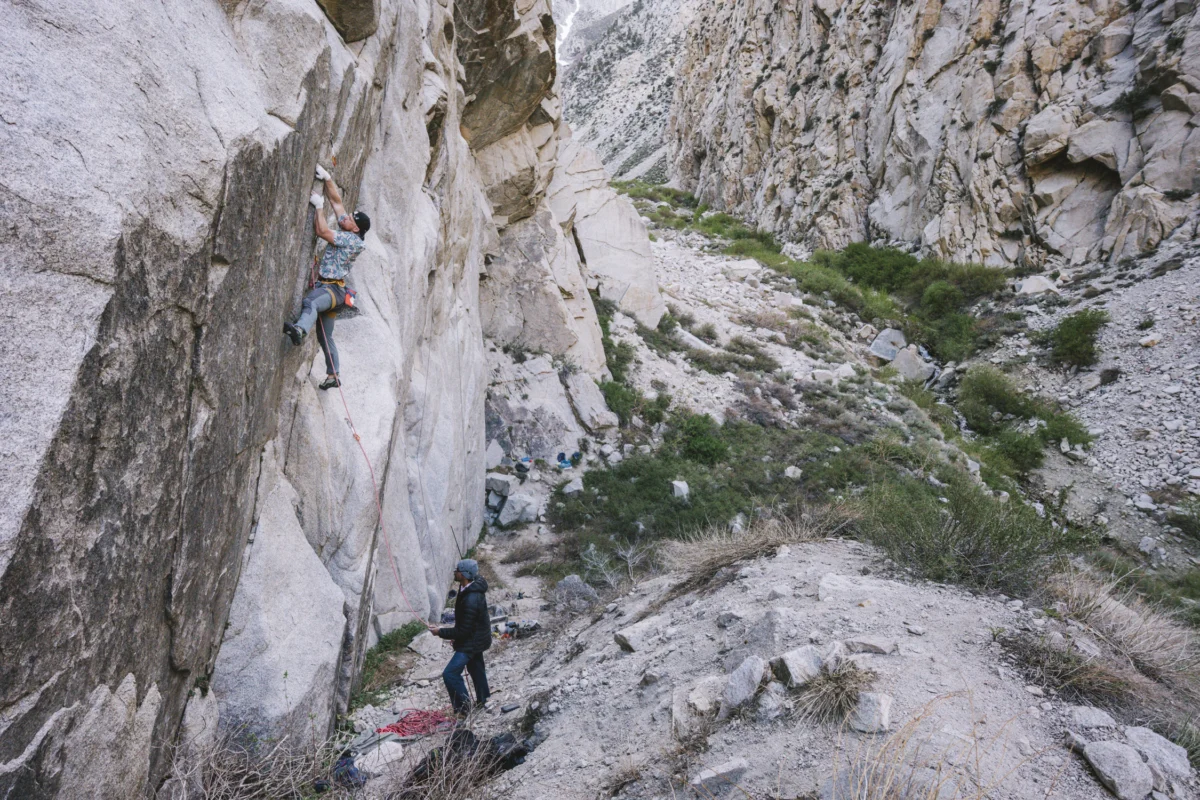
To truly understand the mettle of the Arial 9.5, it requires more than a casual gym session. This review is based on a rigorous month-long testing period in the granite-rich environment of Pine Creek Canyon, Bishop, California.
Week 1: The Breaking-In Period
Straight out of the packaging, the rope displayed a remarkable suppleness. Often, new ropes arrive stiff or prone to kinking; the Arial was surprisingly fluid. During the first week of usage, the rope fed through the GRIGRI with almost zero resistance. Partners noted that the rope felt "fast"—a term usually reserved for 8.7mm or 8.9mm ropes.

Week 2: High-Volume Projecting
The second week was dedicated to "sussing" complex beta. This involved repeated hangdogging, where the climber sits on the rope for extended periods, and working out moves on overhanging terrain. The rope’s 40% sheath proportion began to prove its worth. Despite the constant tension and the abrasion against sharp rock edges, the rope showed no signs of premature sheath degradation.
Week 3: The Redpoint Phase
As the projects moved into the redpoint phase, the weight of the rope became a factor. In climbing, every gram counts, especially when dragging 30+ meters of rope up a steep wall. The Arial’s 58g/m weight meant it didn’t feel like a "drag" during the crux of the climb, a common complaint with thicker, 9.8mm or 10.0mm workhorse ropes.
Week 4: Durability Assessment
By the end of the month, the rope began to show the expected signs of wear—light "fuzzing" on the sheath. However, this is a standard break-in process for any high-performance rope. The core remained intact, and the rope maintained its supple handling characteristics, thanks in part to the EverFlex thermal treatment.

Supporting Data: Understanding the Physics
The performance of a rope is a balancing act of physics, specifically regarding impact force and dynamic stretch.
Impact Force and Catch Quality
The Petzl Arial 9.5mm carries an impact force rating of approximately 8.8 kN. In practical terms, this is slightly higher than the ultra-thin 8.9mm ropes favored by elite climbers, which often provide a "softer" catch due to their increased elasticity. While the catch on the Arial feels firmer, it is not harsh. For most climbers, the minor loss in "cushion" is a worthy trade-off for the increased safety margin and the reduction of the "long drop" effect, which can sometimes occur with highly stretchy, thin ropes.
The Role of Technology
- EverFlex Treatment: This is a proprietary thermal process that stabilizes the core strands and improves consistency. It prevents the rope from becoming stiff over time—a common "death knell" for climbing ropes.
- UltraSonic Finish: By bonding the core and the sheath together at the rope ends, Petzl effectively eliminates the annoying fraying that often requires climbers to chop off the ends of their ropes early in their lifecycle.
- Duratec Dry: While many consider dry treatments to be reserved for ice climbing, they are invaluable for sport climbers. The treatment prevents the rope from absorbing moisture and dirt, which can act as an abrasive paste, grinding away at the fibers from the inside out.
Official Manufacturer Perspective
Petzl has positioned the Arial 9.5 as a "versatile" rope. In their own documentation, the company highlights that the 9.5mm diameter was specifically chosen to offer the best compromise between weight and durability. The design philosophy is centered on the concept of the "daily driver"—a rope that doesn’t need to be babied, yet performs at a level high enough to satisfy a climber’s performance aspirations.

Implications for the Climbing Community
The rise of the "mid-diameter" rope like the Arial 9.5 signals a shift in the climbing zeitgeist. For a decade, the industry pushed thinner and thinner cords, often at the expense of safety and longevity. This trend led to a cycle of constant replacement, which is both environmentally unsustainable and economically draining.
A More Sustainable Approach
By choosing a 9.5mm rope, climbers are opting for a longer service life. If a rope lasts 30% longer than its 8.9mm counterpart, the higher initial investment is offset by the reduced frequency of replacement. This is a shift toward a more professional, long-term approach to gear management.
The "Confidence" Factor
Psychology plays a major role in climbing. Knowing that your rope is robust enough to handle repeated falls and rough handling allows a climber to focus entirely on their movement. The peace of mind provided by a slightly thicker sheath is, for many, worth more than the negligible weight savings of a thinner cord.

Final Verdict: Is the Arial 9.5 Right for You?
The Petzl Arial 9.5 is not for everyone. If your goal is to set a world record on a 5.15 sport climb where every milligram of drag matters, you will likely continue to reach for your 8.7mm super-skinny cord.
However, for the vast majority of the climbing population—those who spend their weekends at the local crag, working projects, taking big falls, and occasionally taking the rope on a multi-pitch trad adventure—the Arial 9.5 is arguably the best tool on the market.
Pros
- Unmatched Handling: Feeds through a GRIGRI with the ease of a much thinner rope.
- Durability: The 40% sheath and Duratec treatment make it a true workhorse.
- Weight: Exceptionally light for a 9.5mm diameter.
Cons
- Not the Absolute Lightest: Still carries more weight than dedicated redpoint-only cords.
- Firm Catch: Does not offer the extreme, bouncy stretch of thinner ropes.
In conclusion, the Petzl Arial 9.5mm is a masterclass in balance. It respects the climber’s need for performance while acknowledging the harsh realities of rock climbing. It is a reliable, high-performing, and durable companion that will spend more time on the wall and less time in the recycling bin. For those looking to invest in a single rope that can truly do it all, the Arial is a clear front-runner.