By Investigative Desk
July 31, 2026
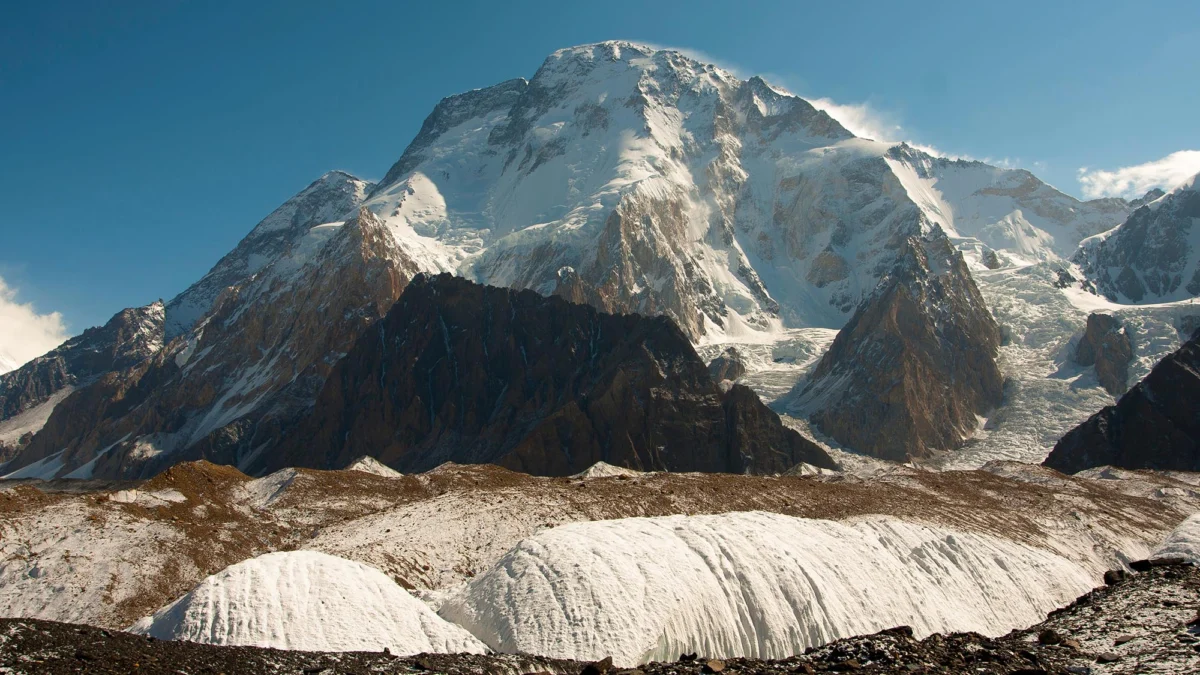
The mountaineering world is reeling following a catastrophic avalanche on Broad Peak, the 12th-highest mountain in the world. Located in the heart of Pakistan’s Karakoram range, the 8,047-meter giant has become the site of a harrowing search-and-rescue operation after a massive snow slide swept away a large, multi-national climbing expedition.
As of Friday morning, the situation remains fluid and dire. At least two climbers have been confirmed dead, while reports from various news outlets—including the BBC—suggest the toll could be as high as four. A total of 10 climbers remain unaccounted for, leaving families, sponsors, and the global climbing community in a state of agonizing suspense. Among those missing is the world-renowned Nepali mountaineer Nirmal “Nims” Purja, whose presence on the mountain had drawn significant attention to this late-season push for the summit.
The Sequence of Events: A Timeline of the Disaster
The tragedy unfolded on the morning of Thursday, July 30, 2026. According to preliminary data and tracking reports, the expedition was moving between Camp 2 and Camp 3, navigating the treacherous terrain at an altitude of approximately 6,660 meters.
The group, which included elite climbers and international clients, had successfully reached Camp 2 on Wednesday. The standard itinerary for such expeditions typically involves a transition to Camp 3 on Thursday, followed by a summit push on Friday. However, at approximately 9:20 a.m. local time on Thursday, the mountain environment turned lethal.

What began as a routine ascent was interrupted by one or more massive avalanches. GPS tracking devices, which provide the only objective window into the final moments of the climb, show that the climbers’ progress ceased abruptly at 9:30 a.m. The trackers indicate a sudden, violent displacement, with the units recording a fall of several hundred meters down the mountain face.
Perhaps the most distressing detail to emerge in the hours following the event is the delay in communication. Despite the presence of support staff at Base Camp and the proximity of other climbing teams, the alarm was not raised until nearly 13 hours after the incident. "We only found out at 10 p.m. [Thursday]," Naila Kiani of the Alpine Club of Pakistan (ACP) told ExplorersWeb. This lost window of time—nearly half a day—deprived rescue teams of the opportunity to mobilize aerial support while the sun was still high, effectively forcing a postponement of rescue efforts until Friday morning.
The Scope of the Expedition
The magnitude of this disaster is underscored by the diversity and experience level of the group involved. The expedition consisted of several distinct teams converging for the push:
- EliteExped: Led by the record-breaking Nirmal Purja, whose recent social media activity revealed he had added Broad Peak to his itinerary as a last-minute attempt to finalize a historic achievement: becoming the first human to climb all 14 eight-thousanders twice without supplemental oxygen.
- Independent and Joint Teams: The group included Pakistani climber Sohail Sakhi and his American client, Mallory Geiss; a Chinese mountaineer identified as Mr. Wang; and various other international climbers.
- The Alpine Club’s Assessment: The ACP confirmed the identities of the two deceased as Nadhira Ahmed Abdullah Al Harthy from Oman and Pur Bahadur Gurung from Nepal.
The presence of such high-profile talent on the mountain, coupled with the sheer number of people impacted, makes this one of the most significant mountaineering accidents in the Karakoram in recent memory.
Official Responses and Rescue Logistics
The Alpine Club of Pakistan has assumed a central role in coordinating the response. Major General Irfan Arshad, President of the ACP, has been in constant communication with the Pakistani government and military agencies to expedite the deployment of rescue assets.

In a formal statement released to the press, the ACP noted: "The Alpine Club of Pakistan has received deeply concerning reports of an avalanche that struck a team of climbers on Broad Peak… Every possible effort is being made to ensure that helicopter support and all available rescue resources are mobilized at the earliest opportunity, subject to weather and operational conditions."
Logistically, the operation is hampered by the extreme altitude and the inherent volatility of the Karakoram weather. On Friday morning, two helicopters were prepped to fly to the site. These aircraft are carrying specialized search-and-rescue personnel and supplemental oxygen supplies, intended to assist in any potential recovery or rescue operations. However, in the high-altitude environment of the Karakoram, success is never guaranteed; the risk to rescuers remains exceptionally high, and the window for survival for those caught in an avalanche of this magnitude shrinks with every passing hour.
The "Final Piece" of a Historic Puzzle
The focus on Nirmal Purja, in particular, has brought international scrutiny to this expedition. Purja, known for his relentless pace and ability to navigate the world’s highest peaks, had recently shared his internal motivation for the climb on Instagram.
"This was never the plan," Purja wrote just days before the incident. "Initially, the plan was to climb just G2 [Gasherbrum II]. But just before setting off for Pakistan, I ran the numbers… If I tick off Broad Peak whilst I’m here, only one remains, Cho Oyu. Then I become the FIRST person in history to climb all 14 eight-thousanders twice without oxygen."
This context adds a layer of poignant irony to the tragedy. Purja, who had become a symbol of human endurance, was on the verge of redefining the limits of mountaineering. His sudden disappearance serves as a stark reminder that even the most elite, highly prepared athletes are at the mercy of the mountain’s whims.

Implications for High-Altitude Mountaineering
As the search continues, the mountaineering community is beginning to ask difficult questions about the conditions on Broad Peak and the protocols for emergency response.
The Communication Gap
The 13-hour delay in reporting the incident is already under intense debate. In an era of satellite communication, why was there such a profound silence? Investigations into whether the team’s communication equipment failed, or whether the teams were operating in a "radio shadow" of the mountain, will be critical.
The Impact of Climate Change
While it is premature to definitively link this specific event to broader climate patterns, the Karakoram has seen increasingly unpredictable weather and snow stability issues in recent summers. Rising temperatures are known to increase the frequency of avalanches, particularly on steep, sun-exposed slopes like those found on the approaches to the Broad Peak summit.
The "Summit Fever" Phenomenon
The tragedy also highlights the risks associated with the increasing popularity of 8,000-meter peaks. The push to tick off peaks for records—as described by Purja—often leads to pressure to maintain rigid schedules, which can conflict with the fluid, dangerous realities of high-altitude weather.
Moving Forward
For now, the world watches and waits. The families of the missing are enduring a period of profound uncertainty, while the rescue teams face the daunting task of navigating the debris field left by the avalanche.

The Alpine Club of Pakistan has stated that it remains in solidarity with the families and the international mountaineering community. As we look toward the next 48 hours, the hope for survivors remains thin, but in the world of high-altitude mountaineering, miracles have occurred before.
This article will be updated as soon as more information becomes available from the search-and-rescue teams on the ground in the Karakoram. For the families, the sponsors, and the colleagues of these ten individuals, the wait for news is the most grueling stage of all.