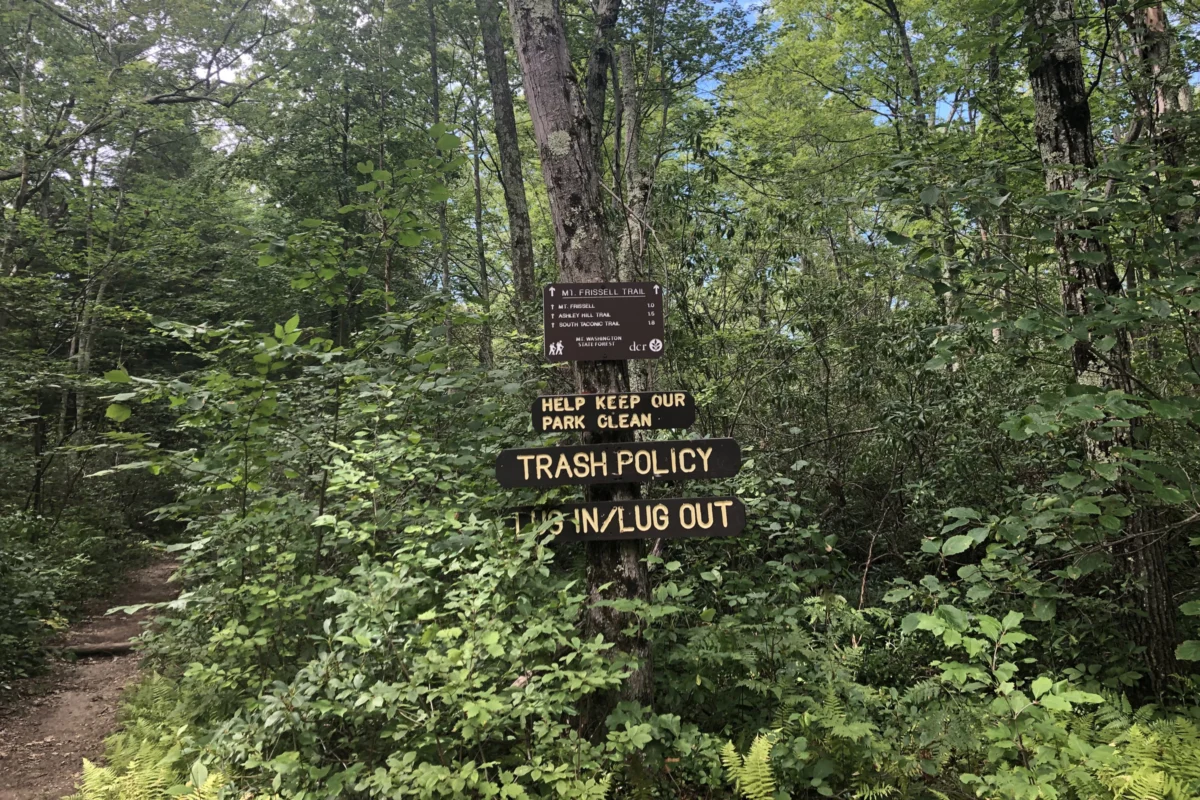
As the band Dawes famously crooned, "Things happen. That’s all they ever do." For the outdoor enthusiast, the backcountry adventurer, or the off-road pioneer, this isn’t just a lyrical sentiment—it is a foundational truth of the wilderness. Last week, what was intended to be a brisk, three-mile hike along a New England riverfront morphed into an impromptu, humid session of backcountry parkour. The trail, typically a well-trodden shared-use path, had been transformed by a recent windstorm into an obstacle course of massive, downed timber and tangled limbs.
While I could navigate the debris on foot, the scene served as a stark reminder of the vulnerability of motorized adventurers. A dirt bike, quad, or side-by-side (SxS) rider would have had their day abruptly terminated by these barriers. In the forests of New England, where second-growth timber is prone to snapping under the weight of heavy snow or seasonal gales, trail maintenance is a perpetual, labor-intensive chore. With state and local government trail crews stretched thin, the burden of clear passage often falls on the shoulders of the users themselves. Yet, human strength has its limits. Wood is heavy, awkward, and unforgiving.
Enter the Dragan Systems Pocket Winch ($399). A compact, high-precision come-along system that weighs a mere 1.5 pounds, it promises to revolutionize how we approach self-rescue and trail maintenance. But is a tool this small actually capable of handling the heavy lifting required in the wild?

The Genesis of the Pocket Winch: Who is Dragan Systems?
To understand the Pocket Winch, one must look at the minds behind the machine. The company was born from the collaboration of two aerospace engineers, Jake Ruhl and Ryan Neil. Their impetus for creation was not a sterile laboratory, but a failed excursion. After a night out on a ride that went catastrophically wrong, the duo realized that the "self-rescue" gear currently on the market was fundamentally flawed.
Standard come-alongs found in automotive supply stores are the antithesis of efficiency. They are notoriously clunky, prone to mechanical jamming, and often fail under the specific, high-torque stresses required for vehicle recovery. Ruhl and Neil set out to build a tool that defied these conventions: something lightweight, modular, and, above all, field-serviceable. They envisioned a tool that could fit into a pack smaller than a Nalgene bottle, yet possess the raw, reliable power of a traditional industrial winch.
Anatomy of the System: Engineering vs. Brute Force
At its core, a come-along is a human-powered recovery device that anchors to a stationary object—typically a tree or rock—to pull a load. While the concept is ancient, the execution has rarely been elegant.

The Dragan Systems Pocket Winch updates this concept with aerospace-grade precision. The kit centers on a proprietary high-strength pulley and belay system, featuring:
- The Dragan Capio: The "secret ingredient" that serves as the winch’s primary belay device, allowing for controlled tension and release.
- The Dragan Doubler: A mechanical force multiplier that allows the user to effectively double their pulling power when the load exceeds the standard capacity.
- Advanced Materials: The system utilizes a custom poly-line constructed with Dyneema fibers, offering an exceptional strength-to-weight ratio while resisting the fraying and UV degradation common in nylon straps.
- Tactile Feedback: Unlike cheaper alternatives, the Pocket Winch incorporates a carbon fiber handle specifically engineered to provide tactile feedback. As the operator approaches the 1-ton working load limit, the handle begins to flex, providing a clear physical warning before a failure occurs.
The entire system is a study in minimalism. By stripping away the heavy iron housings of traditional come-alongs, Dragan Systems has created a tool that is not only portable but arguably more intuitive to operate.
Chronology of a Field Test: From Theory to Utility Poles
To test the true mettle of the Pocket Winch, I opted for a scenario that exceeded standard trail clearing. A friend of mine has been converting ten acres of rugged woodland into a private off-road adventure park. The property is bisected by a creek with steep, 10-foot-high banks—an impossible climb for a stock ATV or a modified 4Runner.

His solution was to bridge the creek using massive, reclaimed utility poles, each weighing between 600 and 1,000 pounds. Moving these poles with an excavator is straightforward, but "dialing in" their placement—ensuring they sit perfectly level and aligned—requires a degree of finesse that heavy machinery often lacks.
Phase 1: Setup and Calibration
Upon unboxing the unit, the first hurdle is the learning curve. The Pocket Winch is not a "plug and play" device; it requires an understanding of basic mechanical advantage. After consulting the provided quick-start guide and the manufacturer’s instructional videos, we laid the components out on the tailgate of our side-by-side.
Crucially, the Capio device is laser-engraved with directional arrows, a thoughtful touch that proves invaluable when you are working in the shade of a dense forest. We anchored the system to a sturdy oak and attached the load to the primary sling.

Phase 2: The Pull
We intentionally left the "Dragan Doubler" out of the first few pulls to test the base capacity. We were moving a 900-pound pole across uneven, rocky terrain. As I began to crank, the difference between this and a standard box-store come-along was immediate. There was no "stutter" or mechanical binding. The tension was smooth, and the carbon fiber handle provided that distinct, reassuring feedback as the load took hold.
We hit one snag: a bolt on the utility pole caught on a limestone footing. In a traditional setup, this would have been a moment of high tension and potential snapping cable. Here, I simply backed off the tension using the Capio’s release mechanism, repositioned the pole, and resumed. The entire process of placing four poles took roughly three hours—a task that, without the winching system, would have been physically impossible for two people to do with such precision.
Supporting Data and Technical Specifications
The Pocket Winch is designed for a specific niche, and it is important to understand its limitations.

- Working Load Limit (WLL): 2,000 pounds (1 ton).
- System Weight: 1.5 pounds (base unit).
- Line Material: High-modulus UHMWPE (Ultra-High-Molecular-Weight Polyethylene), specifically Dyneema.
- Modularity: All components are field-replaceable. Unlike mass-market tools where a broken gear necessitates a full replacement, the Dragan system allows for the swapping of individual pulleys, slings, or the primary Capio block.
Expert Note: While the kit comes with 25 feet of high-strength line, for serious off-road recovery or heavy-duty trail work, it is highly recommended to augment the kit with an additional 100 feet of line and extra synthetic slings. As the old adage goes, you can never have enough rope.
Official Perspective: The Philosophy of Self-Rescue
In discussions with the founders, the emphasis is consistently placed on "the cost of weight." In the off-road community, gear is often chosen based on the "more is better" philosophy. However, when you are miles from the nearest road, weight is the enemy of agility.
The Pocket Winch represents a shift toward "smart" gear. By leveraging advanced materials—like the anodized aluminum and carbon fiber used in the construction—the designers have successfully decoupled power from mass. Their official stance is that the winch is not intended to replace a heavy-duty vehicle-mounted winch, but rather to act as a critical "Plan B" for when the vehicle itself is the problem. It is designed to be the tool that saves the day when the primary recovery equipment fails, or when the terrain is too tight for a truck to maneuver.

Implications for the Adventurer
The implications of such a tool are significant for the outdoor industry. We are seeing a move toward modular, high-performance survival gear. For the hiker, the mountain biker, and the off-roader, the Pocket Winch changes the risk-benefit analysis of remote travel.
Pros:
- Weight-to-Power Ratio: Unmatched in the current market.
- Modularity: Easily serviceable in the field.
- Precision: Allows for delicate adjustments that heavy winches cannot perform.
- Design: Over-engineered for durability, with high-quality finishes that resist corrosion.
Cons:

- Price: At $399, it represents a significant investment compared to standard come-alongs.
- Capacity: Limited to 2,000 lbs, which may be insufficient for fully loaded, stuck heavy-duty trucks.
- Complexity: Requires the user to learn proper rigging techniques; it is not a "beginner" tool.
Conclusion: Why You Need It Before You Need It
The Dragan Systems Pocket Winch is the embodiment of the "self-reliant goober" ethos. It is a piece of equipment that occupies a small, unassuming footprint in your storage bin or daypack, waiting for the moment when a fallen tree or a patch of deep, soupy mud turns your adventure into an ordeal.
After putting it through its paces in the humid New England backcountry, I am convinced of its utility. It is not just a tool; it is an insurance policy. While I hope to use it primarily for clearing trails for others, the peace of mind knowing I have a 1-ton-capable recovery system in my bag—that weighs less than a full water bottle—is invaluable. If you value independence and the ability to solve problems on your own terms, the Pocket Winch is a mandatory addition to your kit. It is, quite simply, the kind of tool you don’t think you need, right up until the moment you find yourself in a jam you can’t get out of.