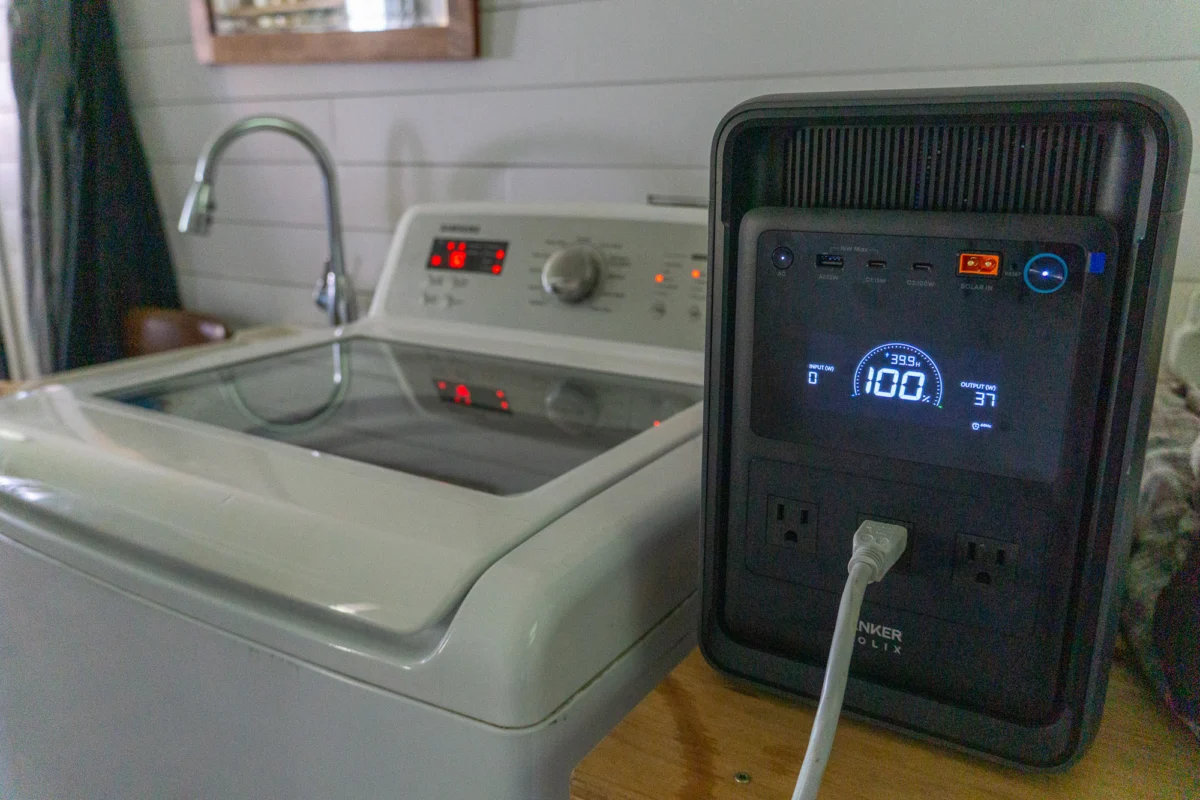
The rapid evolution of consumer technology is nowhere more evident than in the sector of portable power. For the modern homeowner, the shift from noisy, gasoline-reliant generators to silent, lithium-based energy storage systems has been nothing short of transformative. Among the latest entries to this competitive market is the Anker SOLIX S2000, a 2kWh power station that aims to redefine the balance between capacity, portability, and operational efficiency.
Over the past two months, I have integrated the SOLIX S2000 into my own household, testing it through the rigors of home renovation projects, unexpected power outages, and weekend excursions. While many power stations prioritize raw, brute-force output, the S2000 takes a more measured approach—one that prioritizes the longevity of your essentials over the ability to power a workshop full of heavy machinery simultaneously.
Main Facts: The Anatomy of the S2000
The Anker SOLIX S2000 is a 2,010Wh lithium iron phosphate (LiFePO4) power station designed primarily for home backup. Weighing in at approximately 35 pounds and boasting a footprint roughly the size of a standard kitchen coffee maker, it occupies a unique niche in the market.

Technical Specifications:
- Capacity: 2,010Wh
- AC Output: 1,500W (3,000W surge)
- Battery Chemistry: LiFePO4 (rated for high cycle life)
- Input: 400W Solar / 1,600W AC
- Connectivity: 5 AC ports, 1 USB-A, 2 USB-C
- Dimensions: 8.2" x 11.1" x 12.7"
The unit is marketed as the smallest and lightest 2kWh station in its class. By optimizing internal power management, Anker has managed to shed bulk while maintaining a high energy density, making it a viable candidate for homeowners who have limited storage space but require a reliable safety net when the grid goes dark.
Chronology of Testing: A Real-World Assessment
My experience with the S2000 was not conducted in a sterile laboratory, but rather in the unpredictable environment of a new home. The testing phase was divided into three distinct categories: sustained home backup, high-draw appliance testing, and portable field use.

The Fridge Backup Test
The most critical test for any home-backup power station is the "fridge survival test." Most conventional power stations bleed energy through "active idle" draw—the power consumed by the unit itself while the inverter is on but the device isn’t under load. Many units lose 15–20W per hour just sitting idle.
I set my Samsung refrigerator/freezer to a standard 37°F/-2°F split. Over a 34-hour and 15-minute period, the S2000 powered the fridge continuously. What was most impressive was the "OptiSave" feature, which throttles the idle power consumption down to just 6W. This efficiency allowed the unit to survive 12 hours of active family usage—including frequent door openings—while maintaining over 60% charge, ultimately lasting well beyond the 24-hour mark often cited as the gold standard for emergency preparedness.
High-Draw Challenges
While the S2000 is not designed to replace a dedicated industrial power source, it proved surprisingly capable during home improvement tasks. It powered LED site lighting and standard hand tools without hesitation. However, when pushed to its 1,500W limit with a high-draw portable planer (which demands 1,800W continuous and 2,500W startup), the internal safety systems triggered an automatic shutdown. The system’s response was immediate, and the reset process was seamless, highlighting the robust nature of the unit’s internal circuit protection.

Supporting Data and Comparative Analysis
When compared to market stalwarts like the Jackery Explorer 2000 V2 or the EcoFlow Delta 2 Max, the S2000 distinguishes itself through its specific design philosophy. While others focus on high-wattage throughput (often exceeding 2,000W), the S2000 limits its continuous output to 1,500W to favor long-term energy conservation.
The data suggests that this is a deliberate trade-off. By capping the output, Anker has reduced the heat and energy waste typically associated with high-wattage inverters. This makes the S2000 an ideal candidate for "Time-of-Use" (TOU) optimization. Users living in areas with fluctuating electricity rates can charge the unit during off-peak hours and run high-load appliances during peak hours, significantly reducing their monthly utility bills.
Official Perspectives and Manufacturer Intent
Anker’s messaging regarding the S2000 has been consistent: this is a "set-and-forget" device for the average homeowner. According to internal reports and marketing documentation, the unit is engineered to last for over a decade of daily usage. This longevity is largely attributed to the LiFePO4 battery chemistry, which is far more resilient to degradation than traditional lithium-ion batteries.

The manufacturer emphasizes that the S2000 is not a "camping monster" designed for extreme off-grid abuse, but rather a sophisticated, compact, and efficient home appliance. The absence of heavy-duty rubberized bumpers or water-resistant dust covers for the ports is not an oversight, but a reflection of its intended use case: indoor, climate-controlled environments.
Implications for the Future of Home Power
The release of the S2000 carries significant implications for the consumer energy market. As power outages become more frequent due to aging grid infrastructure and extreme weather events, the average consumer is moving away from complex, expensive whole-home backup systems toward modular, portable solutions.
The Ergonomic Hurdle
Despite the high performance, the S2000 is not without its flaws. The design features a tall, sleek, and handle-integrated form factor. While aesthetically pleasing, the recessed handles require significant grip strength to maneuver. For a 35-pound device, carrying it one-handed to open a door or move it across a workspace is cumbersome. This is a reminder that even the most advanced technology is still bound by physical constraints.

The Verdict: Efficiency as a Feature
The S2000 is a masterclass in targeted design. By refusing to chase the "highest wattage" metric, Anker has successfully created a product that solves the most pressing problem for the average user: how to keep the refrigerator and essential home electronics running during a multi-day blackout without needing a massive, immovable power brick.
For the homeowner, the implications are clear: the S2000 provides peace of mind. It is a reliable, efficient, and well-built component of a modern emergency preparedness kit. Its ability to manage idle power loss makes it superior for long-duration backups compared to more "powerful" units that drain their own reserves while doing nothing.
Final Thoughts
If you are looking for a unit to power a construction site or an entire off-grid RV setup, you may find the 1,500W limit restrictive. However, if you are looking for a reliable, compact, and long-lasting solution to keep your home running when the lights go out, the Anker SOLIX S2000 is currently the benchmark. It is a testament to how far portable power has come, turning what was once a complex engineering problem into a simple, countertop-ready appliance.

As we look toward an uncertain energy future, having a 2kWh reserve that is both light enough to carry and efficient enough to last for days is not just a convenience—it is a necessity. The Anker SOLIX S2000 fulfills this role with an elegant, if slightly ergonomically challenged, efficiency that sets a new bar for the industry.