By GearJunkie Staff | August 10, 2026
In what conservationists and park advocates are calling a "day of infamy" for America’s public lands, the federal government has officially commenced construction on a sprawling $1.7 billion border infrastructure project within the heart of Big Bend National Park. The move marks a historic, and deeply controversial, escalation in the securitization of the Texas-Mexico border, prioritizing physical barriers and high-tech surveillance systems over the preservation of one of the nation’s most iconic and biologically diverse protected areas.
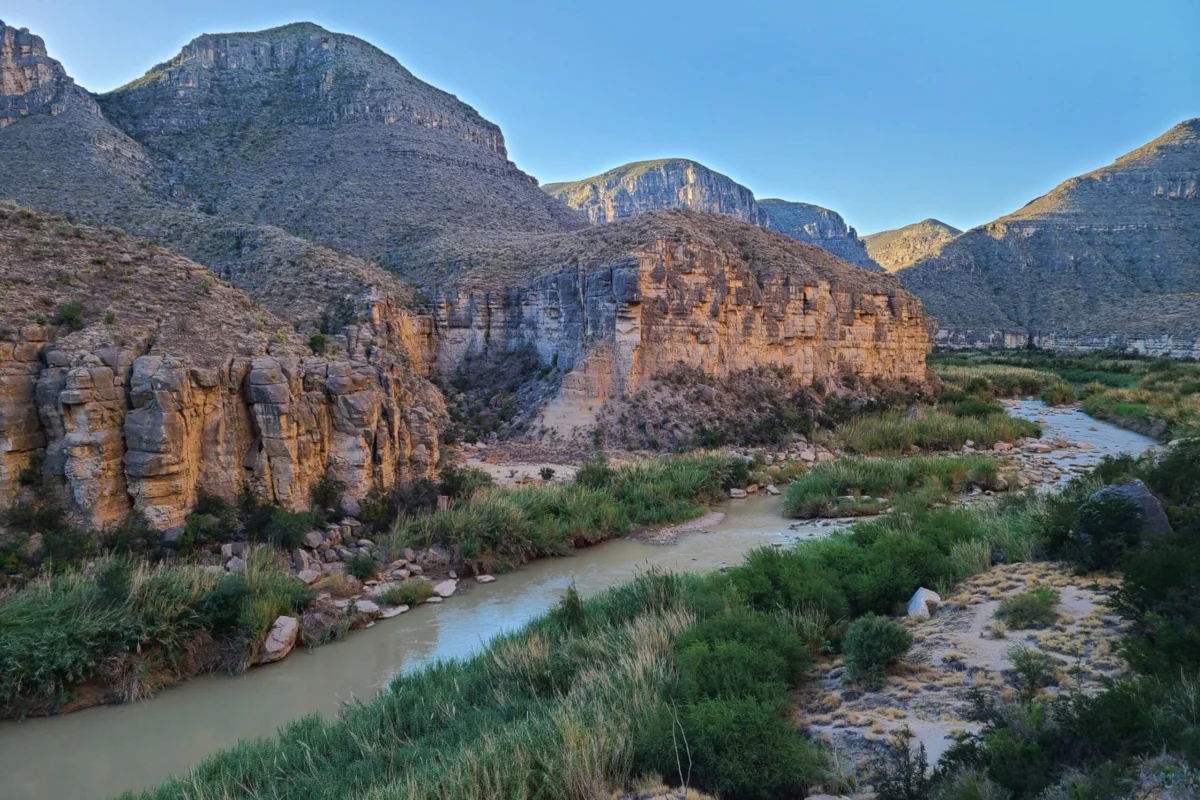
As of August 6, 2026, heavy machinery—including bulldozers and excavators—has begun clearing native vegetation along the Rio Grande’s riparian corridor. With the majestic Santa Elena Canyon looming in the background, the visual juxtaposition of industrial construction equipment against the untouched desert wilderness serves as a grim herald of the landscape’s future.
The Anatomy of the Project
The project is not merely a fence; it is a massive industrial undertaking. The Department of Homeland Security (DHS) has authorized a multi-billion dollar initiative that includes the construction of vehicle barriers, miles of new patrol roads, and the installation of advanced surveillance technology.
According to official project documents, the initiative is designed to "harden" the border against unauthorized crossings. However, the geographic reality of the region—characterized by rugged, mountainous terrain and sheer, inaccessible canyons—has led experts to question the strategic necessity of such invasive measures. Critics argue that the infrastructure is being deployed in areas where vehicle crossings are physically impossible, suggesting that the ecological cost far outweighs the tactical utility.
A Chronology of Escalation
The path to this moment has been paved with years of political tension and legal maneuvering.
- Early 2026: The Department of Homeland Security announces plans to expand border infrastructure in the Big Bend region, citing national security mandates.
- March 2026: Local law enforcement begins to push back. Five border county sheriffs publicly voice their opposition, arguing that the wall will disrupt local ecosystems and hinder search-and-rescue operations.
- April 2026: Public outcry reaches a fever pitch as over 2,000 protesters converge on the Texas State Capitol in Austin, demanding a halt to the project.
- May 2026: Seven former superintendents of Big Bend National Park author a formal letter to DHS Secretary Markwayne Mullin. They warn that the proposed vehicle barriers and patrol roads would be "highly destructive" to the park’s fragile resources.
- June 2026: The administration takes the unprecedented step of waiving dozens of federal environmental laws to expedite construction. This marks the first time in U.S. history that such sweeping waivers have been applied to a national park, effectively shielding the project from standard environmental impact assessments.
- August 6, 2026: Construction begins in earnest. Journalists on the scene capture video evidence of bulldozers tearing through riparian vegetation, sparking widespread outrage among environmental advocates.
The Ecological Cost: Why "Where the Trees Grow" Matters
Raymond Skiles, a former biologist for Big Bend National Park, has become one of the most vocal critics of the construction. His recent online commentary has resonated with thousands, highlighting the specific biological value of the land currently being cleared.
"In the desert, there is no more valuable habitat than where the trees grow," Skiles wrote. "In this arid region, diversity and abundance of plant and animal species is nowhere greater. This is where the trees grow. This is what they chose to destroy first."

The riparian zone—the narrow, verdant strip of land bordering the Rio Grande—is a lifeline in the Chihuahuan Desert. It provides critical habitat for hundreds of species of birds, mammals, and amphibians, many of which are already threatened or endangered. By clearing this land, the federal government is effectively severing an ecological corridor that has sustained life in the region for millennia.
Furthermore, the construction plans include the use of dynamite to blast through limestone canyons. The noise pollution, seismic disruption, and permanent alteration of the geological landscape threaten to irrevocably damage the very qualities that earned Big Bend its status as a premier national park.
Official Responses and the "Prepping" Defense
When approached for comment regarding the destruction, a spokesperson for U.S. Customs and Border Protection (CBP) downplayed the immediate impact, telling SFGate that the machinery currently on-site is merely "prepping the area" and that construction of a formal road had not yet begun.
However, this defense has done little to soothe the concerns of environmentalists. Critics argue that the act of "clearing" is, in itself, a form of construction. Once the vegetation is removed and the topsoil is compacted by heavy machinery, the delicate desert ecosystem suffers a level of degradation that can take decades, if not centuries, to recover.
Despite repeated inquiries from GearJunkie and other media outlets, the DHS has provided limited clarity on how they intend to mitigate the long-term impacts of these projects on the park’s internal infrastructure or its status as a UNESCO Biosphere Reserve.
Supporting Data: The Financials of the Wall
The economic scale of this project is staggering. The DHS has awarded a $1.7 billion contract to New Mexico-based Southwest Valley Constructors for this specific phase of work. When combined with previous contracts, the total expenditure allocated for border wall construction within the Big Bend region has reached approximately $7 billion.
This massive infusion of capital is being funneled into:
- Staging Yards: Extensive tracts of land have been cleared to house heavy equipment and materials.
- Worker Camps: Temporary housing facilities have been erected to support the construction workforce.
- Hydrological Disruption: Multiple water wells have been drilled to support the labor camps and dust suppression efforts, raising concerns about the impact on the region’s scarce groundwater resources.
Implications: A Betrayal of Public Trust?
The implications of the Big Bend project extend far beyond the borders of the park. It represents a fundamental shift in how the federal government treats protected public lands. By waiving environmental laws, the administration has set a precedent that could potentially weaken the protections of every national park in the country.

Laiken Jordahl, the national public lands advocate at the Center for Biological Diversity, did not mince words when describing the gravity of the situation.
"This is the most heinous attack on an American national park in generations," Jordahl stated. "The administration is preparing to blast hundreds of miles of destructive roads through the wildest place left in Texas and cut off public access to the Rio Grande, all to enrich private contractors. Big Bend belongs to us all, and sacrificing it is a betrayal of every Texan and every American who believes our national parks should be protected."
What Lies Ahead
As the bulldozers continue their work, the opposition movement is shifting its focus toward documentation and sustained protest. Former park staff and advocates are now treating the park as a site of active loss, documenting the destruction of natural and cultural heritage in real-time.
For visitors and nature lovers, the future of Big Bend is uncertain. The park has long been a symbol of untamed beauty and cross-cultural exchange. With the introduction of industrial-scale security infrastructure, that identity is being fundamentally transformed.
"The needless border wall’s rip and tear across the fabric of this national treasure began yesterday," Skiles concluded in his statement. "As destruction mounts going forward, day by day, we must continue to protest. Sadly, we now must also document the loss of our natural and cultural heritage."
As the project progresses, the question remains whether the political and security objectives of the current administration can ever be reconciled with the statutory duty to preserve the "unimpaired" condition of America’s national parks for future generations. For now, the heavy equipment remains in the canyons, and the dust continues to settle over a changing Big Bend.