For decades, the aviation industry has operated under the comforting assumption that its life-critical systems are effectively "air-gapped" from the digital threats plaguing the modern world. While hackers have successfully targeted power grids, water utilities, hospital medical devices, and even remote-controlled automobiles, the cockpit of a commercial airliner remained the final frontier of digital isolation.
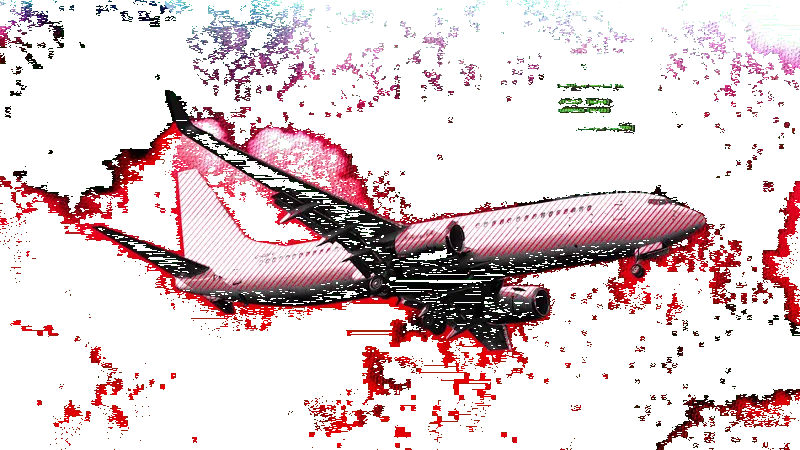
That assumption has been systematically dismantled by a group of academic researchers from the University of California, San Diego (UCSD) and Oberlin College. After a decade of painstaking research, they have unveiled a sophisticated, low-cost technique capable of commandeering the autopilot of a Boeing 737. By gaining brief physical access to an exterior maintenance port, an attacker can surreptitiously inject malicious code, allowing them to manipulate flight paths, alter critical takeoff calculations, and spoof the very screens pilots rely on for situational awareness.
The "Bus Driver" Attack: Anatomy of a Breach
The vulnerability, which the researchers have dubbed "Bus Driver," centers on an exposed, non-locking external port located on the exterior of the Boeing 737. This port connects to an internal data bus—the digital nervous system of the aircraft—that facilitates communication between the Flight Management Computer (FMC) and the Multipurpose Control Display Unit (MCDU).
The attack device itself is a triumph of miniaturization and low-cost engineering. Roughly the size of a coin and costing less than $100 to produce, the device is designed to be fitted under a standard dust cap in under 60 seconds. Once installed, it is effectively invisible to casual inspection. The device contains a Wi-Fi-enabled chip, which, in theory, allows an attacker to connect to the plane’s in-flight Wi-Fi network and establish a remote link to the malicious hardware, enabling long-range control of the aircraft’s navigation systems.

By sending electrical signals with a higher current than the standard commands used by the plane’s legitimate systems, the device can override authentic data, effectively hijacking the communication lines. Stefan Savage, a professor of computer science at UCSD who led the research, likens the discovery to finding a critical design flaw in a massive system. "If you could get 60 seconds with an airplane, what could you do?" Savage asks. "It turns out there’s a port that’s externally accessible. You can get to it with no special tools in about 15 seconds. And you can shove in a piece of electronics a little bigger than a quarter that lets you basically tell the autopilot what to do and lie to the pilot about changes to the flight plan."
A Decade-Long Chronology of Research
The path to this discovery was neither quick nor cheap. The team’s interest in aviation security was a natural evolution of their pioneering work in automotive cybersecurity. Nearly 15 years ago, these same researchers demonstrated the first successful remote hacks of a car’s braking and steering systems, a revelation that forced the automotive industry to overhaul its security protocols, leading to modern standards like bug bounty programs and dedicated cybersecurity teams.
Following their success with cars, the team turned their attention to the skies. However, unlike a Chevy Impala, a Boeing 737 is not an asset that can be easily acquired for lab testing. "I pointed out that we can’t exactly buy a plane and put it in the parking lot," Savage recalls. Undeterred, the team began scouring the secondhand market for individual avionics components. Over the course of several years, they spent tens of thousands of dollars collecting computer parts from decommissioned 737s.
By 2019, the researchers had constructed "Triton," a sprawling avionics test bed consisting of wired-together 737 computer components. Around the same time, UCSD professor Aaron Schulman began investigating credit card skimmers at gas stations. The realization that physical access could lead to digital compromise on point-of-sale terminals prompted a "lightbulb moment" for the team. Sam Crowe, then a student researcher, began analyzing hundreds of pages of Boeing wiring diagrams, eventually identifying the specific, unprotected port that would serve as the gateway for the "Bus Driver" attack.

When the Covid-19 pandemic hit, the research didn’t stop; the equipment was shipped to Crowe’s home in the Bay Area, where he continued to refine the exploit, proving that the attack could be performed in a bedroom, provided one had the necessary components.
The Risks: From Subtle Diversions to Catastrophe
The implications of the "Bus Driver" exploit are profound. By manipulating the data fed into the Flight Management Computer, an attacker could force the autopilot to redirect the aircraft into another country’s restricted airspace, potentially triggering an intercept by military forces.
Perhaps more insidious are the subtle manipulations. By feeding the system false data regarding the aircraft’s total weight or the outside air temperature, an attacker could cause the computer to miscalculate the required speed for a safe takeoff. If the plane fails to reach the necessary velocity before the runway ends, the result could be a catastrophic runway overrun.
In mid-air, the risks are equally concerning. The device can spoof values on the pilot’s screen, making it appear that everything is functioning correctly while the plane slowly drifts off course. "It could be something as subtle as, you’re in the Pacific, you see blue everywhere, and this diverts you 3 degrees off course, and now you’re in the middle of nowhere," Schulman explains. While a vigilant pilot might notice inconsistencies between instruments, the resulting confusion during a high-stakes flight could lead to fatal decision-making errors.

Official Responses and Industry Stance
The research team has maintained a professional and collaborative relationship with Boeing, having first disclosed their findings to the manufacturer over six years ago. They even demonstrated the attack within a Boeing-controlled test facility.
Boeing, for its part, has downplayed the immediate threat. In a statement provided to the media, the aerospace giant noted that it had conducted its own internal review of component designs and installation interfaces in light of the researchers’ findings. "Our technical experts are confident that the layers of protection in place on the airplane, including within the system design and the operating environment, provide sufficient mitigation to significantly limit the feasibility and risk of real-world attacks," the statement read.
However, the researchers note that Boeing has not implemented any public-facing technical fixes, nor have they communicated plans for an immediate fleet-wide update. Given that commercial aircraft are designed for lifespans measured in decades, the prospect of a hardware-level redesign is unlikely in the near future. Despite the severity of their findings, the researchers emphasize that they continue to fly on Boeing 737s and do not believe the public should panic or demand the grounding of aircraft.
Implications for 21st-Century Aviation Security
The "Bus Driver" research serves as a stark reminder that the security models of the 20th century—which relied on physical isolation and the assumption of a "trusted" environment—are increasingly obsolete.

Beau Woods, a cybersecurity consultant and advisor to the Cybersecurity and Infrastructure Security Agency (CISA), underscores the importance of this work. "It is entirely possible to have someone who is on staff go up to an airplane when it’s on the ground, going through maintenance, and put this type of thing in there," Woods says. He argues that the research provides empirical evidence that the "threat model" for aviation must evolve.
The researchers suggest a straightforward, immediate solution: plugging the vulnerable port with epoxy or removing it entirely. Long-term, they advocate for a shift toward modern cybersecurity practices, such as software-level intrusion detection, better electrical isolation between systems (similar to standards used in military aviation), and the implementation of cryptographic authentication to verify the legitimacy of signals traveling across the plane’s internal networks.
As the industry moves forward, the "Bus Driver" exploit stands as a cautionary tale. It proves that even the most complex, high-value systems possess "exhaust ports" that, if left unaddressed, can be exploited by motivated, well-resourced adversaries. As Savage puts it, "This is something the aviation industry will want to plan to defend against. I would not sleep on this one." The reality of aviation security has changed, and for the industry, the work of securing these critical machines is only just beginning.