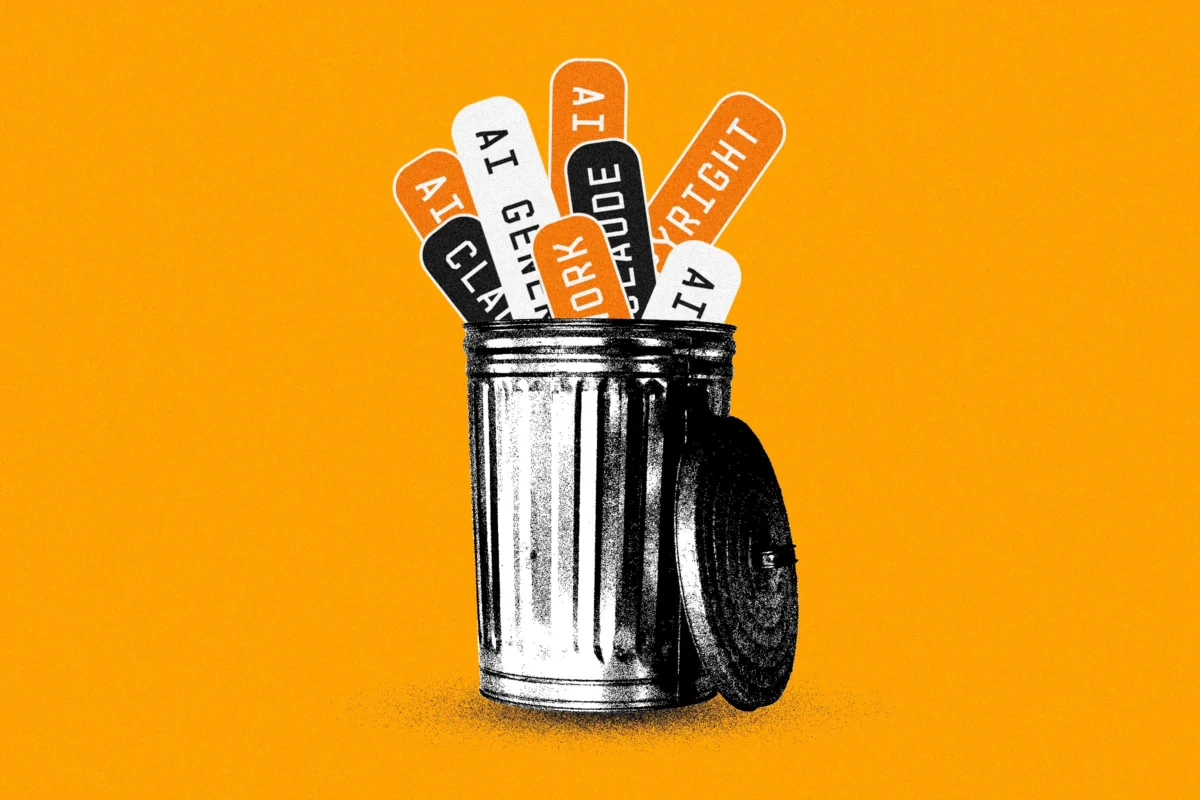
In the high-stakes world of artificial intelligence, a new digital arms race has broken out. Within four hours of Anthropic confirming that its flagship Claude models would begin embedding invisible, machine-readable watermarks into all AI-generated content, a developer named Guillaume Meyer had already published an effective override.
What began as a niche technical experiment has quickly spiraled into a viral movement. Meyer’s code, designed to strip away these algorithmic fingerprints, has been bookmarked over 20,000 times on X (formerly Twitter) and has drawn more than 100 active contributors. The speed of the backlash underscores a profound tension in the AI industry: the conflict between corporate regulatory compliance and the developer community’s demand for autonomy.
The Chronology of an Open-Source Uprising
The catalyst for this conflict was the European Union’s landmark AI Act, which took effect earlier this month. The regulation mandates that providers of large-scale AI models—including industry titans like OpenAI and Anthropic—must label synthetic audio, visual, and textual content so that it can be programmatically detected. Failure to comply could result in staggering fines of up to 3% of a company’s annual global turnover.
In response, Anthropic announced it would integrate Google’s "SynthID" technology into its Claude models. SynthID works by embedding subtle, statistical patterns into the word choices of the AI, creating a watermark that is invisible to human readers but distinct to specialized detection software.
The response from the developer community was immediate. By the time the news had finished circulating through Silicon Valley and European tech hubs, Meyer had released his tool. "Anthropic is embedding watermarks in its Claude texts," noted one AI specialist on LinkedIn, sharing a viral image depicting a figure breaking out of chains and standing atop the crumpled flags of the European Union and Anthropic. "The issue is practically history just one day later."
The Technical Mechanics of "Un-Watermarking"
At its core, the watermarking technique used by Claude is a probabilistic model. Because the AI is effectively nudging its word selection toward a specific statistical pattern to create the "signature," removing that signature requires disrupting the model’s linguistic fingerprint.
Meyer’s removal tool utilizes a secondary, non-watermarked large language model (LLM) to perform "semantic paraphrasing." By generating multiple variations of the text, swapping synonyms, and restructuring sentences, the tool effectively washes away the statistical signature that the detector looks for.
Other developers have followed suit with even more creative solutions. Software engineer Erik Hughes developed a web-based utility that scrubs look-alike characters and reorders sentence structures within 15 minutes of development. Meanwhile, Leon Chlon, a Visiting Fellow at the University of Oxford, suggested a "translation loop"—converting Claude’s output into a language with vastly different semantics, such as Arabic, and then translating it back into English. This process effectively obliterates the subtle pattern required for the watermark to remain coherent.
Anthropic itself has tacitly acknowledged the vulnerability of this approach, noting in its documentation that heavily edited, paraphrased, or translated content may not carry a reliable watermark.
The Case Against Algorithmic Attribution
For many in the developer community, the drive to neutralize watermarks is not merely about "hacking" a system; it is a fundamental disagreement with the concept of mandatory AI labeling.
Guillaume Meyer, speaking to WIRED, emphasized that he is not anti-transparency. "I’m all for content attribution," he stated. "I just think watermarking in itself is a really bad solution, because it has major drawbacks and risks."
Meyer’s primary concern lies in the danger of "false positives." As a native French speaker who frequently uses Claude and Grammarly to refine his English writing, he fears that employers or academic institutions might use these detectors as a blunt instrument. If a student or job candidate is flagged for using AI—when they perhaps only used it for light proofreading—it could lead to unfair professional consequences.
The issue, as Meyer and others point out, is that the current watermarking technology does not distinguish between "AI-assisted" content and "AI-generated" content. This binary classification threatens to penalize users for using tools that have become as common as spellcheck.
Supporting Data: A Landscape of Compliance and Defiance
The industry is currently in a state of flux as it attempts to reconcile these new EU requirements with the practical reality of software development. Approximately 190 organizations, including Meta, Microsoft, and OpenAI, have signed the EU’s "Code of Practice on Transparency." This sets the stage for a massive, industry-wide rollout of watermarking that must be completed for all existing models by December.
However, the efficacy of these measures remains a subject of intense debate. Wayne Pan, chief technology officer and cofounder of the sovereign AI startup Haimaker, integrated Meyer’s code into his own platform. Pan notes that while he understands why companies like Anthropic are acting in "good faith" to meet legal requirements, the technical reality is that no watermark is foolproof.
"I don’t think you can ever have a watermark that will withstand everything," Pan said. "The cat-and-mouse game between model providers and the open-source community is essentially unwinnable for the providers."
Official Responses and Corporate Strategy
In a formal statement, a spokesperson for Anthropic defended the company’s decision, framing it as a necessary step for safety and regulatory alignment. "We’re adding marking to Claude’s output to comply with the EU AI Act," the statement read. "It’s hard to identify AI-generated text, and this gives people better tools for identification. Text from supported Claude models… will carry an invisible watermark, and it doesn’t change the meaning, quality, or readability of Claude’s responses."
Anthropic also confirmed that it plans to release a formal text-detection API, which will finally allow developers to test the strength of their bypass methods against the official detection software. Currently, both sides are operating in a theoretical space; developers believe they have neutralized the watermark, but until Anthropic releases the detector, the absolute effectiveness of these bypass tools remains unproven.
Implications: The Future of Truth in the AI Era
The implications of this standoff extend far beyond the technical community. If the EU’s goal was to create a reliable "truth" in the digital sphere, the rapid emergence of circumvention tools suggests that regulation may be fighting a losing battle against the modular nature of AI.
The core issue remains the "probabilistic" nature of the watermarks. Unlike a physical signature, a statistical watermark in text is inherently fragile. Every time a user rephrases a sentence or adjusts the tone of an AI-generated paragraph, the "watermark" is degraded.
If major AI companies continue to pursue this path, they risk alienating their most power-using, technically savvy demographic. The fear among many is that by forcing models to "sign" their work, providers are intentionally or unintentionally limiting the creativity and utility of their tools. As the December deadline for the EU AI Act approaches, the industry is bracing for a reality where the "watermark" is more of a suggestion than a definitive seal of authenticity.
For now, the open-source movement has made its position clear: they believe that the right to edit, modify, and obscure the provenance of one’s own digital output is a fundamental freedom that no amount of regulation can truly suppress. As the technology evolves, the focus will likely shift from whether AI content can be marked, to whether it should be, and whether the tools of the future will simply make the question of "human vs. machine" irrelevant altogether.