Accidents in the backcountry are rarely convenient, but on the river, they are often transformative. The difference between a minor logistical hiccup and a life-threatening catastrophe is frequently determined by the gear you have on hand and, more importantly, your proficiency in deploying it. In the world of commercial and private rafting, the “pin kit”—a collection of ropes, pulleys, and hardware designed to unpin a stuck boat—is considered an essential piece of safety equipment.
However, there is a dangerous complacency surrounding these kits. Many boaters purchase a pre-assembled, commercially available kit, stow it in a hatch, and never give it a second thought. This article explores why the "standard" kit is often inadequate for the realities of modern river running and how to build a system that actually works when the current is pushing against your hull.
The Anatomy of an Oversight: A Case Study
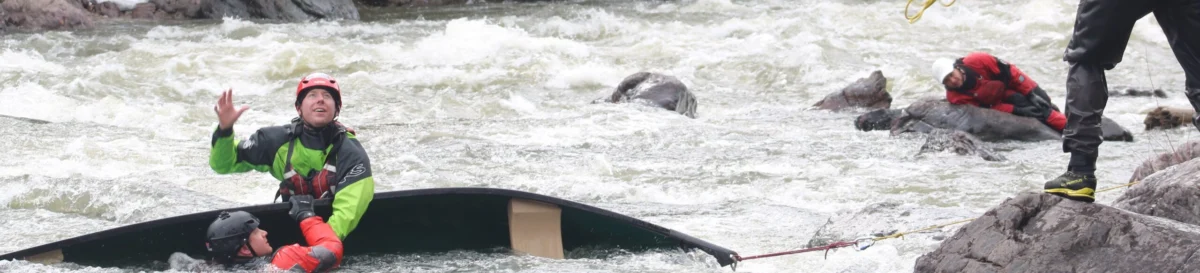
To understand the shortcomings of standard equipment, we must look at a common scenario. Imagine a multi-day expedition on the Middle Fork of the Salmon River. A member of your flotilla breaks an oar while approaching the infamous Haystack Rapid. They miss their line, lose momentum, and the raft becomes pinned broadside against a boulder.
On board the pinned craft are the group’s entire kitchen, the evening’s meal, and critical supplies. The river at this location is wide—over 250 feet—and the boat is stranded a full 100 feet from the nearest bank. Your group, acting with textbook efficiency, retrieves the pin kit from the sweep boat, secures a rope to the raft, and treks to a solid anchor point on the shore.
As you begin to rig a Z-drag mechanical advantage system, you hit a wall: you are out of rope. The kit, standard issue from a reputable supplier, contained only 150 feet of line. How did you run out?
The math of river rescue is unforgiving. A Z-drag system requires significant rope for the anchor, the connection to the boat, and the hauling system itself. Because a Z-drag is a 3:1 mechanical advantage system, the configuration consumes rope length rapidly. Furthermore, a standard 1/2-inch static line requires roughly four feet of length just to tie a secure Figure-8 on a bight. When you account for the distance to the anchor, the span to the boat, and the loss of efficiency due to knots and the Z-drag geometry, 150 feet is rarely enough. In this scenario, the "standard" kit has failed you because it was designed for a textbook environment, not the complex, wide-channel reality of the Salmon River.
Supporting Data: Why "Standard" Is Not Sufficient
The limitations of off-the-shelf kits are rooted in a "one-size-fits-all" manufacturing philosophy. Manufacturers prioritize portability and price points, which often results in undersized rope lengths and lower-tier hardware.
The Rope Dilemma
Most commercial kits favor 1/2-inch static line. While this provides a high breaking strength (often exceeding 40 kN or 9,000 lbs), it is bulky and heavy. Because of its diameter, a standard bag can only hold 150 feet.
Modern rescue philosophy is shifting toward thinner, high-strength lines. By switching to a 9mm static rope with a 22 kN (5,000 lb) rating, a boater can carry 330 feet of rope in the same volume and weight footprint as the 150-foot 1/2-inch line. In a wide river scenario, having double the length allows for complex redirects, longer anchor spans, and secondary safety lines that are impossible with shorter setups.
Mechanical Advantage and Friction
Mechanical advantage is not free. Every pulley in a system introduces friction, and every knot reduces the breaking strength of your rope. Standard kits often include low-quality pulleys that are not optimized for the high-tension demands of unpinning a water-logged, rock-stuck raft.
Official Recommendations: What Your Kit Should Contain
If you are serious about safety, you must move beyond the "pre-packaged" mentality. Your pin kit should be a bespoke collection of tools tailored to the rivers you run.
1. Rope Selection
Prioritize length and durability over raw, excessive diameter. A 9mm to 10mm high-tenacity static rope offers the best balance of weight, stowage volume, and tensile strength. Ensure your rope is rated for rescue applications and is kept away from UV exposure when not in use.
2. The Webbing and Sling Arsenal
Never rely on a single 10-foot piece of tubular webbing. Wrapping around large boulders or trees requires significant material. I recommend carrying:
- 25 feet of 1-inch tubular webbing (for custom rigging).
- A 10-foot 13mm Dynex "Rabbit Runner."
- A 240cm 10mm Dynex sling.
These options provide versatility when searching for reliable anchor points in rocky or vegetated terrain.
3. Prusiks and Friction Hitches
While mechanical ascenders have their place, the humble Prusik remains the king of river rescue. Ensure your Prusik cord is 70–80% the diameter of your haul line for optimal bite. Pre-sewn Prusik loops are superior to tied loops because they eliminate the weak point of a knot and are immediately ready for deployment.
4. Pulleys: The Force Multipliers
A Z-drag system is useless without efficient pulleys. A minimum of three Prusik Minding Pulleys (PMPs) is standard for a professional kit. PMPs are designed to prevent the Prusik hitch from being sucked into the pulley, which could jam the system and lead to equipment failure under load.
5. Dedicated Hardware
Your rescue carabiners must be dedicated to the pin kit. Do not use your water-bottle carabiner or a piece of gear that has been used for rigging tie-downs. Use only locking, rated carabiners, and inspect them regularly for signs of gate stress or corrosion.
The Human Factor: Maintenance and Storage
A kit is only as good as its condition. Many boaters store their gear in a wet environment, leading to rapid degradation. Rope fibers break down when exposed to constant moisture and direct sunlight. Aluminum carabiners can corrode, and sand—the silent killer of pulleys—can seize the bearings of your most critical hardware.
The Case for a Dedicated Dry Bag:
Investing in a high-quality, dedicated dry bag (such as a Watershed bag) is a professional standard. A dry bag serves two purposes:
- Integrity: It keeps the gear free of silt, sand, and moisture, extending the lifespan of the rope and the efficiency of the pulleys.
- Accessibility: Because the bag is buoyant and waterproof, it can be stowed in a location that is instantly accessible, ensuring that when the adrenaline is spiking and the boat is sinking, you aren’t wasting time digging through a disorganized hatch.
Implications for the Future of River Safety
The current trend toward "off-the-shelf" preparedness is a liability. As rivers become more crowded and the demographic of river runners shifts, the collective knowledge of mechanical advantage and rescue rigging is becoming diluted.
When you purchase a pin kit, view it as a "starter pack." Consult with your local river shop or a professional rescue instructor to audit your current equipment. Ask yourself:
- Can I anchor this to a tree 50 feet back?
- Does my system have enough pulleys to redirect the pull away from the rocks?
- Is my rope long enough to span the widest point of the river I intend to run?
If the answer to any of these is "no," your kit is not a safety device; it is a false sense of security. The goal of a pin kit is not just to have the tools—it is to have the right tools, organized in a way that allows for rapid, effective, and safe intervention in the worst-case scenario. When the water is rising and the boat is wedged, you don’t want to be wishing you had 100 more feet of rope. You want to be finished with the job, eating your dinner, and recounting the tale as a success story rather than a warning.