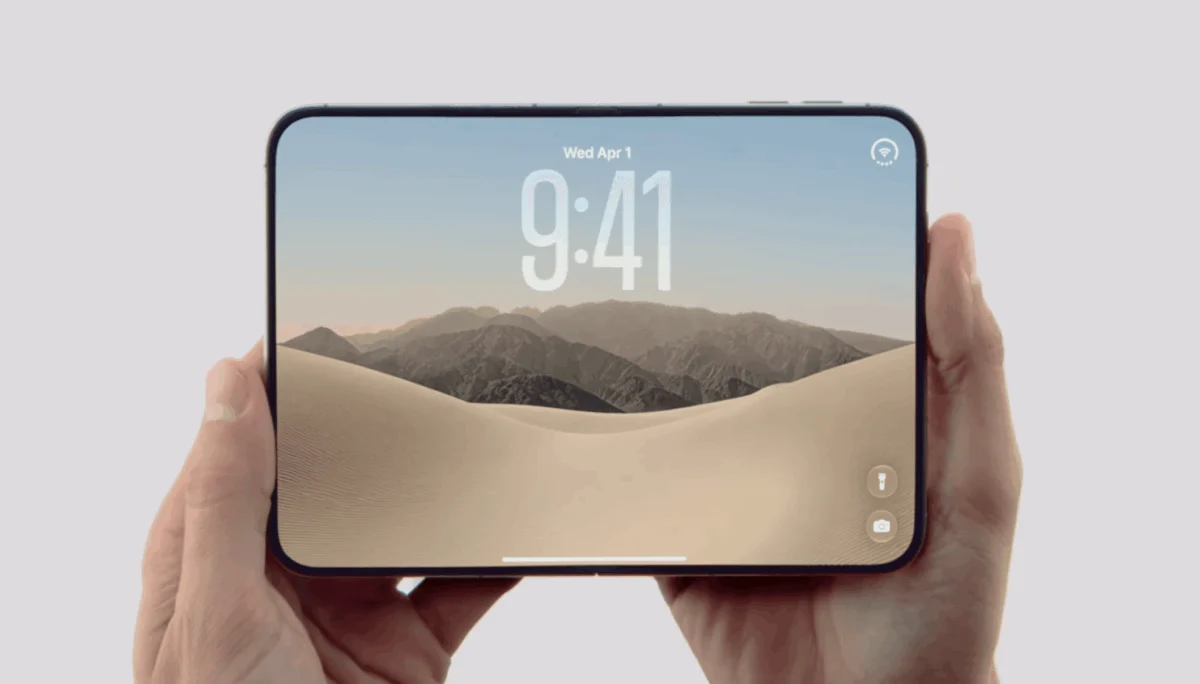
In a landmark moment for the mobile industry, Apple has officially shed its reputation as a cautious observer of the foldable trend. At its annual September showcase held at the pristine Apple Park campus in Cupertino, California, the tech giant unveiled the iPhone Duo, its first-ever folding smartphone. Announced alongside the robust new iPhone 18 Pro lineup, the device marks a fundamental shift in Apple’s hardware design philosophy, signaling that the company believes the foldable form factor has finally matured enough to meet its rigorous standards for consumer electronics.
The Evolution of the Fold: A Brief Chronology
To understand the weight of Apple’s entry, one must look at the turbulent history of the foldable market. The category was effectively birthed in 2019 with the debut of the original Samsung Galaxy Fold. That initial device, while revolutionary, was plagued by display failures and mechanical fragility, serving as a cautionary tale for the industry.
For years, Apple watched from the sidelines while competitors navigated the growing pains of flexible OLED displays and complex hinge mechanisms. By the time Apple finally felt the technology was ready, the foldable landscape had become crowded. Manufacturers such as Honor, Google, Motorola, and Oppo pushed the envelope, rapidly iterating on designs that became progressively slimmer, lighter, and more resilient.
The iPhone Duo arrives at a time when the "first-generation" stigma has largely evaporated. The device features a book-like, "passport-style" fold—shorter and wider than the narrow designs that dominated the early market. This decision mirrors the architecture of recent devices like the Samsung Galaxy Z Fold8 and the original Google Pixel Fold. By opting for this wider aspect ratio, Apple is clearly positioning the iPhone Duo as a primary media consumption device, effectively mitigating the "letterboxing" issues that have long plagued narrow-screen foldables.
Market Dynamics and the "Apple Effect"
The global smartphone market has faced significant headwinds, characterized by five consecutive quarters of decline. According to IDC, overall smartphone shipments were projected to face a 13 percent year-over-year drop as recently as 2026, driven in part by a global memory crisis and hardware saturation.
Nabila Popal, a senior research director at IDC, views the iPhone Duo not just as a new product, but as a potential catalyst for industry-wide recovery. "Apple has such a strong market pull," Popal notes. "The average consumer didn’t know about underlying supply chain issues, like memory price increases, until Apple made an announcement that they were going to increase prices. Coming into foldables, it’s going to create overall excitement for the category. It’s good for the consumer, too. It’s always good to have more competition and more choice."
IDC’s data provides a compelling look at the power of the Apple brand. A recent survey conducted by the firm found that 60 percent of consumers were largely indifferent or opposed to purchasing a foldable smartphone when they were next due for an upgrade. However, that sentiment shifted dramatically when the variable of "Apple" was introduced: nearly 33 percent of those surveyed indicated they would "absolutely" consider purchasing a foldable if it bore the Apple logo.
While the foldable market currently represents only about 2 percent of the global smartphone landscape, analysts project that Apple’s entry could help the company capture up to 30 percent of the foldable market share by the end of 2026. This would represent a massive shift in how high-end mobile devices are viewed by the general public.
The Durability and Repairability Conundrum
Despite the excitement surrounding the iPhone Duo, significant technical challenges remain. The primary concern for both analysts and consumer advocacy groups is the inherent fragility of folding screens. Folding phones are notoriously prone to damage—not just from drops, but from the simple, repeated physical stress placed on the display material and the hinge mechanism.
Elizabeth Chamberlain, Director of Sustainability at iFixit, offers a sobering perspective on the state of the technology. According to Chamberlain, her team has yet to dismantle a foldable device that could be considered truly "repairable."
"Manufacturers have come a long way since the Galaxy Fold first dropped," Chamberlain tells WIRED. "The hinges are smoother, the displays are brighter, and the dust resistance is significantly improved. But the gains in durability haven’t come with gains in repairability. We are still seeing devices that are essentially glued together, making a simple battery swap or a display replacement a nightmare for the end-user."
This presents a unique challenge for Apple, a company that has recently made strides in its "Self Service Repair" program. Bringing a device as complex as the iPhone Duo into the fold—pun intended—tests the limits of Apple’s commitment to product longevity. If the iPhone Duo follows the path of its competitors, it may be a masterpiece of engineering that remains, ultimately, disposable.
Implications for the Future of Mobile Computing
The release of the iPhone Duo forces a conversation about the trajectory of the smartphone. For nearly a decade, the "glass slab" design has been the gold standard, offering little in the way of true innovation beyond camera improvements and processing speed. The introduction of the Duo suggests that Apple recognizes the "peak smartphone" era is over.
1. The Death of the Small Tablet?
By creating a device that opens into a tablet-sized workspace, Apple is directly challenging its own iPad Mini line. If a user can carry a phone that doubles as a media hub, the necessity for a secondary, small-form-factor tablet diminishes. This could lead to a massive consolidation in the Apple ecosystem, where the iPhone eventually replaces multiple devices.
2. Software Optimization
The success of the iPhone Duo will not rest on hardware alone. Apple’s greatest strength has always been its walled-garden software optimization. Developers are already scrambling to update their applications to support the dynamic resizing required by the Duo’s inner display. This "Apple-first" software ecosystem will likely give the iPhone Duo a distinct advantage over Android competitors, which have often struggled with inconsistent app scaling on folding devices.
3. Pricing and Accessibility
The iPhone Duo enters the market at an ultra-premium price point. While this will likely limit its initial reach to enterprise users and early adopters, it sets a new baseline for what constitutes a "flagship" device. As manufacturing processes improve, the industry expects these costs to filter down, but for now, the Duo remains a luxury item.
A Developing Landscape
As the dust settles on the Cupertino launch, the industry will be watching the iPhone Duo with a mix of anticipation and skepticism. Will Apple’s entry solve the durability issues that have plagued the sector for years? Will it convert the skeptics who have long insisted that a folding screen is a gimmick?
The data suggests that Apple has the influence to turn a niche, experimental technology into a mainstream necessity. However, as iFixit’s Chamberlain points out, "just because you can build it doesn’t mean it’s ready for the long haul."
For now, the iPhone Duo stands as a testament to the fact that even the most conservative tech giants eventually succumb to the lure of innovation. Whether the foldable phone becomes the new standard for the next decade or remains a high-end curiosity depends entirely on how the iPhone Duo performs in the hands of the millions who are waiting to see if Apple has finally gotten the fold right.
This is a developing story. As units reach reviewers and teardown experts, we will provide further updates on the iPhone Duo’s internal architecture, real-world battery performance, and long-term mechanical reliability.